GRADE & PURITYMoligand™?Moligand™ — Aladdin's line of ligands and bioactive small molecules. Use for receptor, pathway, and binding studies needing defined small-molecule tools.≥98%(HPLC)
Synonyms
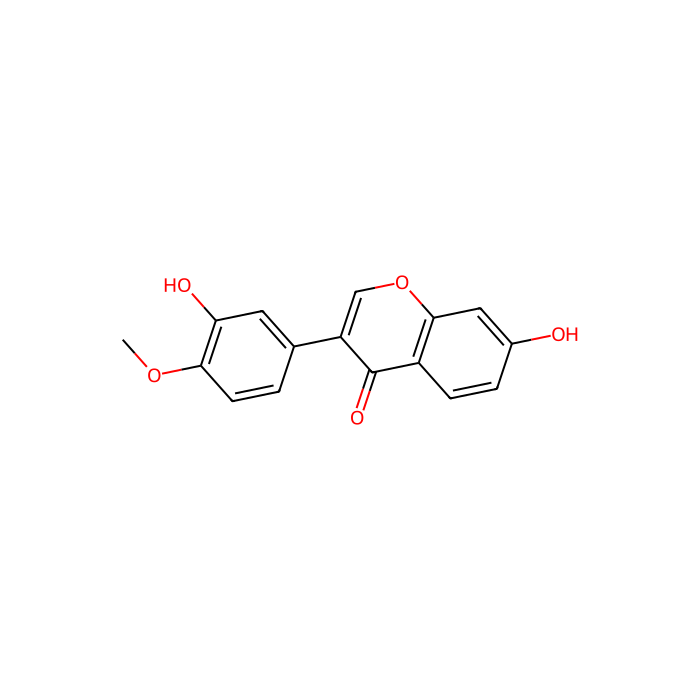
4H-1-Benzopyran-4-one, 7-hydroxy-3-(3-hydroxy-4-methoxyphenyl)-|Calycosin|CALYCOSIN (CONSTITUENT OF ASTRAGALUS) [DSC]|3'-hydroxyformononetin|3'-hydroxy-formononetin|3-Hydroxyformononetin|3',7-dihydroxy-4'-methoxyisoflavone|7-hydroxy-3-(3-hydroxy-4-methoxyphenyl)-4H-1-benzopyran-4-one|7,3'-dihydroxy-4'-methoxyisoflavone|CALYCOSIN [USP-RS]|7-hydroxy-3-(3-hydroxy-4-methoxyphenyl)-4H-chromen-4-one|7-hydroxy-3-(3-hydroxy-4-methoxy-phenyl)chromen-4-one|7-hydroxy-3-(3-hydroxy-4-methoxyphenyl)chromen-4-one|3′,7-Dihydroxy-4′-methoxy-isoflavone|3′-Hydroxyformononetin
Calycosin (Cyclosin) is a natural active compound with anti-oxidative and anti-inflammation activity. Calycosin, a phytoestrogen isoflavone, may be used to promote and study its mechanisms of angiogenesis via interaction with the estrogen receptor and mitogen-activated protein kinase (MAPK) signaling pathway. Calycosin may be used to study its function and role in neuroprotection via prevention of reperfusion injury. Calycosin may be used as a calcium channel blocker. Calycosin can be used to study its role in protection of HUVECs from advanced glycation end products-induced macrophage infiltration.
Calycosin is a plant estrogen exhibiting both agonistic and antagonistic attitude towards estrogen. It is an isoflavone, occurring as the primary component of the Radix astragali extract.
Calycosin has been used: to study its effect on the repression of glioblastomas by having an inhibitory effect on the expression of tyrosine-protein kinase Met (c-Met) to analyze its effect on the growth of nasopharyngeal carcinoma cells by modulating the long non-coding RNA, Ewing sarcoma-associated transcript 1(EWSAT1) to evaluate its effect on the left ventricular ejection fraction in rat model with myocardial ischemia
Specifications
Synonyms
4H-1-Benzopyran-4-one, 7-hydroxy-3-(3-hydroxy-4-methoxyphenyl)- | Calycosin | CALYCOSIN (CONSTITUENT OF ASTRAGALUS) [DSC] | 3'-hydroxyformononetin | 3'-hydroxy-formononetin | 3-Hydroxyformononetin | 3',7-dihydroxy-4'-methoxyisoflavone | 7-hydroxy-3-(3-hydroxy-4-methoxyphenyl)-4H-1-benzopyran-4-one | 7,3'-dihydroxy-4'-methoxyisoflavone | C Show more
Specifications & Purity
Moligand™, ≥98%(HPLC)
Biochemical and Physiological Mechanisms
Calycosin exhibits various therapeutic properties such as anti-inflammatory, antioxidant, antiviral, and neuroprotective effects. It is shown to exercise its anticarcinogenic effects against the cluster of breast cancer, osteosarcoma, hepatocellular carcinoma, and colorectal cancer. It is also being promoted as a probable treatment for myocardial infarction due to its ability to hasten the process of angiogenesis and increase the expression of vascular endothelial growth factor (VEGF). It has been found to show hyperpermeability induced by the conditions of low osmolarity. Finally, calycosin is being suggested to be used as a prodrug for the treatment of hypoxia-related vascular diseases.
Isoflavone and phytoestrogen isolated froma traditional Chinese medicinal herb. Calycosin induces angiogenesis in HUVEC and promotes proliferation of estrogen-receptor positive cells in vivo and in vitro. Also functions as a vasorelaxant on rat thoracic aorta.
Storage
Store at 2-8°C
Shipped In
Wet ice
This product requires cold chain shipping. Ground and other economy services are not available.
This compound belongs to the class of organic compounds known as 3'-hydroxy,4'-methoxyisoflavonoids. These are isoflavonoids carrying a methoxy group attached to the C4' atom, as well as a hydroxyl group at the C3'-position of the isoflavonoid backbone.
External Descriptors
an isoflavone
1. Djoumbou Feunang Y, Eisner R, Knox C, Chepelev L, Hastings J, Owen G, Fahy E, Steinbeck C, Subramanian S, Bolton E, Greiner R, and Wishart DS. ClassyFire: Automated Chemical Classification With A Comprehensive, Computable Taxonomy. Journal of Cheminformatics, 2016, 8:61.
Determine the necessary mass, volume, or concentration for preparing a solution.
Dilution Calculator
Determine the dilution needed to prepare a stock solution.
Reconstitution Calculator
Reviews
Customer Reviews
Application Protocols
No vendor-validated application protocols (e.g., WB, IHC, IF, FC) are applicable to this small-molecule product, and none are provided in the Product Data.
General research-use guidance (literature/practice):
Preparation of DMSO stock: Dissolve calycosin at 10–50 mM in anhydrous DMSO. Vortex and, if needed, sonicate gently. Filter (0.22 μm PTFE) for sterile applications.
Assay dilution: Add stock to assay buffer to a final DMSO content of ≤0.5–1.0% v/v to minimize vehicle effects. Mix thoroughly to avoid localized precipitation.
HPLC reference solution: Prepare 0.1–1.0 mg/mL in methanol or acetonitrile; store protected from light. Verify response factors and retention times with your instrument/method.
Stability check: For multi-day studies, assess solution stability by periodic HPLC/LC–MS or UV scans.
Note: These are general, literature-based suggestions and not product-validated protocols. Adapt to your assay and instrumentation.
Biological Roles
Calycosin is a plant-derived isoflavone (phytoestrogen class) reported in the literature as a constituent of Astragalus membranaceus and related legumes.
Biosource and context (literature):
Arises from the phenylpropanoid/flavonoid pathway; derived from chalcone/isoflavanone intermediates via isoflavone synthase.
Functions as a specialized metabolite potentially involved in plant defense and signaling.
Molecular interactions (general, non-clinical):
Phenolic isoflavones can bind to proteins via π–π stacking and H‑bonding; calycosin’s phenolic and methoxy groups, along with the conjugated 4‑oxo chromene, support such interactions.
Literature describes in vitro affinity of certain isoflavones for nuclear hormone receptors (e.g., ERα/ERβ) and antioxidant/redox‑modulating behavior in cell‑free assays. These are context‑dependent and assay‑specific; no biological performance is implied for this product.
Experimental utility:
Serves as a reference standard in metabolomics and phytochemical profiling.
Employed as a probe/ligand candidate in target engagement assays and binding studies (fluorescence quenching, SPR, DSF), leveraging its UV chromophore and limited intrinsic fluorescence.
Disclaimer: The above reflects general literature knowledge about isoflavones. This product is provided strictly for research use only. No clinical, diagnostic, or therapeutic claims are made or implied.
Buffer Applications
Calycosin is not a buffering reagent and is not used to establish or maintain pH in aqueous systems. Instead, it is a hydrophobic phenolic isoflavone typically handled in organic solvents or as DMSO stocks for biochemical assays.
Practical notes:
If introducing calycosin into aqueous buffers for in vitro assays, use co‑solvents (e.g., ≤1% DMSO or ethanol) and pre‑dissolve thoroughly.
Verify that the buffer composition (pH, ionic strength, detergents, proteins) does not precipitate the compound. Perform a solubility/precipitation check at working concentrations.
For spectroscopic assays, use buffers with low UV background (e.g., phosphate or HEPES) and account for isoflavone UV absorption to avoid interference.
For preparing biological assay buffers, consult standard buffering agents (phosphate, HEPES, Tris).
Green Alternatives
Although calycosin itself is a solid reagent/ligand rather than a solvent, greener choices can be made for its dissolution, purification, and derivatization.
Greener solvent choices for stocks and analytics (literature guidance):
Prefer ethanol or methanol for routine UV/HPLC work when compatible with your method, replacing DMF/NMP where possible.
Use acetonitrile/water gradients for LC–MS instead of halogenated solvents.
Greener reaction media options for O‑alkylation/acylation:
Replace DMF with acetonitrile, acetone, or 2‑MeTHF when base/solubility permit.
Employ carbonate bases (K2CO3, Cs2CO3) and phase‑transfer catalysis to operate in greener solvents.
Workup/purification:
Favor EtOAc/MeOH over DCM/chloroform when practicable.
Use reversed‑phase chromatography (water/ACN) to eliminate halogenated eluents for small libraries.
Comparison (general, not item-specific):
DMSO vs EtOH for stocks: DMSO offers superior solubility but higher persistence/toxicity concerns; ethanol is greener but may limit concentration.
DMF/NMP vs 2‑MeTHF/MeCN: DMF/NMP excel in solvating power but pose reproductive toxicity concerns; 2‑MeTHF/MeCN provide safer profiles with attention to peroxides (2‑MeTHF) and flammability (MeCN).
Trade‑offs:
Greener solvents may reduce solubility or reaction rate; consider modest temperature increases, co‑solvents, or catalyst optimization to maintain performance while lowering environmental impact.
Pharmaceutical Uses
Calycosin is not an approved excipient and is not used as a standard pharmaceutical formulation aid. Within research and quality control contexts, the following uses may be relevant (non-clinical, literature/industry practice):
Reference standard: applied in analytical methods (HPLC/LC–MS) for identification/quantitation of calycosin in botanical raw materials, extracts, or finished nutraceutical products.
In vitro studies: used as a test article in formulation screening (e.g., solubilization studies, supersaturation evaluations) to understand behavior of phenolic isoflavones in enabling systems (cyclodextrins, cosolvents, lipidic vehicles). These are research-only activities.
Not specified for this item; refer to CoA/Spec Sheet:
Any pharmacopoeial listings or compendial reference status.
Residual solvent/water content specifications required for regulated QC work.
Important: No therapeutic, diagnostic, or clinical use is claimed or supported for this product. It is sold strictly for research use only.
Physical Properties
Item-specific specifications (this lot):
Molecular formula: Not specified for this item; refer to CoA/Spec Sheet.
Molecular weight: Not specified for this item; refer to CoA/Spec Sheet.
Appearance: Not specified for this item; refer to CoA/Spec Sheet.
Literature/general values (for informational context only; not product specifications):
Typical melting point (solid isoflavone standard): ~240–250 °C (literature, compound-dependent; calycosin commonly reported ~245–247 °C).
Solubility: sparingly soluble in water; soluble in polar aprotic and protic organic solvents (DMSO, DMF, methanol, ethanol; improved in hot solvents). Aqueous solubility can be enhanced by co-solvents or cyclodextrins (literature practice).
LogP/logD: moderate lipophilicity expected for a monomethoxy, monophenolic isoflavone (literature reports typically in the 2–3 range at neutral pH; exact value varies by source/method).
pKa: one phenolic OH typically pKa ~7–8 (literature range for isoflavone phenols; microenvironment-dependent).
UV/Vis: strong absorption in UV region due to extended conjugation; typical λmax bands for isoflavones near 250–270 nm (Band II) and 320–340 nm (Band I), solvent-dependent (literature).
Stability: phenolic isoflavones are generally stable as dry solids; may undergo slow oxidative discoloration or photodegradation upon prolonged light/air exposure (literature observation).
Notes:
Do not treat these literature values as specifications for SKU C123665. For precise values applicable to your lot, consult the Aladdin CoA and SDS.
Quality & Grades
Grade/Purity (item-specific): Moligand™. This denotes inclusion in Aladdin’s small‑molecule/ligand screening collection intended for research and discovery workflows (e.g., biochemical target engagement, phenotypic screening, reference standards). It emphasizes identity and suitability for screening applications rather than chromatographic grade as a solvent.
What Moligand™ typically implies (general explanation):
Verified structural identity (by NMR/MS/HRMS where applicable) and traceability to a unique CAS/CID.
Purity appropriate for screening assays; exact purity threshold, residual solvents, and impurity profiles are lot‑specific. For quantitative needs (e.g., potency estimation or standardization), consult the CoA.
Packaging that supports small‑scale dispensing and minimizes degradation (light-protective, desiccated as needed).
Not specified for this item; refer to CoA/Spec Sheet:
Exact purity percentage and assay method(s).
Residual solvent limits and water content.
Metal content, UV cutoff, and chromatographic baseline characteristics.
Any stabilizers or form-specific information.
Practical notes for users:
For biochemical screening, prepare fresh DMSO stocks and track freeze–thaw cycles to preserve assay reproducibility.
If using as a reference standard (e.g., HPLC/LC–MS of botanical matrices), confirm identity and response factors with your analytical method and the lot’s CoA.
Reaction & Applications
Research and screening use (aligned with Moligand™ collection):
Ligand and reference standard in phenotypic and target-based assays involving nuclear receptors (e.g., estrogen receptor binding in vitro), oxidative stress pathways, and kinase/enzymatic panels (literature practice; no claims on efficacy).
Analytical calibrant for profiling Astragalus and related botanical extracts by HPLC/LC–MS.
Synthetic and derivatization applications (general chemistry of isoflavones):
Phenolic O‑functionalization: selective O‑alkylation or O‑acylation at the phenolic OH using K2CO3/alkyl halide (MeCN/acetone) or acyl chlorides (pyridine, DMAP). Protecting group strategies (e.g., benzylation) facilitate multi‑step routes.
Demethylation of the aryl methoxy (if desired) via BBr3 or AlCl3/thiol reagents to access catechol‑like motifs (control over regioselectivity required).
Electrophilic aromatic substitution on the B‑ring can be limited; halogenation under mild conditions enables further cross‑coupling.
Late‑stage diversification: Suzuki–Miyaura, Sonogashira, or Buchwald–Hartwig couplings on appropriately halogenated analogs to build SAR libraries.
Conjugate additions are generally disfavored due to aromatic stabilization; however, the 4‑oxo chromene permits metal chelation and noncovalent interactions useful in materials/chemosensor studies (literature reports for isoflavones).
Practical tips:
Maintain anhydrous conditions for base‑promoted O‑alkylations to suppress hydrolysis.
Monitor reactions by HPLC/UV at ~260–340 nm to exploit the isoflavone chromophore.
Protect from light/air during prolonged steps to minimize oxidative side products.
Reaction Conditions
General, literature-based guidance for common transformations on isoflavone scaffolds like calycosin (not item-specific specifications):
O‑Alkylation (ether formation):
Conditions: K2CO3 or Cs2CO3 (2–3 equiv), alkyl halide (1.2–2 equiv), solvent MeCN or acetone (0.1–0.5 M), 25–60 °C, 2–16 h.
Notes: Ensure anhydrous conditions; phase-transfer catalysts (TBAB) can accelerate in greener solvents. Monitor by HPLC at ~320–340 nm.
O‑Acylation/carbamates:
Conditions: acyl chloride or chloroformate (1.2–1.5 equiv), pyridine or Et3N, catalytic DMAP, CH2Cl2/MeCN/EtOAc, 0–25 °C, 0.5–4 h.
Notes: Avoid prolonged basic conditions that may affect the chromone core.
Demethylation of aryl methoxy (if targeting polyphenols):
Reagents: BBr3 (1–3 M in DCM), −78 to 0 °C, 1–12 h; quench carefully with MeOH/water.
Alternatives: AlCl3/thiol systems or iodocyclohexane/AlCl3 for milder selectivity (literature).
Suzuki–Miyaura: Pd(dppf)Cl2 (1–3 mol%), base (K3PO4), dioxane/H2O or 2‑MeTHF/H2O, 60–90 °C, 2–12 h.
Buchwald–Hartwig: Pd2(dba)3 (1 mol%), BrettPhos/ligand, NaOtBu, toluene/1,4-dioxane, 80–110 °C.
Analytical expectations:
Yields vary widely (40–90%) depending on substitution and conditions; confirm integrity by NMR/HRMS and purity by HPLC.
Always adapt to your substrate substitution pattern and perform small-scale feasibility trials.
Safety & Handling
Product hazard information provided for this SKU is not specified; consult the SDS for authoritative guidance.
GHS classification, signal word, pictograms, H‑statements: Not specified for this item; refer to SDS.
General handling recommendations for phenolic isoflavones (literature/practice):
PPE: wear lab coat, safety glasses, and suitable gloves (e.g., nitrile). Avoid inhalation of dusts and contact with skin/eyes.
Engineering controls: handle powders in a fume hood or ventilated enclosure to minimize airborne particulate.
Incompatibilities: strong oxidizers (risk of oxidation), strong bases (can form phenolates; may promote O-alkylation/condensation), strong acids (possible hydrolysis under forcing conditions). Avoid prolonged exposure to light which can accelerate photodegradation.
Hygroscopicity/volatility: not volatile; not strongly hygroscopic, but store tightly closed to limit moisture and oxygen exposure.
Spill & cleanup: avoid dust generation; collect mechanically and wipe residues with solvent-dampened towels (e.g., ethanol) while wearing PPE. Dispose according to local regulations.
First aid overview: if inhaled, move to fresh air; if on skin/eyes, rinse with water for several minutes; if ingested, rinse mouth with water. Seek medical attention if symptoms persist. Follow SDS instructions.
Fire safety: organic solid; combustible. Use CO2, dry chemical, or foam. Thermal decomposition may produce CO/CO2 and phenolic fragments.
Storage per Product Data:
Store at 2–8 °C. Protect from light and moisture. Shipments are on wet ice.
Solvent Selection
Calycosin is an aromatic, moderately lipophilic phenolic isoflavone. It is poorly soluble in water but dissolves in common organic solvents.
Poor solubility: water and nonpolar alkanes (hexanes). Limited in toluene unless heated or with co‑solvent.
Recommended stock preparation:
DMSO stocks at 10–50 mM are typical for screening; further dilute into assay buffers with ≤1% DMSO final.
For analytical standards, methanol or acetonitrile (LC‑MS grade) are commonly used. Sonication and gentle heating (≤40 °C) can aid dissolution.
Considerations:
Phenolic OH can engage in H‑bonding; protic solvents (MeOH/EtOH) often give faster dissolution than purely aprotic esters.
Avoid prolonged exposure in strongly basic media that may ionize the phenol and alter chromatographic behavior.
Comparison (literature guidance):
DMSO: highest solvating power; best for dense stocks; can interfere with some assays at >1–2%.
MeOH/EtOH: good for HPLC/UV work; volatile; greener profile; limited long‑term stability for solutions if ambient light/air present.
ACN: compatible with LC–MS; moderate solubility; lower viscosity than DMSO.
Always verify solution clarity and stability under your method conditions and document solvent composition for reproducibility.
Storage & Reconstitution
Item-specific conditions (from Product Data):
Storage: Store at 2–8 °C.
Shipping: Wet ice.
Research Use: For research use only.
General best practices for calycosin (solid):
Keep the container tightly closed, in a dry place, protected from light. Allow cold shipments to equilibrate to room temperature in a desiccator before opening to prevent condensation.
Reconstitution and stock solutions (research guidance):
Solvents: DMSO is recommended for concentrated stocks (e.g., 10–50 mM). Methanol or acetonitrile can be used for analytical stocks (0.1–1 mg/mL).
Technique: Add a measured volume of solvent, vortex, and sonicate briefly if needed. Gentle warming (≤40 °C) can aid dissolution; avoid prolonged heating.
Filtration: For sterile or particulate-free solutions, filter through 0.22 μm PTFE or PVDF.
Aliquoting: Dispense single-use aliquots to minimize freeze–thaw and headspace oxygen/light exposure.
Solution stability (literature/practice, not item-specific):
DMSO stocks are typically stable for weeks at −20 °C when protected from light and moisture. Aqueous dilutions should be prepared fresh. Monitor for precipitation, color change, or degradation by HPLC/UV.
Always consult the Aladdin CoA and SDS for lot-specific guidance and compliance requirements.
Structure & Identity
Calycosin is a naturally occurring isoflavone (phenyl‐benzopyranone) commonly found in Astragalus species and used as a reference ligand in small‑molecule libraries.
Item-specific identifiers (from Product Data):
SKU: C123665
Product Name: Calycosin
CAS: 20575-57-9
PubChem CID: 5280448
InChIKey: 470173 (as provided; refer to CoA/SDS for definitive identifier)
Category: Small Molecules & Compound Libraries (Moligand™)
Structure overview (general chemistry knowledge):
Class: Isoflavone (3-phenylchromen-4-one core) with one phenolic OH and one methoxy substituent.
Key functional groups: phenolic hydroxyl (acidic), aryl ether (methoxy), conjugated enone (isoflavone carbonyl), two aromatic rings (A- and B-rings) connected via the heteroaromatic C-ring (chromen-4-one).
Typical substitution pattern: 7-methoxy on the A-ring and 3′-hydroxy on the B-ring (literature description of calycosin’s substitution motif).
A benzopyran-4-one (chromone) framework fused ring (A/C) bearing a methoxy substituent on the A-ring, with the B-ring attached at C-3 (isoflavone connection) and carrying a para- or meta-phenolic OH (for calycosin, literature assigns 3′-OH). The conjugation spans the B-ring–C-ring–A-ring enone system, supporting strong UV absorption.
Additional identifiers (literature, not item-specific):
Molecular formula and SMILES/InChI string: Not specified for this item; refer to CoA/Spec Sheet. Typical literature resources list a formula consistent with an isoflavone containing one methoxy and one phenolic OH.
Synthetic Utility
Calycosin’s isoflavone scaffold offers a versatile platform for diversification and SAR exploration.
Aryl methoxy: can be demethylated (e.g., BBr3) to yield catechol-like motifs, enabling further elaboration (e.g., selective O‑sulfonylation/alkylation).
Conjugated 4‑oxo chromene: participates in metal chelation and can be reduced under forcing conditions; serves as a UV handle for reaction monitoring.
Library synthesis strategies (general):
Late-stage functionalization via halogenation (B- or A-ring) followed by Pd-catalyzed cross-couplings (Suzuki–Miyaura, Buchwald–Hartwig) to introduce diverse substituents while retaining the isoflavone core.
Mitsunobu reactions to invert alcohol partners when attaching calycosin as a phenolic nucleophile.
Click-compatible handles: append propargyl/azido substituents on the phenolic oxygen for conjugation to probes or materials.
Retrosynthetic value:
Calycosin itself can serve as a benchmark in isoflavone synthesis campaigns (deoxybenzoin or isoflavone synthase-mimetic routes) to validate step-economy and regioselectivity, though the product here is intended for forward use rather than synthesis.
Analytics:
The extended chromophore simplifies TLC/HPLC monitoring (UV 254/280/330 nm). LC–MS readily detects [M−H]− in negative mode for phenolic isoflavones (literature).
Target Specificity
No target specificity data (e.g., antigen/epitope, clone, isotype, species reactivity) are applicable to this small-molecule product and none are provided in the Product Data.
This item is a small-molecule isoflavone (Moligand™), not an antibody or protein. Any binding data to biomolecular targets (e.g., receptors, enzymes) would be assay- and context-dependent from the literature and are not part of the product specification.
For users conducting binding studies, report target source, assay format, and conditions alongside compound concentration and solvent composition to enable reproducibility.
Frequently Asked Questions
What is the purity of this product, and how is it determined?
This product is supplied at ≥98% purity, determined by HPLC. Lot-specific values are stated on the Certificate of Analysis.
What is Moligand??
Moligand? is one of Aladdin Scientific's premium product lines, formulated for high-purity applications across multiple workflows. Compared to standard grades in the same workflow, Moligand? products typically offer tighter specifications, more rigorous QC, and stronger lot-to-lot consistency.
How should this product be stored?
Store at 2–8 °C. Refrigerated storage is required to maintain the specified shelf life.
How is this product shipped?
This product ships chilled on wet ice. Unpack on arrival and transfer it to the storage condition stated above.
What are the CAS number, molecular formula and molecular weight?
The CAS Number is 20575-57-9, the molecular formula is C16H12O5, and the molecular weight is 284.26 g/mol. InChIKey ZZAJQOPSWWVMBI-UHFFFAOYSA-N.
What documentation is provided?
Available product documentation, including Certificates of Analysis (COA), Safety Data Sheets (SDS), and specification sheets, is shown in the product document area. Document availability and access follow the current site policy.
We use cookies to ensure the website functions properly and, where permitted, to improve your experience. You can manage your preferences at any time in Settings. Learn more in our Cookie Policy.
Shall we send you a message when we have discounts available?
Remind me later
Thank you! Please check your email inbox to confirm.
Products are supplied to verified businesses, institutions, and qualified professionals for research and development use only. Not for use in humans, animals, diagnosis, or therapy.

 E2606210