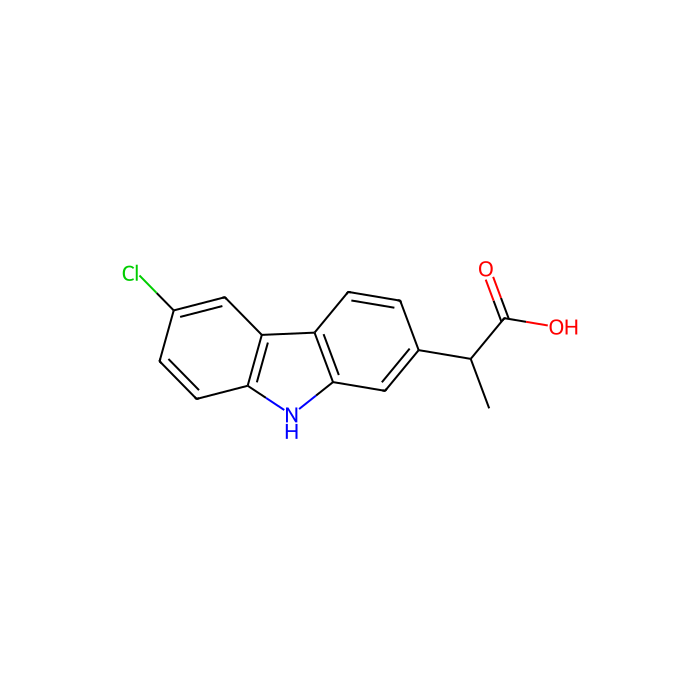
Carprofen - Moligand™, ≥98%(HPLC) , Cyclooxygenase-2 inhibitor, CAS No.53716-49-7, Cyclooxygenase-2 inhibitor

CAS: 53716-49-7 Cat. No.: C153919 Formula: C15H12ClNO2 Molecular Weight: 273.72 EC Number: 258-712-4
AVAILABLE TO ORDER
GRADE & PURITY Moligand™ ? Moligand™ — Aladdin's line of ligands and bioactive small molecules. Use for receptor, pathway, and binding studies needing defined small-molecule tools. ≥98%(HPLC)
Synonyms
(S)-alpha-Methyl-6-chloro-9H-carbazole-2-acetic acid | 9H-Carbazole-2-acetic acid, 6-chloro-.alpha.-methyl- | Rimadyl Chewable Tablets | SPECTRUM1502006 | 6-Chloro-alpha-methyl-9H-carbazole-2-acetic acid | HMS2234P15 | Rimadyl Caplets | 5-22-03-00391 (Bei
Storage
Room temperature
Shipped In
Normal
★
Size
USA
Germany (EU)*
Price
Qty
1g
C153919-1g
9 In stock
—

$21.90

$32.90
Save $11.00 (33.43%)
5g
C153919-5g
5 In stock
—

$57.90

$86.90
Save $29.00 (33.37%)
25g
C153919-25g
5 In stock
—

$187.90

$281.90
Save $94.00 (33.35%)
100g
C153919-100g
2 In stock
—

$623.90

$935.90
Save $312.00 (33.34%)
Enter a quantity for the sizes you want to add.
🧪
Why this grade

Moligand™, ≥98%(HPLC) Moligand™ for sensitive chromatographic and analytical workflows requiring minimal baseline interference.

🌡

Storage & shipping

Room temperature Ships Normal Check lot-specific COA for exact specifications.

📋

Quality documents

SDS, COA, datasheet, and spec sheet available for download. Lot-specific COA accessible via lot number lookup.

📚

Literature proof

Cited in 12 peer-reviewed publications across chromatography, organic synthesis, and cross-coupling reactions.

Overview

Carprofen inhibits canine COX2 with IC50 of 30 nM.

Specifications

Synonyms
(S)-alpha-Methyl-6-chloro-9H-carbazole-2-acetic acid | 9H-Carbazole-2-acetic acid, 6-chloro-.alpha.-methyl- | Rimadyl Chewable Tablets | SPECTRUM1502006 | 6-Chloro-alpha-methyl-9H-carbazole-2-acetic acid | HMS2234P15 | Rimadyl Caplets | 5-22-03-00391 (Bei
Specifications & Purity
Moligand™, ≥98%(HPLC)
Biochemical and Physiological Mechanisms
Carprofen is a non-steroidal anti-inflammatory drug (NSAID) that has been found to have antimicrobial activity. Carprofen is primarily used as a veterinary analgesic and anti-inflammatory for arthritis and pain. Its anti-inflammatory activity is due to cy
Storage
Room temperature
Shipped In
Normal
Grade
Moligand™
Action Type
INHIBITOR
Mechanism of action
Cyclooxygenase-2 inhibitor
Note
Wherever possible, you should prepare and use solutions on the same day. However, if you need to make up stock solutions in advance, we recommend that you store the solution as aliquots in tightly sealed vials at -20°C. Generally, these will be useable for up to one month. Before use, and prior to opening the vial we recommend that you allow your product to equilibrate to room temperature for at least 1 hour. Toxic, refer to SDS for further information. Need more advice on solubility, usage and handling? Please visit our frequently asked questions (FAQ) page for more details.
Purity
≥98%(HPLC)
Names and Identifiers
Pubchem Sid
Pubchem Sid Url
https://pubchem.ncbi.nlm.nih.gov/substance/504750583
Canonical Smiles
CC(C1=CC2=C(C=C1)C3=C(N2)C=CC(=C3)Cl)C(=O)O
IUPAC Name
2-(6-chloro-9H-carbazol-2-yl)propanoic acid
InChIKey
PUXBGTOOZJQSKH-UHFFFAOYSA-N
INCHI
1S/C15H12ClNO2/c1-8(15(18)19)9-2-4-11-12-7-10(16)3-5-13(12)17-14(11)6-9/h2-8,17H,1H3,(H,18,19)
Isomeric SMILES
CC(C1=CC2=C(C=C1)C3=C(N2)C=CC(=C3)Cl)C(=O)O
RTECS
FE3180000
UN Number
UN2811
Packing Group
III
Molecular Weight
273.72
Reaxy-Rn
487098
Reaxys-RN_link_address
https://www.reaxys.com/reaxys/secured/hopinto.do?context=S&query=IDE.XRN=487098&ln=

Documentation

📋 Safety Data Sheet (SDS)

Comprehensive hazard, handling, storage, and regulatory compliance document.

Download SDS →

✅ Certificate of Analysis (COA)

Lot-specific quality data. Enter your lot number to retrieve the exact COA.

Look up COA →

📊 Datasheet

Quick-reference summary of product specifications and applications.

View datasheet →

🔬 Specification Sheet

Full quality attributes and acceptance criteria for this grade.

View spec sheet →

Advanced Data

Taxonomic Classification

Taxonomy Tree

KingdomOrganic compounds
SuperclassOrganoheterocyclic compounds
ClassIndoles and derivatives
SubclassCarbazoles
Intermediate Tree Nodes Not available
Direct ParentCarbazoles
Alternative Parents Indoles  Benzenoids  Aryl chlorides  Pyrroles  Heteroaromatic compounds  Monocarboxylic acids and derivatives  Carboxylic acids  Azacyclic compounds  Organopnictogen compounds  Organonitrogen compounds  Organochlorides  Organic oxides  Hydrocarbon derivatives  Carbonyl compounds  
Molecular FrameworkAromatic heteropolycyclic compounds
Substituents Carbazole - Indole - Aryl chloride - Aryl halide - Benzenoid - Pyrrole - Heteroaromatic compound - Carboxylic acid derivative - Carboxylic acid - Monocarboxylic acid or derivatives - Azacycle - Organochloride - Organohalogen compound - Organic oxygen compound - Organic oxide - Organic nitrogen compound - Carbonyl group - Organonitrogen compound - Organooxygen compound - Hydrocarbon derivative - Organopnictogen compound - Aromatic heteropolycyclic compound
DescriptionThis compound belongs to the class of organic compounds known as carbazoles. These are compounds containing a three ring system containing a pyrrole ring fused on either side to a benzene ring.
External Descriptors organochlorine compound - carbazoles
3D Structure
Interactive Chemical Structure Model


Associated Targets(Human)
PTGS2 Tclin Prostaglandin G/H synthase 2 (4 Activities)
Activity TypeActivity Value -log(M)Mechanism of ActionActivity ReferencePublications (PubMed IDs)
C5 Tclin Complement C5 (1 Activities)
Activity TypeActivity Value -log(M)Mechanism of ActionActivity ReferencePublications (PubMed IDs)
ESR1 Tclin Estrogen receptor alpha (17718 Activities)
Activity TypeRelationActivity valueUnitsAction TypeJournalPubMed IddoiAssay Aladdin ID
NR3C1 Tclin Glucocorticoid receptor (14987 Activities)
Activity TypeRelationActivity valueUnitsAction TypeJournalPubMed IddoiAssay Aladdin ID
PGR Tclin Progesterone receptor (8562 Activities)
Activity TypeRelationActivity valueUnitsAction TypeJournalPubMed IddoiAssay Aladdin ID
ADRB2 Tclin Beta-2 adrenergic receptor (11824 Activities)
Activity TypeRelationActivity valueUnitsAction TypeJournalPubMed IddoiAssay Aladdin ID
CHRM2 Tclin Muscarinic acetylcholine receptor M2 (10671 Activities)
Activity TypeRelationActivity valueUnitsAction TypeJournalPubMed IddoiAssay Aladdin ID
ADRB1 Tclin Beta-1 adrenergic receptor (6630 Activities)
Activity TypeRelationActivity valueUnitsAction TypeJournalPubMed IddoiAssay Aladdin ID
HTR1A Tclin Serotonin 1a (5-HT1a) receptor (14969 Activities)
Activity TypeRelationActivity valueUnitsAction TypeJournalPubMed IddoiAssay Aladdin ID
ADRA2A Tclin Alpha-2a adrenergic receptor (9450 Activities)
Activity TypeRelationActivity valueUnitsAction TypeJournalPubMed IddoiAssay Aladdin ID
AR Tclin Androgen Receptor (11781 Activities)
Activity TypeRelationActivity valueUnitsAction TypeJournalPubMed IddoiAssay Aladdin ID
RARA Tclin Retinoic acid receptor alpha (1324 Activities)
Activity TypeRelationActivity valueUnitsAction TypeJournalPubMed IddoiAssay Aladdin ID
CHRM1 Tclin Muscarinic acetylcholine receptor M1 (12690 Activities)
Activity TypeRelationActivity valueUnitsAction TypeJournalPubMed IddoiAssay Aladdin ID
VDR Tclin Vitamin D receptor (26531 Activities)
Activity TypeRelationActivity valueUnitsAction TypeJournalPubMed IddoiAssay Aladdin ID
DRD2 Tclin Dopamine D2 receptor (23596 Activities)
Activity TypeRelationActivity valueUnitsAction TypeJournalPubMed IddoiAssay Aladdin ID
GABRA1 Tclin GABA receptor alpha-1 subunit (399 Activities)
Activity TypeRelationActivity valueUnitsAction TypeJournalPubMed IddoiAssay Aladdin ID
MAOA Tclin Monoamine oxidase A (11911 Activities)
Activity TypeRelationActivity valueUnitsAction TypeJournalPubMed IddoiAssay Aladdin ID
CNR1 Tclin Cannabinoid CB1 receptor (20913 Activities)
Activity TypeRelationActivity valueUnitsAction TypeJournalPubMed IddoiAssay Aladdin ID
DRD1 Tclin Dopamine D1 receptor (9720 Activities)
Activity TypeRelationActivity valueUnitsAction TypeJournalPubMed IddoiAssay Aladdin ID
PTGS1 Tclin Cyclooxygenase-1 (9233 Activities)
Activity TypeRelationActivity valueUnitsAction TypeJournalPubMed IddoiAssay Aladdin ID
SLC6A2 Tclin Norepinephrine transporter (10102 Activities)
Activity TypeRelationActivity valueUnitsAction TypeJournalPubMed IddoiAssay Aladdin ID
HRH2 Tclin Histamine H2 receptor (5428 Activities)
Activity TypeRelationActivity valueUnitsAction TypeJournalPubMed IddoiAssay Aladdin ID
HTR2A Tclin Serotonin 2a (5-HT2a) receptor (14758 Activities)
Activity TypeRelationActivity valueUnitsAction TypeJournalPubMed IddoiAssay Aladdin ID
HTR2C Tclin Serotonin 2c (5-HT2c) receptor (11471 Activities)
Activity TypeRelationActivity valueUnitsAction TypeJournalPubMed IddoiAssay Aladdin ID
AVPR2 Tclin Vasopressin V2 receptor (2912 Activities)
Activity TypeRelationActivity valueUnitsAction TypeJournalPubMed IddoiAssay Aladdin ID
ADORA1 Tclin Adenosine A1 receptor (17603 Activities)
Activity TypeRelationActivity valueUnitsAction TypeJournalPubMed IddoiAssay Aladdin ID
AGTR1 Tclin Type-1 angiotensin II receptor (5176 Activities)
Activity TypeRelationActivity valueUnitsAction TypeJournalPubMed IddoiAssay Aladdin ID
SLC6A4 Tclin Serotonin transporter (12625 Activities)
Activity TypeRelationActivity valueUnitsAction TypeJournalPubMed IddoiAssay Aladdin ID
ADRA1A Tclin Alpha-1a adrenergic receptor (8359 Activities)
Activity TypeRelationActivity valueUnitsAction TypeJournalPubMed IddoiAssay Aladdin ID
PTGS2 Tclin Cyclooxygenase-2 (13999 Activities)
Activity TypeRelationActivity valueUnitsAction TypeJournalPubMed IddoiAssay Aladdin ID
HRH1 Tclin Histamine H1 receptor (7573 Activities)
Activity TypeRelationActivity valueUnitsAction TypeJournalPubMed IddoiAssay Aladdin ID
OPRM1 Tclin Mu opioid receptor (19785 Activities)
Activity TypeRelationActivity valueUnitsAction TypeJournalPubMed IddoiAssay Aladdin ID
DRD3 Tclin Dopamine D3 receptor (14368 Activities)
Activity TypeRelationActivity valueUnitsAction TypeJournalPubMed IddoiAssay Aladdin ID
AVPR1A Tclin Vasopressin V1a receptor (5412 Activities)
Activity TypeRelationActivity valueUnitsAction TypeJournalPubMed IddoiAssay Aladdin ID
OPRD1 Tclin Delta opioid receptor (15096 Activities)
Activity TypeRelationActivity valueUnitsAction TypeJournalPubMed IddoiAssay Aladdin ID
OPRK1 Tclin Kappa opioid receptor (16155 Activities)
Activity TypeRelationActivity valueUnitsAction TypeJournalPubMed IddoiAssay Aladdin ID
HTR3A Tclin Serotonin 3a (5-HT3a) receptor (3366 Activities)
Activity TypeRelationActivity valueUnitsAction TypeJournalPubMed IddoiAssay Aladdin ID
SLC6A3 Tclin Dopamine transporter (10535 Activities)
Activity TypeRelationActivity valueUnitsAction TypeJournalPubMed IddoiAssay Aladdin ID
GRIN1 Tclin Glutamate (NMDA) receptor subunit zeta 1 (122 Activities)
Activity TypeRelationActivity valueUnitsAction TypeJournalPubMed IddoiAssay Aladdin ID
PPARA Tclin Peroxisome proliferator-activated receptor alpha (9197 Activities)
Activity TypeRelationActivity valueUnitsAction TypeJournalPubMed IddoiAssay Aladdin ID
KCNH2 Tclin HERG (29587 Activities)
Activity TypeRelationActivity valueUnitsAction TypeJournalPubMed IddoiAssay Aladdin ID
CACNA1C Tclin Voltage-gated L-type calcium channel alpha-1C subunit (766 Activities)
Activity TypeRelationActivity valueUnitsAction TypeJournalPubMed IddoiAssay Aladdin ID
PDE3A Tclin Phosphodiesterase 3A (3309 Activities)
Activity TypeRelationActivity valueUnitsAction TypeJournalPubMed IddoiAssay Aladdin ID
SLC29A1 Tclin Equilibrative nucleoside transporter 1 (1711 Activities)
Activity TypeRelationActivity valueUnitsAction TypeJournalPubMed IddoiAssay Aladdin ID
ADRA2B Tclin Alpha-2b adrenergic receptor (4412 Activities)
Activity TypeRelationActivity valueUnitsAction TypeJournalPubMed IddoiAssay Aladdin ID
ADRA2C Tclin Alpha-2c adrenergic receptor (4876 Activities)
Activity TypeRelationActivity valueUnitsAction TypeJournalPubMed IddoiAssay Aladdin ID
CHRM3 Tclin Muscarinic acetylcholine receptor M3 (7750 Activities)
Activity TypeRelationActivity valueUnitsAction TypeJournalPubMed IddoiAssay Aladdin ID
HTR2B Tclin Serotonin 2b (5-HT2b) receptor (10323 Activities)
Activity TypeRelationActivity valueUnitsAction TypeJournalPubMed IddoiAssay Aladdin ID
RARG Tclin Retinoic acid receptor gamma (1154 Activities)
Activity TypeRelationActivity valueUnitsAction TypeJournalPubMed IddoiAssay Aladdin ID
TBXA2R Tclin Thromboxane A2 receptor (5717 Activities)
Activity TypeRelationActivity valueUnitsAction TypeJournalPubMed IddoiAssay Aladdin ID
EDNRA Tclin Endothelin receptor ET-A (5008 Activities)
Activity TypeRelationActivity valueUnitsAction TypeJournalPubMed IddoiAssay Aladdin ID
ADORA2A Tclin Adenosine A2a receptor (16305 Activities)
Activity TypeRelationActivity valueUnitsAction TypeJournalPubMed IddoiAssay Aladdin ID
Associated Targets(non-human)
ampC Beta-lactamase AmpC (62480 Activities)
Activity TypeRelationActivity valueUnitsAction TypeJournalPubMed IddoiAssay Aladdin ID
Mc4r Melanocortin receptor 4 (1205 Activities)
Activity TypeRelationActivity valueUnitsAction TypeJournalPubMed IddoiAssay Aladdin ID
Npy1r Neuropeptide Y receptor type 1 (8 Activities)
Activity TypeRelationActivity valueUnitsAction TypeJournalPubMed IddoiAssay Aladdin ID
Cckar Cholecystokinin A receptor (90 Activities)
Activity TypeRelationActivity valueUnitsAction TypeJournalPubMed IddoiAssay Aladdin ID
Pde4d Phosphodiesterase 4D (4 Activities)
Activity TypeRelationActivity valueUnitsAction TypeJournalPubMed IddoiAssay Aladdin ID
Hdac6 Histone deacetylase 6 (222 Activities)
Activity TypeRelationActivity valueUnitsAction TypeJournalPubMed IddoiAssay Aladdin ID
Faah Anandamide amidohydrolase (3907 Activities)
Activity TypeRelationActivity valueUnitsAction TypeJournalPubMed IddoiAssay Aladdin ID
Staphylococcus aureus (210822 Activities)
Activity TypeRelationActivity valueUnitsAction TypeJournalPubMed IddoiAssay Aladdin ID
Plasmodium falciparum (966862 Activities)
Activity TypeRelationActivity valueUnitsAction TypeJournalPubMed IddoiAssay Aladdin ID
GCN5 Histone acetyltransferase GCN5 (89 Activities)
Activity TypeRelationActivity valueUnitsAction TypeJournalPubMed IddoiAssay Aladdin ID
Luciferin 4-monooxygenase (66902 Activities)
Activity TypeRelationActivity valueUnitsAction TypeJournalPubMed IddoiAssay Aladdin ID
Slc22a6 Solute carrier family 22 member 6 (141 Activities)
Activity TypeRelationActivity valueUnitsAction TypeJournalPubMed IddoiAssay Aladdin ID
Mapt Microtubule-associated protein tau (6 Activities)
Activity TypeRelationActivity valueUnitsAction TypeJournalPubMed IddoiAssay Aladdin ID
NS1 Nonstructural protein 1 (33327 Activities)
Activity TypeRelationActivity valueUnitsAction TypeJournalPubMed IddoiAssay Aladdin ID
Ptgs1 Prostaglandin G/H synthase (cyclooxygenase) (169 Activities)
Activity TypeRelationActivity valueUnitsAction TypeJournalPubMed IddoiAssay Aladdin ID
Mechanisms of Action
Certificates(CoA,COO,BSE/TSE and Analysis Chart)
C of A & Other Certificates(BSE/TSE, COO):
Analytical Chart:

Find and download the COA for your product by matching the lot number on the packaging.

11 results found

Lot NumberCertificate TypeDateItem
C1925141Certificate of AnalysisOct 09, 2026 C153919
H2628624Certificate of AnalysisAug 29, 2026 C153919
J2228291Certificate of AnalysisAug 04, 2026 C153919
J2228376Certificate of AnalysisAug 04, 2026 C153919
J2228377Certificate of AnalysisAug 04, 2026 C153919
J2524027Certificate of AnalysisNov 04, 2025 C153919
F2105041Certificate of AnalysisMar 04, 2025 C153919
A2507211Certificate of AnalysisAug 05, 2022 C153919
F2309086Certificate of AnalysisAug 05, 2022 C153919
F2309087Certificate of AnalysisAug 05, 2022 C153919
J2228374Certificate of AnalysisAug 05, 2022 C153919
Chemical and Physical Properties
SolubilitySoluble in Methanol
Melt Point(°C)200 °C
Molecular Weight273.710 g/mol
XLogP34.000
Hydrogen Bond Donor Count2
Hydrogen Bond Acceptor Count2
Rotatable Bond Count2
Exact Mass273.056 Da
Monoisotopic Mass273.056 Da
Topological Polar Surface Area53.100 Ų
Heavy Atom Count19
Formal Charge0
Complexity362.000
Isotope Atom Count0
Defined Atom Stereocenter Count0
Undefined Atom Stereocenter Count1
Defined Bond Stereocenter Count0
Undefined Bond Stereocenter Count0
The total count of all stereochemical bonds0
Covalently-Bonded Unit Count1
Citations of This Product
Solution Calculators
Reviews

Customer Reviews

Application Protocols

Tested application types, recommended dilutions, and validated procedural steps are not specified for this item. Refer to the CoA/Spec Sheet and SDS for any item-specific instructions.

General reminders (non-specific):

  • Verify solubility in the intended medium before scaling an assay.
  • Filter stock solutions (0.2 µm PTFE) to remove particulates prior to sensitive biophysical or cellular assays.
  • Maintain low final cosolvent content (e.g., ≤1% DMSO v/v) unless otherwise validated for your assay.

If you require application-specific guidance, please contact Technical Support with details of your use case.

Biological Roles

General biochemical context (literature; not a statement of use for this specific product):

  • Mechanistic class: Aromatic propionic acid known to inhibit cyclooxygenase (COX) isoenzymes in enzymology studies; used as a tool compound for probing eicosanoid biosynthesis pathways in vitro.
  • Molecular interactions: The carboxylate can form ionic/H-bond interactions with active-site residues; the lipophilic carbazole engages hydrophobic pockets. Stereochemistry can influence affinity and selectivity in binding assays.
  • ADME-relevant traits (in vitro): High lipophilicity (logP ~4) and acidic pKa (~4.4) suggest strong plasma protein binding and limited aqueous solubility—parameters relevant when designing biochemical or microsomal experiments (these are general properties and require empirical confirmation per system).
  • Cellular studies: Often delivered in DMSO stocks with final cosolvent kept low (≤0.1–0.5%) to mitigate off-target solvent effects; precipitation should be monitored upon dilution into aqueous media.

Important notes:

  • This product is designated “For research use only.” No medical, diagnostic, veterinary, or in vivo claims are made or implied for this item.
  • Item-specific bioactivity data (IC50/Ki, selectivity, enantiospecific effects) are not specified for this item; consult primary literature for target- and assay-specific parameters.
Buffer Applications

Carprofen is not a buffering reagent. However, buffer considerations are important for its use in biochemical assays due to its poor water solubility.

  • Practical guidance (general):

    • Stock preparation: Dissolve in DMSO (e.g., 10–100 mM), then dilute into assay buffers (PBS, HEPES, Tris) maintaining final DMSO at minimal levels (typically ≤1% v/v).
    • pH effects: Solubility improves above pH ~7–8 as the carboxylate forms; limited solubility at acidic pH can cause precipitation. Where compatible, pre-neutralize a portion of stock with base to generate the sodium salt.
    • Surfactants: Low concentrations of nonionic surfactants (e.g., 0.01–0.05% Tween 20) or serum proteins can help maintain colloidal stability; verify they do not interfere with the assay.
  • Not typically applicable:

    • Buffer capacity specifications, pKa spacing for buffer design, and electrophoresis running buffers are not relevant to this compound per se.

Item-specific buffer recipes or validated conditions: Not specified for this item; refer to CoA/Spec Sheet.

Green Alternatives

While Carprofen itself is the target compound rather than a solvent or reagent, greener choices can be made in its handling, dissolution, and derivatization workflows.

  • Dissolution and assay preparation (general):

    • Prefer water-based buffers with minimal DMSO by forming the sodium salt in situ (titrate with dilute NaOH) when assay design permits.
    • If an organic co-solvent is required, ethanol can substitute a portion of DMSO for improved biodegradability and lower worker exposure concerns.
  • Synthetic transformations (general):

    • For esterification/amide formation, replace chlorinated activations (SOCl2) with carbodiimide couplings (e.g., EDC•HCl in water-miscible media) or enzymatic esterification where applicable.
    • For cross-couplings, use aqueous micellar catalysis (TPGS-750-M, Savie) to reduce organic solvent volumes.

Comparison of solvent choices (illustrative; not product specifications):

  • DMSO vs Ethanol/Buffer

    • Solubilization: DMSO (excellent) | Ethanol/Buffer (moderate; improves with salt formation)
    • Biodegradability: DMSO (moderate) | Ethanol (good)
    • Assay interference: DMSO can affect some targets at >1–2% | Ethanol often tolerable at low % but verify
  • Waste and lifecycle considerations:

    • Minimize chlorinated solvent use (e.g., DCM) for workups; employ ethyl acetate or 2-MeTHF as greener extraction solvents when compatible.

Item-specific environmental metrics (e.g., LCA, solvent residuals): Not specified for this item; refer to CoA/Spec Sheet.

Pharmaceutical Uses

This section addresses formulation and manufacturing context without therapeutic claims.

  • Reference material and QC (general):

    • Analytical reference standard: Employed in method development and validation (HPLC/LC–MS) for identification, quantitation, and system suitability of aromatic carboxylic acids.
    • Impurity profiling: Useful comparator for structurally related carbazole/aryl propionic acids in raw material and finished product testing.
  • Formulation considerations (general):

    • Solid-state handling: High melting aromatic acid; suitable for solid dosage R&D studies such as salt/ester screening, polymorph exploration, and chiral resolution methods development.
    • Solubilization strategies: Salt formation (e.g., sodium), co-solvents, solid dispersions, or cyclodextrin inclusion complexes explored in preformulation research contexts.
  • Regulatory notes:

    • Pharmacopeial monographs, if any, and specification details are jurisdiction- and supplier-specific. These are not provided for this item.

Item-specific pharmacopeial status, residual solvent compliance, and excipient compatibility: Not specified for this item; refer to CoA/Spec Sheet.

Research Use Note: For research use only. No clinical or diagnostic applications are supported for this catalog item.

Physical Properties

Item-specific physico-chemical specifications (e.g., exact melting range, water content, residual solvents) are not provided for this catalog entry. Consult the CoA/Spec Sheet for definitive values.

Literature/general reference values (for context; not product specifications):

  • Physical state: Solid; typically off-white to light tan crystalline powder (literature observation).
  • Melting point: ~194–197 °C (literature).
  • pKa (carboxylic acid): ~4.3–4.5 (literature; aqueous, 25 °C).
  • LogP (octanol/water): ~4.0–4.3 (literature), indicating pronounced lipophilicity.
  • Aqueous solubility: Very low at neutral pH; increases markedly in basic media (carboxylate form). Freely soluble in polar aprotic organics (e.g., DMSO, DMF) and moderately soluble in alcohols (literature).
  • UV–Vis: Strong aromatic absorption in the UV region due to the carbazole chromophore (literature; exact cutoff not specified for this item).
  • Vapor pressure/boiling point: Not typically applicable for this nonvolatile solid.

Practical notes (general):

  • For spectroscopic work, DMSO-d6 or CDCl3 are common NMR solvents; carboxylic acid proton may show broad downfield resonance.
  • Poor water solubility necessitates co-solvents or salt formation for aqueous preparations.

Item-specific values not specified for this item; refer to CoA/Spec Sheet.

Quality & Grades
  • Grade supplied: Moligand™ (item-specific). This designation is used by Aladdin Scientific to indicate material positioned for use as a molecular ligand, tool compound, or reference standard in discovery workflows (e.g., biophysical binding assays, screening, and chemical biology). It emphasizes identity, consistency, and suitability as a small-molecule probe rather than chromatographic solvent performance.

  • What Moligand™ typically implies (general):

    • Identity assurance: Verified against an authentic reference by orthogonal methods (e.g., NMR/HRMS/Chromatography), supporting reliable use in binding or mechanistic studies.
    • Consistency: Batch-to-batch reproducibility suitable for screening/assay contexts.
    • Impurity profile: Managed to avoid confounding biological readouts; however, exact impurity limits and any stabilizers are item-specific.
  • Item-specific analytical specifications (if any):

    • Purity level, stabilizers, residual solvents, water/peroxide/metal limits: Not specified for this item; refer to CoA/Spec Sheet.
  • Practical implications for users:

    • For quantitative work (e.g., calorimetry, kinetics), confirm assay suitability (UV background, residual solvent) with the CoA.
    • If enantiopurity is critical, verify whether the material is racemic or enriched; Moligand™ materials are generally racemic unless noted.
Reaction & Applications

As a well-characterized carbazole-derived propionic acid, carprofen serves primarily as a small-molecule tool compound and reference standard in discovery and analytical workflows. It also functions as a versatile synthetic substrate due to its carboxylic acid, aryl chloride, and carbazole motifs.

  • Research applications (general, non-clinical):

    • Biochemical probe: Widely used in enzyme inhibition studies (e.g., COX isoenzymes) for mechanism and SAR exploration; suitable for binding assays (ITC, SPR, DSF) after appropriate solubilization.
    • Analytical reference: Employed as a system suitability and retention marker in HPLC/LC–MS methods for aromatic acids; also used as a calibration/reference in impurity profiling of related scaffolds.
  • Synthetic applications (general):

    • Derivatization of the carboxyl group: Esterification (acid-catalyzed or via DCC/EDC), amidation (EDC/HOBt, HATU, CDI), and acid chloride formation (SOCl2, oxalyl chloride) enabling library synthesis of esters/amides.
    • Aryl chloride functionalization: Cross-coupling (Suzuki, Buchwald–Hartwig after halide activation or via C–N coupling from suitably activated positions); note carbazole nitrogen is part of the aromatic system and generally non-nucleophilic without prior modification.
    • Chirality: The α-carbon is stereogenic; enantiomer separation (chiral HPLC, salt resolution) enables enantiospecific studies.
  • Practical tips:

    • Ensure anhydrous conditions for coupling reagents; the acid can self-associate—activate as the acid chloride or mixed anhydride to enhance reactivity with hindered amines.
    • For biophysics, filter 0.2 µm and verify concentration by UV using an experimentally determined ε in the chosen solvent.
Reaction Conditions

General literature guidance for common derivatizations of Carprofen (not product specifications; optimize per substrate and scale):

  • Amide couplings:

    • Typical conditions: Carprofen (1.0 eq), amine (1.1–1.5 eq), EDC•HCl (1.2–1.5 eq) with HOBt or HOAt (0.1–0.2 eq) and DIPEA (2–3 eq) in DMF or DCM, 0–25 °C, 2–16 h. Workup by aqueous quench and extraction; yields often 60–90% (literature ranges).
    • Alternative: HATU (1.1 eq) with DIPEA in DMF/NMP for hindered amines; shorter reaction times (1–4 h) at RT.
  • Esterification:

    • Fischer: Alcohol solvent, catalytic H2SO4 or p-TsOH, reflux (2–8 h); remove water to drive equilibrium.
    • CDI-mediated: CDI (1.1–1.5 eq) in THF or DMF at 0–25 °C, then add alcohol; milder and anhydrous.
  • Acid chloride formation:

    • SOCl2: 3–5 eq, catalytic DMF, 0–reflux (1–3 h); solvent removal gives acyl chloride used in situ with an alcohol/amine base (e.g., pyridine, triethylamine) at 0–25 °C.
  • Cross-coupling at aryl chloride (where feasible with this scaffold):

    • Suzuki–Miyaura: Pd(dppf)Cl2 (2–5 mol%), base (K2CO3, Cs2CO3), dioxane/H2O or toluene/H2O, 60–100 °C, 6–24 h; aryl/heteroaryl boronic acids as partners.
  • Practical notes:

    • Protect the acid as an ester if competing acid-base interactions inhibit coupling steps.
    • Monitor by LC–MS; the carbazole chromophore affords strong UV response (254 nm) for HPLC.

Item-specific optimal conditions or yields: Not specified for this item; refer to CoA/Spec Sheet.

Safety & Handling

Item-specific GHS classification and hazard statements are not provided for this listing. Always consult the product SDS for authoritative safety information.

General safety guidance (non-specific, good laboratory practice):

  • Primary hazards (general for aromatic carboxylic acids): May cause skin/eye irritation; dust may cause respiratory irritation. Avoid inhalation of particulates.
  • PPE: Lab coat, safety glasses or goggles, appropriate chemical-resistant gloves (e.g., nitrile). Use a dust mask or respirator if airborne particles may form and local rules require it.
  • Handling: Avoid creating dust; handle in a fume hood when weighing or transferring. Prevent contamination with strong bases/acids if not intended, as salt formation can alter handling.
  • Incompatibilities (general): Strong oxidizing agents; strong bases/acids may effect neutralization/ionization. Avoid prolonged exposure to strong light or elevated temperature to minimize potential discoloration.
  • First aid (overview):
    • Skin/eye contact: Rinse with plenty of water for several minutes; remove contact lenses if easy to do; seek medical attention if irritation persists.
    • Inhalation: Move to fresh air; seek medical attention if symptoms occur.
    • Ingestion: Rinse mouth; do not induce vomiting; seek medical advice.
  • Spill response: Avoid dust generation, collect mechanically, and dispose in accordance with institutional and regulatory requirements.

Research Use Note: For research use only.

Solvent Selection

Carprofen is a lipophilic aromatic carboxylic acid with very low water solubility at neutral pH and good solubility in polar aprotic organics.

  • Polarity and miscibility (literature/general):

    • Preferred stock solvents: DMSO, DMF, NMP (high solubility; good for assay stocks).
    • Alternative organics: Ethanol, methanol, isopropanol (moderate solubility); acetone, acetonitrile (variable).
    • Aqueous systems: Poor solubility at pH ≤5; substantially improved as the carboxylate above pH ~7–8 (using buffers or base neutralization).
  • Practical guidance:

    • Prepare concentrated DMSO stocks (e.g., 10–100 mM) and dilute into assay buffer to ≤1% DMSO v/v to minimize cosolvent effects.
    • For water-based work without DMSO, form soluble salts (e.g., sodium carprofen) by neutralizing with equimolar NaOH; filter-sterilize if required by application.
    • Avoid nonpolar solvents (hexanes, toluene) for dissolution at room temperature; solubility is limited despite high logP due to the acid functionality and rigid aromatic core.
  • Selection versus alternatives:

    • Choose DMSO for maximum solubilization and long-term stock stability.
    • Choose alcohol/water with mild base for rapid aqueous dosing when DMSO must be minimized.
    • For LC workflows, acetonitrile/water (with 0.1% formic acid or ammonium formate, method-dependent) provides good peak shape; verify with your analytical method.

Item-specific solvent compatibility or UV cutoff: Not specified for this item; refer to CoA/Spec Sheet.

Storage & Reconstitution
  • Item-specific storage and shipping:

    • Storage Conditions: Room temperature (as provided in Product Data).
    • Shipped In: Normal (as provided in Product Data).
  • General storage guidance (good practice):

    • Keep container tightly closed in a dry environment; protect from prolonged light exposure to preserve appearance.
    • For long-term storage of prepared solutions, aliquot to minimize freeze–thaw; store DMSO stocks at 2–8 °C or −20 °C as appropriate to your assay (avoid repeated thawing).
  • Reconstitution (general suggestions):

    • Dissolve the solid in anhydrous DMSO to prepare a concentrated stock (e.g., 10–100 mM), vortex and sonicate if necessary.
    • For aqueous use, dilute the DMSO stock into buffer while mixing; monitor for precipitation. Alternatively, neutralize with equimolar base to form a soluble salt before dilution.
  • Stability notes:

    • Solid aromatic carboxylic acids are typically stable at ambient conditions; nonetheless, verify integrity periodically by HPLC/LC–MS.

Item-specific stability data (shelf life, solution stability, degradation pathways) and reconstitution concentrations: Not specified for this item; refer to CoA/Spec Sheet.

Structure & Identity

Carprofen is a chloro-substituted carbazole-derived propionic acid, commonly encountered as a racemic mixture.

  • Item-specific identifiers (from Product Data)

    • SKU: C153919
    • CAS: 53716-49-7
    • CID (PubChem): 2581
    • InChIKey (as provided): 287646
    • Grade: Moligand™
  • Literature structural identifiers (for reference; not product specifications)

    • Molecular formula (literature): C15H12ClNO2
    • Molecular weight (literature): ~273.72 g/mol
    • Preferred IUPAC name (literature): 2-(6-chloro-9H-carbazol-2-yl)propanoic acid
    • SMILES (literature): CC(C(=O)O)C1=CC2=CC(Cl)=CC=C2N3C1=CC=C3
    • InChIKey (literature): RRCXGBULXODZCX-UHFFFAOYSA-N
  • Structural features (general chemistry description)

    • Core scaffold: Carbazole (tricyclic indole–benzene fusion) bearing a 6-chloro substituent.
    • Side chain: A propionic acid at the 2-position of the carbazole core, introducing a single stereogenic center (typically supplied as racemate unless otherwise stated).
    • Functional groups: Carboxylic acid (Brønsted acid, H-bond donor/acceptor), tertiary aryl amine within carbazole (non-basic), aryl chloride (inert under many conditions but participates in cross-coupling under activation).
    • 2D description: A fused tricyclic aromatic system (carbazole) with chlorine on one outer ring; the opposite outer ring carries an isopropanoic acid side chain whose α-carbon is chiral. The nitrogen is embedded in the central five-membered ring of the carbazole.
Synthetic Utility

Carprofen’s functionality enables diverse derivatizations for SAR libraries and materials-like conjugates.

  • Transformations of the carboxylic acid:

    • Amide synthesis: EDC/HOBt, HATU, or CDI-mediated couplings to primary/secondary amines; generate libraries of amide analogs to probe binding interactions.
    • Esterification: Fischer esterification (acid/alcohol, Dean–Stark) or carbodiimide-based methods at ambient temperatures for base- or acid-sensitive partners.
    • Acid chloride/anhydride routes: SOCl2 or (COCl)2 to access acyl derivatives, then react with nucleophiles (alcohols, amines, thiols).
  • Aryl chloride diversification:

    • Cross-coupling: Suzuki–Miyaura (to introduce aryl/heteroaryl groups) after appropriate activation/protection strategies; Stille/Negishi as alternatives. Carboxyl-directed C–H activation strategies can also be envisioned on the carbazole framework.
  • Nitrogen chemistry:

    • The carbazole N–H is part of an aromatic system and typically weakly acidic; N-alkylation or N-acylation (after deprotonation) can modulate electronics and solubility.
  • Stereochemical considerations:

    • The α-stereocenter invites enantioenriched analog access via chiral resolution (diastereomeric salts, chiral HPLC) or asymmetric synthesis from chiral auxiliaries, enabling enantioselective binding studies.
  • Retrosynthetic value:

    • Carprofen can serve as a node for constructing carbazole–propionic acid hybrids; conversely, it can be disconnected to a 2-substituted carbazole and a propionate synthon for modular assembly.
Target Specificity

Item-specific biological target data (e.g., named targets, binding constants, selectivity across isoforms) are not provided for this catalog entry.

General note (literature; not product specification): Carprofen is frequently used as a reference inhibitor in cyclooxygenase enzymology. However, quantitative specificity parameters are assay- and enantiomer-dependent and should be sourced from primary literature for the exact system under study.

For authoritative information on any validated targets associated with this specific lot or grade, please consult the CoA/Spec Sheet or contact Technical Support.

Frequently Asked Questions

How should this product be stored?
Store at room temperature.

Shall we send you a message when we have discounts available?

Remind me later

Thank you! Please check your email inbox to confirm.

Oops! Notifications are disabled.