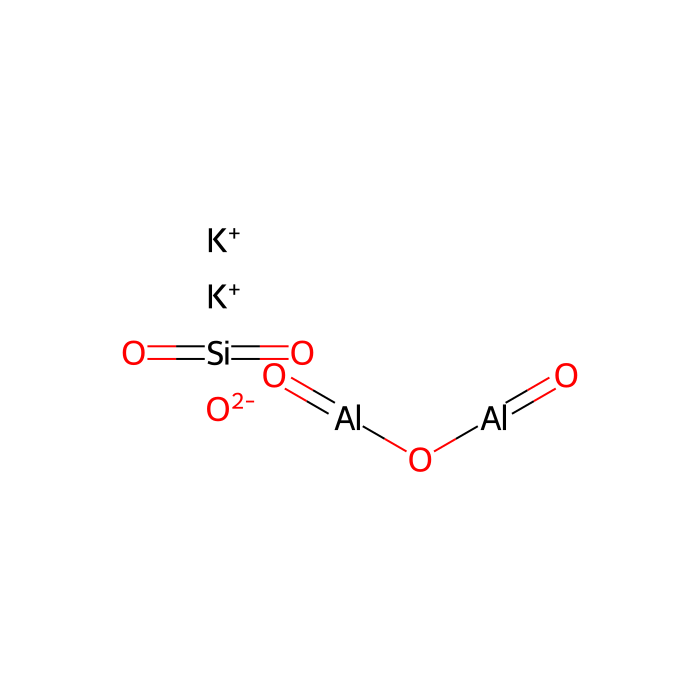
Dehydrated mica - 20 mesh , CAS No.12001-26-2

CAS: 12001-26-2 Cat. No.: D590951 Formula: K2O.3Al2O3.6SiO2∙2H2O Molecular Weight: 796.65(760.62anhy) EC Number: 601-648-2
AVAILABLE TO ORDER
GRADE & PURITY 20 mesh
Synonyms
Cogemika|Muscovite, fluorian|dipotassium;dioxosilane;oxo(oxoalumanyloxy)alumane;oxygen(2-)|Astrolite|Clarite 30C|Astrolit|Muscovite (Al2K(Si3Al)((OH)0.5-1F0-0.5)2O10)|Chacaltaite|Fluorian muscovite|Serikuron|Muscovite|Clarite 60C
Storage
Room temperature,Desiccated
Shipped In
Normal
★
Size
USA
Germany (EU)*
Price
Qty
100g
D590951-100g
1 In stock
—

$19.90

$24.90
Save $5.00 (20.08%)
500g
D590951-500g
2 In stock
1 In stock

$31.90

$60.90
Save $29.00 (47.62%)
Enter a quantity for the sizes you want to add.

Specifications

Synonyms
Cogemika | Muscovite, fluorian | dipotassium;dioxosilane;oxo(oxoalumanyloxy)alumane;oxygen(2-) | Astrolite | Clarite 30C | Astrolit | Muscovite (Al2K(Si3Al)((OH)0.5-1F0-0.5)2O10) | Chacaltaite | Fluorian muscovite | Serikuron | Muscovite | Clarite 60C
Specifications & Purity
20 mesh
Storage
Room temperature,Desiccated
Shipped In
Normal
Names and Identifiers
Pubchem Sid
SMILES
[O-2].O=[Al]O[Al]=O.O=[Si]=O.[K+].[K+]
IUPAC Name
dipotassium;dioxosilane;oxo(oxoalumanyloxy)alumane;oxygen(2-)
InChIKey
YGANSGVIUGARFR-UHFFFAOYSA-N
InChI
1S/2Al.2K.O2Si.4O/c;;;;1-3-2;;;;/q;;2*+1;;;;;-2
Isomeric SMILES
[O-2].O=[Al]O[Al]=O.O=[Si]=O.[K+].[K+]
Molecular Weight
796.65(760.62anhy)

Advanced Data

Taxonomic Classification

Taxonomy Tree

KingdomInorganic compounds
SuperclassMixed metal/non-metal compounds
ClassAlkali metal oxoanionic compounds
SubclassAlkali metal aluminates
Intermediate Tree Nodes Not available
Direct ParentAlkali metal aluminates
Alternative Parents Miscellaneous aluminates  Metalloid salts  Inorganic salts  Inorganic oxides  
Molecular FrameworkNot available
Substituents Aluminate - Alkali metal aluminate - Inorganic oxide - Inorganic salt - Inorganic metalloid salt
DescriptionThis compound belongs to the class of inorganic compounds known as alkali metal aluminates. These are inorganic compounds in which the largest oxoanion is aluminate, and in which the heaviest atom not in an oxoanion is an alkali metal.
External Descriptors Not available
3D Structure
Interactive Chemical Structure Model


Certificates (CoA,COO,BSE/TSE and Analysis Chart)
C of A & Other Certificates(BSE/TSE, COO):
Analytical Chart:

Find and download the COA for your product by matching the lot number on the packaging.

3 results found

Lot NumberCertificate TypeDateItem
F23151048F23151048Certificate of AnalysisJun 26, 2023 D590951
F23151049F23151049Certificate of AnalysisJun 26, 2023 D590951
F23151058F23151058Certificate of AnalysisJun 26, 2023 D590951
Chemical and Physical Properties
SolubilityInsoluble in water
Documents & Articles
Mica Materials: Selection and Applications—Structural Features, Composition, and Industrial Uses
Mercapto Silane Coupling Agents: Structural Features, Classification, Applications, and Selection
TCA-KTTS, a Titanate Coupling Agent Suitable for Use in Cosmetics: Basic Information, Application Characteristics, and Differences from 130 and 105
How Matting Agents in Coatings Build Low-Gloss Coating Surfaces: Mechanisms, Formulation Trade-Offs, and Product Selection
Four Core Applications of Epoxy Resins: Bonding, Protection, Load-Bearing, and Insulation Protection
Guide to Epoxy Resin Performance Design: System Composition, Key Properties, Process Control, and Application Selection
Fluorocarbon Resin Coating Formulation Design: Resin Selection, Supporting Systems, and Key Application Control Points
Silicone Resin Coating Formulation Design: From Application Conditions to Matching Resins, Pigments and Fillers, Curing, and Substrates
Formulation Design of Chlorinated Rubber Coatings: Component Synergy and Performance Control
Applicability Boundaries, Failure Risks, and Alternative System Selection for Chlorinated Rubber Resin in Coatings
Why Do Daily Chemical Products Become Opaque? Formation Mechanisms of Milky Turbidity, Pearlescence, and Coverage, and How to Select the Right Ingredients
Color-Development Mechanisms, Formulation Forms, and Selection/Application Logic of Colorants in Personal Care Products
Types, Mechanisms of Action, Key Quality Indicators, and Selection and Application of Common Cellulose Ethers in Wall Putty
How to Select Binding/Gel Materials for Neutral Wall Putty? A Comparison of Pregelatinized Starch, PVA, and Redispersible Polymer Powder Based on Four Application Trials
Causes and Mechanism Analysis of Delamination During Sanding of Water-Resistant Putty
Mechanism of Action of Porous Silica in Oil-Control Loose Powder: Pore Structure, Capillary Imbibition, and Surface Modification
Citations of This Product
Solution Calculators
Reviews

Customer Reviews

Shall we send you a message when we have discounts available?

Remind me later

Thank you! Please check your email inbox to confirm.

Oops! Notifications are disabled.