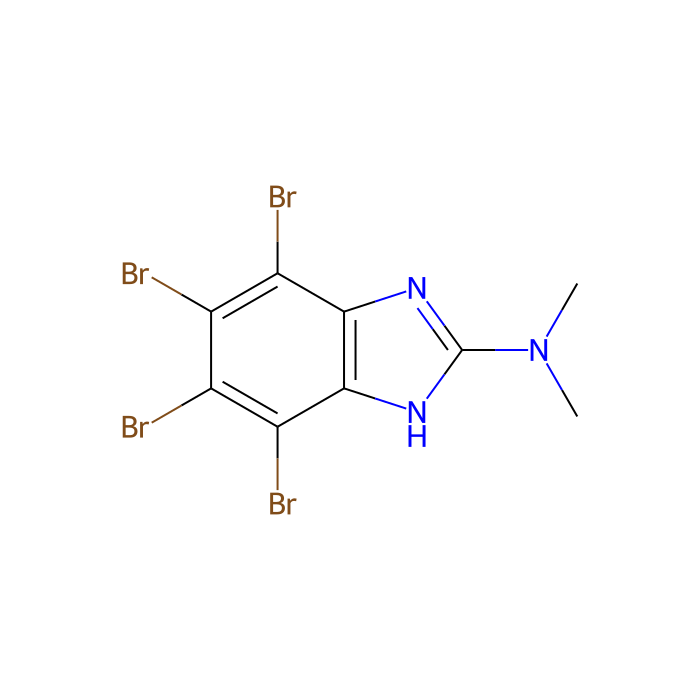
DMAT - Moligand™, ≥98% , CAS No.749234-11-5

CAS: 749234-11-5 Cat. No.: D127353 Formula: C9H7Br4N3 Molecular Weight: 476.79 EC Number: 636-153-0
AVAILABLE TO ORDER
GRADE & PURITY Moligand™ ? Moligand™ — Aladdin's line of ligands and bioactive small molecules. Use for receptor, pathway, and binding studies needing defined small-molecule tools. ≥98%
Synonyms
K25|DIMETHYL-(4,5,6,7-TETRABROMO-1H-BENZOIMIDAZOL-2-YL)-AMINE|DIMETHYL-(4,5,6,7-TETRABROMO-1H-BENZOIMIDAZOL-2-YL)-AMINE'|2-Dimethylamino-4,5,6,7-tetrabromo-1H-benzimidazole|(4,5,6,7-Tetrabromo-N,N-dimethyl-1H-benzo[d]imidazol-2-amine)|casein kinase ii|ck2inhibitor|SDCCGSBI-0207142.P002|4,5,6,7-tetrabroMo-N,N-diMethyl-1H-benzo[d]iMidazol-2-aMine|DMAT|Casein kinase II Inhibitor|2-Dimethylamino-4,5,6,7-tetrabromobenzimidazole|CK2 Inhibitor|Cytalopram|CK2 Inhibitor;Casein kinase II Inhibitor|Clemizolo|4,5,6,7-TETRABROMO-N,N-DIMETHYL-1H-BENZIMIDAZOL-2-AMINE|CK2 Inhibitor II
Storage
Store at -20°C
Shipped In
Ice chest + Ice pads
★
Size
USA
Germany (EU)*
Price
Qty
10mg
D127353-10mg
3 In stock
—
$88.90
50mg
D127353-50mg
3 In stock
—
$300.90
250mg
D127353-250mg
2 In stock
—
$1,218.90
Enter a quantity for the sizes you want to add.

Overview

DMAT is a potent and specific CK2 inhibitor with an IC50 value of 130 nM

Specifications

Synonyms
K25 | DIMETHYL-(4,5,6,7-TETRABROMO-1H-BENZOIMIDAZOL-2-YL)-AMINE | DIMETHYL-(4,5,6,7-TETRABROMO-1H-BENZOIMIDAZOL-2-YL)-AMINE' | 2-Dimethylamino-4,5,6,7-tetrabromo-1H-benzimidazole | (4,5,6,7-Tetrabromo-N,N-dimethyl-1H-benzo[d]imidazol-2-amine) | casein kinase ii | ck2inhibitor | SDCCGSBI-0207142.P002 | 4,5,6,7-tetrabroMo-N,N-diMethyl-1H-be Show more
Specifications & Purity
Moligand™, ≥98%
Biochemical and Physiological Mechanisms
Casein kinase II inhibitor II (Ck2 Inhibitor II) is a high affinity ATP-competitive inhibitor of casein kinase II. Ck2 Inhibitor II inhibits CK2 in rat liver with 1,300-fold greater selectivity for CK2 than for CK1 (IC50 = 140 nM and >200 μM respectively). Ki = 40 nM; In Jurkat human T-cell leukemia cells, Ck2 Inhibitor II does not display side effects on mitochondria polarization at concentrations up to 10 μM; Ck2 Inhibitor II is useful for in vivo studies due to cell permeability and high efficacy in cultured cells and has implications in research and treatment of neoplasia and infective diseases, in which CK2 plays a role and is highly active constitutively.
Storage
Store at -20°C
Shipped In
Ice chest + Ice pads
This product requires cold chain shipping. Ground and other economy services are not available.
Grade
Moligand™
Action Type
INHIBITOR
Purity
≥98%
Names and Identifiers
Pubchem Sid
Pubchem Sid Url
https://pubchem.ncbi.nlm.nih.gov/substance/504763626
SMILES
CN(C)C1=NC2=C(N1)C(=C(C(=C2Br)Br)Br)Br
IUPAC Name
4,5,6,7-tetrabromo-N,N-dimethyl-1H-benzimidazol-2-amine
InChIKey
SLPJGDQJLTYWCI-UHFFFAOYSA-N
InChI
1S/C9H7Br4N3/c1-16(2)9-14-7-5(12)3(10)4(11)6(13)8(7)15-9/h1-2H3,(H,14,15)
Isomeric SMILES
CN(C)C1=NC2=C(N1)C(=C(C(=C2Br)Br)Br)Br
Molecular Weight
476.79
Reaxy-Rn
9858133
Reaxys-RN_link_address
https://www.reaxys.com/reaxys/secured/hopinto.do?context=S&query=IDE.XRN=9858133&ln=

Advanced Data

Taxonomic Classification

Taxonomy Tree

KingdomOrganic compounds
SuperclassOrganoheterocyclic compounds
ClassBenzimidazoles
SubclassNot available
Intermediate Tree Nodes Not available
Direct ParentBenzimidazoles
Alternative Parents Dialkylarylamines  Benzenoids  Aryl bromides  Aminoimidazoles  Heteroaromatic compounds  Azacyclic compounds  Organopnictogen compounds  Organobromides  Hydrocarbon derivatives  
Molecular FrameworkAromatic heteropolycyclic compounds
Substituents Benzimidazole - Dialkylarylamine - Aminoimidazole - Aryl bromide - Aryl halide - Benzenoid - Heteroaromatic compound - Azole - Imidazole - Azacycle - Organobromide - Organonitrogen compound - Organic nitrogen compound - Hydrocarbon derivative - Organopnictogen compound - Organohalogen compound - Aromatic heteropolycyclic compound
DescriptionThis compound belongs to the class of organic compounds known as benzimidazoles. These are organic compounds containing a benzene ring fused to an imidazole ring (five member ring containing a nitrogen atom, 4 carbon atoms, and two double bonds).
External Descriptors Not available
3D Structure
Interactive Chemical Structure Model


Associated Targets(Human)
DRD1 Tclin Dopamine D1 receptor (9720 Activities)
Activity TypeRelationActivity valueUnitsAction TypeJournalPubMed IddoiAssay Aladdin ID
CSNK2A1 Tchem Casein kinase II alpha (3512 Activities)
Activity TypeRelationActivity valueUnitsAction TypeJournalPubMed IddoiAssay Aladdin ID
MAPK11 Tchem MAP kinase p38 beta (2785 Activities)
Activity TypeRelationActivity valueUnitsAction TypeJournalPubMed IddoiAssay Aladdin ID
LCK Tclin Tyrosine-protein kinase LCK (9212 Activities)
Activity TypeRelationActivity valueUnitsAction TypeJournalPubMed IddoiAssay Aladdin ID
MAPK14 Tchem MAP kinase p38 alpha (12866 Activities)
Activity TypeRelationActivity valueUnitsAction TypeJournalPubMed IddoiAssay Aladdin ID
GSK3B Tclin Glycogen synthase kinase-3 beta (11785 Activities)
Activity TypeRelationActivity valueUnitsAction TypeJournalPubMed IddoiAssay Aladdin ID
PDPK1 Tchem 3-phosphoinositide dependent protein kinase-1 (3758 Activities)
Activity TypeRelationActivity valueUnitsAction TypeJournalPubMed IddoiAssay Aladdin ID
ARSA Tbio Cerebroside-sulfatase (655 Activities)
Activity TypeRelationActivity valueUnitsAction TypeJournalPubMed IddoiAssay Aladdin ID
RPS6KA5 Tchem Ribosomal protein S6 kinase alpha 5 (3355 Activities)
Activity TypeRelationActivity valueUnitsAction TypeJournalPubMed IddoiAssay Aladdin ID
SYK Tclin Tyrosine-protein kinase SYK (7372 Activities)
Activity TypeRelationActivity valueUnitsAction TypeJournalPubMed IddoiAssay Aladdin ID
RPS6KA1 Tchem Ribosomal protein S6 kinase alpha 1 (2796 Activities)
Activity TypeRelationActivity valueUnitsAction TypeJournalPubMed IddoiAssay Aladdin ID
MAPK13 Tchem MAP kinase p38 delta (2605 Activities)
Activity TypeRelationActivity valueUnitsAction TypeJournalPubMed IddoiAssay Aladdin ID
MAPKAPK2 Tchem MAP kinase-activated protein kinase 2 (4814 Activities)
Activity TypeRelationActivity valueUnitsAction TypeJournalPubMed IddoiAssay Aladdin ID
MAPKAPK5 Tchem MAP kinase-activated protein kinase 5 (2831 Activities)
Activity TypeRelationActivity valueUnitsAction TypeJournalPubMed IddoiAssay Aladdin ID
ROCK2 Tclin Rho-associated protein kinase 2 (6206 Activities)
Activity TypeRelationActivity valueUnitsAction TypeJournalPubMed IddoiAssay Aladdin ID
MTOR Tclin Serine/threonine-protein kinase mTOR (13850 Activities)
Activity TypeRelationActivity valueUnitsAction TypeJournalPubMed IddoiAssay Aladdin ID
MAP2K1 Tclin Dual specificity mitogen-activated protein kinase kinase 1 (4127 Activities)
Activity TypeRelationActivity valueUnitsAction TypeJournalPubMed IddoiAssay Aladdin ID
NFKB1 Tclin Nuclear factor NF-kappa-B p105 subunit (1459 Activities)
Activity TypeRelationActivity valueUnitsAction TypeJournalPubMed IddoiAssay Aladdin ID
PRKCA Tchem Protein kinase C alpha (5923 Activities)
Activity TypeRelationActivity valueUnitsAction TypeJournalPubMed IddoiAssay Aladdin ID
LYN Tclin Tyrosine-protein kinase Lyn (4251 Activities)
Activity TypeRelationActivity valueUnitsAction TypeJournalPubMed IddoiAssay Aladdin ID
DYRK1A Tchem Dual-specificity tyrosine-phosphorylation regulated kinase 1A (6484 Activities)
Activity TypeRelationActivity valueUnitsAction TypeJournalPubMed IddoiAssay Aladdin ID
MAPK8 Tchem c-Jun N-terminal kinase 1 (5038 Activities)
Activity TypeRelationActivity valueUnitsAction TypeJournalPubMed IddoiAssay Aladdin ID
AKT1 Tchem Serine/threonine-protein kinase AKT (9192 Activities)
Activity TypeRelationActivity valueUnitsAction TypeJournalPubMed IddoiAssay Aladdin ID
SGK1 Tchem Serine/threonine-protein kinase Sgk1 (2343 Activities)
Activity TypeRelationActivity valueUnitsAction TypeJournalPubMed IddoiAssay Aladdin ID
CSNK2A2 Tchem Casein kinase II alpha (prime) (1587 Activities)
Activity TypeRelationActivity valueUnitsAction TypeJournalPubMed IddoiAssay Aladdin ID
RPS6KB1 Tchem Ribosomal protein S6 kinase 1 (4456 Activities)
Activity TypeRelationActivity valueUnitsAction TypeJournalPubMed IddoiAssay Aladdin ID
CHEK1 Tchem Serine/threonine-protein kinase Chk1 (6846 Activities)
Activity TypeRelationActivity valueUnitsAction TypeJournalPubMed IddoiAssay Aladdin ID
MAPK12 Tchem MAP kinase p38 gamma (2776 Activities)
Activity TypeRelationActivity valueUnitsAction TypeJournalPubMed IddoiAssay Aladdin ID
CYP3A4 Tclin Cytochrome P450 3A4 (53859 Activities)
Activity TypeRelationActivity valueUnitsAction TypeJournalPubMed IddoiAssay Aladdin ID
HEK293 (82097 Activities)
Activity TypeRelationActivity valueUnitsAction TypeJournalPubMed IddoiAssay Aladdin ID
HepG2 (196354 Activities)
Activity TypeRelationActivity valueUnitsAction TypeJournalPubMed IddoiAssay Aladdin ID
Jurkat (10389 Activities)
Activity TypeRelationActivity valueUnitsAction TypeJournalPubMed IddoiAssay Aladdin ID
FGR Tchem Tyrosine-protein kinase FGR (1748 Activities)
Activity TypeRelationActivity valueUnitsAction TypeJournalPubMed IddoiAssay Aladdin ID
POLI Tchem DNA polymerase iota (116820 Activities)
Activity TypeRelationActivity valueUnitsAction TypeJournalPubMed IddoiAssay Aladdin ID
EHMT2 Tchem Histone-lysine N-methyltransferase, H3 lysine-9 specific 3 (93046 Activities)
Activity TypeRelationActivity valueUnitsAction TypeJournalPubMed IddoiAssay Aladdin ID
LMNA Tbio Prelamin-A/C (36751 Activities)
Activity TypeRelationActivity valueUnitsAction TypeJournalPubMed IddoiAssay Aladdin ID
BLM Tchem Bloom syndrome protein (4248 Activities)
Activity TypeRelationActivity valueUnitsAction TypeJournalPubMed IddoiAssay Aladdin ID
THPO Tbio Thrombopoietin (834 Activities)
Activity TypeRelationActivity valueUnitsAction TypeJournalPubMed IddoiAssay Aladdin ID
NPC1 Tchem Niemann-Pick C1 protein (18985 Activities)
Activity TypeRelationActivity valueUnitsAction TypeJournalPubMed IddoiAssay Aladdin ID
GMNN Tbio Geminin (128009 Activities)
Activity TypeRelationActivity valueUnitsAction TypeJournalPubMed IddoiAssay Aladdin ID
RAB9A Tbio Ras-related protein Rab-9A (22488 Activities)
Activity TypeRelationActivity valueUnitsAction TypeJournalPubMed IddoiAssay Aladdin ID
PMP22 Tbio Peripheral myelin protein 22 (699 Activities)
Activity TypeRelationActivity valueUnitsAction TypeJournalPubMed IddoiAssay Aladdin ID
ATAD5 Tbio ATPase family AAA domain-containing protein 5 (122566 Activities)
Activity TypeRelationActivity valueUnitsAction TypeJournalPubMed IddoiAssay Aladdin ID
MEN1 Tchem Menin/Histone-lysine N-methyltransferase MLL (48157 Activities)
Activity TypeRelationActivity valueUnitsAction TypeJournalPubMed IddoiAssay Aladdin ID
CDK2 Tchem Cyclin-dependent kinase 2/cyclin A (2220 Activities)
Activity TypeRelationActivity valueUnitsAction TypeJournalPubMed IddoiAssay Aladdin ID
PRKACB Tchem cAMP-dependent protein kinase (PKA) (929 Activities)
Activity TypeRelationActivity valueUnitsAction TypeJournalPubMed IddoiAssay Aladdin ID
CSNK2B Tbio Casein kinase II (1406 Activities)
Activity TypeRelationActivity valueUnitsAction TypeJournalPubMed IddoiAssay Aladdin ID
CSNK1G1 Tchem Casein kinase I (67 Activities)
Activity TypeRelationActivity valueUnitsAction TypeJournalPubMed IddoiAssay Aladdin ID
PRKAG1 Tchem AMP-activated protein kinase (AMPK) alpha-1/beta-1/gamma-1 (619 Activities)
Activity TypeRelationActivity valueUnitsAction TypeJournalPubMed IddoiAssay Aladdin ID
CSNK2B Tbio Casein kinase 2 (358 Activities)
Activity TypeRelationActivity valueUnitsAction TypeJournalPubMed IddoiAssay Aladdin ID
Associated Targets(non-human)
Mapk1 MAP kinase ERK2 (650 Activities)
Activity TypeRelationActivity valueUnitsAction TypeJournalPubMed IddoiAssay Aladdin ID
Saccharomyces cerevisiae (19171 Activities)
Activity TypeRelationActivity valueUnitsAction TypeJournalPubMed IddoiAssay Aladdin ID
Plasmodium falciparum (966862 Activities)
Activity TypeRelationActivity valueUnitsAction TypeJournalPubMed IddoiAssay Aladdin ID
BUD32 Serine/threonine-protein kinase BUD32 (5 Activities)
Activity TypeRelationActivity valueUnitsAction TypeJournalPubMed IddoiAssay Aladdin ID
rep Replicase polyprotein 1ab (378 Activities)
Activity TypeRelationActivity valueUnitsAction TypeJournalPubMed IddoiAssay Aladdin ID
Txnrd1 Thioredoxin reductase 1, cytoplasmic (45279 Activities)
Activity TypeRelationActivity valueUnitsAction TypeJournalPubMed IddoiAssay Aladdin ID
Mapt Microtubule-associated protein tau (6 Activities)
Activity TypeRelationActivity valueUnitsAction TypeJournalPubMed IddoiAssay Aladdin ID
Nfe2l2 Nuclear factor erythroid 2-related factor 2 (214 Activities)
Activity TypeRelationActivity valueUnitsAction TypeJournalPubMed IddoiAssay Aladdin ID
FTL Ferritin light chain (43324 Activities)
Activity TypeRelationActivity valueUnitsAction TypeJournalPubMed IddoiAssay Aladdin ID
nfo Endonuclease 4 (425 Activities)
Activity TypeRelationActivity valueUnitsAction TypeJournalPubMed IddoiAssay Aladdin ID
Mechanisms of Action
Certificates (CoA,COO,BSE/TSE and Analysis Chart)
C of A & Other Certificates(BSE/TSE, COO):
Analytical Chart:

Find and download the COA for your product by matching the lot number on the packaging.

2 results found

Lot NumberCertificate TypeDateItem
L1811244L1811244Certificate of AnalysisFeb 05, 2026 D127353
L1811242L1811242Certificate of AnalysisFeb 05, 2026 D127353
Chemical and Physical Properties
SolubilityDMSO
Molecular Weight476.790 g/mol
XLogP34.700
Hydrogen Bond Donor Count1
Hydrogen Bond Acceptor Count2
Rotatable Bond Count1
Exact Mass476.733 Da
Monoisotopic Mass472.737 Da
Topological Polar Surface Area31.900 Ų
Heavy Atom Count16
Formal Charge0
Complexity265.000
Isotope Atom Count0
Defined Atom Stereocenter Count0
Undefined Atom Stereocenter Count0
Defined Bond Stereocenter Count0
Undefined Bond Stereocenter Count0
The total count of all stereochemical bonds0
Covalently-Bonded Unit Count1
Solution Calculators
Reviews

Customer Reviews

Application Protocols

No tested/validated application protocols are provided in the Product Data for this item. The following general guidance supports common research workflows; adapt to your system and validate in-house.

  • Preparation of stock solutions (general):
    • Dissolve in anhydrous DMSO to 10–50 mM. Sonication or gentle warming (≤40°C) may assist dissolution. Filter (0.22 µm PTFE) if particulates persist.
    • Aliquot to single-use volumes (e.g., 10–50 µL) to avoid freeze–thaw.
  • Assay dilution (general):
    • Dilute into assay buffer or media to the desired concentration, keeping final DMSO ≤0.5–1% v/v. Mix thoroughly to avoid precipitation.
  • Analytical verification (general):
    • Confirm concentration by UV or quantitative NMR if needed; re-check by LC–MS after storage to assess stability.
  • Storage of working solutions (general):
    • Short-term (hours to days) at 2–8°C protected from light; longer-term at −20°C as aliquots. Discard if precipitation, color change, or degradation is observed.

Item-specific recommended dilutions, positive controls, or assay types: Not specified for this item; refer to CoA/Spec Sheet.

Biological Roles

No item-specific biological/target data are provided for this product. The following describes general considerations for benzimidazole-based, polyhalogenated small molecules used in research.

  • Structural biology relevance (general): benzimidazole rings can engage in hydrogen bonding (via N–H donor and ring N acceptor) and π–π stacking with nucleobases and aromatic amino acid side chains, making them frequent motifs in ligand design.
  • Physicochemical profile (general): tetrabromination increases lipophilicity and polarizability, potentially enhancing membrane permeability while reducing aqueous solubility; tertiary amine functionality allows salt formation to modulate solubility.
  • Research use context: such scaffolds are included in screening libraries exploring kinase, enzyme, or PPI modulation; however, no specific biological activity, potency, or selectivity is claimed for this item.
  • ADME/toxicity considerations (general, non-clinical): polybrominated aromatics may exhibit higher plasma protein binding and slower clearance; these aspects are typically profiled only in dedicated studies and are not provided for this product.

Important: For research use only. Not for human or veterinary use. Do not infer therapeutic properties from the structural class without dedicated experimental validation.

Buffer Applications

This product is a hydrophobic, polybrominated heteroaromatic small molecule and is not a buffer component. Consequently, conventional buffer preparation guidance (e.g., phosphate, Tris, HEPES systems) does not apply.

  • Practical note (general): When preparing assay solutions, dissolve the compound first in DMSO to make a concentrated stock (e.g., 10–50 mM), then dilute into the desired biological buffer to achieve the working concentration while keeping final DMSO ≤1% v/v to maintain buffer properties and cell/protein compatibility.

For buffer recipes and pH control, consult standard buffering agents; this compound does not serve as a buffering reagent.

Green Alternatives

Greener choices focus on solvent and process design, as the molecular scaffold is fixed. For dissolution and cross-coupling, consider the following (general guidance):

  • Screening stock solvents
    • Prefer aqueous-buffer co-solvent systems with minimal DMSO (≤1%) if assay-tolerant. Replace DMF/NMP with DMSO where feasible due to regulatory concerns around DMF/NMP.
  • Synthetic solvent alternatives
    • Replace dioxane/toluene with 2-methyltetrahydrofuran (2-MeTHF) or cyclopentyl methyl ether (CPME) where coupling performance allows.
    • Employ water or water/ethanol with micellar catalysis (e.g., designer surfactants) for Suzuki–Miyaura couplings to reduce organic solvent use.
  • Bases and reagents
    • Use inorganic bases with lower hazard profiles (K3PO4, K2CO3) over strong alkoxides where possible.
  • Energy efficiency
    • Microwave-assisted cross-coupling can shorten reaction times and reduce energy consumption.

Comparison snapshot (general, literature):

  • 1,4-Dioxane vs 2-MeTHF
    • Dioxane: effective but classified as a probable carcinogen and problematic solvent.
    • 2-MeTHF: biorenewable origin, better safety profile, similar solvating power for many couplings.
  • DMF/NMP vs DMSO
    • DMF/NMP: excellent polar aprotics with reproductive toxicity concerns.
    • DMSO: safer alternative for many applications; biodegradable; still requires PPE due to dermal transport.

Trade-offs: Greener solvents may alter solubility and reaction rates; small-scale scouting is recommended before scale-up.

Pharmaceutical Uses

No pharmacopeial status, excipient role, or approved pharmaceutical application is provided for this item.

  • Research-use context (general): Supplied as a screening-library small molecule (Moligand™), suitable for in vitro research, target discovery, and SAR exploration. Any formulation-related activities should remain within non-clinical research.
  • Formulation considerations in research (general):
    • Prepare DMSO concentrates and dilute into suitable vehicles for in vivo exploratory studies only under appropriate institutional approvals; stability and vehicle compatibility must be established independently.
    • Salt formation (e.g., HCl salt) can increase aqueous solubility for certain research applications; characterize solid form and hygroscopicity if pursued.

No therapeutic, diagnostic, or clinical claims are made or implied for this product.

Physical Properties

Item-specific specifications are not provided in the Product Data. The following are literature/general values to aid method development; they are NOT item specifications.

  • Appearance: Not specified for this item; refer to CoA/Spec Sheet.
  • Molecular weight: ~477.80 g/mol (literature, for C9H8Br4N3)
  • Molecular formula: C9H8Br4N3 (literature)
  • Melting point: Reported for related samples in literature; exact value is batch/form-dependent and often influenced by solvate content. Not specified for this item; refer to CoA/Spec Sheet.
  • Boiling point: Not applicable (decomposes before boiling at ambient pressure). Literature sources typically report decomposition for similar polybrominated heteroarenes.
  • Density: Not specified for this item; refer to CoA/Spec Sheet.
  • LogP/logD: Expected to be high due to tetrabromination and tertiary amine; reported cLogP for analogous species >3 (literature; model-dependent). Specific value not established for this item.
  • pKa: Benzimidazole N–H typically pKa ~12–13 (very weak acid), while the benzimidazole ring nitrogens (as base) and the pendant dimethylamino (tertiary amine, conjugated) can show modest basicity; concrete pKa values vary with substitution. Not specified for this item.
  • Solubility (literature guidance)
    • Water: Very low to practically insoluble at neutral pH
    • Organic: Readily soluble in DMSO; soluble in DMF; limited solubility in ethanol/MeOH (warming/sonication may help)
  • UV–Vis: Polyhalogenated benzimidazoles typically show UV absorption in the 250–320 nm region; exact λmax not specified for this item.
Quality & Grades
  • Grade/Purity (from Product Data): Moligand™. This denotes inclusion in a curated small-molecule/ligand library suitable for discovery screening and SAR exploration.
  • What Moligand™ implies (general description):
    • Emphasis on identity confirmation (e.g., LC–MS/HRMS, NMR) appropriate for screening libraries.
    • Practical purity typically aligned with biochemical screening requirements; however, exact assay purity, water content, residual solvents, and elemental analysis are not specified here.
    • Packaging suited for small-quantity research use.
  • Item-specific specifications:
    • Purity percentage, residual solvent limits, water content, metal content, and UV cutoff: Not specified for this item; refer to CoA/Spec Sheet.
  • Stabilizers/additives: None stated. Not specified for this item; refer to CoA/Spec Sheet.
  • Why this matters:
    • For bioassays and screening, low impurity and verified identity are critical to avoid false positives/negatives.
    • For synthetic diversification, known halogenation pattern and impurity profile can influence cross-coupling efficiency.
  • Recommended QC upon receipt (general best practice):
    • Verify identity and purity by LC–MS; obtain 1H NMR if quantities allow.
    • For quantitative biology, prepare fresh DMSO stocks and assess stability (e.g., re-inject by LC after storage) to monitor potential degradation.

Note: For definitive quality attributes of SKU D127353, please consult the CoA/Spec Sheet supplied with the lot.

Reaction & Applications

While often supplied as a screening-library ligand, DMAT’s polybrominated benzimidazole scaffold is also a versatile synthetic platform. The points below summarize general literature applications; they are not item-specific performance claims.

  • Diversification via cross-coupling (literature):
    • Four aryl bromides at positions 4–7 enable sequential or selective Pd-catalyzed couplings (Suzuki–Miyaura, Sonogashira, Buchwald–Hartwig after amination) to build densely substituted heteroaryls.
    • Strategies include orthogonal reactivity using ligand/temperature control to differentiate C–Br sites.
  • N-Functionalization (literature):
    • The benzimidazole N1 can be alkylated/acylated under standard conditions, enabling prodrug-like masks or solubility modulation; quaternization at the dimethylamino nitrogen affords salts for improved handling.
  • Late-stage library generation:
    • Parallel synthesis by iterative coupling creates SAR matrices. Protecting-group-free approaches are feasible given the innate stability of the benzimidazole core.
  • Heteroaryl–metalation (caution):
    • Lithium–halogen exchange on tetrabrominated rings is possible but requires cryogenic control to avoid ring degradation; safer to use catalytic cross-couplings.
  • Applications in materials/chemical biology (literature):
    • Heavy atom substitution can enhance spin–orbit coupling, useful in photophysical probes; benzimidazole rings serve as H-bond donors/acceptors in ligand design.

Practical tips:

  • Ensure rigorous degassing and dry conditions for Pd cross-couplings; employ micromolar palladium with bulky phosphines to control site selectivity.
  • Solubilize substrates in dioxane/DMF with base (K3PO4, Cs2CO3) and water (5–10%) for Suzuki couplings.
Reaction Conditions

The following conditions are representative literature starting points for polybrominated benzimidazoles and are offered as general guidance only.

  • Suzuki–Miyaura arylation (general):
    • Substrate (1.0 eq), aryl boronic acid (1.5 eq), Pd2(dba)3 (1–2 mol% Pd), SPhos (2–4 mol%), K3PO4 (2–3 eq), 1,4-dioxane/H2O (4:1), 80–100°C, 6–16 h. Typical isolated yields for the first coupling: 60–85% depending on site.
  • Sonogashira coupling (general):
    • Substrate (1.0 eq), terminal alkyne (1.2–1.5 eq), Pd(PPh3)2Cl2 (2–3 mol%), CuI (5–10 mol%), iPr2NH or Et3N base, DMF or 2-MeTHF, 50–80°C, 4–12 h.
  • Buchwald–Hartwig amination (general):
    • Substrate (1.0 eq), amine (1.5 eq), Pd2(dba)3 (1–2 mol% Pd), BrettPhos or XPhos (3–4 mol%), NaOtBu or Cs2CO3, toluene or dioxane, 90–110°C, 8–16 h.
  • N1-alkylation (benzimidazole) (general):
    • Substrate (1.0 eq), alkyl halide (1.2 eq), K2CO3 (2–3 eq), DMF or MeCN, 25–60°C, 2–16 h; monitor to minimize over-alkylation or quaternization of the dimethylamino.
  • Notes on selectivity:
    • Sequential couplings benefit from reactivity mapping of C–Br positions; high-throughput microscale screens (ligand/base/solvent) help define an order of operations.
  • Workup/purification:
    • Aqueous quench, extraction with EtOAc, charcoal treatment if needed, silica gel chromatography (add 0.1–1% Et3N to reduce tailing) or reverse-phase HPLC.

These parameters should be optimized for each transformation and substrate set.

Safety & Handling

Safety profile for this specific item is not provided; consult the product SDS for authoritative guidance. The following are general precautions for polybrominated heteroaromatics and tertiary amine-containing benzimidazoles.

  • GHS classification, signal word, pictograms, H-statements: Not specified for this item; refer to SDS.
  • Likely hazards (general): Irritation to skin, eyes, or respiratory tract possible; harmful if swallowed/inhaled; avoid dust formation. Polybrominated aromatics may be harmful to aquatic life—prevent environmental release.
  • Personal protective equipment (general):
    • Wear lab coat, safety glasses/goggles, and appropriate chemical-resistant gloves (e.g., nitrile).
    • Handle powders in a fume hood to minimize inhalation exposure; consider dust mask/respirator per risk assessment.
  • Handling advice (general):
    • Avoid heat and open flames; do not breathe dust. Use antistatic precautions when weighing fine powders.
    • For solutions in DMSO/DMF, prevent skin contact due to efficient dermal transport of solvents.
  • Incompatibilities (general): Strong oxidizers; strong acids/bases may lead to degradation or salt formation. Avoid halogen–metal exchange conditions unless intended synthetically.
  • First-aid overview (general):
    • Inhalation: Move to fresh air; seek medical attention if symptoms persist.
    • Skin/eye contact: Rinse with water for 15 minutes; remove contaminated clothing; seek medical advice.
    • Ingestion: Rinse mouth; do not induce vomiting; obtain medical attention.
  • Spill/Disposal: Avoid release to the environment. Collect with inert absorbent for disposal in accordance with local regulations.

Always defer to the SDS and institutional EHS policies for final safety measures.

Solvent Selection

DMAT is a highly halogenated benzimidazole with limited aqueous solubility; solvent choice focuses on dissolution for screening stocks and, if applicable, for cross-coupling chemistry.

  • Polarity and miscibility (general):
    • Practically insoluble in water at neutral pH; increased apparent solubility possible upon protonation (acidic media) but may compromise stability.
    • Readily soluble: DMSO (preferred for screening stocks), DMF, NMP.
    • Moderately soluble: acetone, acetonitrile (method-dependent), alcohols with warming/sonication.
  • Recommended for biological screening stock solutions (general):
    • DMSO at 10–50 mM; dilute into assay buffer to ≤1% DMSO final. Filter if needed (PTFE or hydrophilic PTFE, 0.22 µm).
  • For synthetic transformations (general):
    • Cross-coupling: dioxane, toluene, DMAc, DMF, or mixtures with water under Pd catalysis.
    • N-alkylation or salt formation: polar aprotic solvents (DMF/MeCN) or alcohols, with suitable base/alkylating agent.
  • Comparison notes (general):
    • DMSO vs DMF: DMSO offers better solubility and handling for small aliquots; DMF preferred when high-boiling polar aprotic solvent is needed for catalysis.
    • Water co-solvent systems can be used in Suzuki couplings but require surfactants or phase-transfer aids due to hydrophobicity.

Always verify solvent compatibility with your assay or reaction and pre-test precipitation upon dilution.

Storage & Reconstitution
  • Storage conditions (from Product Data): Store at −20°C.
  • Shipping (from Product Data): Shipped in ice chest with ice pads to maintain cold chain.
  • Container and atmosphere (general best practice):
    • Keep tightly closed in the original, inert container. Minimize headspace and protect from moisture. Consider storage under inert gas for long-term stability.
  • Light and humidity (general):
    • Protect from light; store in a desiccator or with desiccant to limit hygroscopic uptake and hydrolytic degradation.
  • Reconstitution (general guidance for small molecules):
    • To prepare a stock solution, dissolve in dry DMSO (typical 10–50 mM). Vortex/sonicate briefly; avoid elevated temperatures beyond ~40°C. Record exact concentration.
    • If aqueous use is required, dilute the DMSO stock into buffer with vigorous mixing; evaluate for precipitation. Salt formation (e.g., HCl salt) can be considered to enhance solubility in research contexts.
  • Aliquoting and freeze–thaw (general):
    • Dispense single-use aliquots to avoid repeated freeze–thaw cycles. Thaw at room temperature, mix gently, and use promptly.
  • Stability statements:
    • Item-specific shelf-life, assay purity over time, and solution stability are Not specified for this item; refer to CoA/Spec Sheet.

For research use only. Follow institutional guidelines for storage, labeling, and disposal.

Structure & Identity

Brief overview: DMAT is a polybrominated benzimidazole small molecule commonly used in screening libraries and as a heteroaromatic scaffold for late-stage diversification.

  • Product identifiers (from Product Data)
    • SKU: D127353
    • Product Name: DMAT
    • CAS: 749234-11-5
    • PubChem CID: 5326976
    • InChIKey: Not specified for this item; refer to CoA/Spec Sheet.
    • SMILES: Not specified for this item; refer to CoA/Spec Sheet.
  • Structural class (general chemistry knowledge)
    • Core: benzimidazole fused bicyclic system (benzene fused to imidazole)
    • Substituents: four bromine atoms on the benzene ring (tetra-brominated) and a dimethylamino group attached to the imidazole C2 position (literature identification for “DMAT”).
    • Functional groups: imidazole (one [NH] and one ring imine N), tertiary dimethylamino substituent, four aryl bromides (C–Br) offering cross-coupling handles.
    • Stereochemistry: achiral; no stereogenic centers.
  • Molecular formula and mass (literature)
    • Empirical formula (commonly reported for DMAT): C9H8Br4N3
    • Molecular weight (average): ~477.80 g/mol
  • Descriptive 2D structure (general): a benzimidazole ring with positions 4,5,6,7 brominated on the benzene portion, the imidazole N1 protonated (1H tautomer), and a dimethylamino group at C2. The four bromines render a heavily electron-withdrawing, densely substituted aryl platform suitable for sequential cross-couplings.

Note: For definitive structural descriptors (canonical SMILES/InChI), consult the item’s CoA/Spec Sheet.

Synthetic Utility

DMAT’s structure offers multiple, orthogonally addressable handles for synthesis (general literature guidance):

  • Polybrominated arene platform
    • Four aryl bromides allow stepwise diversification via Pd-catalyzed cross-couplings: Suzuki–Miyaura (boronic acids/esters), Sonogashira (alkynes), Heck (alkenes), and direct amination (Buchwald–Hartwig) when paired appropriately.
    • Site-selectivity can be tuned using catalyst/ligand sets (bulky electron-rich phosphines, NHCs), temperature, and order of introduction of substituents.
  • Heterocycle N-modification
    • N1 of benzimidazole: alkylation/acylation to adjust polarity and metabolic stability.
    • Tertiary dimethylamino group: quaternization or acylation to modulate solubility or create latent leaving groups.
  • Scaffold hopping and tethering
    • Installation of linkers at one or more brominated positions enables conjugation to tags (biotin/fluorophores) or attachment to solid supports for affinity selection.
  • Retrosynthetic value
    • The dense halogenation pattern allows convergent assembly of diverse analogs from a common core, expediting SAR.

Practical insights:

  • Begin with the most electron-deficient/least hindered C–Br for first coupling; validate by small-scale screens.
  • Use bases such as K3PO4/Cs2CO3 and mixed solvents (dioxane/H2O, DMF/H2O) for Suzuki couplings; maintain rigorous exclusion of air/moisture to reduce debromination.
  • Purification often benefits from normal-phase silica with amine modifiers, or reverse-phase prep HPLC due to polarity/lipophilicity contrasts.
Target Specificity

Only item-specific data may appear here. No target, binding partner, or selectivity information is provided in the Product Data for SKU D127353.

  • Target/Pathway: Not specified for this item; refer to CoA/Spec Sheet.
  • Species reactivity/assay context: Not specified for this item; refer to CoA/Spec Sheet.
  • Assay-validated potency/selectivity: Not specified for this item; refer to CoA/Spec Sheet.

For any intended biological assays, determine target engagement and specificity experimentally.

Frequently Asked Questions

What is the purity of this product?
This product is supplied at ≥98% purity (chemical assay). Lot-specific values are stated on the Certificate of Analysis.
What is Moligand??
Moligand? is one of Aladdin Scientific's premium product lines, formulated for high-purity applications across multiple workflows. Compared to standard grades in the same workflow, Moligand? products typically offer tighter specifications, more rigorous QC, and stronger lot-to-lot consistency.
How should this product be stored?
Store at ?20 °C. Freezer storage is required to maintain the specified shelf life.
How is this product shipped?
This product ships in an insulated container with ice pads. Unpack on arrival and transfer it to the storage condition stated above.
What are the CAS number, molecular formula and molecular weight?
The CAS Number is 749234-11-5, the molecular formula is C9H7Br4N3, and the molecular weight is 476.79 g/mol. InChIKey SLPJGDQJLTYWCI-UHFFFAOYSA-N.
What documentation is provided?
Available product documentation, including Certificates of Analysis (COA), Safety Data Sheets (SDS), and specification sheets, is shown in the product document area. Document availability and access follow the current site policy.

Need help choosing the grade?

Our grade selection guide covers purity, stabilizer status, and application suitability for all variants in our catalog.

View Moligand™ grade guide →

Shall we send you a message when we have discounts available?

Remind me later

Thank you! Please check your email inbox to confirm.

Oops! Notifications are disabled.