≥98% for sensitive chromatographic and analytical workflows requiring minimal baseline interference.
🌡
Storage & shipping
Store at 2-8°C,Protected from light,Desiccated Ships Wet ice Check lot-specific COA for exact specifications.
📋
Quality documents
SDS, COA, datasheet, and spec sheet available for download. Lot-specific COA accessible via lot number lookup.
📚
Literature proof
Cited in 0 peer-reviewed publications across chromatography, organic synthesis, and cross-coupling reactions.
Overview
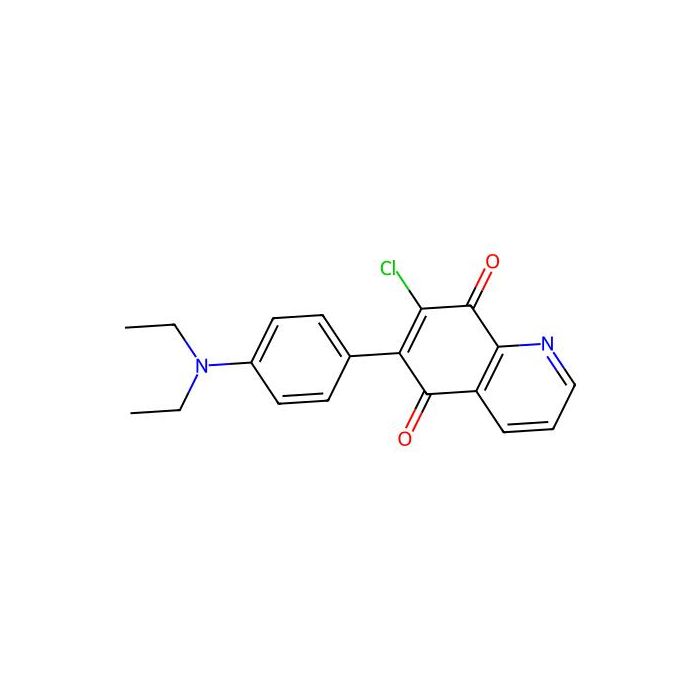
EA4, a derivative of quinone, is an inhibitor for both rPLA and cPLA . EA4 can inhibit rPLA 2 with a K i value of 130 μM. EA4 can be used for the research of hemostasis, thrombosis, and erythropoiesis
In Vitro
EA4 (9 μM, 24 μM) inhibits both rPLA 2 and cPLA 2. EA4 can inhibit rPLA 2 with a K i value of 130 μM. EA4 (50 μM) significantly inhibits A23187-induced AA release from both human and bovine RBCs in a time-dependent manner. MCE has not independently confirmed the accuracy of these methods. They are for reference only.
Form:Solid
IC50& Target:Ki: 130 μM (rPLA 2 )
Specifications
Specifications & Purity
≥98%
Biochemical and Physiological Mechanisms
EA4, a derivative of quinone, is an inhibitor for both rPLA and cPLA . EA4 can inhibit rPLA 2 with a K i value of 130 μM. EA4 can be used for the research of hemostasis, thrombosis, and erythropoiesis.
Storage
Store at 2-8°C,Protected from light,Desiccated
Shipped In
Wet ice
This product requires cold chain shipping. Ground and other economy services are not available.
Determine the necessary mass, volume, or concentration for preparing a solution.
Dilution Calculator
Determine the dilution needed to prepare a stock solution.
Reconstitution Calculator
Reviews
Customer Reviews
Application Protocols
No tested applications or protocols are provided in the Product Data for EA4.
General starting points (non-specific):
Stock preparation: Dissolve to 10–50 mM in anhydrous DMSO in amber vials. Vortex and sonicate if needed. Filter through 0.2 μm PTFE if particulate is present.
Assay dilution: Add stock to assay buffer or media to reach the desired final concentration, keeping DMSO ≤0.5–1% v/v unless your system tolerates higher levels. Include vehicle controls.
Storage of working solutions: Short-term at 2–8 °C protected from light; reassess by LC if stored >24–48 h. Discard if precipitation, discoloration, or >5% degradation is detected.
Analytical QC: Verify identity and purity by LC-MS or HPLC prior to critical experiments. Document concentration by qNMR or UV (with extinction coefficient determined empirically if needed).
For any specialized application, consult the CoA for structural details and develop method-specific protocols accordingly.
Biological Roles
No structural or mechanistic information is provided for EA4 in the Product Data; therefore, specific biological functions, targets, or pathway roles cannot be described.
Research use only: As noted, this material is for research use only and not for diagnostic or clinical applications.
General guidance: If used in biological assays, characterize purity, solubility, and stability under assay conditions. Verify that observed effects are not due to aggregation, redox activity, fluorescence/absorbance interference, or residual solvents.
Documentation: Consult the CoA/SDS for any available annotation (e.g., salt form, counterions) that may influence osmolarity or assay compatibility.
For definitive biological role assignment (if applicable), rely on peer-reviewed literature linked to the specific CAS (389614-94-2) or CID (10042917), verifying that the structures match the lot you received.
Buffer Applications
This product is a small-molecule library member, not a buffering reagent. No buffer capacity or buffer-system role is indicated.
Applicability: Not typically applicable. Use standard biological buffers (PBS, HEPES, Tris, MOPS) appropriate to your assay.
Practical note: If preparing aqueous working solutions, use co-solvents (e.g., DMSO or MeCN) at low final percentages to aid solubilization. Filter-sterilize when sterility is required and confirm that the compound is stable at the buffer pH and ionic strength.
Green Alternatives
With structure and solubility unknown, greener choices center on solvent selection and handling rather than the molecule itself.
Replace DCM with EtOAc or 2-MeTHF for extractions and chromatography when separation allows.
Use ethanol or isopropanol in place of methanol for recrystallization if solubility profiles permit.
For high-boiling polar aprotics, consider Cyrene or propylene carbonate as DMF/DMA substitutes where reactivity allows.
Energy minimization: Work at ambient temperature/pressure; avoid prolonged reflux. Use micro- or flow-scale operations to cut solvent volumes during screening.
Waste reduction: Plan aliquots to reduce freeze–thaw cycles and discard, especially for DMSO stocks. Implement solvent recovery and segregation for halogenated vs non-halogenated waste.
Light/moisture sensitivity: The Product Data advises protection from light and desiccation; employing amberware, desiccants, and dry atmospheres reduces degradation and rework, indirectly improving sustainability through fewer repeats.
Trade-offs: Greener solvents may alter solubility, kinetics, or selectivity. Validate substitutions with small-scale trials and analytical checks (LC/GC, assay readouts) before scale-up.
Pharmaceutical Uses
No pharmacopeial status, excipient role, or formulation designation is provided for EA4. This product is supplied strictly for research use only.
Not for human or veterinary use: Do not use in clinical, diagnostic, or therapeutic settings.
Formulation context (general research use): If utilized in pre-formulation research, typical stock solvents include DMSO, ethanol, or PEG-containing vehicles for in vitro work. For in vivo exploratory research (where institutionally permitted), verify toxicity, vehicle compatibility, and stability independently.
Regulatory note: Absence of a compendial monograph implies no established pharmaceutical quality standard. Any use in regulated workflows would require internal specification setting and validation.
For any development-oriented studies, consult your quality unit to define analytical methods, impurity limits, and stability-indicating assays based on the lot-specific CoA.
Physical Properties
Item-specific physicochemical data have not been provided for this catalog entry.
Appearance: Not specified for this item; refer to CoA/Spec Sheet.
Melting point: Not specified for this item; refer to CoA/Spec Sheet.
Boiling point: Not specified for this item; refer to CoA/Spec Sheet.
Density: Not specified for this item; refer to CoA/Spec Sheet.
Refractive index: Not specified for this item; refer to CoA/Spec Sheet.
Solubility (water/organic): Not specified for this item; refer to CoA/Spec Sheet.
LogP/logD, pKa: Not specified for this item; refer to CoA/Spec Sheet.
UV/Vis absorbance/UV cutoff: Not specified for this item; refer to CoA/Spec Sheet.
Practical guidance (general, non-spec):
If supplied as a solid, begin solubility screening with DMSO (10–50 mg/mL), followed by MeCN, MeOH, EtOH, DMF, and aqueous buffers containing co-solvent. Warm gently (≤40 °C) and sonicate as needed.
If supplied as an oil, record density by pycnometry or syringe mass/volume to enable accurate stock preparation.
For photo- or air-sensitive compounds (product indicates protection from light and desiccation), minimize light and moisture exposure; use amber vials and a dry inert atmosphere during handling.
Determine hygroscopicity by mass gain on exposure to ambient conditions; store in a desiccator as recommended in the Product Data.
Quality & Grades
Grade/purity information is not specified in the Product Data for this item.
Grade/Purity: Not specified for this item; refer to CoA/Spec Sheet.
Interpretation and implications (general guidance):
If a purity value is indicated on the CoA (e.g., ≥95% by HPLC), this typically refers to area % by a specified chromatographic method; confirm the detection wavelength and method.
For screening libraries, materials are often provided with analytical verification (HPLC/UPLC and MS/NMR). Review residual solvent profiles and counterions (if salts) on the CoA.
UV transparency or low-fluorescence attributes may be relevant for assay readouts; if critical, request low-UV or fluorescence-characterized material.
Stabilizers: None are listed in the Product Data. If a stabilizer or counterion is present, it will appear on the CoA; consider implications for downstream reactions or assays.
Batch-to-batch consistency: Use the lot-specific CoA as the authoritative specification for identity, purity, and residuals. For critical applications, consider in-house confirmation (orthogonal HPLC methods, qNMR, HRMS).
Reaction & Applications
Manufacturer Applications: None provided in the Product Data for EA4.
General guidance for small-molecule library members (non-specific):
Bioassay screening: Commonly dissolved in DMSO for high-throughput screening (HTS), biochemical assays, or cell-based assays. Validate solubility and stability in the intended assay matrix.
Analytical characterization: If further confirmation is required, acquire 1H/13C NMR, HRMS, and HPLC/UPLC chromatograms in your lab to complement the CoA.
Derivatization or SAR: If EA4 is a lead or fragment candidate, use standard synthetic strategies (e.g., amide coupling, aryl cross-coupling, nucleophilic substitutions) appropriate to the functional groups once identified from the CoA.
Immobilization or probe development: Consider introducing handles (alkynes/azides, biotin) for chemoproteomics if allowed by the scaffold without perturbing activity; conduct control experiments to assess activity retention.
Assay interference mitigation: Evaluate for PAINS-like behaviors or redox-activity with orthogonal counterscreens. Include detergent controls to detect aggregation-based inhibition.
Note: Specific reaction classes (e.g., Grignard, cross-coupling) and mechanistic uses cannot be assigned without structural information. Please consult the structural data from the CoA to plan precise synthetic or application workflows.
Reaction Conditions
No reaction class or functional-group information is available for EA4; therefore, specific reaction conditions cannot be recommended for transformations involving this compound.
General laboratory guidance (non-specific):
Solution preparation: For screening or analytical work, prepare DMSO stocks (e.g., 10–50 mM) and store aliquots at 2–8 °C protected from light, per Product Data. Verify concentration by UV (if chromophore present) or qNMR.
Stability checks: Before multi-hour incubations or reactions, confirm stability in the selected solvent and at the chosen temperature via time-course LC.
Atmosphere: If the compound is air- or moisture-sensitive (storage guidance suggests sensitivity), use inert atmosphere (N2/Ar), anhydrous solvents, and oven-dried glassware.
Temperature: Begin at ambient temperature; scale to gentle warming (≤40 °C) only after confirming no decomposition.
For precise reaction planning, consult the lot’s CoA and any available literature associated with CAS 389614-94-2.
Safety & Handling
GHS classification and hazard statements are not provided in the Product Data for EA4. Always consult the SDS for your received lot for authoritative safety information.
Signal word (GHS): Not specified for this item; refer to SDS.
Hazard statements, pictograms, classifications: Not specified for this item; refer to SDS.
General laboratory safety (non-specific):
PPE: Lab coat, safety glasses, and disposable nitrile gloves as baseline protection. Use chemical-resistant gloves and splash protection if handling larger quantities or volatile/irritant materials.
Engineering controls: Work in a certified chemical fume hood when weighing, dissolving, or transferring powders/volatile liquids. Use local exhaust for operations that can generate aerosols.
Incompatibilities: Without structural data, treat as potentially incompatible with strong oxidizers and strong acids/bases. Segregate from reactive metals and peroxides as a precaution.
First aid (overview; consult SDS): Inhalation—move to fresh air; Skin—wash with soap and water; Eyes—rinse with water for ≥15 min; Ingestion—rinse mouth, seek medical advice. Provide SDS to responders.
Spill response: Avoid dust generation; absorb liquids with inert material. Collect in appropriate waste for disposal according to institutional and local regulations.
Stability considerations: Product Data recommends protecting from light and storing desiccated at 2–8 °C, suggesting possible photo- and moisture-sensitivity; minimize exposure to ambient light and humidity during handling.
Solvent Selection
Because structure and polarity are not provided for EA4, solvent selection should be determined empirically for your application.
Recommended initial panel (general): DMSO, DMF, acetonitrile, methanol, ethanol, 2-propanol, ethyl acetate, dichloromethane, toluene; and water/co-solvent mixtures (e.g., 10–50% DMSO or MeCN in buffer) for assay stocks.
Stock solutions for screening: DMSO is the default for small-molecule libraries due to broad solubilization power and assay compatibility. Prepare concentrated stocks (e.g., 10–50 mM) and dilute into assay media to ≤0.5–1% DMSO final, as the biology permits.
Moisture/light sensitivity: Product Data indicates protection from light and desiccation; use amber vials and dry, anhydrous solvents where feasible. Minimize freeze–thaw and headspace moisture by aliquoting.
Filtration: For particulate removal before bioassays or analytical work, filter through 0.2 μm PTFE/nylon (organic) or PVDF (aqueous) filters as compatible with your chosen solvent.
Compatibility notes: Verify that the solvent system does not interfere with detection (e.g., LC-MS adducting, fluorescence quenching) or assay targets. Run solvent-only controls.
Stability checks: Monitor for precipitation or color change upon dilution into buffers. Confirm stability by LC before extended storage of solutions.
Light protection: Use amber vials/foil wrapping during storage and handling to mitigate photodegradation. Minimize exposure during weighing and solution prep.
Desiccation: Store in a desiccator or with fresh desiccant packs. Open vials only after equilibrating to room temperature to prevent condensation.
Aliquoting: Immediately subdivide into single-use aliquots under dry, inert atmosphere to avoid repeated moisture/light exposure and freeze–thaw.
Reconstitution (general guidance; not a specification):
Solvent choice: Begin with anhydrous DMSO to prepare a concentrated stock (e.g., 10–50 mM), then dilute into the desired medium. If water solubility is required, use aqueous buffer with 5–10% co-solvent and adjust as needed.
Technique: Add solvent incrementally, vortex/sonicate, and gently warm (≤40 °C) if needed. Filter through 0.2 μm if particulate remains.
Stability monitoring: Check freshly prepared solutions by LC at time 0 and after storage to confirm integrity; discard if degradation is observed.
Note: Where exact solubility, pH sensitivity, or extinction coefficients are critical, these are Not specified for this item; refer to CoA/Spec Sheet.
Structure & Identity
Brief overview: EA4 (SKU E649463) is listed in our small-molecule/compound library category, but item-specific structural identifiers are not provided in the Product Data.
CAS: 389614-94-2 (from Product Data)
PubChem CID: 10042917 (from Product Data)
Chemical name: Not specified for this item; refer to CoA/Spec Sheet.
Molecular formula: Not specified for this item; refer to CoA/Spec Sheet.
Molecular weight: Not specified for this item; refer to CoA/Spec Sheet.
SMILES: Not specified for this item; refer to CoA/Spec Sheet.
InChIKey: Not specified for this item; refer to CoA/Spec Sheet.
Synonyms: Not specified for this item; refer to CoA/Spec Sheet.
Structural features (general guidance):
Functional groups, ring systems, heteroatoms, and stereochemistry cannot be described without the structural identifiers. Please consult the CoA or spectral data for this lot for definitive identity confirmation.
Identity confirmation best practices (general):
Verify by high-resolution MS and 1H/13C NMR against reference spectra.
Use HPLC/UPLC purity profiling and co-injection when possible.
Cross-reference CAS and CID to public databases for auxiliary information; defer to the CoA as the authoritative source for the supplied lot.
Synthetic Utility
Specific synthetic roles of EA4 cannot be detailed without structural information. The Product Data does not provide functional groups, reactive handles, or scaffold class.
General considerations (if derivatization is intended):
Once the structure is confirmed from the CoA, map functional groups (e.g., amines, acids, halides, heteroaryl motifs) to standard transformations (amide coupling, SNAr/SN2, cross-coupling, reductions/oxidations).
Plan protecting-group strategy only if required; otherwise, pursue convergent routes that minimize steps and purifications.
For SAR campaigns, design matched pairs and conservative modifications (bioisosteres, subtle electronics/sterics changes) to preserve baseline properties while exploring activity.
Analytical control: Employ LC-MS and qNMR to track mass balance and impurity profiles throughout any modification sequence.
Retrosynthetic value: Defer until the exact core is known; consult literature by CAS/CID to identify known building-block disconnections or enabling methodologies.
Target Specificity
Target, epitope, or isotype information is applicable to biologics and antibodies, not to small-molecule library members. No target specificity data are provided for EA4 in the Product Data.
If used as a chemical probe: Establish target engagement through orthogonal assays (biochemical potency, cellular target engagement, thermal shift/DSF, CETSA, chemoproteomics) once the structure and hypothesized mechanism are known.
Record-keeping: Tie all measured activities unambiguously to the lot and structure (CAS/CID), and document salt form and stereochemistry if relevant.
We use cookies to ensure the website functions properly and, where permitted, to improve your experience. You can manage your preferences at any time in Settings. Learn more in our Cookie Policy.
Shall we send you a message when we have discounts available?
Remind me later
Thank you! Please check your email inbox to confirm.
Products are supplied to verified businesses, institutions, and qualified professionals for research and development use only. Not for use in humans, animals, diagnosis, or therapy.