
Determine the necessary mass, volume, or concentration for preparing a solution.
| Activity Type | Activity Value -log(M) | Mechanism of Action | Activity Reference | Publications (PubMed IDs) |
|---|
Moligand™, 10mM in DMSO Moligand™ for sensitive chromatographic and analytical workflows requiring minimal baseline interference.
Store at -80°C Ships Dry ice packs + Cold packs Check lot-specific COA for exact specifications.
SDS, COA, datasheet, and spec sheet available for download. Lot-specific COA accessible via lot number lookup.
Cited in 10 peer-reviewed publications across chromatography, organic synthesis, and cross-coupling reactions.
Information
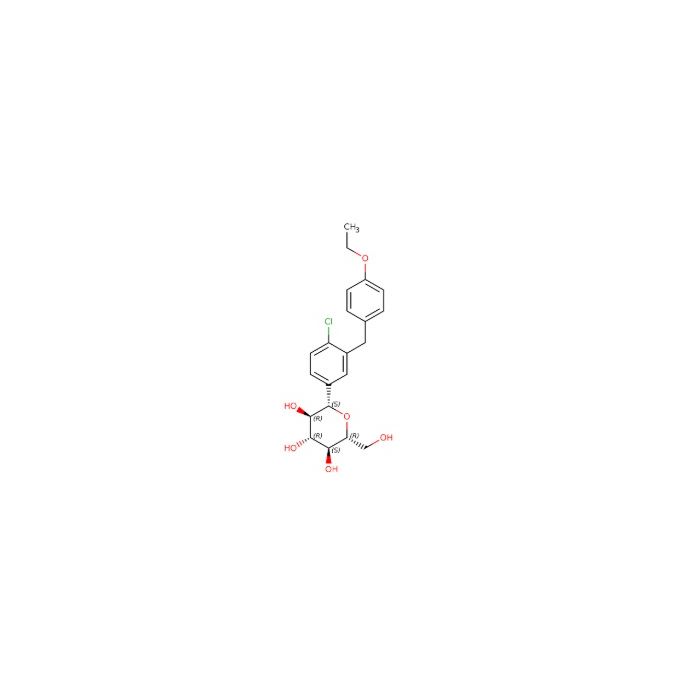
Dapagliflozin (BMS-512148) is a potent and selectivehSGLT2inhibitor withEC50of 1.1 nM, exhibiting 1200-fold selectivity over hSGLT1. Phase 4.
In vitro
Dapagliflozin is not sensitive to hSGLT1 with a 1200-fold IC50. Dapagliflozin is 32-fold more potent than phlorizin against hSGLT2 but 4-fold less than phlorizin against hSGLT1. Dapagliflozin is highly selective versus GLUT transporters and displays 8–9% inhibition in protein-free buffer at 20 μM and virtually no inhibition in the presence of 4% bovine serum albumin. Dapagliflozin has good permeability across Caco-2 cell membranes and is a substrate for P-glycoprotein (P-gp) but not a significant P-gp inhibitor. Dapagliflozin is stable in rat, dog, monkey, and human serum at 10 μM. Dapagliflozin shows no inhibitory responses or induction to human P450 enzymes. The in vitro metabolic pathways Dapagliflozin are glucuronidation, hydroxylation, and O-deethylation.
In vivo
Dapagliflozin reduces blood glucose levels by 55% after 0.1 mg/kg oral dose in hyperglycemic streptozotocin (STZ) rats, which is in part to the metabolic stability conferred by the C-glucoside linkage. Dapagliflozin displays a favorable absorption, distribution, metabolism, and excretion (ADME) profile and is orally bioavailable. Dapagliflozin (1 mg/kg) causes significant dose-dependent glucosuria and increase in urine volume in normal rats over 24 hours post-dose. Dapagliflozin induces increase in urine glucose and urine volume excretion at 6 hours post-dose in Zucker diabetic fatty (ZDF) rats. Dapagliflozin lowers fasting and fed glucose levels in ZDF rats even by 2 weeks of treatment, without any marker of renal or liver toxicity. Dapagliflozin significantly reduces the development of hyperglycaemia, with lowered blood glucose. Dapagliflozin could improve the insulin sensitivity, reduce β-cell mass and the development of impaired pancreatic function.
Cell Data
cell lines:
Concentrations:
Incubation Time:
Powder Purity:≥98%
| Isomeric SMILES | CCOC1=CC=C(C=C1)CC2=C(C=CC(=C2)[C@H]3[C@@H]([C@H]([C@@H]([C@H](O3)CO)O)O)O)Cl |
|---|---|
| Molecular Weight | 408.87 |
| Reaxy-Rn | 21800523 |
| Reaxys-RN_link_address | https://www.reaxys.com/reaxys/secured/hopinto.do?context=S&query=IDE.XRN=21800523&ln= |
Comprehensive hazard, handling, storage, and regulatory compliance document.
Download SDS →Lot-specific quality data. Enter your lot number to retrieve the exact COA.
Look up COA →Full quality attributes and acceptance criteria for this grade.
View spec sheet →| Activity Type | Activity Value -log(M) | Mechanism of Action | Activity Reference | Publications (PubMed IDs) |
|---|
| Activity Type | Activity Value -log(M) | Mechanism of Action | Activity Reference | Publications (PubMed IDs) |
|---|
| Activity Type | Activity Value -log(M) | Mechanism of Action | Activity Reference | Publications (PubMed IDs) |
|---|
| Activity Type | Activity Value -log(M) | Mechanism of Action | Activity Reference | Publications (PubMed IDs) |
|---|
| Solubility | Solubility (25°C) In vitro Water: 6 mg/mL (40.21 mM); DMSO: Insoluble; |
|---|
| 1. Zhonghua Dong, Xiao Li, Xuan Wang, Jingya Xu, Wei Xu. (2025) Ergosterol from Edible Fungi: Enhancing Fatty Acid Oxidation via CPT1A to Protect Against Diabetic Kidney Disease. Food & Function, [PMID:40704985] [10.1039/D5FO00371G] |
| 2. Wenyu Du, Zihan Liu, Zhi Wang, Xin Zhou, Zhanjun Dong, Ying Li. (2025) In vivo assessment of pharmacokinetic interactions of empagliflozin and henagliflozin with sorafenib: an animal-based study. PeerJ, [PMID:40656939] [10.7717/peerj.19662] |
| 3. Qin Fei, Zeng Huicong, Zhou Li, Zhou Zhenhua, Mao Yongxin, Zeng Youyan, Guo Rongxiang, Chen Kaixian, Zhao Dongyu, Yao Weiwei, Zhang Bin, Zhou Qian, Li Bo. (2025) Identification of novel small molecules as potential SGLT2 inhibitors through combined virtual screening and experimental validation. MOLECULAR DIVERSITY, [PMID:41021175] [10.1007/s11030-025-11367-4] |
| 4. Xueru He, Ying Li, Yajing Li, Caihui Guo, Yuhao Fu, Xuejiao Xun, Zhi Wang, Zhanjun Dong. (2023) In vivo assessment of the pharmacokinetic interactions between donafenib and dapagliflozin, donafenib and canagliflozin in rats. BIOMEDICINE & PHARMACOTHERAPY, [PMID:37027985] [10.1016/j.biopha.2023.114663] |
| 5. Shuo Zhang, Shuang Guo, Pengyu Wang, Yan Song, Leiming Yang, Qiyu Sun, Qi Huang, Youzhi Zhang. (2025) Dapagliflozin attenuates skeletal muscle atrophy in diabetic nephropathy mice through suppressing Gasdermin D-mediated pyroptosis. INTERNATIONAL IMMUNOPHARMACOLOGY, [PMID:39837016] [10.1016/j.intimp.2025.114088] |
| 6. Wan Zhijie, Yuan Ming, Liu Ziao, Cai Yuan, He Hua, Hao Kun. (2025) Impact of Dapagliflozin on Hepatic Lipid Metabolism and a Dynamic Model of Ketone Body Levels. AAPS Journal, 27 (1): (1-14). [PMID:39900889] [10.1208/s12248-025-01024-x] |
| 7. Wanxian Wang, Yanfang Liu, Dian Liu, Han Zhou, Yan Li, Wenjie Yuan, Suowen Xu, Jixia Wang, Xinmiao Liang, Jianping Weng. (2024) Profiling of Antidiabetic Bioactive Flavonoid Compounds from an Edible Plant Kudzu (Pueraria lobata). JOURNAL OF AGRICULTURAL AND FOOD CHEMISTRY, [PMID:38976778] [10.1021/acs.jafc.4c02564] |
| 8. Pengyu Wang, Zhen Sun, Qing Lan, Shuo Zhang, Yan Song, Leiming Yang, Mi Chen, Jianfen Shen, Qi Huang, Youzhi Zhang. (2025) Bioinformatics analysis combined with experimental validation reveals the novel mechanisms of multi-targets of dapagliflozin attenuating diabetic liver injury. Frontiers in Endocrinology, [PMID:40438398] [10.3389/fendo.2025.1519153] |
| 9. Xiaoming Zou, Baoyin Zhang, Yujiao Jing, Lihui Zong, Ligui Wu, Qunyan Zhou, Yue Fang, Kaifang Shen, Xubiao Luo, Lingling Rong. (2025) Significant effects of electrophilicity in oral antidiabetic drugs upon conjugative transfer of drug-resistance plasmids in activated sludge and the mechanisms. WATER RESEARCH, [PMID:41442951] [10.1016/j.watres.2025.125250] |
| 10. Qi Wu, Yupeng Tao, Chenchen Sun, Yijing Li, Tianyu Liu, Buhui Liu, Wei Li, Kun Gao, Yao Zhou. (2026) Isoquercitrin Improves Renal Tubular Epithelial Cell Mitochondrial Dysfunction by Regulating Extracellular Signal-Regulated Kinase/Reactive Oxygen Species Signaling and Connexin 43 Expression in Diabetic Kidney Disease. PHYTOTHERAPY RESEARCH, [PMID:] [10.1002/ptr.70307] |
Our grade selection guide covers purity, stabilizer status, and application suitability for all variants in our catalog.
View Moligand™ grade guide →