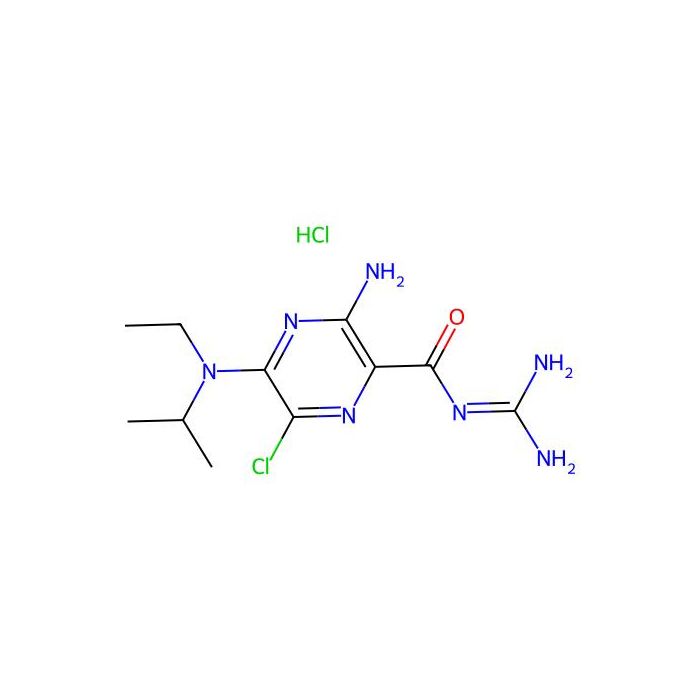
EIPA (L593754) hydrochloride is an orally active TRPP3 channel inhibitor with an IC 50 of 10.5 μM. EIPA hydrochloride also enhances autophagy by inhibiting Na + /H + -exchanger 3 ( NHE3 ). EIPA hydrochloride inhibits macropinocytosis as well. EIPA hydrochloride can be used in the research of inflammation and cancers, such as gastric cancer , colon carcinoma, pancreatic carcinoma.
In Vitro
EIPA hydrochloride (100 μM, 30 min) suppresses TRPP3-mediated Ca 2+ uptake in X. laevis oocytes. EIPA hydrochloride (10-100 μM) reversibly inhibits the basal Na + current (IC 50 : 19.5 μM). EIPA hydrochloride (300 μM, 6h) enhances autophagy through NHE3 (Na + /H + -exchanger 3) in IEC-18 cells. EIPA hydrochloride (20 μM, 2 h) blocks macropinocytosis-mediated uptake of CA-PZ massively entry in HT-29 cells and MIA PaCa-2 cells. EIPA hydrochloride (30 μM, 3h) attenuates Zinc/Kainate toxicity by decreasing Zn 2+ entry in cerebellar granule neurons . EIPA hydrochloride (5-100 μM, 48h) suppresses proliferation of MKN28 cells through up-regulation of p21 expression . EIPA hydrochloride (3 μM, 6 h) inhibits the LPS-induced increase in the level of COX-2 protein. MCE has not independently confirmed the accuracy of these methods. They are for reference only. Cell Proliferation Assay Cell Line: MKN28 cells Concentration: 5, 10, 25, 50, and 100 μM Incubation Time: 48 h Result: Inhibited cell proliferation in a dose- and time-dependent manner. Western Blot AnalysisCell Line: IEC-18 cells Concentration: 300 μM Incubation Time: 6 h Result: Increased total LC3-II protein levels and P62 flux. Increased ATG5, 7, 12 and P62 expression.
In Vivo
EIPA hydrochloride (Intravenous injection, 1 mg/kg) dose-dependently attenuates the I/R (Ischemia/reperfusion)-induced renal dysfunction in ddY strain mice . EIPA hydrochloride (oral administration, 10 mg/kg) inhibits LPS-induced inflammation in air pouch-type LPS-induced inflammation model. MCE has not independently confirmed the accuracy of these methods. They are for reference only. Animal Model: Male ddY strain mice Dosage: 1 mg/kg Administration: Intravenous injection Result: Attenuated histologic renal damage, and imprved the I/R-induced increases in renal ET-1 contents. Animal Model: Air pouch-type LPS-induced inflammation model Dosage: 10 mg/kg Administration: Oral administration Result: Inhibited the LPS-induced infiltration of leukocytes into the pouch. Inhibited the amount of PGE2 in the pouch fluid.