QUALITÄT & REINHEITMoligand™?Moligand™ — Aladdin's line of ligands and bioactive small molecules. Use for receptor, pathway, and binding studies needing defined small-molecule tools.≥99%(HPLC)
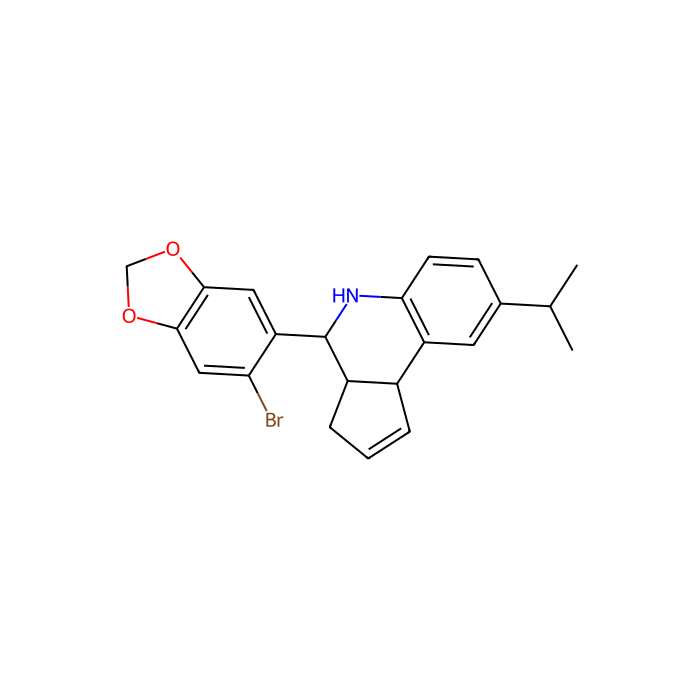
G-36 is a cell permeable non-steroidal antagonist of G-protein-coupled estrogen receptor (GPER/GPR30) which selectively inhibits estrogen-mediated activation of PI3K by GPER, but not by ERα. G-36 also inhibits estrogen-mediated calcium mobilization (IC50=112 nM)
Spezifikationen
Synonyme
(+/-)-(3aR*,4S*,9bS*)-4-(6-Bromo-1,3-benzodioxol-5-yl)-3a,4,5,9b-tetrahydro-8-(1-methylethyl)-3H-cyclopenta[c]quinoline | G-36 | rel-(3aR,4S,9bS)-4-(6-Bromo-1,3-benzodioxol-5-yl)-3a,4,5,9b-tetrahydro-8-(1-methylethyl)-3H-cyclopenta[c]quinoline | (3aS,4R,9bR)-4-(6-bromo-1,3-benzodioxol-5-yl)-8-propan-2-yl-3a,4,5,9b-tetrahydro-3H-cyclopenta Show more
Spezifikationen & Reinheit
Moligand™, ≥99%(HPLC)
Biochemische und physiologische Mechanismen
Antagonist of GPER; selectively inhibits estrogen-mediated activation of PI3-K by GPER, but not by ERα. Also inhibits estrogen-mediated calcium mobilization (IC50= 112 nM). Structural analog ofG-1.
Storage
Store at -20°C
Verschickt in
Ice chest + Ice pads
Dieses Produkt erfordert Kühlkettenversand. Grundversand und andere Economy-Optionen sind nicht verfügbar.
This compound belongs to the class of organic compounds known as hydroquinolines. These are derivatives of quinoline in which in which at least one double bond in the quinoline moiety are reduced by adding two hydrogen atoms.
External Descriptors
Not available
1. Djoumbou Feunang Y, Eisner R, Knox C, Chepelev L, Hastings J, Owen G, Fahy E, Steinbeck C, Subramanian S, Bolton E, Greiner R, and Wishart DS. ClassyFire: Automated Chemical Classification With A Comprehensive, Computable Taxonomy. Journal of Cheminformatics, 2016, 8:61.
Determine the necessary mass, volume, or concentration for preparing a solution.
Dilution Calculator
Determine the dilution needed to prepare a stock solution.
Reconstitution Calculator
Bewertungen
Kundenbewertungen
Application Protocols
Item-specific tested applications
None specified for this item.
General protocols for small-molecule screening (research use)
Stock preparation: Dissolve the compound at 10–50 mM in anhydrous DMSO. Vortex/sonicate briefly. If necessary, warm gently (<40°C) in a sealed tube, then cool to RT before opening.
Aliquoting: Dispense single-use aliquots (10–100 µL) into low-binding tubes or 384-well source plates; purge with inert gas if oxidation-sensitive; store at −20°C.
Serial dilution: Perform 1:3 or 1:10 serial dilutions in assay-compatible vehicle to generate 10–12-point concentration–response curves. Keep final DMSO ≤0.1–1% v/v.
Assay interference checks: Measure intrinsic fluorescence/absorbance across assay wavelengths; include detergent (0.01–0.05% Tween-20) and redox counterscreens if relevant.
Data quality: Include vehicle controls, positive/negative controls, and technical triplicates. Calculate Z′-factor during assay validation; aim for Z′ ≥ 0.5.
Stability monitoring: Confirm concentration and integrity of working solutions by LC–UV/MS pre- and post-assay, especially for long incubations (>2 h) or elevated temperatures.
Note
The above are general practices and not item-specific claims. Consult the CoA/SDS for any constraints unique to this compound.
Biological Roles
Item-specific biological target/role
Not specified for this item; refer to CoA/Spec Sheet and primary literature, if applicable.
General context for small-molecule ligands (research use)
Small-molecule ligands are used to modulate or probe macromolecular function (enzymes, receptors, transporters) and to interrogate pathways in cellular or cell-free systems. They can act as agonists/antagonists, inhibitors/activators, or allosteric modulators depending on structure and context.
In discovery workflows, a well-characterized ligand supports: target engagement studies (e.g., CETSA, NanoBRET), binding thermodynamics (ITC), kinetics (stopped-flow, SPR), and mechanistic elucidation via competition with substrates or co-factors.
Physicochemical properties (charge state, permeability surrogates, solubility) drive assay behavior. Pay special attention to aggregation, nonspecific redox activity, and interference with detection modalities; include counterscreens (detergent sensitivity, redox/thiol reactivity panels) where appropriate.
For cell-based experiments, confirm compound stability in culture media (protein binding, serum esterase sensitivity, photolability), and control vehicle concentrations carefully to avoid confounding cytotoxicity or off-target stress responses.
Recommendation
If “G-36” maps to a known literature chemotype in your program, reconcile lot identity with published spectra/analytical data before translating reported conditions or potencies.
Buffer Applications
Item-specific buffer system
None specified for this item; no designated buffering role. This product is a small-molecule ligand, not a buffer component.
General guidance for preparing assay solutions with small-molecule ligands
Stock preparation: Dissolve in dry DMSO (10–50 mM). For aqueous working solutions, dilute into assay buffer under vigorous mixing to final DMSO ≤0.1–1% v/v as tolerated by the assay.
Common assay buffers: PBS or HEPES (pH 7.2–7.5) for biochemical and cell assays; Tris or HEPES (pH 7.5–8.0) for many enzyme assays; citrate or acetate buffers for acidic enzymes. Choose buffer to maintain target stability and avoid reactive functionalities (e.g., primary amines in Tris can interfere with NHS ester chemistry).
Additives: Include 0.01–0.05% nonionic surfactant (Tween-20, Triton X-100) to mitigate colloidal aggregation when appropriate to the assay. Add 0.1% BSA if nonspecific binding is problematic.
Filtration: If precipitation occurs upon dilution, brief sonication and 0.22 µm filtration can help—confirm no loss by adsorption using recovery checks via LC–UV.
Stability checks: Monitor compound integrity in buffer over the assay time course by LC–MS; re-prepare solutions frequently if instability is detected.
Green Alternatives
Context
Without a disclosed structure, solvent/reactivity hazards specific to this item cannot be enumerated. However, greener strategies primarily concern dissolution vehicles and handling practices for screening ligands.
Greener solvent choices (general guidance)
Prefer ethanol (EtOH) or isopropanol (IPA) over acetonitrile/DMF when biological compatibility allows; both are less toxic and have better environmental profiles.
Use aqueous buffers with minimal DMSO (≤0.1–0.5% v/v) for working solutions when solubility permits.
Avoid chlorinated solvents for routine dissolution; reserve for analytical needs only.
Small comparison (general; not item-specific specs)
DMSO: excellent solvency; moderate EHS concerns; widely accepted in bioassays at ≤1%.
Ethanol: greener, volatile, cell-compatible at low %; lower solvency for highly lipophilic compounds.
PEG-400: nonvolatile, greener profile; can enhance solubility but may affect assay readouts and viscosity.
Operational best practices
Minimize waste by preparing small aliquots tailored to experiment scale.
Use microscale solubility screens to avoid multiple failed preparations.
Document and share solvent selection and concentration limits to reduce rework and improve reproducibility across teams.
Pharmaceutical Uses
Item-specific pharma/formulation status
No pharmacopeial status or excipient role is specified. This product is supplied strictly for research use only.
General considerations (non-clinical)
Small-molecule ligands at discovery stage are sometimes formulated for in vivo research in vehicles such as: 10–20% captisol, 10–40% PEG-400, 5–10% ethanol, and saline or citrate buffer, depending on solubility and tolerability. These are research practices and are not clinical guidance.
Salt selection (if applicable) can influence solubility and stability; verify the exact counter-ion or free-base/acid form on the CoA before preparing any dosing formulations for preclinical studies.
Avoid extrapolating research formulations to clinical contexts; regulatory-grade specifications (ICH, pharmacopeias) and GMP controls are not implied by Moligand™ grade.
Compliance note
No medical, diagnostic, or therapeutic use is intended or permitted. For any in vivo research, ensure internal ethics and EHS approvals and consult the SDS and CoA for material-specific constraints (impurity profile, residual solvents, stability).
Physical Properties
Item-specific physical data
Appearance: Not specified for this item; refer to CoA/Spec Sheet.
Melting point (MP): Not specified for this item; refer to CoA/Spec Sheet.
Boiling point (BP): Not specified for this item; refer to CoA/Spec Sheet.
Density: Not specified for this item; refer to CoA/Spec Sheet.
Solubility: Not specified for this item; refer to CoA/Spec Sheet.
LogP/logD, pKa, refractive index: Not specified for this item; refer to CoA/Spec Sheet.
General guidance (literature/practice, not item specifications)
Library ligands are commonly supplied as crystalline solids or amorphous powders and are often handled as concentrated DMSO stocks (e.g., 10–50 mM) for screening and biological assays.
If solubility is unknown, perform a micro-solubility screen: DMSO → DMF → ethanol → acetonitrile; then aqueous buffer with 1–5% DMSO or 10–20% ethanol if biologically compatible.
For ionizable compounds, adjusting pH (±2 units around predicted pKa) can markedly improve aqueous solubility; confirm by UV-Vis or HPLC area response stability over time.
Hygroscopicity and polymorphism can influence weighing accuracy and dissolution rates. If behavior suggests hygroscopicity, quickly weigh in a low-humidity environment and prepare aliquots.
Analytical tips
Verify identity and purity by LC–MS and HPLC/UPLC prior to critical studies. If extinction coefficient is unknown, use quantitative NMR (qNMR) or gravimetric preparation with back-calculation by LC–UV to confirm stock concentration.
Quality and Grades
Item-specific quality
Grade/Purity: Moligand™.
Exact purity assay, residual solvents, elemental/metal content, water/peroxide levels, and stabilizers: Not specified for this item; refer to CoA/Spec Sheet.
What Moligand™ implies (general description; not a substitute for item specifications)
Moligand™ denotes a screening/probe-oriented small-molecule suitable for target interrogation, assay development, and SAR exploration. Typical QC for such entries includes LC–MS identity confirmation and HPLC purity profiling; some lots may also be supported by 1H NMR and water/solvent determinations.
UV transparency and low baseline drift are important for plate-based readouts; users should review chromatographic traces and UV spectra on the CoA to ensure compatibility with their detection wavelengths.
Practical quality considerations
Request the lot-specific CoA for: purity (area %), retention time and method, mass spectrum, and any known counter-ions/salt forms.
For quantitative biology or biophysics, confirm concentration by qNMR or external-standard LC–UV. Impurities or tautomers can affect apparent potency and binding thermodynamics.
If your application requires metal-catalyst sensitivity (e.g., biocatalysis), ask for residual metal screening data or perform your own ICP-MS.
For high-sensitivity fluorescence/absorbance assays, evaluate background signal from vehicle and compound at working concentrations to rule out inner-filter or autofluorescence effects.
Reaction and Applications
Applicability to synthetic reactions (item-specific)
This Moligand™ entry is intended primarily as a bioactive screening ligand rather than a synthetic reagent. No manufacturer-supplied reaction applications are provided, and functional group information is not disclosed. As such, traditional named-reaction use (e.g., cross-couplings, condensations) cannot be recommended for this item without structural confirmation.
General applications for screening ligands (non-synthetic)
Assay development and target validation: Use as a reference or exploratory ligand in biochemical, biophysical (SPR, ITC, DSF), or cellular assays to benchmark response windows.
SAR and mechanistic studies: Compare activity across close analogs to infer binding determinants; employ competition assays to probe site engagement when a tool ligand is known.
Probe qualification: Evaluate potency reproducibility across assay formats and counterscreens (e.g., detergent-sensitive readouts to flag aggregation; redox activity panels).
Practical guidance
Prepare master DMSO stocks (10–50 mM), aliquot, and store at −20°C. Avoid plastic adsorption by using low-binding polypropylene plates/tubes.
Before committing to HTS, pilot stability in assay buffer (time course LC–MS) and assess interference (autofluorescence/absorbance, redox cycling, PAINS filters). Use orthogonal detection when possible.
If synthetic elaboration is planned, first obtain the disclosed structure; then evaluate standard transformations on an analytical scale to confirm compatibility.
Reaction Conditions
Item-specific reaction conditions
None provided. Because the molecular structure and functional groups are not disclosed for this SKU, no specific reaction conditions can be recommended.
General guidance (only if structure becomes available)
Choose solvent and base/acid systems compatible with the functional group landscape (e.g., polar aprotic solvents for SNAr on electron-deficient heteroarenes; protic or biphasic systems for phase-transfer catalysis if quaternization is feasible).
Temperature and time should be optimized on 5–20 mg analytical scale with in-process LC monitoring. Protect from moisture/oxygen/light if sensitive moieties are present (e.g., aldehydes, diazo, photosensitive azo/anthracene motifs).
For metal-catalyzed couplings, degas solvents, use anhydrous conditions, and screen ligand/catalyst loadings systematically (e.g., 0.5–5 mol% Pd; bases like K2CO3, Cs2CO3, or tBuONa as dictated by substrate stability).
Note
The above are generic considerations and are not item-specific specifications. Retrieve the structure and consult primary literature before attempting any transformations on this material.
Safety and Handling
Item-specific hazard information
Signal word: Not specified for this item; refer to SDS.
GHS classification and pictograms: Not specified for this item; refer to SDS.
H-statements: Not specified for this item; refer to SDS.
Storage: Store at −20°C (per Product Data). Shipped cold (ice chest + ice pads).
General laboratory safety (for small-molecule ligands; defer to SDS for authoritative guidance)
PPE: Lab coat, safety glasses, and appropriate chemical-resistant gloves (e.g., nitrile). Handle powders in a fume hood to avoid inhalation of dust/aerosols.
Avoid skin/eye contact and ingestion. Prevent inhalation of dust; use microspatulas and antistatic measures when handling finely divided solids.
Incompatibilities are structure-dependent (acids/bases/oxidizers). Until specific data are known, segregate from strong oxidizers and strong acids/bases, and avoid metal-catalyzed heating.
First aid (overview): If inhaled—move to fresh air; skin—wash with soap/water; eyes—rinse with water for ≥15 min; ingestion—rinse mouth, seek medical attention. Provide SDS to responders.
Spill/cleanup: Avoid dust generation; dampen and collect with inert absorbent. Dispose via licensed chemical waste contractor in accordance with local regulations.
Thermal/photolability: Many bioactive ligands degrade with heat or light. Minimize exposure; keep capped, protected from light, and return promptly to −20°C after use.
Keep a dedicated DMSO stock aliquot to reduce repeated freeze–thaw and handling of the neat solid.
Solvent Selection
Item-specific solvent data
Solubility/miscibility: Not specified for this item; refer to CoA/Spec Sheet.
General solvent strategy for unknown/varied small-molecule ligands
Primary stock vehicle: DMSO is the default for discovery ligands due to broad solvency and assay compatibility at ≤0.5–1% v/v in many biological systems.
Secondary options: DMF, NMP, acetone, acetonitrile, ethanol, isopropanol. Choose based on assay tolerance, volatility, and material compatibility.
Aqueous delivery: Prepare concentrated DMSO stocks (e.g., 10–50 mM), then dilute into buffer with vigorous mixing to final DMSO ≤0.1–1% v/v. Include nonionic surfactant (e.g., 0.01–0.05% Tween-20) when colloidal aggregation is a risk.
pH adjustment: For ionizable analytes, dissolve in minimal solvent then titrate buffer to maintain solubility near the ionized state. Filter (0.22 µm) if compatible.
Comparison notes (general)
DMSO vs DMF: DMSO is less volatile and more biocompatible, but hygroscopic; DMF offers strong solvency but presents higher toxicity concerns.
Ethanol vs acetonitrile: Ethanol is greener and cell-compatible at low %; acetonitrile provides stronger solvency for neutral aromatics and is LC-friendly, but less biocompatible.
Practical tips
Run a mini solubility screen (5–10 mg scale) with stepwise solvent escalation, documenting clarity, time-to-dissolution, and stability by LC–MS/HPLC over 24–48 h.
Storage and Reconstitution
Item-specific storage and shipping
Storage conditions: Store at −20°C (per Product Data). Minimize freeze–thaw; keep container tightly closed.
Shipped in: Ice chest + ice pads.
Reconstitution (general guidance; not item specifications)
Preferred stock solvent: Anhydrous DMSO, unless the CoA specifies an alternative. Typical stock concentrations: 10–50 mM.
Procedure: Equilibrate vial to room temperature before opening to prevent moisture condensation. Weigh quickly, cap promptly. Add measured solvent volume, vortex, and, if needed, brief sonication. Avoid heating above 40°C unless stability is confirmed.
Aliquoting: Prepare single-use aliquots to avoid repeated freeze–thaw cycles. Use low-binding polypropylene tubes. For light-sensitive compounds, wrap in foil or use amber vials.
Working solutions: Dilute into assay buffer immediately before use. Maintain final organic cosolvent at assay-tolerated levels (commonly ≤0.1–1% DMSO).
Stability considerations
Photolability/oxidation/hydrolysis risks are compound-dependent. If not specified, store under inert gas (argon/nitrogen) as a precaution and protect from light. Verify stability by periodic LC–MS/HPLC.
Documentation
For lot-specific solubility, purity, and stability data, consult the CoA/Spec Sheet. Always defer to the SDS for hazard and first-aid information.
Structure and Identity
Item-specific facts (from Product Data)
Product name: G-36 (SKU: G288800)
CAS: 1392487-51-2
PubChem CID: 73755224
InChIKey: 306139
SMILES: Not specified for this item; refer to CoA/Spec Sheet.
Molecular formula: Not specified for this item; refer to CoA/Spec Sheet.
Molecular weight: Not specified for this item; refer to CoA/Spec Sheet.
Grade: Moligand™; Category: small molecules and compound libraries; Research use only.
Interpretive notes (general chemistry context)
“G-36” here denotes a small-molecule library entry (Moligand™ grade). The precise 2D structure, functional groups, and stereochemistry are not provided in this listing. Without a SMILES or structure diagram, structural features (aromaticity, heteroatoms, ionizable centers, stereocenters) cannot be described for this specific item.
If you require unambiguous structural identity for informatics, docking, or analytical method development, request the CoA/Spec Sheet for this SKU or reference the supplier’s structure disclosure under CDA where applicable.
Practical guidance
For cheminformatics workflows (e.g., generating 2D/3D conformers, pKa/logP predictions), obtain the canonical SMILES or SDF from the CoA or the vendor portal. Ensure the identifier (CAS 1392487-51-2; CID 73755224) aligns exactly with the supplied structure prior to use in screening or synthesis.
Synthetic Utility
Item-specific utility as a reagent/building block
Not specified for this item; structure and functional groups are not disclosed in this listing. Therefore, no reliable guidance can be provided on its use as a synthetic intermediate.
General notes
If you plan derivatization or analog synthesis, first obtain the full structure (SMILES/SDF) and assess key handles (e.g., aryl halides for cross-coupling, amines/acids for amide formation, heteroaryl nitrogens for N-oxidation/alkylation). Run micro-scale reactions to confirm reactivity and stability.
For scale-up or library expansion, confirm purity and batch-to-batch consistency by orthogonal methods (LC–MS, HPLC, NMR). Map potential liabilities (acid/base lability, redox sensitivity, photodegradation) before planning protecting-group strategies.
Practical recommendation
Until the structure is confirmed, treat this material as an endpoint ligand rather than a feedstock. Source or synthesize fully characterized analogs if a synthetic campaign is intended.
Target Specificity
Item-specific targeting data
Not specified for this item. No target, pathway, or binding profile is provided in the Product Data.
Guidance
For use as a reference ligand or probe, obtain target annotations (if any) from the item’s CoA/Spec Sheet or validated literature sources. Confirm that the compound identity (CAS 1392487-51-2; CID 73755224) and stereochemistry match those in cited studies before interpreting biological readouts.
Where uncertainty exists, implement a target-deconvolution strategy (chemoproteomics, CETSA, DARTS, or panel screening) to verify specificity and minimize off-target confounds.
Häufig gestellte Fragen
What is the purity of this product, and how is it determined?
This product is supplied at ≥99% purity, determined by HPLC. Lot-specific values are stated on the Certificate of Analysis.
What is Moligand??
Moligand? is one of Aladdin Scientific's premium product lines, formulated for high-purity applications across multiple workflows. Compared to standard grades in the same workflow, Moligand? products typically offer tighter specifications, more rigorous QC, and stronger lot-to-lot consistency.
How should this product be stored?
Store at ?20 °C. Freezer storage is required to maintain the specified shelf life.
How is this product shipped?
This product ships in an insulated container with ice pads. Unpack on arrival and transfer it to the storage condition stated above.
What are the CAS number, molecular formula and molecular weight?
The CAS Number is 1392487-51-2, the molecular formula is C22H22BrNO2, and the molecular weight is 412.33 g/mol. InChIKey QTOCPACSSHFGOY-ZCCHDVMBSA-N.
What documentation is provided?
Available product documentation, including Certificates of Analysis (COA), Safety Data Sheets (SDS), and specification sheets, is shown in the product document area. Document availability and access follow the current site policy.
Benötigen Sie Hilfe bei der Auswahl der Qualität?
Unser Leitfaden zur Qualitätsauswahl behandelt Reinheit, Stabilisatorstatus und Anwendungseignung für alle Varianten in unserem Katalog.
Wir verwenden Cookies, um die ordnungsgemäße Funktion der Website sicherzustellen und, soweit zulässig, Ihr Nutzererlebnis zu verbessern. Sie können Ihre Einstellungen jederzeit unter „Einstellungen“ verwalten. Weitere Informationen finden Sie in unserer Cookie-Richtlinie.
Dürfen wir Sie über Rabattaktionen informieren?
Später erinnern
Vielen Dank! Bitte überprüfen Sie Ihren E-Mail-Posteingang, um zu bestätigen.
Products are supplied to verified businesses, institutions, and qualified professionals for research and development use only. Not for use in humans, animals, diagnosis, or therapy.

 F2302450