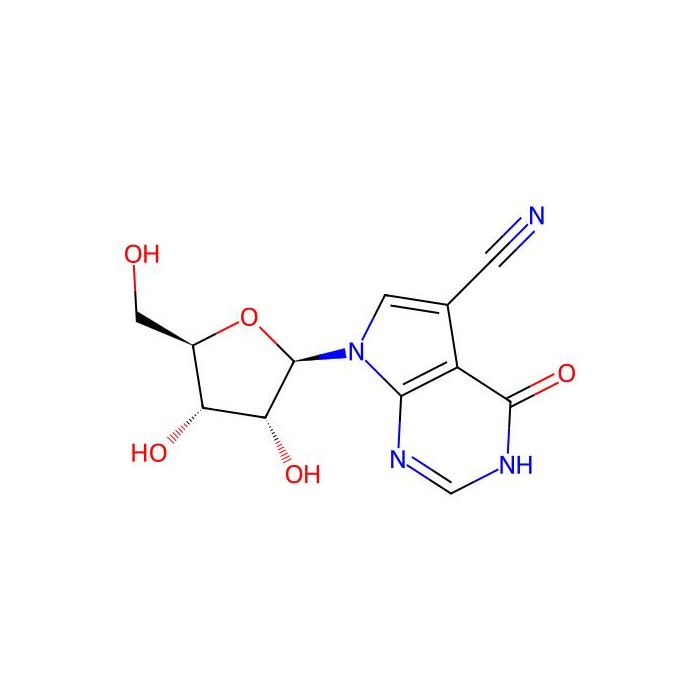
Jaspamycin - ≥98% , CAS No.22242-96-2

CAS: 22242-96-2 Cat. No.: J647143 Summenformel: C12H12N4O5 Molekulargewicht: 292.25 PubChem CID: 136670059
Zu bestellen verfügbar
QUALITÄT & REINHEIT ≥98%
Storage
Store at -20°C
Shipped In
Ice chest + Ice pads
★
Größe
Deutschland (EU)
USA*
Preis
Menge
5mg
J647143-5mg
Auf Bestellung · 8–12 Wochen
608,20€
10mg
J647143-10mg
Auf Bestellung · 8–12 Wochen
955,29€
50mg
J647143-50mg
Auf Bestellung · 8–12 Wochen
2.864,32€
100mg
J647143-100mg
Auf Bestellung · 8–12 Wochen
3.905,61€
Enter a quantity for the sizes you want to add.

Übersicht

Jaspamycin (7-CN-7-C-Ino) is a potent activator of PKA , binding to the R site (PKAR), with an EC 50 of 6.5 nM and K d of 8 nM in Trypanosoma brucei . Jaspamycin (7-CN-7-C-Ino) does not bind with purified human PKARIα. Anti-parasite activity

Form:Solid

IC50& Target:Trypanosoma brucei PKAR(199-499) 6.5 nM (EC 50 ) Trypanosoma Trypanosoma brucei PKA holoenzyme 8 nM (Kd)

Spezifikationen

Spezifikationen & Reinheit
≥98%
Biochemische und physiologische Mechanismen
Jaspamycin (7-CN-7-C-Ino) is a potent activator of PKA , binding to the R site (PKAR), with an EC 50 of 6.5 nM and K d of 8 nM in Trypanosoma brucei . Jaspamycin (7-CN-7-C-Ino) does not bind with purified human PKARIα. Anti-parasite activity.
Storage
Store at -20°C
Verschickt in
Ice chest + Ice pads
Dieses Produkt erfordert Kühlkettenversand. Grundversand und andere Economy-Optionen sind nicht verfügbar.
Aktionsart
INHIBITOR
Reinheit
≥98%
Namen und Kennungen
SMILES
C1=C(C2=C(N1C3C(C(C(O3)CO)O)O)N=CNC2=O)C#N
IUPAC Name
7-[(2R,3R,4S,5R)-3,4-dihydroxy-5-(hydroxymethyl)oxolan-2-yl]-4-oxo-3H-pyrrolo[2,3-d]pyrimidine-5-carbonitrile
InChIKey
SKDKFLFSBDYEDO-WOUKDFQISA-N
InChI
1S/C12H12N4O5/c13-1-5-2-16(10-7(5)11(20)15-4-14-10)12-9(19)8(18)6(3-17)21-12/h2,4,6,8-9,12,17-19H,3H2,(H,14,15,20)/t6-,8-,9-,12-/m1/s1
Isomere SMILES
C1=C(C2=C(N1[C@H]3[C@@H]([C@@H]([C@H](O3)CO)O)O)N=CNC2=O)C#N
PubChem CID
136670059
Molekulargewicht
292.25

Erweiterte Daten

Taxonomic Classification

Taxonomy Tree

KingdomOrganic compounds
SuperclassNucleosides, nucleotides, and analogues
KlassePyrrolopyrimidine nucleosides and nucleotides
SubclassNot available
Intermediate Tree Nodes Not available
Direct ParentPyrrolopyrimidine nucleosides and nucleotides
Alternative Parents Glycosylamines  Pentoses  Pyrrolo[2,3-d]pyrimidines  Pyrimidones  Substituted pyrroles  Vinylogous amides  Heteroaromatic compounds  Oxolanes  1,2-diols  Secondary alcohols  Oxacyclic compounds  Nitriles  Azacyclic compounds  Organic oxides  Hydrocarbon derivatives  Primary alcohols  
Molecular FrameworkAromatic heteropolycyclic compounds
Substituents Pyrrolopyrimidine ribonucleoside - Glycosyl compound - N-glycosyl compound - Pentose monosaccharide - Pyrrolo[2,3-d]pyrimidine - Pyrrolopyrimidine - Pyrimidone - Monosaccharide - Pyrimidine - Substituted pyrrole - Oxolane - Heteroaromatic compound - Vinylogous amide - Pyrrole - 1,2-diol - Secondary alcohol - Carbonitrile - Nitrile - Oxacycle - Azacycle - Organoheterocyclic compound - Organooxygen compound - Organonitrogen compound - Alcohol - Organic nitrogen compound - Organic oxide - Hydrocarbon derivative - Primary alcohol - Organic oxygen compound - Cyanide - Aromatic heteropolycyclic compound
BeschreibungThis compound belongs to the class of organic compounds known as pyrrolopyrimidine nucleosides and nucleotides. These are nucleoside derivatives containing a ribose derivative which is n-glycosylated to a pyrrolopyrimidine. Also called deazapurine nucleosides, they are analogs of purine nucleosides with the N atom of the purine being replaced by a C atom at position 7.
External Descriptors Not available
3D-Struktur
Interaktives chemisches Strukturmodell


Wirkungsmechanismen
Zertifikate (CoA, COO, BSE/TSE und Analyse-Diagramm)
C of A & Other Certificates(BSE/TSE, COO):
Analytical Chart:
Chemische und physikalische Eigenschaften
LöslichkeitDMSO : 41.67 mg/mL (142.58 mM; Need ultrasonic)
Lösungsrechner
Bewertungen

Kundenbewertungen

Application Protocols

No validated application protocols are provided in the Product Data for this item.

  • Item-specific (Product Data)

    • Tested applications and recommended dilutions: Not specified for this item; refer to CoA/Spec Sheet.
  • General guidance for small-molecule use in assays

    • Stock preparation: Dissolve in dry, high-purity DMSO to prepare 10–50 mM stocks; filter if necessary through 0.22 µm PTFE.
    • Aliquoting: Prepare single-use aliquots (e.g., 10–50 µL) and store at -20 °C to minimize freeze–thaw.
    • Assay setup: Maintain final DMSO ≤0.5–1% v/v. Include vehicle controls and, where possible, a positive control compound.
    • Stability check: Assess stability in assay buffer and under incubation conditions by LC-MS/UPLC over the experiment duration.
    • Data integrity: Use replicate wells and plate randomization to mitigate edge effects and solvent gradients.

For detailed, validated protocols, consult primary publications for CAS 22242-96-2 or contact technical support with your application details.

Biological Roles

Context: Specific biological targets or pathways for this item are not provided in the Product Data. The following remarks are general to small-molecule natural products used in research and are not item-specific claims.

  • Item-specific (Product Data)

    • Biological/target information: Not specified for this item; refer to literature for CAS 22242-96-2.
  • Literature/general context

    • Natural products labeled with the “-mycin” suffix often originate from microbial secondary metabolism and may exhibit antibacterial or enzyme-modulating properties in vitro. However, exact mechanism-of-action, selectivity, and potency for Jaspamycin should be confirmed from primary sources.
    • Typical research uses include: pathway interrogation in microbial biology, chemical genetics, or use as a reference control in susceptibility testing—subject to validated activity data.
  • Practical guidance

    • Before use as a probe, confirm identity/purity (NMR/LC-MS) and establish dose–response in your assay format. Include orthogonal readouts (e.g., viability, reporter assays) to exclude artifacts from aggregation or solvent effects.
    • Assess stability in the chosen assay buffer and under incubation conditions (e.g., 37 °C for 1–24 h), monitoring by LC-MS.

Note: For research use only. No medical or clinical claims are made or implied. Consult primary literature for validated biological roles tied to CAS 22242-96-2.

Buffer Applications

Applicability: This section is generally not applicable. Jaspamycin is a discrete small molecule and not a buffering agent.

  • Item-specific (Product Data)

    • No buffer capacity or recommended buffer systems are provided.
  • Guidance (general)

    • If used in biochemical assays, dissolve in DMSO or a compatible co-solvent and then dilute into the assay buffer of choice (e.g., phosphate, HEPES, Tris), ensuring compound stability and avoiding precipitation.
    • Confirm that buffer components (pH, salts, surfactants, serum) do not degrade or sequester the compound.

For buffer recipes and pH ranges, refer to standard buffering agents; Jaspamycin itself is not used to prepare buffers.

Green Alternatives

Relevance: Green-chemistry substitution typically applies to solvents, reagents, or auxiliaries. As a discrete bioactive small molecule, Jaspamycin is not generally subject to “green alternative” replacement the way a solvent would be.

  • When this section matters

    • If Jaspamycin is used as a positive control in screening, greener considerations focus on the solvent system and handling rather than replacing the compound itself.
  • Greener handling strategies (general)

    • Use minimal DMSO volumes and low final assay percentages (≤0.5% v/v) to reduce solvent burden.
    • Prefer ethanol/water co-solvent systems when compatible with the assay and compound stability.
    • Implement microscale assays and high-density plate formats to reduce material and solvent use.
    • Optimize LC methods with shorter columns/greener mobile phases (e.g., MeOH-water vs ACN when feasible) while maintaining resolution.
  • Comparison (solvent focus; general)

    • DMSO vs 2-pyrrolidone or PEG-400: Alternative solubilizers may reduce hazard in certain contexts but can complicate assay compatibility; validate for your system.

Conclusion: Green alternatives are best pursued in the process/assay environment (solvent choice, scale, waste minimization) rather than substituting the compound.

Pharmaceutical Uses

Scope: No pharmacopeial status or excipient role is provided in the Product Data. This product is supplied strictly for research use.

  • Item-specific (Product Data)

    • Research Use Note: For research use only.
  • General (non-clinical) context

    • Small molecules of natural-product origin are often evaluated in discovery settings for target modulation; however, without item-specific regulatory status, Jaspamycin should not be used in human or veterinary applications, diagnostics, or as a drug substance/excipient.
    • If formulation-like studies are conducted (e.g., for in vitro bioassays), common lab vehicles include DMSO, ethanol, and aqueous buffers with surfactants. These are research-grade practices, not pharmaceutical formulations.

No therapeutic or clinical claims are made or implied for this item.

Physical Properties

Summary: No item-specific physico-chemical specifications were provided in the Product Data for this catalog entry. Values below are placeholders indicating the absence of specifications for this item.

  • Item-specific (Product Data)

    • Appearance: Not specified for this item; refer to CoA/Spec Sheet.
    • Molecular Weight: Not specified for this item; refer to CoA/Spec Sheet.
  • Literature/general (not item-specific; verify against CoA before use)

    • Melting point (MP): Not available in this listing; consult primary literature for CAS 22242-96-2.
    • Boiling point (BP): Not applicable/unknown for non-volatile natural products; consult literature.
    • Density: Not specified for this item; refer to CoA/Spec Sheet.
    • Solubility: For discovery-compound work, DMSO is commonly used to prepare screening stocks (e.g., 10–50 mM); aqueous solubility with co-solvent may vary widely for natural products. Verify experimentally.
    • LogP/logD, pKa, refractive index: Not specified for this item; consult literature or measure as needed for your workflow.

Practical guidance (general)

  • For early handling, attempt a small-scale solubility screen (water, MeOH, EtOH, ACN, DMSO, DMF) at room temperature and 37 °C.
  • If hygroscopicity or polymorphism is a concern, perform Karl Fischer/moisture screening and PXRD as appropriate.
  • For analytical characterization, establish an HPLC/UPLC method with PDA and MS detection first; confirm identity against reference spectra where available.

Note: Treat any literature values as guidance only; do not construe them as specifications for SKU J647143.

Quality and Grades

Quality overview: The Product Data do not list a grade or purity for this item. Use the guidance below to plan QC and fitness-for-use assessments.

  • Item-specific (Product Data)

    • Grade/Purity: Not specified for this item; refer to CoA/Spec Sheet.
  • Interpreting common grades (general guidance)

    • Research grade: Suitable for exploratory R&D; purity typically established by HPLC/LC-MS and NMR. UV cutoff and trace impurities may not be controlled to chromatographic solvent standards.
    • HPLC grade (for solvents) / LC-MS grade: Low background absorbance/ions; not applicable here unless supplied as a formulated solution.
    • Analytical/Reagent (AR) grade: Tighter impurity specifications suitable for analytical workflows.
  • Recommended incoming QC (general)

    • Identity: 1H NMR, HRMS, and, if available, comparison to literature spectra for CAS 22242-96-2.
    • Purity: HPLC/UPLC with PDA and MS; report area% at multiple wavelengths to detect chromophoric impurities.
    • Water content: Karl Fischer (if applicable to your use case). Metal content is usually not critical unless for catalysis assays.
    • Residual solvents: Headspace GC.
  • Stabilizers/additives

    • None specified for this item. If your assay is sensitive to acids/bases or antioxidants, confirm absence/presence on the CoA.

Note: When grade/purity are critical (e.g., screening vs. mechanistic biochemistry), reference the lot-specific CoA/Spec Sheet for acceptance criteria.

Reaction and Applications

Scope: Jaspamycin, as listed, is a bioactive small molecule for research. It is not typically used as a synthetic reagent or catalyst. Accordingly, reaction chemistry content focuses on usage in discovery workflows rather than as a building block.

  • Item-specific (Product Data)

    • Manufacturer Applications: Not provided for this entry.
  • Research usage (general guidance)

    • Screening libraries: Use in target-agnostic phenotypic screens or target-based biochemical assays to probe pathway modulation. Prepare DMSO stocks (e.g., 10 mM) and dilute to assay concentrations with controls for solvent effects.
    • SAR and reference control: If Jaspamycin has literature-reported activity, it may serve as a reference comparator when profiling analogs. Verify activity and purity lot-by-lot before SAR conclusions.
    • Analytical method development: Establish robust LC-MS/MS methods for quantitation in biochemical matrices or stability studies; evaluate stability in assay buffer over experiment time.
  • Not a general reagent

    • Named reactions, stoichiometric reactivity, or catalytic utility are not generally applicable to this compound class without derivatization and validated protocols.

Note: For specific bioassay protocols or target classes, please consult primary publications tied to CAS 22242-96-2 or request additional documentation.

Reaction Conditions

Not typically applicable. Jaspamycin is not supplied as a reagent for chemical reactions; therefore, standard reaction-condition guidance (solvent, temperature, catalysts) is not relevant.

  • If chemical modification is intended (general)
    • Perform small-scale feasibility studies guided by confirmed structural information (once obtained from CoA/literature).
    • Choose reaction conditions compatible with sensitive functional groups often found in natural products (e.g., protect polyols, avoid strong acids/bases if labile glycosidic or ester linkages are present—structure dependent).
    • Monitor by LC-MS and NMR; purify by preparative HPLC when necessary to avoid degradation.

No item-specific reaction data are available for this catalog entry.

Safety and Handling

Safety summary: Hazard classification for this specific item is not provided in the Product Data. Apply prudent laboratory safety practices typical for bioactive small molecules and defer to the SDS for authoritative information.

  • Item-specific (Product Data)

    • GHS Classification: Not specified for this item; refer to CoA/Spec Sheet and SDS.
    • Signal Word / H-Statements / Pictograms: Not specified for this item; refer to SDS.
    • Storage Conditions: Store at -20°C.
    • Shipping: Ice chest + ice pads (cold chain maintained).
  • General laboratory precautions (literature/general guidance)

    • PPE: Use lab coat, safety glasses, and appropriate chemical-resistant gloves (e.g., nitrile). Work in a chemical fume hood to avoid inhalation exposure.
    • Avoid ingestion, inhalation of dust/aerosols, and skin contact. Consider bioactivity even at low doses; handle with care.
    • Incompatibilities: Until specific data are available, avoid strong oxidizers and strong acids/bases. Keep away from moisture if the substance is hydrolytically sensitive.
    • First aid overview: In case of skin/eye contact, rinse with water for ≥15 min and seek medical attention. If inhaled, move to fresh air. If ingested, do not induce vomiting; seek medical attention. Follow SDS procedures.
    • Spill/accidental release: Avoid dust generation; absorb/collect with inert material; dispose per institutional regulations.

Always consult the product SDS (most current version) for definitive hazard, exposure limits, and response measures.

Solvent Selection

Applicability: As a small-molecule screening compound with unspecified solubility, solvent selection should be empirical and guided by your downstream application (biochemical, cell-based, or analytical).

  • Item-specific (Product Data)

    • No solubility data provided for this item; refer to CoA/Spec Sheet.
  • General guidance for small-molecule natural products

    • Primary stock solvent: DMSO is the default for discovery screening (e.g., 10–50 mM), given broad solvating power and assay compatibility at ≤0.5–1% v/v.
    • Alternative solvents: DMF (strong polar aprotic), ethanol or methanol (biology-friendly co-solvents), acetonitrile (analytical compatibility). For aqueous use, prepare DMSO stock then dilute into buffered media with surfactant if needed (e.g., 0.01–0.05% Tween-80), monitoring for precipitation.
    • pH-assisted solubilization: If functional groups are ionizable (unknown here), modest pH adjustments (pH 2–3 or 9–10) can improve solubility; ensure stability at the chosen pH.
  • Practical tips

    • Small-scale solubility screen: 1 mg in 50–100 µL across solvents at RT and 37 °C with vortex/sonication; visually check and quantify by HPLC.
    • Avoid repeated freeze-thaw of DMSO stocks; prepare single-use aliquots.
  • Comparison snapshot (general)

    • DMSO: Highest success rate; cell-compatible at low %.
    • Ethanol/Methanol: Easier evaporation; watch cytotoxicity above 0.5–1%.
    • Acetonitrile: Good for analytics; limited cell assay tolerance.
    • Aqueous buffers: Only if compound is sufficiently ionizable/hydrophilic; confirm by experiment.
Storage and Reconstitution

Item-specific storage conditions are provided; reconstitution guidance is offered as general best practice for small molecules.

  • Item-specific (Product Data)

    • Storage Conditions: Store at -20°C.
    • Shipped In: Ice chest + Ice pads (maintain cold chain on receipt).
  • General reconstitution guidance (not item-specific; verify with CoA/SDS)

    • Upon receipt: Allow container to equilibrate to room temperature in a desiccator before opening to minimize moisture uptake (if solid). For solutions, keep cold and protect from light if recommended in SDS.
    • Solubilization: Prepare concentrated stocks in anhydrous DMSO (typical 10–50 mM). If water-soluble, sterile water or buffer may be used; confirm stability and pH compatibility.
    • Filtration: If particulate is observed, filter through 0.22 µm PTFE (for organic) or PES/nylon (for aqueous) into sterile vials.
    • Aliquoting: Dispense into single-use aliquots to avoid repeated freeze–thaw. Label with concentration, solvent, and date.
    • Storage of stocks: Keep at -20 °C (or as otherwise indicated on CoA/SDS). Protect from repeated temperature cycling; consider -80 °C for long-term DMSO stocks.
    • Thawing/usage: Thaw quickly at room temperature, mix gently, and return unused aliquots to storage promptly. Discard if precipitation, discoloration, or degradation is detected by LC/UV.

Note: If the CoA/Spec Sheet specifies different conditions (e.g., desiccation, inert atmosphere, light protection), follow those instructions preferentially.

Structure and Identity

Brief overview: Jaspamycin (SKU J647143) is listed as a small-molecule research compound in Aladdin’s small-molecule/compound library category. Limited item-specific identifiers are available in the Product Data for this entry.

  • Item-specific (Product Data)

    • SKU: J647143
    • Product Name: Jaspamycin
    • CAS: 22242-96-2
    • CID: 136670059
    • InChIKey: 338111 (as provided)
    • SMILES: Not specified for this item; refer to CoA/Spec Sheet.
    • Molecular Formula: Not specified for this item; refer to CoA/Spec Sheet.
    • Molecular Weight: Not specified for this item; refer to CoA/Spec Sheet.
  • Literature/general identity notes (context; not item-specific specs)

    • The suffix “-mycin” typically denotes a natural-product–derived small molecule (often microbial in origin). Without a provided structure, functional group assignment and ring-system description cannot be confirmed for this specific lot/item.
    • If structural elucidation is required for your application (e.g., dereplication, analog comparison), request the CoA/Spec Sheet or consult primary literature associated with CAS 22242-96-2.
  • Structural description (2D, qualitative)

    • Not possible to detail rings, stereocenters, or functional groups without an authenticated structure (SMILES/InChI). Please refer to the CoA/Spec Sheet for the verified structure used for this catalog entry.
Synthetic Utility

Relevance: Jaspamycin is provided as a finished small molecule for research and is not typically employed as a reagent, catalyst, or common building block in synthetic chemistry.

  • Item-specific (Product Data)

    • No functional group information provided; reactivity cannot be assigned without structure.
  • General considerations (literature/context)

    • If structural information confirms modifiable handles (e.g., alcohols, amines, carboxylates), late-stage derivatization strategies—such as acylation, carbamate formation, or selective oxidation—may be explored for probe development. Such transformations require validated structural data.
    • For SAR or tagging (e.g., biotinylation/fluorophore conjugation), install linkers at positions known to tolerate substitution per literature on CAS 22242-96-2, then re-evaluate biological activity.

Conclusion: Without item-specific structural data, Jaspamycin should be treated as a terminal compound for bioassay rather than a synthetic intermediate.

Target Specificity

Item-specific targeting data are not provided for this entry.

  • Item-specific (Product Data)

    • Target/Pathway/Mechanism: Not specified for this item; refer to CoA/Spec Sheet or primary literature for CAS 22242-96-2.
    • Antigen/epitope/clone/isotype: Not applicable; this is a small molecule, not an antibody.
  • Guidance (general)

    • Establish target specificity empirically using orthogonal assays (biochemical vs. cellular), counter-screens, and selectivity panels.
    • Evaluate potential assay interference (fluorescence, redox activity, aggregation) using appropriate control assays (e.g., detergent tests, light scattering, redox probes).

Dürfen wir Sie über Rabattaktionen informieren?

Später erinnern

Vielen Dank! Bitte überprüfen Sie Ihren E-Mail-Posteingang, um zu bestätigen.

Hoppla! Benachrichtigungen sind deaktiviert.