Determine the necessary mass, volume, or concentration for preparing a solution.
| Activity Type | Activity Value -log(M) | Mechanism of Action | Activity Reference | Publications (PubMed IDs) |
|---|

Moligand™, 10mM in DMSO Moligand™ for sensitive chromatographic and analytical workflows requiring minimal baseline interference.
Store at -80°C Ships Dry ice packs + Cold packs Check lot-specific COA for exact specifications.
SDS, COA, datasheet, and spec sheet available for download. Lot-specific COA accessible via lot number lookup.
Cited in 1 peer-reviewed publications across chromatography, organic synthesis, and cross-coupling reactions.
Information
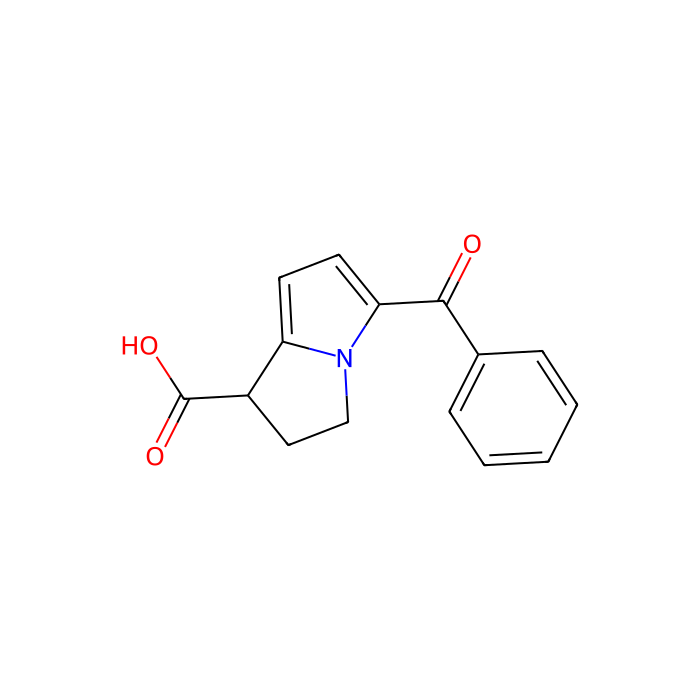
Ketorolac is a non-selective COX inhibitor ofCOX-1andCOX-2withIC50of 1.23 μM and 3.50 μM, respectively.
In vitro
(R, S)-, (S)-, and (R)-Ketorolac inhibit both isoforms of COX in recombinant rat and human enzyme systems, and similar as inhibitors of rat COX (rCOX) and human COX (hCOX) under the conditions used. (R, S)-Ketorolac inhibits rat COX-1, rat COX-2, human COX-1 and human COX-2 with IC50 of 0.27 μM, 2.06 μM, 1.23 μM and 3.50 μM, respectively. The (S) enantiomer of Ketorolac with IC50 of 0.10 μM for rat COX-1 is approximately twice as potent as the racemate, whereas the (R)-enantiomer with IC50 of > 100 μM is virtually without activity. Ketorolac shows inhibition of eicosanoid formation in HEL cells (COX-1) and LPS-stimulated Mono Mac 6 cells (COX-2) with IC50 of 0.025 μM and 0.039 μM, respectively, but does not significantly inhibit NO accumulation in supernatants of LPS-stimulated RAW 264.7 cells up to 300 μM. Ketorolac significantly inhibits thymidine incorporation of human osteoblasts (hOBs) upon 24 hours treatment in a dose-dependent manner, and inhibits proliferation and arrests cell cycle at G0/G1 phase in hOBs.
In vivo
(R, S)-Ketorolac is significantly more potent than indomethacin or diclofenac sodium in tests of acetic acid-induced writhing, carrageenan-induced paw hyperalgesia, and carrageenan-induced edema formation in rats, with ID50 of 0.24, 0.29 and 0.08 mg/kg, respectively. Ketorolac produces significant inhibition of COX-1 activity and gastric PG synthesis with doses of ≥1 mg/kg inhibiting COX-1 activity by 95% and gastric PG synthesis by >88%. Ketorolac does not significantly affect COX-2 activity at doses of ≤3 mg/kg, but at doses of 10 and 30 mg/kg, Ketorolac produces significant inhibition of COX-2 activity by 75% and 91%, respectively. Ketorolac causes gastric damage in rats only at doses that inhibits both COX-1 and COX-2, or when given with a COX-2 inhibitor.
Cell Data
cell lines:Human glaucomatous trabecular meshwork (GTM3) cell line
Concentrations:Dissolved in DMSO, final concentration ~0.1 mM
Incubation Time:24 hours
Powder Purity:≥99%
| Isomere SMILES | C1CN2C(=CC=C2C(=O)C3=CC=CC=C3)C1C(=O)O |
|---|---|
| Molekulargewicht | 255.27 |
| Reaxy-Rn | 413572 |
| Reaxys-RN_link_address | https://www.reaxys.com/reaxys/secured/hopinto.do?context=S&query=IDE.XRN=413572&ln= |
Comprehensive hazard, handling, storage, and regulatory compliance document.
Download SDS →Lot-specific quality data. Enter your lot number to retrieve the exact COA.
Look up COA →Full quality attributes and acceptance criteria for this grade.
View spec sheet →| Activity Type | Activity Value -log(M) | Mechanism of Action | Activity Reference | Publications (PubMed IDs) |
|---|
| Activity Type | Activity Value -log(M) | Mechanism of Action | Activity Reference | Publications (PubMed IDs) |
|---|
| Löslichkeit | Solubility (25°C) In vitro DMSO: 41 mg/mL (196.87 mM); |
|---|
| 1. Yunchao He, Yaling Wu, Lingping Cheng, Shanshan He, Qiuhua Wang, Huiying Wang, Yanxiong Ke. (2018) Separation of Ketorolac enantiomers on polysaccharide-based chiral stationary phases using a polar organic mobile phase. Separation Science Plus, 1 (5): (351-358). [PMID:] [10.1002/sscp.201800048] |
Our grade selection guide covers purity, stabilizer status, and application suitability for all variants in our catalog.
View Moligand™ grade guide →