GRADE & PURITYPharmPure™?PharmPure™ — Aladdin's line of biopharmaceutical raw and starting materials. Use for pharma manufacturing inputs needing high purity and documentation.
PharmPure™ PharmPure™ for sensitive chromatographic and analytical workflows requiring minimal baseline interference.
🌡
Storage & shipping
Room temperature,Argon charged Ships Normal Check lot-specific COA for exact specifications.
📋
Quality documents
SDS, COA, datasheet, and spec sheet available for download. Lot-specific COA accessible via lot number lookup.
📚
Literature proof
Cited in 29 peer-reviewed publications across chromatography, organic synthesis, and cross-coupling reactions.
Übersicht
Finding the right excipient that matches your needs as well as regulatory demands can be a complicated challenge in formulation. With our know-how and regulatory expertise, we support you in every step of development, scale-up, and production. As part of our EMPROVE ® Program, our raw materials are offered with extensive documentation facilitating compliance of your pharma and biopharma product, full supply chain transparency and risk mitigation. Our SAFC ® portfolio of high-quality products for biopharmaceutical and pharmaceutical formulation and production withstands strict quality control procedures and is produced according to applicable cGMP guidelines.Maltose is a commonly used ingredient in pharmaceutical s. In this area, maltose has been used primarily for solid oral dosage forms.
This compound belongs to the class of organic compounds known as fatty acyl glycosides of mono- and disaccharides. These are compounds composed of a mono- or disaccharide moiety linked to one hydroxyl group of a fatty alcohol or of a phosphorylated alcohol (phosphoprenols), a hydroxy fatty acid or to one carboxyl group of a fatty acid (ester linkage) or to an amino alcohol.
External Descriptors
Not available
1. Djoumbou Feunang Y, Eisner R, Knox C, Chepelev L, Hastings J, Owen G, Fahy E, Steinbeck C, Subramanian S, Bolton E, Greiner R, and Wishart DS. ClassyFire: Automated Chemical Classification With A Comprehensive, Computable Taxonomy. Journal of Cheminformatics, 2016, 8:61.
Determine the necessary mass, volume, or concentration for preparing a solution.
Dilution Calculator
Determine the dilution needed to prepare a stock solution.
Reconstitution Calculator
Bewertungen
Kundenbewertungen
Application Protocols
Item-specific, tested application protocols are not provided for this catalog entry; refer to your lab’s SOPs and relevant literature.
General laboratory protocols where maltose is commonly used (literature/practice):
Preparation of maltose stock solution
Dissolve maltose monohydrate in ultrapure water to the desired w/v concentration (e.g., 10–50%). Warm gently (≤40 °C) to aid dissolution; cool to room temperature; filter-sterilize (0.22 μm) if needed. Label as “monohydrate basis.”
MBP fusion protein elution (amylose resin)
Equilibrate resin with binding buffer (e.g., 20 mM Tris-HCl, 200 mM NaCl, pH 7.4). Load clarified lysate. Wash with 5–10 column volumes. Elute with the same buffer supplemented with maltose (optimize concentration empirically). Collect fractions and analyze by SDS-PAGE.
Enzyme assays with α-glucosidase
Prepare substrate solutions of maltose in appropriate buffer (e.g., sodium phosphate, pH 6–7). Initiate reaction by adding enzyme; incubate at defined temperature. Quantify glucose release using coupled enzymatic assays or measure reducing sugar increase with DNS or PAHBAH reagent.
Protein stabilization during freeze–thaw
Add 2–10% w/v maltose to the protein buffer. Aliquot, snap-freeze, and store as required. Thaw on ice; avoid repeated freeze–thaw cycles by aliquoting.
Note: Concentrations, temperatures, and buffer compositions should be optimized for your specific system. These examples are illustrative and not product-validated protocols.
Biological Roles
Literature/general overview (no medical claims):
Metabolic context: Maltose is produced during the hydrolysis of starch and glycogen via amylases, yielding α(1→4)-linked maltooligosaccharides. It is further cleaved by α-glucosidases (maltases) to two D-glucose molecules that enter glycolysis.
Transport and regulation: In bacteria such as E. coli, the maltose/maltodextrin (Mal) system mediates uptake and metabolism. Maltose acts as an inducer for maltose operon components under certain conditions.
Enzymology utility: As a defined disaccharide substrate for α-glucosidase assays, kinetic studies often use maltose to probe catalytic parameters and inhibitor screens.
Osmolyte/stabilizer: Disaccharides, including maltose, stabilize proteins and membranes by water-structure modulation and preferential exclusion, supporting native conformations during stress (freeze–thaw, drying).
Structural chemistry: The reducing end of maltose exists in equilibrium between cyclic (hemiacetal) and open-chain aldehyde forms, enabling reducing reactions (e.g., with DNS reagent for colorimetric assays).
Microbial culture: Many microorganisms readily metabolize maltose, making it a common carbon source in minimal and rich media formulations for growth studies and recombinant protein expression.
Notes for laboratory use (general):
When used as a substrate in enzyme assays, control for spontaneous mutarotation and temperature dependence, which can subtly affect apparent kinetics.
For long-term stabilization roles, non-reducing alternatives (trehalose, sucrose) may be preferred if Maillard chemistry with amines is a concern.
Buffer Applications
Maltose monohydrate is not a buffer and does not provide pH control. However, it is frequently incorporated into buffered solutions as an additive.
Practical laboratory uses (literature/general):
Protein stabilization: Add 2–10% w/v maltose to common buffers (e.g., 20–50 mM HEPES, phosphate, or Tris at physiological pH) to reduce aggregation during purification, storage, and freeze–thaw. Choose non-reactive buffers if primary amines (e.g., in Tris) could participate in Maillard reactions under your conditions.
Cryo/lyo formulations: As a lyoprotectant and glass former in combination with amino acids or polymers; verify pH with the base buffer since maltose does not buffer itself.
MBP elution buffers: Maltose is used to elute maltose-binding protein (MBP) from amylose resins. Typical practice is to supplement the equilibration and elution buffer (e.g., Tris–NaCl) with maltose to disrupt MBP–amylose interactions. Optimize concentration and ionic strength empirically for your construct and resin.
Osmotic modulation: Adjust osmolality in cell and vesicle experiments by adding maltose to isotonic buffers; confirm osmolality via osmometer.
Preparation notes:
Dissolve maltose in the pre-prepared buffer to target concentration; filter-sterilize through 0.22 μm if sterility is required.
Document concentrations as w/v and specify basis (monohydrate) when critical for reproducibility.
Green Alternatives
Maltose monohydrate is a bio-based, renewable carbohydrate. When used as a stabilizer, osmolyte, or benign process additive, it often aligns with green chemistry principles. Selection among related saccharides can further optimize safety, stability, and life-cycle considerations.
Comparison of common saccharide stabilizers (literature/general):
Maltose (reducing disaccharide)
Pros: Renewable, low toxicity, high aqueous solubility, good protein stabilization, effective MBP eluent.
Cons: Reducing end can undergo Maillard reactions with amines at elevated temperature or pH.
Trehalose (non-reducing disaccharide)
Pros: Exceptional protein and membrane stabilization; non-reducing minimizes Maillard pathways.
Cons: Cost can be higher; sometimes lower solubility than maltose at comparable conditions.
Sucrose (non-reducing disaccharide)
Pros: Very high solubility; inexpensive, widely available.
Cons: Hydrolyzes under acid or with invertase to glucose/fructose, changing solution properties; can crystallize upon concentration.
Cons: Strongly reducing; greater propensity for Maillard chemistry.
Greener process notes:
Aqueous media at ambient temperature are typically sufficient for dissolution—no need for organic solvents.
For carbohydrate derivatization, consider biocatalytic routes (glycosyltransferases, glycosidases) and benign oxidants (laccase/TEMPO) to reduce hazardous reagents.
Solid handling can minimize solvent waste: prepare concentrated stock solutions and dilute at point-of-use.
Pharmaceutical Uses
Item-specific regulatory or pharmacopeial status: Not specified for this item; refer to CoA/Spec Sheet.
General formulation roles of maltose monohydrate (literature/industry practice; no therapeutic claims):
Bulking agent/tonicity modifier: Adds solid mass and modulates osmolality in parenteral and non-parenteral research formulations.
Stabilizer/lyoprotectant: Disaccharides are commonly used to protect proteins, peptides, and labile biologics during freeze-drying by vitrification and water replacement mechanisms. Choice between maltose, sucrose, and trehalose depends on reducing activity tolerance and glass-transition targets.
Taste-masking/sweetener (non-clinical development contexts): Provides mild sweetness and solids without the hygroscopicity profile of monosaccharides.
Excipient development: In preclinical formulation screening, maltose is evaluated alongside sucrose and trehalose for stability, viscosity, and reconstitution behavior.
Process considerations (general):
Reducing nature: The reducing end can participate in Maillard reactions with primary amines, potentially affecting peptide/protein stability; evaluate alternatives (trehalose/sucrose) if this is a risk.
Hydration state: Use monohydrate basis for weighing or correct to anhydrous equivalent to maintain precise excipient ratios.
Sterility/bioburden: For sterile applications, prepare solutions with sterile technique and confirm bioburden/endotoxin according to institutional requirements (supplier specifications for this item are not provided).
Documentation: For any regulated use, comprehensive excipient specifications, residual solvent status, elemental impurities, and microbial limits must be established from the lot-specific CoA and applicable pharmacopeias.
Physical Properties
Item-specific physical specifications (for this catalog entry): Not specified for this item; refer to CoA/Spec Sheet.
Literature/general properties (for reference only; not product specifications):
Appearance: white to off-white crystalline solid (literature)
Melting behavior: sugars typically soften/decompose on heating; reported thermal events often reflect dehydration of the monohydrate followed by decomposition rather than a sharp melt (literature)
Hygroscopicity: mildly hygroscopic; can absorb/desorb water of crystallization depending on humidity (literature)
Solubility profile: highly soluble in water; sparingly soluble in methanol/ethanol; essentially insoluble in aprotic nonpolar solvents (hexanes, toluene) (literature)
pKa: not applicable (polyhydroxy neutral carbohydrate; no titratable groups in neutral pH range) (general)
LogP: not meaningful; strongly hydrophilic, negative logP expected (general/computed trends)
Optical rotation: positive; exact values depend on concentration, temperature, and anomeric equilibration (literature)
Refractive index: often reported for aqueous solutions (Brix/c% relationships) in process analytics; solid-state nD not commonly tabulated (literature)
Practical notes for handling (general):
Because the monohydrate can lose water upon heating or under low humidity, gravimetric assays should consider possible hydration state. Karl Fischer moisture gives more precise water content when needed.
For solution work, report concentrations as w/w or w/v and, if critical, specify basis (as monohydrate vs anhydrous equivalent).
Quality and Grades
Item-specific grade information
Grade/Purity: PharmPure™ (as provided). No numeric purity or impurity profile is specified for this item; refer to CoA/Spec Sheet.
Packaging/atmosphere: Argon charged (as provided), which helps limit moisture uptake and oxidative/byproduct formation during storage and transit.
What PharmPure™ typically implies (general guidance; not specific to this lot)
High chemical purity suitable for research and process development where low bioburden and consistent performance are important.
Tight control of inorganic/organic residuals and robust documentation to support reproducibility. Actual acceptance criteria (e.g., metals, UV traceables, endotoxin/bioburden) are supplier- and lot-defined—consult the CoA.
Stabilizers/additives
Not specified for this item; refer to CoA/Spec Sheet. Maltose monohydrate normally requires no stabilizers; inert gas backfill is used to minimize moisture exchange.
Identity: FTIR/Raman carbohydrate fingerprints; 1H/13C NMR in D2O; specific rotation; HPAEC-PAD or HPLC-RI profiling vs standards.
Purity: HPLC/IC carbohydrate methods; water by Karl Fischer (to assess hydration); ash/metals by ICP if process-critical; microbial counts where relevant to bioprocess use.
Suitability notes
For sensitive biochemical or formulation work, confirm whether values are reported “as monohydrate” or “anhydrous equivalent.”
If using in UV-based analytics, verify baseline absorbance of your solvent matrix; sugars typically have minimal UV absorbance above ~220 nm (general).
Reaction and Applications
As a reducing disaccharide, maltose monohydrate participates in and enables several classes of transformations and laboratory applications.
Carbohydrate chemistry (literature/general)
Protection/deprotection: Selective acylation or silylation of primary vs secondary hydroxyls; benzylation for permanent protection; isopropylidene formation is limited due to vicinal diol configurations.
Glycosylation: Maltose derivatives (e.g., per-O-acetylated maltose) can serve as glycosyl donors/acceptors to build higher maltooligosaccharides using Lewis acid-activated trichloroacetimidates or thioglycosides.
Oxidation: TEMPO/NaOCl/NaBr or laccase-mediated systems oxidize C6 primary alcohols to yield uronic acids (e.g., maltobionic acid). Periodate cleavage targets vicinal diols after suitable protection.
Reduction/hydrogenation: Catalytic hydrogenation (Raney Ni, Ru/C) converts the reducing end to maltitol (a polyol), removing reducing activity.
Biochemical/bioprocess use (general)
Carbon source: Widely used in microbial culture (e.g., E. coli strains utilizing maltose transporter), yeast propagation, and enzymology of α-glucosidases.
Affinity chromatography: Commonly used as an eluent for maltose-binding protein (MBP) fusion purifications from amylose resins.
Protein stabilization: Functions as an osmolyte and lyoprotectant; helps maintain native structures during freeze–thaw and drying steps.
Practical tips
Use freshly prepared solutions for reactions sensitive to reducing sugars (Maillard-type side reactions with amines).
For precise stoichiometry in synthesis, account for hydration state (monohydrate vs anhydrous equivalent) and water present in solvent.
Mildly basic or acidic conditions can accelerate mutarotation/anomerization at the reducing end; monitor when stereochemistry is critical.
Reaction Conditions
General literature guidance for transformations involving maltose (not product specifications):
Per-O-acetylation
Typical: Ac2O/pyridine or Ac2O/DMAP in CH2Cl2, 0–25 °C, 2–18 h. Workup with methanol quench; purification by chromatography.
Benzylation
NaH or Ag2O-promoted benzyl bromide alkylation in DMF or acetonitrile, 0–25 °C, hours to overnight. Protect reducing end first to avoid decomposition.
Glycosylation (as donor)
Convert to trichloroacetimidate at the anomeric position (e.g., CCl3CN/DBU), then couple to acceptor with catalytic TMSOTf in dry CH2Cl2/Et2O at −78 to −20 °C. α-Selectivity enhanced by participating groups and solvent choice. Typical yields vary (40–80%) depending on protecting group patterns.
TEMPO oxidation to maltobionic acid
TEMPO (0.05–0.1 equiv), NaBr (0.1 equiv), NaOCl (bleach, pH 10–11), 0–25 °C, monitor by HPLC. Quench with Na2S2O3. Alternatively, laccase/TEMPO in acetate buffer for greener protocols.
Reductive amination (conjugation)
React with amines in aqueous buffer (pH 5–6) to form imines, then reduce with NaBH3CN or picoline borane at room temperature, 2–24 h. Purify by dialysis/SEC for bioconjugates.
Hydrogenation to maltitol
Raney Ni or Ru/C, H2 (30–100 bar), aqueous solution 40–80 °C; monitor by HPLC-RI. Neutral pH preferred to minimize degradation.
Notes:
Water management is critical for moisture-sensitive steps (glycosylation, acetal formation). Pre-dry starting material and use molecular sieves when necessary.
Due to weak UV chromophores, use evaporative light scattering detection (ELSD), RI, or PAD for analytics. Adjust temperatures conservatively to prevent caramelization/degradation.
Safety and Handling
Item-specific hazard classifications and statements: Not specified for this item; refer to SDS.
General laboratory safety guidance for carbohydrates and maltose monohydrate (literature/practice; not a substitute for the SDS):
GHS status: Many simple sugars are not classified as hazardous under GHS; however, classification can vary by jurisdiction and supplier. Always consult the SDS supplied with the lot.
Inhalation/dust: Finely divided carbohydrate powders can cause mechanical respiratory irritation. Avoid dust generation. Carbohydrate dusts may pose a combustible dust explosion hazard in high concentrations—use appropriate housekeeping and avoid ignition sources in dusty environments.
Skin/eye contact: May cause mechanical irritation; rinse with water if contacted. No known sensitization for maltose, but monitor for irritation.
Ingestion: Not intended for human or animal consumption. For research use only (per Product Data). Do not ingest.
Incompatibilities: Strong oxidizers (e.g., nitric acid), concentrated mineral acids or bases can degrade sugars (caramelization, hydrolysis). Avoid contact with reactive dehydrating agents.
Thermal decomposition: Heating can lead to dehydration and caramelization, producing irritating fumes (e.g., acrolein-like species). Use local exhaust when heating/drying.
PPE: Laboratory coat, safety glasses, appropriate gloves (nitrile). Use dust mask/respirator if airborne particulate may be generated and engineering controls are inadequate.
Spill/cleanup: Avoid dust; sweep up gently or use HEPA-filtered vacuum. Dispose in accordance with institutional and local regulations.
First aid (overview): Move to fresh air if inhaled; rinse eyes/skin with water; seek medical attention if irritation persists. Defer to SDS for authoritative instructions.
Solvent Selection
This product is a solid saccharide, not a solvent. Selection considerations therefore focus on dissolution media for experimental use.
Polarity and miscibility (literature/general)
Water: Highly soluble; forms clear solutions across a wide concentration range. Solubility increases with temperature.
Alcohols: Sparingly soluble in methanol/ethanol and more soluble in hot alcohol–water mixtures.
Polar aprotics (DMSO, DMF): Soluble; viscosity and potential for Maillard-type reactions at elevated temperatures should be considered.
For biochemical assays and protein stabilization, use buffered aqueous solutions (e.g., phosphate, HEPES) with maltose added last to minimize osmolality and pH drift from dilution.
For carbohydrate derivatization, dissolution in water or aqueous alcohol, followed by co-solvent addition (e.g., acetonitrile, DMF), can aid homogeneous reaction conditions.
For NMR, D2O affords clean spectra; exchangeable protons broaden/vanish. For full assignment, combine D2O and non-exchanging solvents (e.g., DMSO-d6) as needed.
Comparison (general)
Maltose vs glucose: Maltose has lower reducing-end concentration at equal mass, potentially moderating Maillard reactions compared with monosaccharides.
Maltose vs trehalose: Trehalose is non-reducing and can be preferred for long-term protein stabilization; maltose offers similar osmolyte behavior with a reducing end that can participate in reactions.
Keep tightly closed in the original argon-backfilled container to limit moisture exchange; store in a cool, dry place away from strong oxidizers.
Sugars are mildly hygroscopic; minimize headspace exposure and reseal promptly. For long-term storage in humid environments, consider desiccation.
Avoid elevated temperatures that can promote dehydration and caramelization.
Reconstitution/preparation of solutions (general)
Solvent: Ultrapure water or appropriate buffer. Warm gently (≤40 °C) with stirring to accelerate dissolution. Do not overheat.
Basis: If precise stoichiometry is required, record concentrations on a monohydrate basis or convert to anhydrous equivalents as needed.
Sterilization: Filter-sterilize through 0.22 μm if sterility is required. Autoclaving may lead to browning at high concentrations; validate for your application.
Storage of solutions: Prepare fresh when possible. If stored, keep refrigerated (2–8 °C) in clean, sealed containers. Solution stability depends on concentration, pH, and temperature; monitor for color change or precipitation.
Freeze–thaw guidance
For formulations containing maltose, aliquot to avoid repeated freeze–thaw. Thaw gently at 2–8 °C or on ice to minimize stress on co-formulated biomolecules.
Refer to the lot-specific CoA and SDS for definitive storage and handling instructions.
Structure and Identity
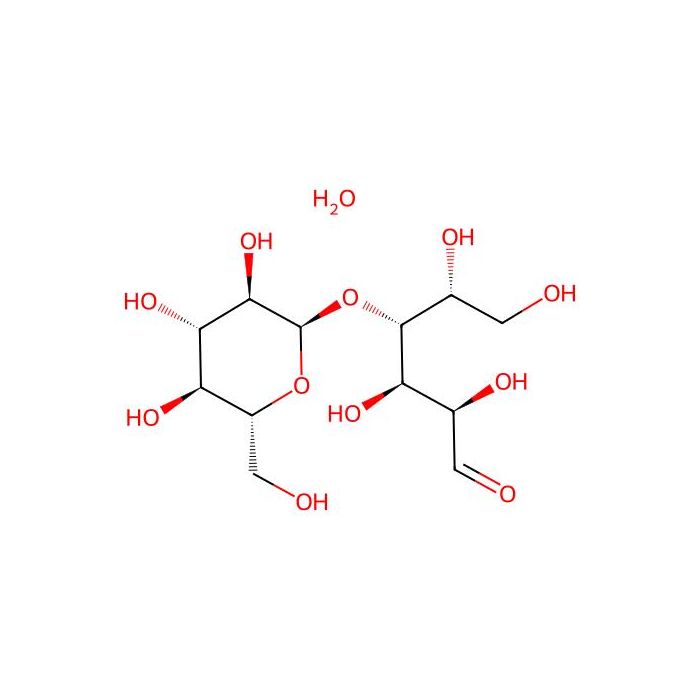
Maltose monohydrate is a reducing disaccharide composed of two D-glucose units linked α(1→4), isolated as the crystalline monohydrate.
Item-specific identifiers (from Product Data)
SKU: M774661
CAS: 6363-53-7
CID: 23615261
InChIKey: 116879 (as provided)
Literature structural data (for reference; not item specifications)
Common name: Maltose monohydrate (α-D-Glcp-(1→4)-D-Glcp·H2O)
Molecular formula: C12H22O11·H2O (often written overall as C12H24O12) (literature)
Molecular weight: ~360.3 g/mol for the monohydrate; 342.3 g/mol anhydrous (literature)
SMILES (one of several valid representations; literature): OC[C@H]1OC@HC@@HC@@H[C@H]1O[C@H]1OC@@HC@HC@H[C@H]1O
Key functional groups: multiple secondary alcohols; one primary alcohol; acetal/ketal linkages; hemiacetal at the reducing end (open-chain aldehyde possible in equilibrium)
Stereochemistry: All chiral centers correspond to D-glucose configuration; α-anomer at the interglycosidic linkage; reducing end anomerizes in solution.
2D structural description (general)
Two hexopyranose rings (glucopyranoses) joined via an α(1→4) O-glycosidic bond. One ring (non-reducing end) is locked as an acetal; the reducing-end ring contains a hemiacetal that can open to an aldehyde, conferring reducing sugar behavior. The monohydrate contains one lattice water per disaccharide.
Synthetic Utility
Maltose monohydrate is a versatile starting material and intermediate in carbohydrate synthesis and derivatization.
Key reactivity features (literature/general):
Reducing end chemistry: The hemiacetal equilibrates with the open-chain aldehyde, enabling formation of oximes, hydrazones, and imines with appropriate partners; reduction yields maltitol.
Hydroxyl group manipulation: Eight secondary and two primary hydroxyls allow rich protection strategies (acetates, benzoates, benzyl ethers, silyl ethers) with selectivity achievable via sterics, neighboring group effects, or temporary protection.
Glycosidic bond formation/extension: After suitable protection, maltose derivatives serve as donors/acceptors in assembling maltooligosaccharides via α-selective glycosylations (trichloroacetimidate donors, thioglycosides, or glycosyl fluorides under Lewis acid catalysis).
Oxidation: TEMPO-mediated oxidation targets primary C6 hydroxyls to uronic acids; periodate cleavage of vicinal diols (after strategic protection) affords fragmentations useful in mapping and derivatization.
Conjugation: Reductive amination at the reducing end enables bioconjugation to amine-bearing carriers, polymers, or surfaces, providing maltose-decorated materials for lectin interactions.
Practical considerations:
Hydration/water management: Account for lattice water in stoichiometry; azeotropic drying or co-evaporation with toluene/acetonitrile can reduce free water prior to moisture-sensitive steps.
Anomeric control: For reducing-end modifications, control pH and temperature to manage mutarotation; lock anomers by converting to stable glycosides.
Analytics: Monitor reactions by TLC (carbohydrate stains, e.g., anisaldehyde, orcinol), HPAEC-PAD, or LC–MS (as adducts) due to low UV chromophore content.
Target Specificity
Not applicable. This product is a small-molecule carbohydrate, not a biological targeting reagent (e.g., antibody, oligonucleotide, or ligand with defined target specificity). For functional uses related to binding (e.g., MBP–amylose systems), see Reaction & Applications and Application Protocols for general laboratory context.
Wir verwenden Cookies, um die ordnungsgemäße Funktion der Website sicherzustellen und, soweit zulässig, Ihr Nutzererlebnis zu verbessern. Sie können Ihre Einstellungen jederzeit unter „Einstellungen“ verwalten. Weitere Informationen finden Sie in unserer Cookie-Richtlinie.
Shall we send you a message when we have discounts available?
Remind me later
Thank you! Please check your email inbox to confirm.
Products are supplied to verified businesses, institutions, and qualified professionals for research and development use only. Not for use in humans, animals, diagnosis, or therapy.

 GMG2616228