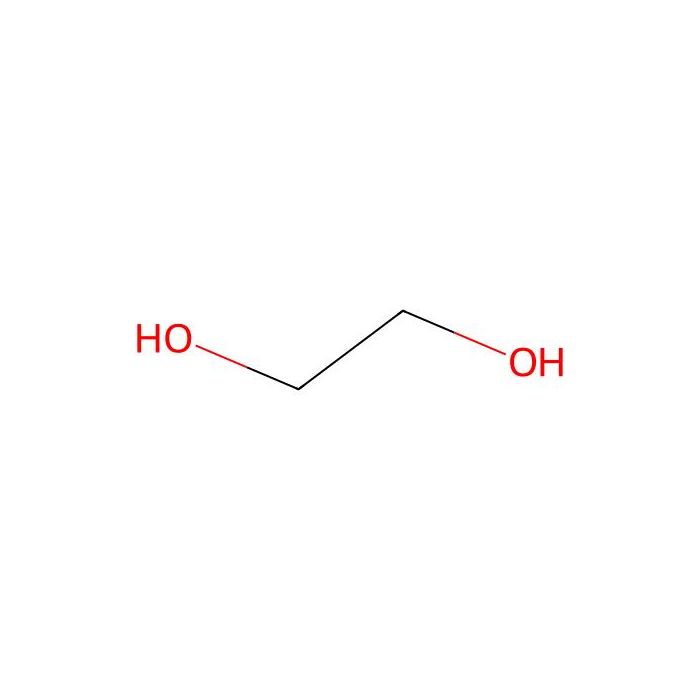
Poly(ethylene glycol)(PEG) - UltraBio™, Ultra pure, 2000 , CAS No.25322-68-3

CAS: 25322-68-3 Cat. No.: P615477 Summenformel: HO(CH2CH2O)nH EG-Nummer: 500-038-2
Zu bestellen verfügbar
QUALITÄT & REINHEIT UltraBio™ ? UltraBio™ — Aladdin's line for molecular-biology applications. Use for nuclease-free, high-consistency reagents across molecular workflows. Ultra pure ? Ultra-pure grade with very low impurity content across the board. Use for trace analysis, electronics, or processes intolerant of contamination. 2000
Synonyms
PEG
Storage
Room temperature
Shipped In
Normal
★
Größe
Deutschland (EU)
USA*
Preis
Menge
25g
P615477-25g
—
4 Auf Lager
25,95€
100g
P615477-100g
—
4 Auf Lager
86,69€
Enter a quantity for the sizes you want to add.
🧪
Warum diese Qualität

UltraBio™, Ultra pure, 2000 Ultra pure,UltraBio™ für empfindliche chromatographische und analytische Workflows, die minimale Basislinieninterferenzen erfordern.

🌡

Lagerung & Versand

Room temperature Versand Normal. Genaue Spezifikationen finden Sie im chargenspezifischen COA.

📋

Qualitätsdokumente

SDS, COA, Datenblatt und Spezifikationsblatt stehen zum Download bereit. Chargenspezifische COA über Chargennummernsuche abrufbar.

📚

Literaturbeleg

In 3267 peer-reviewten Publikationen zu Chromatographie, organischer Synthese und Kreuzkupplungsreaktionen zitiert.

Übersicht

Poly(ethylene glycol) (PEG) is a non-ionic hydrophilic polymer and is available in different molecular weights. It helps in the purification and crystal growth of proteins and nucleic acids. PEG and dextran together result in aqueous polymer two phase system, which is required for the purification of biological materials. PEG also interacts with cell membrane, thereby allowing cell fusion. It exhibitsstealth effect, prolonged blood circulation and excellent biocompatibility. PEG has an ability to elicit hypersensitivity reactions via stimulating complement pathway.
Application
Poly(ethylene glycol) has been used:
1,as a constituent in the preparation of liquid desiccant solutions
2,as a precipitating agent and additive in protein crystallization
3,as a representative biocompatible polymer to decipher its interactions with cellular system at molecular level

Spezifikationen

Synonyme
PEG
Spezifikationen & Reinheit
UltraBio™, Ultra pure, 2000
Storage
Room temperature
Verschickt in
Normal
Note
Ultra pure, UltraBio™
Namen und Kennungen
PH
5.5-7.0 (25 °C, 50 mg/mL in H2O)
WGK Deutschland
1
Reaxy-Rn
505945
Reaxys-RN_link_address
https://www.reaxys.com/reaxys/secured/hopinto.do?context=S&query=IDE.XRN=505945&ln=

Dokumentation

📋 Sicherheitsdatenblatt (SDS)

Umfassendes Dokument zu Gefahren, Handhabung, Lagerung und Einhaltung regulatorischer Vorschriften.

<<<<<<< HEAD SDS herunterladen → ======= SDS herunterladen → >>>>>>> release248-p3

✅ Analysezertifikat (COA)

Chargenspezifische Qualitätsdaten. Geben Sie Ihre Chargennummer ein, um das genaue COA abzurufen.

COA nachschlagen →

📊 Datenblatt

Kurzübersicht über Produktspezifikationen und Anwendungen.

Datenblatt ansehen →

🔬 Spezifikationsblatt

Vollständige Qualitätsmerkmale und Akzeptanzkriterien für diese Qualität.

Spezifikationsblatt ansehen →

Erweiterte Daten

Zertifikate (CoA, COO, BSE/TSE und Analyse-Diagramm)
C of A & Other Certificates(BSE/TSE, COO):
Analytical Chart:

Find and download the COA for your product by matching the lot number on the packaging.

6 results found

Lot NumberCertificate TypeDatumArtikel
H2625003H2625003Certificate of AnalysisJul 25, 2026 P615477
H2625004H2625004Certificate of AnalysisJul 25, 2026 P615477
E2627550E2627550Certificate of AnalysisMay 21, 2026 P615477
E2627551E2627551Certificate of AnalysisMay 21, 2026 P615477
A2616295A2616295Certificate of AnalysisNov 07, 2025 P615477
A2616296A2616296Certificate of AnalysisNov 07, 2025 P615477
Chemische und physikalische Eigenschaften
LöslichkeitH2O: 50 mg/mL at 25 °C, clear, colorless
Brechungsindex1.460
Flammpunkt (°F)519.8 °F
Flammpunkt (°C)271.00 °C
Siedepunkt (°C)> 200 °C
Schmelzpunkt (°C)61-64℃
FAQs und Artikel
UltraBio™: Defining Excellence in Molecular Biology Applications
Enzyme Protectants and Common Methods to Prolong Enzymatic Activity
Buffer exchange of a sample using a dialysis bag
Why Can Biotinylated Peptides Test Negative in Biotin Assays?
How to Choose Plasma Cell-Free DNA Extraction Reagents
Differences Between Transformation and Transfection
PEGylation in Drug Modification and Delivery: Applications to Proteins, Peptides, Small Molecules and Liposomes
Polyethylene Glycol (PEG): Properties, Applications Across Multiple Fields, and Product Selection Guide
PEG–Dialysis Tubing Method for Protein Concentration
Application Guide to Super Fluor 680 / 750 Near-Infrared Dyes for In Vivo Small-Animal Fluorescence Imaging
7 Types of DNA Ligases: Functions and Features
General Principles of Antibody Labeling with NHS-Activated Esters, F/P Calculation, and Troubleshooting Guide
Polyethylene Glycol (PEG) and Its Derivatives: End-Group Design and Applications in PROTACs, ADCs, and Medical Device
Sources, Biological Functions, Isolation/Characterization, and Emerging Applications of Exosomes
Photo-Crosslinking and Patterning of PEG-Based Hydrogels (2D/3D): Principles, Method Comparisons, and Product Selection Guidelines
SOFC Solid Oxide Fuel Cells: From “What It Is and How It Generates Power” to a Key Materials Map, Application Scenarios, and Selection Navigation (Electrolytes / Electrodes / Interconnects / Sealing)
A Complete Guide to Choosing Resins for SPPS (Solid-Phase Peptide Synthesis): Fmoc/Boc Routes, C-Terminal Acid/Amide, and a Key-Parameter Navigator
Materials Can “Switch”: How Smart Polymers Respond to Temperature, pH, and Light (with Experimental Selection Tips & Product Navigation)
Understanding Hydrophilic Polymers in Aqueous Systems: Hydration Mechanisms, Structural Knobs, and Task-Oriented Selection Guide (Including Tables 1–3)
Biomedical Polymer Insights: Role-Based Task Map, Six Key Material Levers, and a Risk-Driven Evidence Chain (including the Product Navigation Guide and Product Tables 1–3)
Pharmaceutical Formulation and Delivery in Research Settings: Core Definitions, Controllable Frameworks and Practical Guidelines
Plant Omics Panorama: Workflow Frameworks and Multi-Omics Integration from Genomics to Transcriptomics, Proteomics, and Metabolomics
Hemicellulases: A Review of Substrate Specificity, Catalytic Systems, and Research and Industrial Applications
Key Judgments in Medical Hydrogel R&D: From Polymer Source and Crosslinking Strategy to Sterilization Planning, Scale-Up Feasibility, and Quality Control
Injectable Thermosensitive Gels: Gelation Behavior, Rheological Properties, and Drug Release Characteristics
Protein Structure Analysis: An Experimental Path from Defining the Question to Functional Validation
How Degradable Poly(ethylene glycol) Hydrogels Build Tunable Cellular Microenvironments: Adhesion, Degradation, Release, and Experimental Interpretation in 2D/3D Culture
Designing Hydrogel Scaffolds as Programmable Cell Microenvironments: From Click-Chemistry Functionalization to 3D Cell Culture Experimental Design
Adding a Temperature-Triggered Switch to NCO: How Blocked Isocyanates Affect the Storage, Curing, and Film Performance of 1K Baking Coatings
How Do Isocyanates and Polyols Affect the Performance of Polyurethane Coating Films: Structure, Raw Material Selection, and Performance Design Essentials
Comprehensive Performance Analysis of Polyurethane Coating Films: Soft/Hard Segment Structure, Microphase Separation, Crosslinking and Curing, and Selection of Representative Chemicals
Failure Mechanisms, Application Limitations, and Systematic Improvement Directions for Polyester Coatings
Peptide Intermediates Difficult to Dissolve and Separate? Route Design and Workup Strategies for Tag-Assisted Liquid-Phase Peptide Synthesis (TAG-LPPS)
Causes, Diagnosis, and Control Strategies for Elevated Off-State Current in Semiconducting Single-Walled Carbon Nanotube Transistors
Polyurethane Coating Resins: Not a Single Resin, but a Designable High-Performance System
Application of Shellac, a Natural Film-Forming Resin, in Coatings: Alcohol-Soluble Fast-Drying Film Formation, Sealing and Repair, and Performance Boundaries
The Role of Polyether-Modified Polysiloxanes in Controlling Coating Leveling and Smooth Tactile Feel: Molecular Structure, Surface Migration, and Interfacial Control Mechanisms
Resin Polarity in Coating Formulations: From Molecular Structure to Dissolution, Compatibility, Interfacial Interactions, and Formulation Design
Solvents, Co-solvents, and Solubilization Systems in Home and Personal Care Formulations: Classification, Functions, and Selection Guide
Why Do Alcohols Differ in Function: Why Is Glycerol Mainly Moisturizing, Propylene Glycol Mainly Solubilizing, and Isopropyl Alcohol Fast-Drying? — Understanding Personal Care Formulation Functions from Structural Differences
Signal Transduction Mechanism of Graphene Biosensors: From Molecular Recognition to Electrical/Optical Signal Readout and Materials Selection
What Is Synthetic Biology? The Industrialization Pathway from Upstream Reagent Toolchains to Biomanufacturing Applications
From Structure to Selection: Mechanisms and Application Assessment of Low-Foam Oil and Wax Removal with Fatty Acid Methyl Ester Ethoxylates (FMEE)
Mechanism of Action and Selection Logic of Defoamers for Daily Chemical Products: Foam Stability, Foam-Breaking Mechanisms, and Representative Raw Material Analysis
Mechanisms and Troubleshooting of Foam Reduction in Personal and Household Care Formulations: Film Rupture, Weak Interfacial Films, Insufficient Surfactant Supply, and Phase-State Disturbance
Application of Conductive Carbon Black in Coatings: Selection Criteria, Dispersion Control, and Conductive Network Construction
Key Variable in the Long-Term Stability of Waterborne Pigment Concentrates: How Dispersant Molecular Weight Distribution (MWD) Affects Pigment Dispersion, Surface Adsorption-Layer Formation, and Storage Stability
Influencing Factors and Control Strategies for Blistering in Neutral Wall Putty: An Experimental Analysis Based on HPMC Dosage, Viscosity, and Ground Calcium Carbonate Fineness
How to Select Binding/Gel Materials for Neutral Wall Putty? A Comparison of Pregelatinized Starch, PVA, and Redispersible Polymer Powder Based on Four Application Trials
Structure, Degradation Behavior, and Applications of Poly(trimethylene carbonate) (PTMC) in Flexible Absorbable Materials
Antioxidant Mechanisms of Ferulic Acid in Skincare, Vitamin C/E Synergy, and Stable Delivery Applications
Exosome-Related Ingredients in Skincare Products: Sources and Preparation, Quality Control, Evidence of Efficacy, and Safety Assessment
Differences Between Cast CPU and Thermoplastic TPU in Structure, Processing, Performance, and Applications
What Is Direct Compression? Process Characteristics, Suitability Criteria, and Excipient Selection
Solid Supports in Packed Gas Chromatography Columns: Definition, Mechanisms of Action, Classification, and Selection
Citations of This Product
Lösungsrechner
Bewertungen

Kundenbewertungen

Häufig gestellte Fragen

What does UltraBio? mean?
UltraBio? indicates that the product has been processed and tested for biological and biochemical applications. Specifications may include endotoxin limits, microbial controls, sterility, low DNase/RNase/protease activity, and verified biological activity where relevant.
What does Ultra pure mean?
Ultra pure is a defined analytical purity tier suitable for general analytical and reagent applications. It specifies a minimum assay percentage, controlled limits on common impurities (water, heavy metals, residue on ignition), and lot-to-lot consistency. Ultra pure is one of several purity tiers — choose based on the sensitivity and regulatory requirements of your method.
How should this product be stored?
Store at room temperature.
How is this product shipped?
This product ships under standard ambient conditions. No temperature-controlled packaging is required.
What are the CAS number, molecular formula and molecular weight?
The CAS Number is 25322-68-3, the molecular formula is HO(CH2CH2O)nH.
What documentation is provided?
Available product documentation, including Certificates of Analysis (COA), Safety Data Sheets (SDS), and specification sheets, is shown in the product document area. Document availability and access follow the current site policy.

Benötigen Sie Hilfe bei der Auswahl der Qualität?

Unser Leitfaden zur Qualitätsauswahl behandelt Reinheit, Stabilisatorstatus und Anwendungseignung für alle Varianten in unserem Katalog.

UltraBio™ Qualitätsleitfaden ansehen → Ultra pure Qualitätsleitfaden ansehen →

Dürfen wir Sie über Rabattaktionen informieren?

Später erinnern

Vielen Dank! Bitte überprüfen Sie Ihren E-Mail-Posteingang, um zu bestätigen.

Hoppla! Benachrichtigungen sind deaktiviert.