Determine the necessary mass, volume, or concentration for preparing a solution.
average Mn 1500 for sensitive chromatographic and analytical workflows requiring minimal baseline interference.
Desiccated,Room temperature Ships Normal Check lot-specific COA for exact specifications.
SDS, COA, datasheet, and spec sheet available for download. Lot-specific COA accessible via lot number lookup.
Cited in 3236 peer-reviewed publications across chromatography, organic synthesis, and cross-coupling reactions.
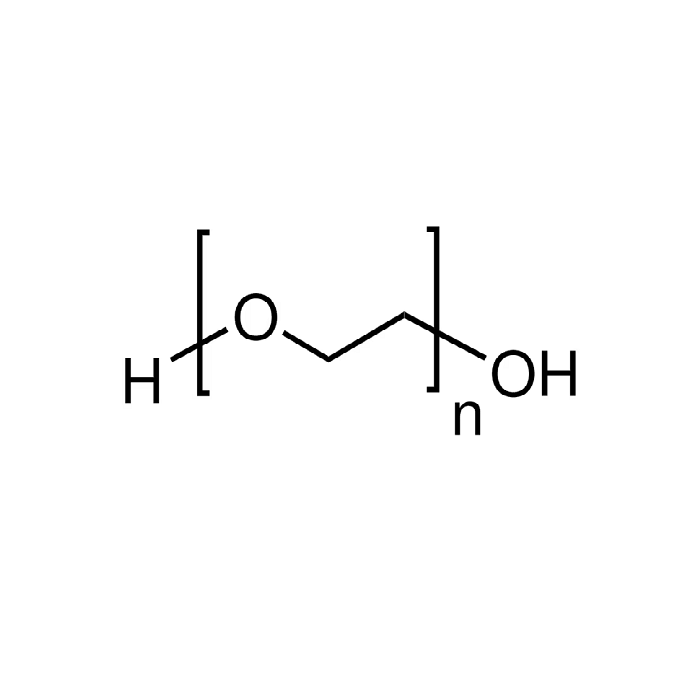
Poly(ethylene glycol) (PEG) is a non-ionic hydrophilic polymer and is available in different molecular weights. It helps in the purification and crystal growth of proteins and nucleic acids. PEG and dextran together result in aqueous polymer two phase system, required for the purification of biological materials. PEG also interacts with cell membrane, thereby resulting in cell fusion.
Usually used to modify therapeutic proteins and peptides to increase their solubility and lower their toxicity.
Application:
Cell fusion induced by polyethylene glycol(PEG) has become a standard method in somatic cell genetics. PEG promoted cell fusion is involved in the production of hybridoma cells.
Poly(ethylene glycol) has been used for histological, histochemical and immunohistochemical evaluation of in vitro cultured beads. It has been used for the fusion of cells.
Comprehensive hazard, handling, storage, and regulatory compliance document.
Download SDS →Lot-specific quality data. Enter your lot number to retrieve the exact COA.
Look up COA →Full quality attributes and acceptance criteria for this grade.
View spec sheet →Find and download the COA for your product by matching the lot number on the packaging.
| Lot Number | Certificate Type | Datum | Artikel |
|---|---|---|---|
| Certificate of Analysis | Sep 07, 2026 | P103721 | |
| Certificate of Analysis | Mar 12, 2026 | P103721 | |
| Certificate of Analysis | Mar 12, 2026 | P103721 | |
| Certificate of Analysis | Mar 12, 2026 | P103721 | |
| Certificate of Analysis | Jun 11, 2025 | P103721 | |
| Certificate of Analysis | Jun 11, 2025 | P103721 | |
| Certificate of Analysis | Jun 11, 2025 | P103721 | |
| Certificate of Analysis | Jun 11, 2025 | P103721 | |
| Certificate of Analysis | Oct 14, 2024 | P103721 | |
| Certificate of Analysis | Oct 14, 2024 | P103721 | |
| Certificate of Analysis | Oct 14, 2024 | P103721 | |
| Certificate of Analysis | Oct 14, 2024 | P103721 | |
| Certificate of Analysis | Jun 25, 2024 | P103721 | |
| Certificate of Analysis | Jun 25, 2024 | P103721 | |
| Certificate of Analysis | Jun 25, 2024 | P103721 | |
| Certificate of Analysis | Nov 11, 2023 | P103721 | |
| Certificate of Analysis | Nov 11, 2023 | P103721 | |
| Certificate of Analysis | Nov 24, 2022 | P103721 | |
| Certificate of Analysis | Nov 24, 2022 | P103721 | |
| Certificate of Analysis | Nov 24, 2022 | P103721 | |
| Certificate of Analysis | Nov 24, 2022 | P103721 | |
| Certificate of Analysis | Dec 14, 2021 | P103721 | |
| Certificate of Analysis | Dec 14, 2021 | P103721 | |
| Certificate of Analysis | Dec 14, 2021 | P103721 |
| Empfindlichkeit | Moisture sensitive |
|---|---|
| Brechungsindex | 1.460 |
| Flammpunkt (°F) | 519.8 °F |
| Flammpunkt (°C) | 271.00 °C |
| Siedepunkt (°C) | > 200 °C |
| Schmelzpunkt (°C) | 61-64℃ |