Recombinant mtTFA Antibody - Primärer Antikörper, specific to TFAM, Rabbit IgG

Cat. No.: Ab116339
Zu bestellen verfügbar
QUALITÄT & REINHEIT Recombinant ? Recombinant — produced via recombinant expression for defined sequence and consistency. Use for reproducible, animal-free proteins of known origin. ExactAb™ ? ExactAb™ — Aladdin's antibody line emphasizing precision and validated quality. Use for reliable, specificity-validated antibody applications. Validated ? Validated grade — performance confirmed in defined applications before release. Use when you want documented assurance the reagent works as stated. 0.5 mg/mL
Application
IF/ICC, IHC, WB
Host species
Kaninchen
Reactive species
Mensch
Isotype
Rabbit IgG
Conjugation
Unconjugated
★
Größe
Deutschland (EU)
USA*
Preis
Menge
10μl
Ab116339-10μl
—
5 Auf Lager
69,33€
50μl
Ab116339-50μl
—
2 Auf Lager
225,53€
100μl
Ab116339-100μl
—
1 Auf Lager
364,36€
1ml
Ab116339-1ml
Auf Bestellung · 8–12 Wochen
2.950,23€
Enter a quantity for the sizes you want to add.
🧪
Warum diese Qualität

ExactAb™, Validated, Recombinant, 0.5 mg/mL ExactAb™,Recombinant,Validated für empfindliche chromatographische und analytische Workflows, die minimale Basislinieninterferenzen erfordern.

🌡

Lagerung & Versand

Store at -20°C,Avoid repeated freezing and thawing Versand Ice chest + Ice pads. Genaue Spezifikationen finden Sie im chargenspezifischen COA.

📋

Qualitätsdokumente

SDS, COA, Datenblatt und Spezifikationsblatt stehen zum Download bereit. Chargenspezifische COA über Chargennummernsuche abrufbar.

📚

Literaturbeleg

In 0 peer-reviewten Publikationen zu Chromatographie, organischer Synthese und Kreuzkupplungsreaktionen zitiert.

Übersicht

Rabbit anti Human mtTFA Antibody, Recombinant, could be used for WB, IHC, IF, ICC and so on.
Application:
WB: 1/500-1/1000
IHC: 1/50-1/100
IF/ICC: 1/50-1/200
Function
Binds to the mitochondrial light strand promoter and functions in mitochondrial transcription regulation. Required for accurate and efficient promoter recognition by the mitochondrial RNA polymerase. Promotes transcription initiation from the HSP1 and the light strand promoter by binding immediately upstream of transcriptional start sites. Is able to unwind and bend DNA. Required for maintenance of normal levels of mitochondrial DNA. May play a role in organizing and compacting mitochondrial DNA. target DNA. Interacts with TFB1M and TFB2M.

Spezifikationen

Product Name
Recombinant mtTFA Antibody - Primärer Antikörper, specific to TFAM, Rabbit IgG
Synonyme
anscription factor 6-like 1 antibody | MitochomtTFA ndrial transcription factor 1 antibody | mitochondrial transcription factor A antibody | MtTF1 antibody | mtTFA antibody | TCF 6 antibody | TCF-6 antibody | TCF6 antibody | TCF6L1 antibody | TCF6L2 antib
Spezifikationen & Reinheit
ExactAb™, Validated, Recombinant, 0.5 mg/mL
Wirtsspezies
Kaninchen
Spezifität
TFAM
Immunogen
A synthetic peptide derived from human mtTFA (AA 57-70).
Positive Kontrolle
WB: A431, HEK293, A549, Hep G2 and HeLa cell ysates; IHC: Human breast cancer tissues; IF/ICC: HeLa.
Konjugation
Unconjugated
Note
ExactAb™, Recombinant, Validated
Isotyp
Rabbit IgG
SDS-PAGE
150 kDa
Verfahren zur Reinigung
Antigen affinity purified
Konzentration
0.5 mg/mL
Product Line
Biologische Produkte
Lagerung und Versand
Form
Liquid
Storage
Store at -20°C,Avoid repeated freezing and thawing
Verschickt in
Ice chest + Ice pads
Stabilität und Lagerung
Store at 4°C short term (1-2 weeks). Store at -20°C long term (24 months). Upon receipt, it is recommended to aliquot. Avoid freeze/thaw cycle.
Bilder

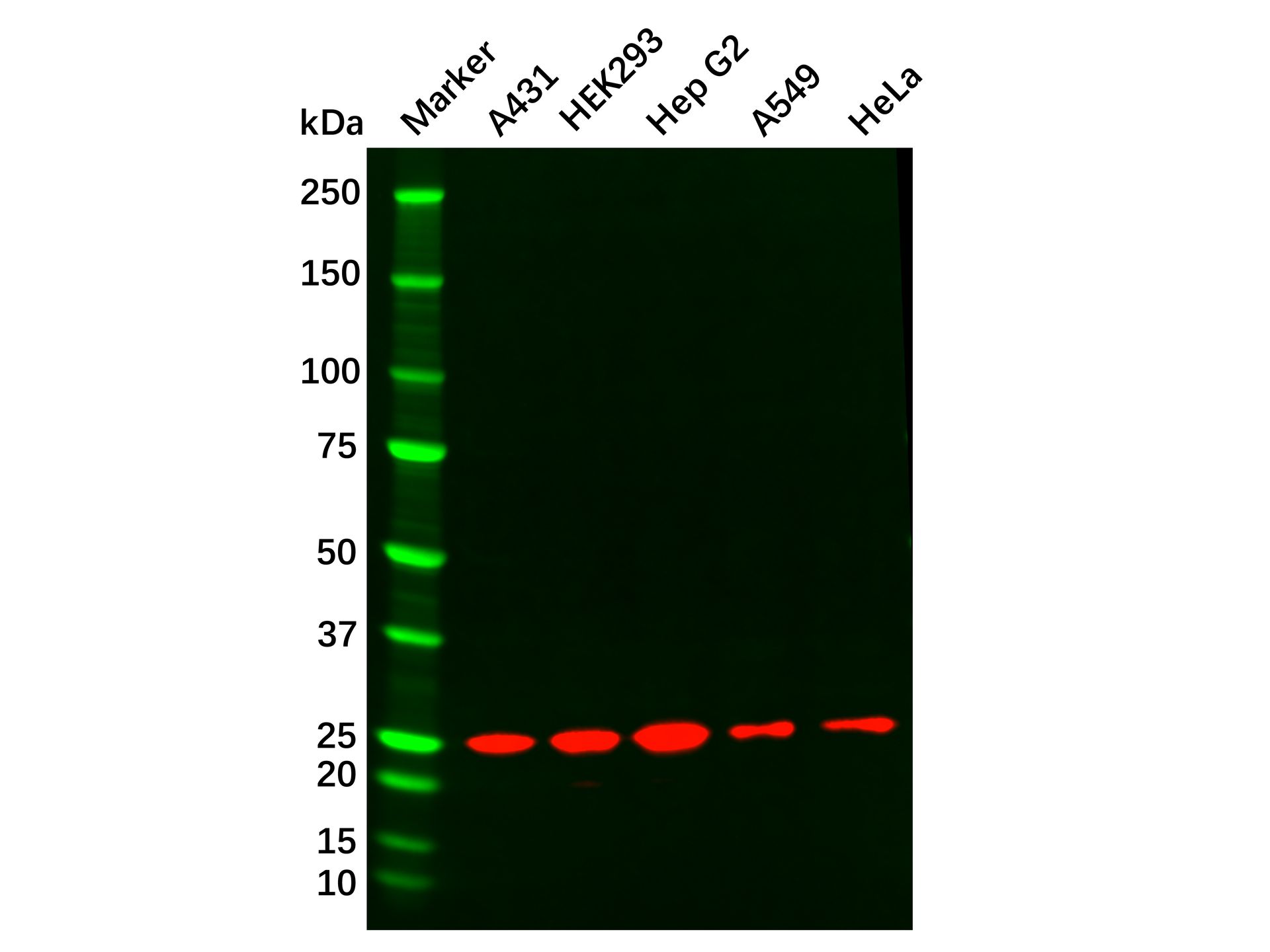
Recombinant mtTFA Antibody (Ab116339) - Western Blot
All lanes: Recombinant mtTFA Antibody (Ab116339) at 1/1000 dilution
Samples: Lysates at 20 µg per lane
Secondary: Goat Anti-Rabbit IgG H&L (HRP) (Ab170144) at 1/50000 dilution

Predicted band size: 24 kDa
Observed band size: 24 kDa
Exposure time: 11.1 s

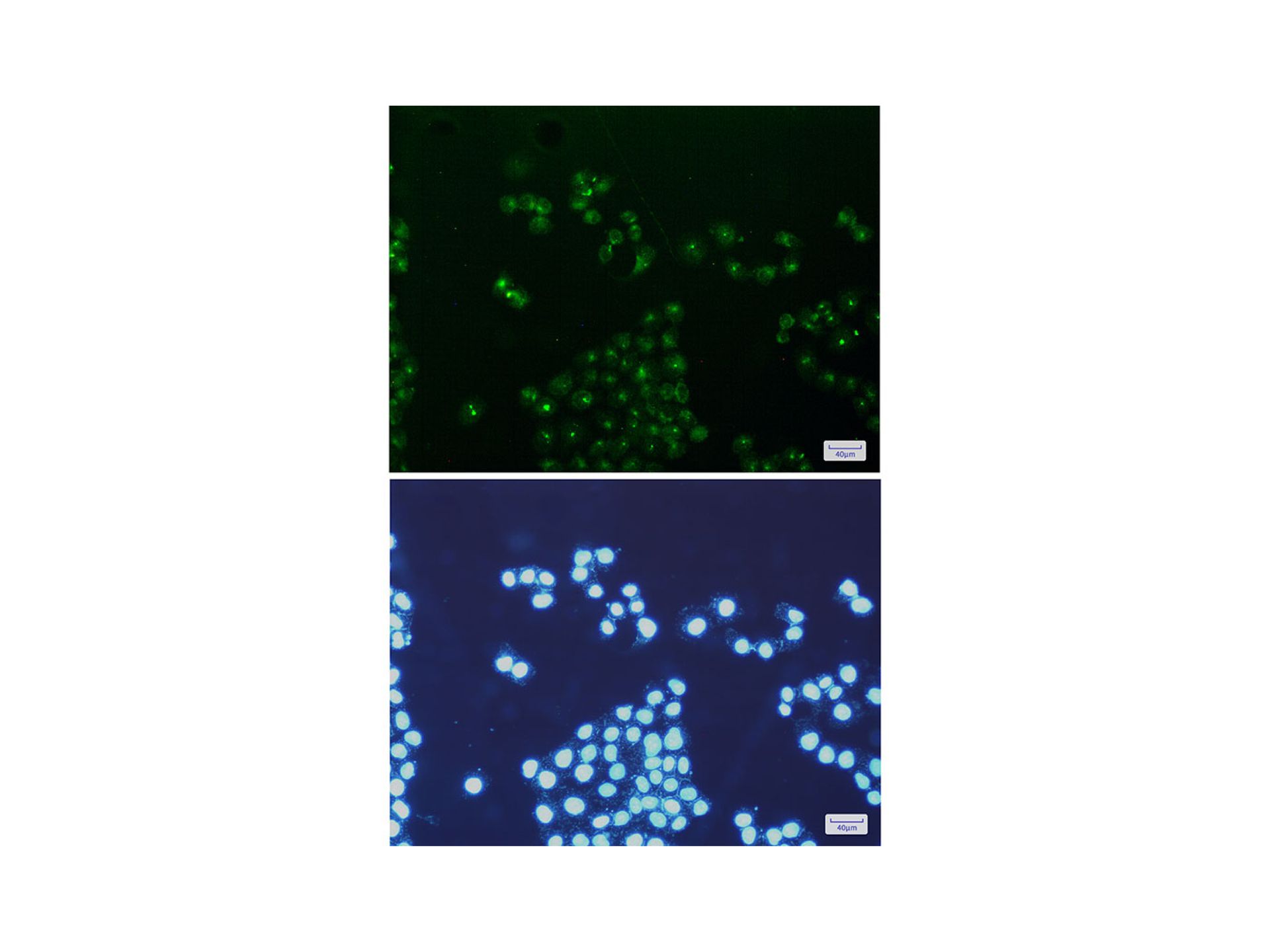
Recombinant mtTFA Antibody (Ab116339) - ICC/IF
Immunocytochemistry analysis of beta Tubulin(green) in HeLa cells using Recombinant mtTFA Antibody (Ab116339) and cells were counterstained with DAPI (blue).

Recombinant mtTFA Antibody (Ab116339) - IHC
Immunohistochemistry analysis of paraffin-embedded Human breast cancer using Recombinant mtTFA Antibody (Ab116339) at 1/50 dilution. High-pressure and temperature Sodium Citrate pH 6.0 was used for antigen retrieval.

Anwendung
Anwendung
Dilution info
WB

1/500-1/1000

IHC

1/50 - 1/100

IF/ICC

1/50 - 1/200

Dokumentation

📋 Sicherheitsdatenblatt (SDS)

Umfassendes Dokument zu Gefahren, Handhabung, Lagerung und Einhaltung regulatorischer Vorschriften.

<<<<<<< HEAD SDS herunterladen → ======= SDS herunterladen → >>>>>>> release248-p3

✅ Analysezertifikat (COA)

Chargenspezifische Qualitätsdaten. Geben Sie Ihre Chargennummer ein, um das genaue COA abzurufen.

COA nachschlagen →

📊 Datenblatt

Kurzübersicht über Produktspezifikationen und Anwendungen.

Datenblatt ansehen →

🔬 Spezifikationsblatt

Vollständige Qualitätsmerkmale und Akzeptanzkriterien für diese Qualität.

Spezifikationsblatt ansehen →

Erweiterte Daten

Zugehörige Ziele (menschlich)
TFAM Tbio Transcription factor A, mitochondrial (0 Activities)
Activity TypeActivity Value -log(M)Mechanism of ActionActivity ReferencePublications (PubMed IDs)
Zertifikate (CoA, COO, BSE/TSE und Analyse-Diagramm)
C of A & Other Certificates(BSE/TSE, COO):
Analytical Chart:

Find and download the COA for your product by matching the lot number on the packaging.

3 results found

Lot NumberCertificate TypeDatumArtikel
ZJ24F0911288ZJ24F0911288Certificate of AnalysisJul 09, 2026 Ab116339
ZJ23F0800831ZJ23F0800831Certificate of AnalysisAug 16, 2023 Ab116339
ZJ23F0800830ZJ23F0800830Certificate of AnalysisAug 16, 2023 Ab116339
FAQs und Artikel
Lösungsrechner
Bewertungen

Kundenbewertungen

Application Protocols

Manufacturer-tested applications, dilutions, and positive controls: Not specified for this item; refer to CoA/Spec Sheet.

General protocol guidance (literature; not validated for this specific item):

  • Western blot:
    • Prepare total lysate or mitochondrial fraction with protease inhibitors.
    • Load 10–40 µg protein per lane depending on sample and detection sensitivity.
    • Block in TBST + 5% BSA or milk; incubate with primary antibody at an empirically determined dilution; detect with HRP- or fluorophore-conjugated secondary.
  • IF/ICC:
    • Fix cells (e.g., 4% PFA), permeabilize (e.g., 0.1–0.2% Triton X-100), block with 3% BSA; incubate with primary antibody; use fluorescent secondary and mitochondrial counterstains; image by confocal or widefield microscopy.
  • IHC:
    • Optimize antigen retrieval (citrate pH 6 or Tris-EDTA pH 9) depending on epitope; include no-primary and isotype controls; develop with chromogenic or fluorescent detection.
  • IP:
    • Couple antibody to Protein A/G beads; incubate with lysate; wash stringently; elute under mild conditions if downstream activity assays are planned. Adjust concentrations, incubation times, and buffers according to pilot optimization and the item’s CoA when available.
Biological Roles

Target: mtTFA (mitochondrial transcription factor A; TFAM).

  • Functional overview (literature): TFAM is a high-mobility group (HMG)-box protein that binds mitochondrial DNA (mtDNA), promoting nucleoid compaction and serving as an essential cofactor for mitochondrial transcription initiation with POLRMT and TFB2M. TFAM also contributes to mtDNA replication and maintenance by organizing the genome and protecting it from damage.
  • Cellular localization: Predominantly in the mitochondrial matrix, associated with mtDNA nucleoids.
  • Biological processes (literature):
    • mtDNA packaging and nucleoid formation.
    • Transcription initiation of mitochondrial genes from the light- and heavy-strand promoters.
    • Regulation of mtDNA copy number and stability.
    • Influence on mitochondrial biogenesis and respiratory chain function through transcription of mitochondrial-encoded subunits.
  • Experimental relevance: Measuring TFAM levels is commonly used to assess mitochondrial content, biogenesis, or stress responses. In cell and tissue studies, TFAM abundance often correlates with mtDNA copy number and mitochondrial transcriptional activity. Note: The above summarizes general biology of the target protein and does not imply any clinical or diagnostic use for this product. For antibody performance characteristics (species reactivity, epitope, affinity), see the item-specific CoA/Spec Sheet.
Buffer Applications

Not applicable. This product is an antibody and does not function as a buffering agent. For optimal performance, use standard immunoassay buffers (e.g., PBS or TBS with appropriate blocking agents and detergents) tailored to the application. Refer to the CoA/Spec Sheet for any buffer compatibility notes specific to this antibody.

Green Alternatives

Not directly applicable. This product is a biologic reagent used in small volumes within immunoassay workflows rather than a process solvent or reagent with greener substitutes.

Sustainability tips for antibody workflows (general):

  • Minimize single-use plastics by consolidating aliquots and using reusable racks where compatible with biosafety policies.
  • Use room-temperature stable blocking buffers where possible to reduce cold-chain demand during setup (while still storing the antibody as required).
  • Plan experiments to reduce repeat freeze–thaw and wasted aliquots.
  • Dispose of buffers and consumables according to institutional environmental and biosafety guidelines.
Pharmaceutical Uses

For research use only. Not for human or veterinary use, diagnostic procedures, or therapeutic applications.

Formulation/excipient context: Not specified for this item; refer to CoA/Spec Sheet for buffer composition, preservatives (e.g., sodium azide) if present, carrier proteins (e.g., BSA), and stabilizers (e.g., glycerol). Any pharmacopeial status is not applicable for a research-use-only antibody. If you intend to adapt this reagent into regulated workflows, conduct independent qualification and review of quality attributes (purity, bioburden, endotoxin) per institutional requirements.

Physical Properties

As an antibody reagent, conventional small-molecule physical constants (bp, mp, logP) are not applicable.

  • Appearance: Not specified for this item; refer to CoA/Spec Sheet (antibodies are commonly supplied as liquid solutions or lyophilized powders with stabilizers).
  • Molecular weight: Not specified for this item; refer to CoA/Spec Sheet. (Literature: intact IgG antibodies are typically ~150 kDa; recombinant fragments such as scFv/Fab are smaller.)
  • Solubility (general, literature): Antibodies are water-soluble in physiological buffers (e.g., PBS) and insoluble in most organic solvents. Stability is strongly buffer- and temperature-dependent.
  • pI and extinction coefficient: Not specified for this item; refer to CoA/Spec Sheet.
  • Formulation components (salts, stabilizers, preservatives): Not specified for this item; refer to CoA/Spec Sheet.
  • Storage conditions (from product data): Store at -20°C; avoid repeated freezing and thawing. Shipped in an ice chest with ice pads.
  • Thawing behavior (general): Minimize freeze–thaw cycles; keep on ice during use; consider aliquoting upon first thaw. For precise concentration, buffer composition, and any carrier proteins or preservatives, consult the CoA/SDS.
Quality and Grades
  • Item-specific grade (from product data): Recombinant, ExactAb™, Validated.
  • Recombinant (general meaning): Produced from a defined sequence in a controlled expression system, enabling high lot-to-lot consistency, defined clonality, and reduced background relative to hybridoma-derived material.
  • ExactAb™ (program description, general): Denotes sequence-defined recombinant antibody production with stringent in-process controls. Benefits typically include reproducibility across lots, secure sequence fidelity, and scalable manufacturing. Refer to product CoA for specifics tied to this SKU.
  • Validated (scope): Indicates performance verification has been conducted; however, specific validated applications, tested species, and dilutions are not provided in the current product data. Refer to CoA/Spec Sheet for the validated use-cases and data.
  • Purity and formulation: Not specified for this item; refer to CoA/Spec Sheet (common analytical controls include SDS-PAGE purity, endotoxin level for certain applications, concentration by A280, and absence of aggregates by SEC-HPLC).
  • Documentation recommended for QC review:
    • Lot-specific CoA including concentration, buffer composition, and storage.
    • Validation images/protocols for stated applications.
    • Sequence/isotype information for recombinant antibodies, if applicable. This combination of recombinant production and ExactAb™ validation is designed to provide robust reproducibility for demanding research workflows.
Reaction and Applications

This product is an antibody reagent, not a chemical reactant. It is typically used in immunoassays rather than synthetic reactions.

  • Manufacturer applications: Not specified for this item; refer to CoA/Spec Sheet.
  • Common antibody application contexts (general, literature; not validated for this item unless stated in CoA):
    • Western blotting (WB) to detect mtTFA in mitochondrial fractions or whole-cell lysates.
    • Immunofluorescence (IF) or immunocytochemistry (ICC) to visualize mitochondrial nucleoids; co-stain with mitochondrial markers and DNA dyes.
    • Immunohistochemistry (IHC) on fixed tissues to localize mtTFA in cells with high mitochondrial content.
    • ELISA for relative quantitation or screening.
    • Immunoprecipitation (IP) to pull down mtTFA-containing complexes for downstream analysis (e.g., ChIP-like assays for mtDNA association).
  • Practical considerations (general):
    • Optimize fixation (paraformaldehyde vs methanol) and permeabilization conditions for mitochondrial antigens.
    • Include appropriate positive controls (cells with robust mitochondrial content) and negative controls (knockdown/knockout if available).
    • Validate antibody specificity by peptide/blocking control or orthogonal methods. Consult the product’s CoA/Spec Sheet for the validated application list, recommended dilutions, and representative data for this exact antibody.
Reaction Conditions

Not applicable to chemical synthesis. For immunoassay conditions (general, literature; not validated for this item):

  • Western blot: Typical primary antibody incubations range from 1–16 h at 4°C or room temperature in TBST with 3–5% BSA or milk; dilutions vary widely by antibody and must be optimized. Secondary HRP- or fluorescence-based detection follows.
  • IF/ICC: Fix with 4% paraformaldehyde or cold methanol depending on epitope sensitivity; permeabilize with 0.1–0.3% Triton X-100 where appropriate; block with serum/BSA; primary incubation 1–16 h; use mitochondrial co-stains as controls.
  • IHC: Antigen retrieval conditions (pH and heat) must be optimized; blocking and detection per standard protocols.
  • ELISA/IP: Use low-protein binding plastics; optimize capture/detection antibody pairings or bead coupling chemistries. These are general guidelines only. For this specific antibody, refer to the CoA/Spec Sheet for validated methods, if available.
Safety and Handling

This product is an antibody intended for research use only.

  • GHS/SDS status: Not specified for this item; refer to CoA/SDS for authoritative hazard classification. Many antibody formulations are not classified as hazardous, but this cannot be assumed without the SDS.
  • Signal word, pictograms, H-statements: Not specified for this item; refer to SDS.
  • General laboratory PPE: Wear a lab coat, safety glasses, and appropriate gloves. Handle using aseptic technique to avoid microbial contamination of the reagent.
  • Handling recommendations:
    • Keep the vial cold during use (on ice) and return promptly to storage to limit thermal degradation.
    • Avoid repeated freeze–thaw cycles; aliquot upon receipt to single-use volumes.
    • Do not vortex harshly; gently mix to avoid foaming and aggregation.
  • Storage incompatibilities (general): Avoid contact with strong oxidizers and proteases. Do not expose to extreme pH or organic solvents that denature proteins.
  • Spills/first aid (general): Wipe small spills with absorbent material and disinfect surfaces. For skin/eye contact, rinse with water. Seek medical attention if irritation persists. Dispose of waste according to institutional biosafety guidelines. Always defer to the product-specific SDS for hazards, first-aid measures, accidental release procedures, and disposal guidance.
Solvent Selection

Not typically applicable. Antibodies are supplied in aqueous buffers and are not used as solvents. For experimental use, maintain in recommended physiological buffers (e.g., PBS, TBS) per the CoA. If buffer exchange is required (e.g., to remove preservatives for cell-based assays), perform gentle diafiltration or spin-column desalting. Avoid organic solvents that denature proteins.

Storage and Reconstitution
  • Storage (from product data): Store at -20°C. Avoid repeated freezing and thawing. Shipped in an ice chest with ice pads.
  • Aliquoting: Upon first thaw/receipt, aliquot into single-use volumes to minimize freeze–thaw. Use low-protein binding tubes.
  • Working stability (general): Keep on ice during setup; do not leave at room temperature for prolonged periods. Short-term storage at 4°C for a few days may be acceptable for many antibodies, but follow the item-specific CoA.
  • Reconstitution: Not specified for this item; refer to CoA/Spec Sheet. If supplied lyophilized, reconstitute with sterile, antibody-grade water or buffer to the recommended concentration, then allow gentle mixing (no vigorous vortexing) and equilibrate on ice.
  • Buffer composition and preservatives: Not specified for this item; refer to CoA/Spec Sheet. If sodium azide is present, avoid azide-sensitive downstream applications (e.g., live-cell labeling or HRP-based enzyme reactions in some contexts).
  • Long-term storage (general): For multi-month storage, many antibodies remain stable at -20°C or -80°C depending on formulation; glycerol (up to 50%) is commonly used to enable subzero storage without freezing, but only adjust buffers if compatible with the item’s specification. Always consult the lot-specific CoA/SDS for definitive instructions.
Structure and Identity

Recombinant mtTFA Antibody (SKU: Ab116339) is an affinity reagent targeting mitochondrial transcription factor A (mtTFA; also known as TFAM), a nuclear-encoded protein essential for mitochondrial DNA maintenance and transcription initiation.

  • Item-specific identifiers:
    • Molecular formula: Not specified for this item; refer to CoA/Spec Sheet.
    • Molecular weight: Not specified for this item; refer to CoA/Spec Sheet.
    • SMILES: Not applicable for proteins/antibodies.
    • InChIKey: Not applicable for proteins/antibodies.
    • CAS/CID: Not applicable/not assigned for this antibody reagent.
  • Composition and format:
    • Grade/Purity: Recombinant, ExactAb™, Validated (per product data).
    • Nature: Recombinant antibody (isotype/host/clonality not specified; refer to CoA/Spec Sheet).
  • Structural features (general, literature):
    • Antibodies typically comprise two heavy and two light chains stabilized by disulfide bonds, forming variable domains for antigen recognition and constant domains that define isotype and Fc interactions.
    • The binding site (paratope) recognizes an mtTFA epitope; epitope mapping and affinity constants are not specified for this item.
  • Target description (literature):
    • mtTFA/TFAM is a high-mobility group (HMG)-box DNA-binding protein that packages mitochondrial DNA into nucleoids and participates in transcription initiation with POLRMT and TFB2M.
Synthetic Utility

Not applicable. Antibodies are not employed as reagents in chemical synthesis or as building blocks in standard organic transformations. For practical usage, see Reaction & Applications and Application Protocols sections focused on immunoassays.

Target Specificity
  • Antigen/Target: mtTFA (TFAM) — mitochondrial transcription factor A.
  • Clone, isotype, host, and epitope: Not specified for this item; refer to CoA/Spec Sheet.
  • Species reactivity and cross-reactivity: Not specified for this item; refer to CoA/Spec Sheet.
  • Applications validated by manufacturer: Not specified for this item; refer to CoA/Spec Sheet.
  • Positive/negative controls: General suggestions only until item-specific data are available (e.g., mitochondrial-rich cell lines as positive controls; genetic knockdown/knockout as negative controls).

Häufig gestellte Fragen

How should this product be stored?
Store at ?20 °C. Avoid repeated freeze–thaw cycles. Aliquot into single-use volumes before freezing.
What does ExactAb? mean?
ExactAb? indicates the product has been validated for use in rigorous antibody validation workflows. Validation may include positive/negative control samples, signal-to-noise testing, and protocol-specific QC. Lot-specific test data is published on the Certificate of Analysis where available.
What does Recombinant mean?
Recombinant is a defined analytical purity tier suitable for workflows requiring a specific validated property. It specifies a minimum assay percentage, controlled limits on common impurities (water, heavy metals, residue on ignition), and lot-to-lot consistency. Recombinant is one of several purity tiers — choose based on the sensitivity and regulatory requirements of your method.
How is this product shipped?
This product ships in an insulated container with ice pads. Unpack on arrival and transfer it to the storage condition stated above.
What documentation is provided?
Available product documentation, including Certificates of Analysis (COA), Safety Data Sheets (SDS), and specification sheets, is shown in the product document area. Document availability and access follow the current site policy.
Which species reactivity has this antibody been validated against?
Validated reactivity is listed on the PDP and on each lot's datasheet. We validate against the most commonly tested species for the target (Recombinant mtTFA Antibody); cross-reactivity in untested species may exist but is not guaranteed. Contact technical support for specific species inquiries.

Benötigen Sie Hilfe bei der Auswahl der Qualität?

Unser Leitfaden zur Qualitätsauswahl behandelt Reinheit, Stabilisatorstatus und Anwendungseignung für alle Varianten in unserem Katalog.

Recombinant Qualitätsleitfaden ansehen → Validated Qualitätsleitfaden ansehen → ExactAb™ Qualitätsleitfaden ansehen →

Verwandte Produkte

Goat Anti-Rabbit IgG H&L Antibody - Sekundärantikörper, for ELISA,LF,GICA various applications, from Rabbit, generated in Goat
Goat Anti-Rabbit IgG H&L (AF594) - Sekundärantikörper, IgG
Goat Anti-Rabbit IgG H&L (Biotin) - Sekundärantikörper, IgG
Goat Anti-Rabbit IgG H&L (AF488) - Sekundärantikörper, IgG
Goat Anti-Rabbit IgG H&L (AF405) - Sekundärantikörper, IgG
Donkey Anti-Rabbit IgG H&L (AF647) - Sekundärantikörper, specific to , IgG
Donkey Anti-Rabbit IgG H&L (Biotin) - Sekundärantikörper, IgG
Goat Anti-Rabbit IgG H&L (HRP) - Sekundärantikörper
Goat Anti-Rabbit IgG H&L Antibody - Sekundärantikörper, Goat IgG
Goat Anti-Rabbit IgG H&L (Biotin) - Sekundärantikörper
Goat Anti-Rabbit IgG H&L (Cy5) - Sekundärantikörper
Goat Anti-Rabbit IgG H&L (FITC) - Sekundärantikörper
Goat Anti-Rabbit IgG H&L (TRITC) - Sekundärantikörper
Goat Anti-Rabbit IgG H&L (Biotin) - Sekundärantikörper, Goat IgG
Goat Anti-Rabbit IgG H&L (HRP) - Sekundärantikörper, Goat IgG
Goat Anti-Rabbit IgG H&L (Cy5) - Sekundärantikörper, Goat IgG
Goat Anti-Rabbit IgG H&L (TRITC) - Sekundärantikörper, Goat IgG
Goat Anti-Rabbit IgG H&L (FITC) - Sekundärantikörper, Goat IgG
Goat Anti-Rabbit IgG H&L (PE) - Sekundärantikörper, Goat IgG
Goat Anti-Rabbit IgG H&L (APC) - Sekundärantikörper, Goat IgG
Goat Anti-Rabbit IgG H&L (AF647) - Sekundärantikörper, Goat IgG
Goat Anti-Rabbit IgG H&L (AF405) - Sekundärantikörper, Goat IgG
Goat Anti-Rabbit IgG H&L (AF555) - Sekundärantikörper, Goat IgG
Goat Anti-Rabbit IgG H&L (AF546) - Sekundärantikörper, specific to Rabbit IgG
Goat Anti-Rabbit IgG H&L (AF700) - Sekundärantikörper, specific to Rabbit IgG
Goat Anti-Rabbit IgG H&L (AF488) - Sekundärantikörper
Goat Anti-Rabbit IgG H&L (AF647) (Ready to use) - Sekundärantikörper, specific to Rabbit IgG

Dürfen wir Sie über Rabattaktionen informieren?

Später erinnern

Vielen Dank! Bitte überprüfen Sie Ihren E-Mail-Posteingang, um zu bestätigen.

Hoppla! Benachrichtigungen sind deaktiviert.