Regdanvimab (anti-Spike RBD) - Primärer Antikörper, specific to Spike RBD, >95% (SDS-PAGE&SEC), Human IgG1, INHIBITOR of Spike glycoprotein inhibitor, INHIBITOR of Spike glycoprotein inhibitor

CAS: 2444308-95-4 Cat. No.: Ab182925
Zu bestellen verfügbar
QUALITÄT & REINHEIT Animal Free ? Animal-free — produced without animal-derived components to reduce contamination risk. Use in biomanufacturing and culture avoiding animal-origin material. Carrier Free ? Carrier-free — supplied without added carrier protein/stabilizer. Use when carriers (e.g. BSA) would interfere with conjugation or sensitive assays. Recombinant ? Recombinant — produced via recombinant expression for defined sequence and consistency. Use for reproducible, animal-free proteins of known origin. ExactAb™ ? ExactAb™ — Aladdin's antibody line emphasizing precision and validated quality. Use for reliable, specificity-validated antibody applications. Low Endotoxin ? Low-endotoxin grade — endotoxin reduced to low controlled levels. Use in sensitive biological work where high endotoxin would interfere. Azide Free ? Azide-free — without sodium azide preservative. Use in conjugations, cell work, or assays where azide is toxic or inhibitory. Validated ? Validated grade — performance confirmed in defined applications before release. Use when you want documented assurance the reagent works as stated. ≥95%(SDS-PAGE&SEC-HPLC) See COA
Application
Animal Model, ELISA, Flow Cytometry, Functional Assay
Host species
Mensch
Reactive species
Schweres akutes respiratorisches Syndrom Coronavirus 2
Isotype
Human IgG1
Conjugation
Unconjugated
★
Größe
Deutschland (EU)
USA*
Preis
Menge
100μg
Ab182925-100μg
—
Auf Lager ≥10
100,57€
1mg
Ab182925-1mg
—
4 Auf Lager
496,26€
5mg
Ab182925-5mg
—
1 Auf Lager
1.301,52€
10mg
Ab182925-10mg
Auf Bestellung · 8–12 Wochen
2.082,49€
Enter a quantity for the sizes you want to add.
🧪
Warum diese Qualität

Carrier Free, Recombinant, ExactAb™, Low Endotoxin, Azide Free, Validated, Animal Free, ≥95%(SDS-PAGE&SEC-HPLC), See COA Animal Free,Azide Free,Carrier Free,ExactAb™,Low Endotoxin,Recombinant,Validated für empfindliche chromatographische und analytische Workflows, die minimale Basislinieninterferenzen erfordern.

🌡

Lagerung & Versand

Store at -80°C,Avoid repeated freezing and thawing Versand Dry ice packs + Cold packs. Genaue Spezifikationen finden Sie im chargenspezifischen COA.

📋

Qualitätsdokumente

SDS, COA, Datenblatt und Spezifikationsblatt stehen zum Download bereit. Chargenspezifische COA über Chargennummernsuche abrufbar.

📚

Literaturbeleg

In 0 peer-reviewten Publikationen zu Chromatographie, organischer Synthese und Kreuzkupplungsreaktionen zitiert.

Übersicht

Regdanvimab (anti-Spike RBD) is a human monoclonal antibody that targets the receptor-binding domain of SARS-CoV-2 spike protein, blocking interaction with ACE2 for viral entry. Regdanvimab (anti-Spike RBD) can be used for the research of COVID-19.
Purity
>95% (SDS-PAGE&SEC)
Endotoxin Level
< 1.0EU/mg

Spezifikationen

Product Name
Regdanvimab (anti-Spike RBD) - Primärer Antikörper, specific to Spike RBD, >95% (SDS-PAGE&SEC), Human IgG1, INHIBITOR of Spike glycoprotein inhibitor
Synonyme
Spike RBD antibody | Anti-Spike RBD antibody | Anti-Human Spike RBD Recombinant Antibody | Anti-Spike RBD Reference Antibody | SARS-CoV-2 antibody | Anti-SARS-CoV-2 antibody | CT-P59
Spezifikationen & Reinheit
Carrier Free, Recombinant, ExactAb™, Low Endotoxin, Azide Free, Validated, Animal Free, ≥95%(SDS-PAGE&SEC-HPLC), See COA
Wirtsspezies
Mensch
Spezifität
Spike RBD
Konjugation
Unconjugated
Note
Animal Free, Azide Free, Carrier Free, ExactAb™, Low Endotoxin, Recombinant, Validated
Aktionsart
INHIBITOR
Mechanismus der Wirkung
INHIBITOR of Spike glycoprotein inhibitor
Isotyp
Human IgG1
Lichterketten-Typ
lambda
SDS-PAGE
27.2 kDa (Light Chain) & 51.6 kDa (Heavy Chain), under reducing conditions; 208.7 kDa, under non-reducing conditions.
Verfahren zur Reinigung
Protein A purified
Reinheit
>95% (SDS-PAGE&SEC)
Konzentration
See COA
CAS
2444308-95-4
Product Line
Biologische Produkte
Lagerung und Versand
Form
Liquid
Storage
Store at -80°C,Avoid repeated freezing and thawing
Verschickt in
Dry ice packs + Cold packs
Stabilität und Lagerung
Store at -80℃ for 24 months. Upon receipt, it is recommended to aliquot. Avoid freeze/thaw cycle.
Bilder

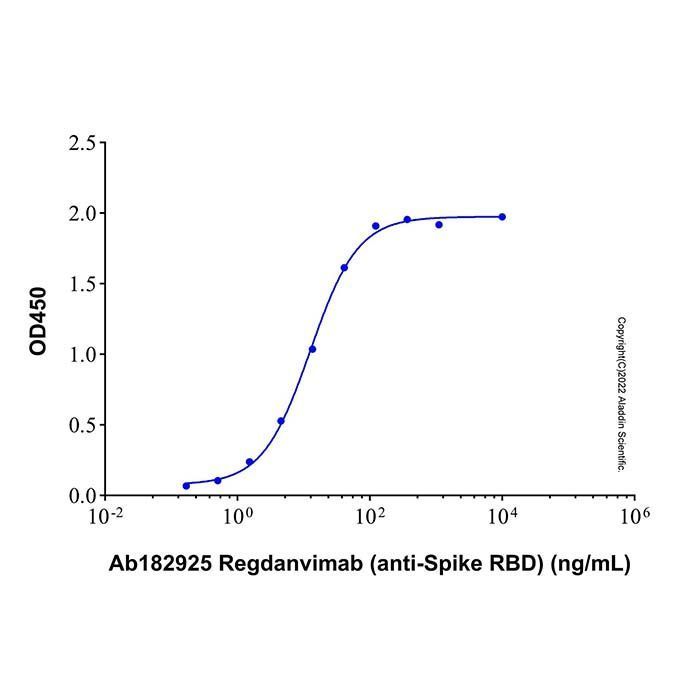
Regdanvimab (anti-Spike RBD) (Ab182925) - ELISA
Immobilized Recombinant Human SARS-CoV-2 Spike Protein RBD (rp155929) at 1.0 μg/mL can bind Regdanvimab (anti-Spike RBD) (Ab182925) with the EC₅₀ of 12.65 ng/mL.​

Regdanvimab (anti-Spike RBD) (Ab182925) - SEC
The purity of Regdanvimab (anti-Spike RBD) (Ab182925) is more than 95% verified by HPLC.

Dokumentation

📋 Sicherheitsdatenblatt (SDS)

Umfassendes Dokument zu Gefahren, Handhabung, Lagerung und Einhaltung regulatorischer Vorschriften.

<<<<<<< HEAD SDS herunterladen → ======= SDS herunterladen → >>>>>>> release248-p3

✅ Analysezertifikat (COA)

Chargenspezifische Qualitätsdaten. Geben Sie Ihre Chargennummer ein, um das genaue COA abzurufen.

COA nachschlagen →

📊 Datenblatt

Kurzübersicht über Produktspezifikationen und Anwendungen.

Datenblatt ansehen →

🔬 Spezifikationsblatt

Vollständige Qualitätsmerkmale und Akzeptanzkriterien für diese Qualität.

Spezifikationsblatt ansehen →

Erweiterte Daten

Zertifikate (CoA, COO, BSE/TSE und Analyse-Diagramm)
C of A & Other Certificates(BSE/TSE, COO):
Analytical Chart:

Find and download the COA for your product by matching the lot number on the packaging.

3 results found

Lot NumberCertificate TypeDatumArtikel
ZJ24F0505648ZJ24F0505648Certificate of AnalysisMar 17, 2026 Ab182925
ZJ24F0505649ZJ24F0505649Certificate of AnalysisMar 17, 2026 Ab182925
ZJ24F0505650ZJ24F0505650Certificate of AnalysisMar 17, 2026 Ab182925
Lösungsrechner
Bewertungen

Kundenbewertungen

Application Protocols

Tested applications, recommended dilutions, and positive controls are not specified for this item; refer to the CoA/validation report. The following are general workflow outlines to guide assay setup (parameters must be optimized empirically):

  • Direct/Indirect ELISA: immobilize RBD or Spike on high‑binding plates; block; incubate with primary antibody; detect with species‑appropriate anti‑Fc secondary (if unconjugated). Include standard curves with known binder for benchmarking.
  • BLI/SPR kinetics: capture antibody on Protein A/G sensors; inject RBD at multiple concentrations; analyze global fits to 1:1 or heterogeneous models as appropriate. Include reference subtraction and replicate injections.
  • Flow cytometry: stain Spike‑expressing cells on ice; include Fc block where relevant; detect with fluorescent secondary; gate on live singlets; include untransfected or isotype controls.
  • Immunofluorescence/ICC: fix and permeabilize cells as dictated by epitope accessibility; titrate antibody to minimize background; include no‑primary control.

Because this listing is Carrier Free and Azide Free, select secondary reagents and buffers accordingly to maintain sterility and compatibility with live‑cell workflows if applicable.

Biological Roles

Regdanvimab binds the receptor‑binding domain (RBD) of the SARS‑CoV‑2 Spike glycoprotein, a key viral surface protein that mediates host‑cell attachment via ACE2.

  • Target context (literature): the Spike RBD undergoes conformational dynamics between “up” (ACE2‑accessible) and “down” states on the trimeric Spike. Antibodies to RBD can sterically hinder or allosterically modulate ACE2 engagement in vitro.
  • Mechanistic considerations: antibody–antigen recognition is driven by complementarity of CDR loops to RBD epitopes through hydrogen bonding, electrostatics, and hydrophobic contacts. Fc domain does not contribute to antigen affinity but governs effector functions in cellular contexts (e.g., FcγR/C1q interactions; literature) which may be studied in research systems.
  • Research utility: serves as a reference binder for Spike–ACE2 interaction assays, epitope binning panels, and structural studies (cryo‑EM/X‑ray of Fab–RBD complexes).
  • Cross‑reactivity: specificity is for SARS‑CoV‑2 Spike RBD per product name; breadth across variants or related betacoronaviruses is not specified for this item and must be empirically determined for your system.

Note: No clinical or diagnostic claims are made. All uses are limited to laboratory research, biochemistry, and virology model systems.

Buffer Applications

This product is an antibody reagent and is not a buffering compound. It does not serve as a pH buffer system.

  • For experimental use, prepare and handle the antibody in suitable laboratory buffers (e.g., PBS or HEPES). Select buffers and pH based on your target assay.
  • If you require information on the antibody’s formulation buffer or recommended working buffer, this is not specified for this item; refer to CoA/Spec Sheet.
Green Alternatives

From a sustainability perspective, this product already embodies several greener attributes compared with legacy antibody production.

  • Animal‑free recombinant production reduces reliance on animal‑derived sera and hybridoma ascites, aligning with 3Rs principles and lowering biological waste.
  • Carrier‑free, azide‑free formulation minimizes persistent biocides and additives; it also facilitates downstream biodegradability and reduces hazardous waste streams (no azide disposal constraints).

Comparison (general):

  • Traditional hybridoma antibodies: often require animal components (FBS, ascites), variable lot profiles, and may include preservatives like sodium azide; disposal requires chemical hazard considerations.
  • Recombinant, animal‑free antibodies (this item): consistent sequence/lot performance, lower animal input, typically manufactured under tighter process controls; reduced environmental and ethical footprint.

Practical green tips:

  • Use aliquots to avoid product loss and repeat shipping.
  • Plan consolidated experiments to minimize cold‑chain shipments.
  • Employ reusable cold packs and validated insulated shippers where institutional policy allows.

Trade‑offs: cold‑chain storage (−80°C) is energy intensive. Mitigate by efficient freezer management, inventory control, and minimizing door‑open time.

Pharmaceutical Uses

This catalog item is supplied strictly for research use. It is not intended for human or veterinary use, and no clinical claims are made.

  • Possible roles in pharmaceutical R&D (general):
    • Reference antibody for assay development (e.g., ligand‑binding assays to quantify anti‑RBD activity, surrogate neutralization tests, or Spike–ACE2 blockade assays).
    • Reagent for comparability assessments, epitope mapping, and developability screens (stability, aggregation, Fc engineering studies) in preclinical research.
    • Positive control material in bioanalytical methods targeting Spike or RBD.
  • Excipient/formulation status: Not specified for this item; refer to CoA/Spec Sheet for any buffer components. This listing is Carrier Free and Azide Free by grade.
  • Pharmacopeial status: not applicable; no compendial monograph is implied for this research reagent.

Any use in GMP, diagnostic, or therapeutic contexts would require separate qualification and is outside the scope of this listing.

Physical Properties

Item‑specific physicochemical constants are not provided. The following are general properties for IgG‑class monoclonal antibodies and should be treated as literature guidance, not specifications for this item.

  • Appearance: Not specified for this item; refer to CoA/Spec Sheet.
  • Molecular weight (literature): ~150 kDa for human IgG1; exact value depends on sequence and glycosylation.
  • Isoelectric point (literature): typically pI ~7–9 for human IgG1; sequence‑dependent.
  • Solubility (literature): highly soluble in aqueous physiological buffers (e.g., PBS, HEPES) at mg/mL concentrations; poor solubility in organic solvents.
  • Extinction coefficient (literature): ε280 often ~1.3–1.5 (mg/mL)−1 cm−1 for IgG; must be computed from exact sequence for precise quantitation.
  • Aggregation behavior (general): sensitive to freeze‑thaw, elevated temperature, extremes of pH, and interfacial stress; may form dimers/oligomers without stabilizers.
  • Formulation excipients: Not specified for this item; refer to CoA/Spec Sheet (this listing is Carrier Free and Azide Free per grade, but buffer/excipients are not detailed).

Specifications such as concentration, pH, osmolality, endotoxin value, and residual host‑cell protein/DNA are not listed here. For authoritative physical data, consult the item CoA/Spec Sheet and SDS.

Quality and Grades

This item is supplied with multiple quality designations; below are their meanings and practical implications for experimental planning.

  • Animal Free: produced without animal‑derived components in the manufacturing process. Reduces risk of adventitious agents and animal‑origin variability; supports xeno‑free workflows.
  • Carrier Free: no carrier proteins (e.g., BSA) added. Advantages include accurate mass dosing, unobstructed labeling/conjugation, and lower background in assays. Handle gently to avoid adsorption losses; consider low‑protein bind tubes.
  • Recombinant: sequence‑defined antibody expressed in a controlled host system, improving lot‑to‑lot consistency compared to hybridoma. Enables sequence‑level analytics and engineering.
  • ExactAb™: denotes a recombinant, sequence‑exact antibody format designed for high reproducibility (program‑level designation; consult CoA for sequence or lot metadata).
  • Low Endotoxin: suitable for cell‑based assays sensitive to LPS. Exact endotoxin limit is not specified for this item; refer to CoA/Spec Sheet.
  • Azide Free: compatible with live‑cell assays and enzyme‑mediated labeling. Requires sterile technique and proper storage to prevent microbial growth.
  • Validated: indicates internal application verification. Specific tested applications and performance criteria are not listed here; refer to CoA/validation report if available.

Note: This section explains grade meanings; it does not confer additional specifications beyond those explicitly provided for this SKU.

Reaction and Applications

This antibody is designed for binding the SARS‑CoV‑2 Spike RBD and is suited to immunoassay and biophysical applications rather than chemical reactions.

  • Immunoassays:
    • ELISA/CLIA: use as capture or detection reagent against recombinant RBD or Spike ectodomain. Pairing with non‑competing antibodies enables sandwich formats.
    • Western blot (reduced/non‑reduced): binding to denatured Spike may be epitope‑dependent; confirm retention of linear epitope if WB is intended.
    • Immunofluorescence/ICC: detect RBD/Spike expressed in transfected cells; validate fixation/permeabilization conditions.
  • Biophysical binding studies:
    • BLI/SPR: determine apparent KD, kon, koff versus RBD or full Spike; immobilize antibody (Protein A/G or Fc capture) or antigen (His‑Ni or biotin‑streptavidin) depending on experiment design.
    • Epitope binning: assess competition with ACE2 or other anti‑RBD antibodies to map epitope classes.
  • Cell‑based assays:
    • Flow cytometry: detect cell‑surface Spike on transfected cells or pseudoparticles; consider Fc receptor blocking in FcγR+ cells.
    • Functional interaction studies: evaluate blockade of RBD–ACE2 interaction in vitro (e.g., surrogate neutralization ELISAs), avoiding any clinical inference.

Practical tips: keep solutions cold, avoid surfactant‑free vigorous mixing, use low‑binding plastics, and pre‑clear lysates to reduce background. Optimize antibody amount and incubation times empirically.

Reaction Conditions

Classical chemical reaction conditions are not applicable to an antibody reagent. However, for assay‑style “interactions” used in analytical workflows, the following general, literature‑based guidance may be useful (not item‑specific specifications):

  • ELISA binding: coat antigen (RBD) on high‑binding plates in carbonate buffer pH ~9.6, block with protein blockers, and incubate antibody in PBS/Tween at ambient temperature or 4°C with gentle agitation. Optimize incubation times and washing stringency empirically.
  • BLI/SPR: capture antibody via Protein A/G on sensor or chip; run kinetics in HEPES‑buffered saline with surfactant at 25°C, verifying mass‑transport limits and regeneration compatibility. Titrate antigen across sub‑ to supra‑KD concentrations.
  • Flow cytometry: stain cells expressing Spike under ice‑cold conditions to preserve surface epitopes; include Fc receptor block for myeloid lines; analyze promptly to minimize internalization artifacts.

These conditions are provided as general starting points. Exact concentrations, temperatures, and times for this SKU are not specified and must be determined experimentally. Always consult your assay SOPs and instrument manufacturer guidance.

Safety and Handling
  • Research use: For research use only; not for diagnostic or therapeutic applications.
  • GHS classification: Not specified for this item; refer to SDS. Antibody preparations are often not classified as hazardous chemicals, but you must confirm in the SDS.
  • Signal word, pictograms, H‑statements: Not specified for this item; refer to SDS.
  • Primary hazards (general for proteins): low volatility; potential for mild irritation or sensitization in susceptible individuals. Avoid aerosol generation.
  • PPE: lab coat, nitrile gloves, and safety glasses. Use biological safety cabinet (Class II) when handling open vials to maintain sterility and protect from aerosols.
  • Handling:
    • Keep on ice during use; minimize time at ambient temperature.
    • Avoid repeated freeze–thaw cycles; aliquot upon first thaw.
    • Prevent mechanical stress (vigorous vortexing, foaming) which can promote aggregation/denaturation.
  • Incompatibilities: avoid strong acids/bases, oxidizers, and organic solvents; avoid microbial contamination. Do not mix with sodium azide–containing solutions if downstream enzymatic assays are planned (this item is Azide Free per grade).
  • First aid (general): skin/eye contact—rinse with water; inhalation—move to fresh air; ingestion—rinse mouth. Seek medical attention as appropriate. Defer to SDS for definitive guidance.
  • Waste: dispose of proteinaceous biological waste per institutional biosafety policies; decontaminate surfaces with suitable disinfectants.
Solvent Selection

As a recombinant monoclonal antibody, this product is intended for use in aqueous buffers rather than organic solvents.

  • Preferred media (general): sterile, isotonic buffers such as PBS, DPBS, or HEPES buffered saline at neutral pH. For sensitive applications, use low‑endotoxin, nuclease‑free reagents.
  • Additives (if compatible with your assay): sugars (trehalose, sucrose) and amino acids (arginine) can enhance stability; non‑ionic surfactants (e.g., 0.01% polysorbate) can reduce interfacial stress. Note: This item is Carrier Free and Azide Free; no excipients are specified—add only if appropriate for your workflow.
  • Avoid: alcohols, ketones, chlorinated solvents, strong acids/bases—these denature proteins. High ionic strength or extreme pH may impair binding.
  • Filtration: if sterility is required and formulation permits, 0.22 µm sterile filtration can be used, minimizing protein loss by pre‑wetting and using low‑binding membranes.
  • Storage buffer choice: match your long‑term storage and assay conditions; maintain pH 6.8–7.4 (general guidance) to balance stability and activity.

If your application requires conjugation (e.g., fluorophore, biotin), ensure the buffer is free of amines (for NHS chemistry) and reducing agents (for maleimide chemistry). Dialyze or desalt into a conjugation‑compatible buffer before labeling.

Storage and Reconstitution
  • Storage conditions (item‑specific): Store at −80°C. Avoid repeated freezing and thawing.

  • Shipping: Shipped on dry ice packs + cold packs.

  • Reconstitution: Not specified for this item; refer to CoA/Spec Sheet for any lyophile reconstitution instructions or concentration. General guidance if reconstitution is required in your workflow:

    • Thaw or reconstitute on ice using sterile, endotoxin‑controlled buffer (e.g., PBS or HEPES).
    • Mix by gentle inversion; avoid foaming.
    • If carrier‑free adsorption losses are a concern at low µg/mL, pre‑rinse plastics with buffer containing inert protein only if compatible with your assay.
  • Aliquoting: Upon first thaw, aliquot into single‑use volumes in low‑binding, sterile tubes; refreeze promptly at −80°C. Record freeze–thaw count per aliquot.

  • Short‑term handling: keep on ice during experiments; return unused material to −80°C quickly. For temporary storage at 4°C, limit to the shortest possible duration and verify stability empirically.

  • Light and agitation: protect from prolonged bright light if conjugated (none specified here) and avoid vigorous mixing.

For authoritative stability, concentration, and buffer composition, consult the item’s CoA/Spec Sheet and SDS.

Structure and Identity

Regdanvimab is a recombinant monoclonal antibody directed against the receptor-binding domain (RBD) of the SARS‑CoV‑2 Spike glycoprotein.

  • Product name: Regdanvimab (anti‑Spike RBD)
  • SKU: Ab182925
  • CAS: 2444308-95-4
  • Category: Antibody (recombinant, animal‑free)
  • Molecular formula: Not specified for this item; refer to CoA/Spec Sheet.
  • Molecular weight: Not specified for this item; refer to CoA/Spec Sheet.
    • Typical IgG1 molecular mass is ~150 kDa (literature).
  • SMILES/InChI/InChIKey: Not specified for this item; refer to CoA/Spec Sheet.
  • Structural features (general, literature):
    • Immunoglobulin G architecture comprising two heavy chains and two light chains, each with variable domains (VH/VL) forming the antigen‑binding site (paratope) and constant regions (CH1–CH3/CL).
    • Glycoprotein with conserved N‑glycosylation in Fc (Asn297 for human IgG1; literature).
    • Bivalent binding to the Spike RBD via complementarity‑determining regions (CDRs) within the Fab fragments.
  • 2D structural description (conceptual):
    • Y‑shaped heterotetramer with two Fab arms (each containing one VH–VL pair) connected to an Fc dimer (CH2–CH3) via flexible hinge; disulfide bonds stabilize inter‑ and intra‑chain linkages (literature).

Note: Exact amino‑acid sequence, subclass, and glycoform distribution for this catalog item are not specified here; consult the Certificate of Analysis (CoA) for item‑specific identity data.

Synthetic Utility

As a recombinant monoclonal antibody, this product is not a synthetic building block or reagent for organic transformations. Therefore, classical synthetic utility (e.g., named reactions, protecting‑group strategies) does not apply.

For chemists working at the interface of chemistry and biology, potential uses include:

  • Conjugation chemistry studies: site‑selective labeling of lysines (NHS‑esters) or cysteines (maleimides) after buffer exchange into amine‑/thiol‑compatible media; glycan‑directed or Fc‑site–specific conjugation methods (literature) to create ADC‑like constructs for research assays.
  • Biophysical method development: exploiting the well‑defined Fc for immobilization (Protein A/G capture) in affinity workflows.

Note: No specific conjugation protocol, degree of labeling, or stability data are provided for this item; optimization must be done empirically for your use case.

Target Specificity
  • Antigen/Target: SARS‑CoV‑2 Spike protein, receptor‑binding domain (RBD)
  • Species reactivity: Virus (SARS‑CoV‑2); cross‑reactivity with variants or related coronaviruses is not specified for this item.
  • Clone/designation: Not specified for this item; refer to CoA/Spec Sheet.
  • Isotype/subclass: Not specified for this item; refer to CoA/Spec Sheet.
    • General note: Regdanvimab is known in literature as a human IgG1 monoclonal antibody; item‑specific confirmation is not provided here.
  • Epitope: Not specified for this item; refer to CoA/Spec Sheet.
  • Conjugate: None specified (Carrier Free; no label indicated).

Users should verify specificity under their assay conditions, including competition with ACE2 or non‑competing antibodies if epitope class determination is required.

Häufig gestellte Fragen

What does Animal Free mean?
Animal Free indicates that the material has been processed and tested for specialty industrial processing. Specifications focus on the impurities that affect performance in that application — for example, metal content for electronics, particle size for batteries, refractive index for optics, or moisture content for moisture-sensitive processes.
What does Carrier Free mean?
Carrier Free indicates that the material has been processed and tested for specialty industrial processing. Specifications focus on the impurities that affect performance in that application — for example, metal content for electronics, particle size for batteries, refractive index for optics, or moisture content for moisture-sensitive processes.
How should this product be stored?
Store at ?80 °C. Avoid repeated freeze–thaw cycles. Aliquot into single-use volumes before freezing.
How is this product shipped?
This product ships frozen with dry ice and cold packs. Unpack on arrival and transfer it to the storage condition stated above; handle dry ice with insulated gloves in a ventilated area.
What are the CAS number, molecular formula and molecular weight?
The CAS Number is 2444308-95-4.
What documentation is provided?
Available product documentation, including Certificates of Analysis (COA), Safety Data Sheets (SDS), and specification sheets, is shown in the product document area. Document availability and access follow the current site policy.
Which species reactivity has this antibody been validated against?
Validated reactivity is listed on the PDP and on each lot's datasheet. We validate against the most commonly tested species for the target (Regdanvimab (anti-Spike RBD)); cross-reactivity in untested species may exist but is not guaranteed. Contact technical support for specific species inquiries.

Verwandte Produkte

Mouse Anti-Human IgM Antibody - Sekundärantikörper, for ELISA various applications, from Human, generated in Mouse, IgG1
Mouse Anti-Human IgG H&L (HRP) - Sekundärantikörper, for ELISA various applications, from Human, generated in Mouse, IgG1
Goat Anti-Human IgG H&L (HRP) - Sekundärantikörper, for WB,ELISA,IHC various applications, from Human, generated in Goat, IgG
Mouse Anti-Human IgG Antibody - Sekundärantikörper, for ELISA,CLIA various applications, from Human, generated in Rat, IgG1
Human IgG - Isotyp-Kontrollantikörper, for WB,CLIA,LF,EIA,PRTIA various applications, generated in Human, >95%, IgG
Bebtelovimab (anti-Spike RBD) - Primärer Antikörper, specific to Spike RBD, Human IgG1, INHIBITOR of Spike glycoprotein inhibitor
Goat Anti-Human IgG Antibody - Sekundärantikörper, ≥ 95%
Mouse Anti-Human IgA H&L Antibody - Sekundärantikörper, Mouse IgG1
Goat Anti-Human IgG (HRP) - Sekundärantikörper
Goat Anti-Human IgG (Biotin) - Sekundärantikörper
Goat Anti-Human IgG (Cy5) - Sekundärantikörper
Goat Anti-Human IgG (APC) - Sekundärantikörper
Goat Anti-Human IgG (PE) - Sekundärantikörper
Goat Anti-Human IgG (TRITC) - Sekundärantikörper
Goat Anti-Human IgG (FITC) - Sekundärantikörper
Mouse Anti-Human IgE epsilon chain Antibody - Sekundärantikörper
Goat Anti-Human IgG Fc Antibody - Sekundärantikörper, Goat IgG
Casirivimab (anti-Spike RBD) - Primärer Antikörper, specific to Spike RBD, >95% (SDS-PAGE&SEC); Endotoxin Level
Bamlanivimab (anti-Spike RBD) - Primärer Antikörper, specific to Spike RBD, >95% (SDS-PAGE&SEC), Human IgG1, INHIBITOR of Spike glycoprotein inhibitor
Sotrovimab (anti-Spike RBD) - Primärer Antikörper, specific to Spike RBD, >95% (SDS-PAGE&SEC), Human IgG1, INHIBITOR of Spike glycoprotein inhibitor
Etesevimab (anti-Spike RBD) - Primärer Antikörper, specific to Spike RBD, >95% (SDS-PAGE&SEC); Endotoxin Level
Imdevimab (anti-Spike RBD) - Primärer Antikörper, specific to Spike RBD, >95% (SDS-PAGE&SEC), Human IgG1, INHIBITOR of Spike glycoprotein inhibitor
Human IgG2-Kappa - Isotyp-Kontrollantikörper, Human IgG2
Human IgG3-kappa - Isotyp-Kontrollantikörper, Human IgG3
Cilgavimab (anti-Spike RBD) - Primärer Antikörper, specific to Spike RBD, Human IgG1
Mouse IgG2b-kappa, anti-Spike RBD - Isotyp-Kontrollantikörper, specific to Spike RBD, Mouse IgG2b
Mouse IgG2a-kappa, anti-Spike RBD - Isotyp-Kontrollantikörper, specific to Spike RBD, Mouse IgG2a
Rat IgG2a-kappa, anti-Spike RBD - Isotyp-Kontrollantikörper, specific to Spike RBD, Rat IgG2a
Human IgG1-kappa, anti-Spike RBD - Isotyp-Kontrollantikörper, specific to Spike RBD, Human IgG1
Human IgG4-kappa - Isotyp-Kontrollantikörper, IgG4
Goat Anti-Human IgG (AF647) - Sekundärantikörper, IgG
Goat Anti-Human IgG (AF405) - Sekundärantikörper, IgG
Human IgG (FITC) - Isotyp-Kontrollantikörper, IgG
Human IgG (APC) - Isotyp-Kontrollantikörper, IgG
Human IgG (PE) - Isotyp-Kontrollantikörper, IgG
Human IgG1(P331S/E430G)-kappa, anti-HEL - Isotyp-Kontrollantikörper, specific to HEL, Human IgG1(P331S/E430G)
Human IgG1(D265A/N297A)-kappa, anti-HEL - Isotyp-Kontrollantikörper, specific to HEL, Human IgG1(D265A/N297A)
Human IgG1(K409R/E356D/M358L)-kappa, anti-HEL - Isotyp-Kontrollantikörper, specific to HEL, Human IgG1(K409R/E356D/M358L)
Human IgG1(P329G/E356D/M358L)-kappa, anti-HEL - Isotyp-Kontrollantikörper, specific to HEL, Human IgG1(P329G/E356D/M358L)
Human IgG1(F405L)-kappa, anti-HEL - Isotyp-Kontrollantikörper, specific to HEL, Human IgG1(F405L)
Human IgG1(N297Q)-kappa, anti-HEL - Isotyp-Kontrollantikörper, specific to HEL, Human IgG1(N297Q)
Human IgG (Biotin) - Isotyp-Kontrollantikörper, IgG
Human IgG1(N297S)-kappa, anti-HEL - Isotyp-Kontrollantikörper, specific to HEL, Human IgG1(N297S)
Human IgG1(E233A/L235A)-kappa, anti-HEL - Isotyp-Kontrollantikörper, specific to HEL, Human IgG1(E233A/L235A)
Human IgG1(K214R/N297A)-kappa, anti-HEL - Isotyp-Kontrollantikörper, specific to HEL, Human IgG1(K214R/N297A)
Human IgG1(K214R/L234A/L235A)-kappa, anti-HEL - Isotyp-Kontrollantikörper, specific to HEL, Human IgG1(K214R/L234A/L235A)
Human IgG1(N297A/E356D/M358L)-kappa, anti-HEL - Isotyp-Kontrollantikörper, specific to HEL, Human IgG1(N297A/E356D/M358L)
Human IgG1(L234F/L235E)-kappa, anti-HEL - Isotyp-Kontrollantikörper, specific to HEL, Human IgG1(L234F/L235E)
Human IgG1(D265A)-kappa, anti-HEL - Isotyp-Kontrollantikörper, specific to HEL, Human IgG1(D265A)
Human IgG1(K214R/L234F/L235E/P331S)-kappa, anti-HEL - Isotyp-Kontrollantikörper, specific to HEL, Human IgG1(K214R/L234F/L235E/P331S)
Human IgG1(K214R/E356D/M358L)-kappa, anti-HEL - Isotyp-Kontrollantikörper, specific to HEL, Human IgG1(K214R/E356D/M358L)
Human IgG1(L234A/L235A/G237A)-kappa, anti-HEL - Isotyp-Kontrollantikörper, specific to HEL, Human IgG1(L234A/L235A/G237A)
Human IgG1(L234A/L235A/F405L)-kappa, anti-HEL - Isotyp-Kontrollantikörper, specific to HEL, Human IgG1(L234A/L235A/F405L)
Human IgG1(D270N)-kappa, anti-HEL - Isotyp-Kontrollantikörper, specific to HEL, Human IgG1(D270N)
Human IgG4(S228P)-kappa, anti-HEL - Isotyp-Kontrollantikörper, specific to HEL, Human IgG4(S228P)
Human IgG1(N297A)-kappa, anti-HEL - Isotyp-Kontrollantikörper, specific to HEL, Human IgG1(N297A)
Human IgG4(S228P/L235E/P329G)-kappa, anti-HEL - Isotyp-Kontrollantikörper, specific to HEL, Human IgG4(S228P/L235E/P329G)
Human IgG1-lambda1, anti-Spike RBD - Isotyp-Kontrollantikörper, specific to Spike RBD, Human IgG1
Human IgG1-lambda2, anti-Spike RBD - Isotyp-Kontrollantikörper, specific to Spike RBD, Human IgG1
Rat IgG2b-kappa, anti-Spike RBD - Isotyp-Kontrollantikörper, specific to Spike RBD, Rat IgG2b
Rat IgG1-kappa - Isotyp-Kontrollantikörper, Rat IgG1
Amubarvimab (gegen Spike RBD) - Primärer Antikörper, specific to Spike RBD, Human IgG1
Goat Anti-Human IgG (AF555) - Sekundärantikörper, IgG
Human IgG1-kappa (AF405), anti-Spike RBD - Isotyp-Kontrollantikörper, specific to Spike RBD
Human IgG1-kappa (AF647), anti-Spike RBD - Isotyp-Kontrollantikörper, specific to Spike RBD
Human IgG1-kappa (APC), anti-Spike RBD - Isotyp-Kontrollantikörper, specific to Spike RBD
Human IgG1-kappa (Biotin), anti-Spike RBD - Isotyp-Kontrollantikörper, specific to Spike RBD
Human IgG1-kappa (AF700), anti-Spike RBD - Isotyp-Kontrollantikörper, specific to Spike RBD
Human IgG1-kappa (FITC), anti-Spike RBD - Isotyp-Kontrollantikörper, specific to Spike RBD
Mouse IgG2a-kappa (APC), anti-Spike RBD - Isotyp-Kontrollantikörper, specific to Spike RBD
Mouse IgG2a-kappa (FITC), anti-Spike RBD - Isotyp-Kontrollantikörper, specific to Spike RBD
Mouse IgG2a-kappa (AF700), anti-Spike RBD - Isotyp-Kontrollantikörper, specific to Spike RBD
Mouse IgG2a-kappa (AF647), anti-Spike RBD - Isotyp-Kontrollantikörper, specific to Spike RBD
Mouse IgG2a-kappa (AF555), anti-Spike RBD - Isotyp-Kontrollantikörper, specific to Spike RBD
Mouse IgG2a-kappa (AF405), anti-Spike RBD - Isotyp-Kontrollantikörper, specific to Spike RBD
Mouse IgG2a-kappa (Biotin), anti-Spike RBD - Isotyp-Kontrollantikörper, specific to Spike RBD
Human IgG1-kappa (AF555), anti-Spike RBD - Isotyp-Kontrollantikörper, specific to Spike RBD
Rat IgG2b-kappa (Biotin), anti-Spike RBD - Isotyp-Kontrollantikörper, specific to Spike RBD
Rat IgG2b-kappa (APC), anti-Spike RBD - Isotyp-Kontrollantikörper, specific to Spike RBD
Rat IgG2b-kappa (FITC), anti-Spike RBD - Isotyp-Kontrollantikörper, specific to Spike RBD
Rat IgG2b-kappa (AF555), anti-Spike RBD - Isotyp-Kontrollantikörper, specific to Spike RBD
Rat IgG2b-kappa (AF647), anti-Spike RBD - Isotyp-Kontrollantikörper, specific to Spike RBD
Tixagevimab (anti-Spike RBD) - Primärer Antikörper, specific to Spike RBD
Romlusevimab (anti-Spike RBD) - Primärer Antikörper, specific to Spike RBD
Rat IgG2a-kappa (AF405), anti-Spike RBD - Isotyp-Kontrollantikörper, specific to Spike RBD
Rat IgG2a-kappa (AF647), anti-Spike RBD - Isotyp-Kontrollantikörper, specific to Spike RBD
Rat IgG2a-kappa (FITC), anti-Spike RBD - Isotyp-Kontrollantikörper, specific to Spike RBD
Rat IgG2a-kappa (APC), anti-Spike RBD - Isotyp-Kontrollantikörper, specific to Spike RBD
Rat IgG2b-kappa (AF700), anti-Spike RBD - Isotyp-Kontrollantikörper, specific to Spike RBD
CR3022 (anti-Spike RBD) - Primärer Antikörper, specific to Spike RBD
Rat IgG2b-kappa (AF405), anti-Spike RBD - Isotyp-Kontrollantikörper, specific to Spike RBD
Rat IgG2a-kappa (AF700), anti-Spike RBD - Isotyp-Kontrollantikörper, specific to Spike RBD
Mouse IgG2b-kappa (Biotin), anti-Spike RBD - Isotyp-Kontrollantikörper, specific to Spike RBD
Mouse IgG2b-kappa (FITC), anti-Spike RBD - Isotyp-Kontrollantikörper, specific to Spike RBD
Mouse IgG2b-kappa (APC), anti-Spike RBD - Isotyp-Kontrollantikörper, specific to Spike RBD
Mouse IgG2b-kappa (APC-Cy7), anti-Spike RBD - Isotyp-Kontrollantikörper, specific to Spike RBD
Centrose patent anti-dysadherin (anti-Dysadherin) - Primärer Antikörper, specific to FXYD5
Human IgG (AF647) - Isotyp-Kontrollantikörper
Human IgG (AF488) - Isotyp-Kontrollantikörper
Human IgG (AF700) - Isotyp-Kontrollantikörper
Human IgG (AF405) - Isotyp-Kontrollantikörper
Rat IgG2a-kappa (AF555), anti-Spike RBD - Isotyp-Kontrollantikörper, specific to Spike RBD
Mouse IgG2b-kappa (AF555), anti-Spike RBD - Isotyp-Kontrollantikörper, specific to Spike RBD
Goat Anti-Human IgG (AF488) - Sekundärantikörper
Goat Anti-Human IgG Fc (Cy5) - Sekundärantikörper
Goat Anti-Human IgG Fc (AF555) - Sekundärantikörper, specific to Human IgG Fc
Goat Anti-Human IgG Fc (TRITC) - Sekundärantikörper
Goat Anti-Human IgG Fc (AF700) - Sekundärantikörper, specific to Human IgG Fc
Goat Anti-Human IgG Fc (AF405) - Sekundärantikörper
Goat Anti-Human IgG Fc (Biotin) - Sekundärantikörper, specific to Human IgG Fc
Goat Anti-Human IgG Fc (AF647) - Sekundärantikörper
Goat Anti-Human IgG Fc (FITC) - Sekundärantikörper, specific to Human IgG Fc
Human IgG (AF555) - Isotyp-Kontrollantikörper

Dürfen wir Sie über Rabattaktionen informieren?

Später erinnern

Vielen Dank! Bitte überprüfen Sie Ihren E-Mail-Posteingang, um zu bestätigen.

Hoppla! Benachrichtigungen sind deaktiviert.