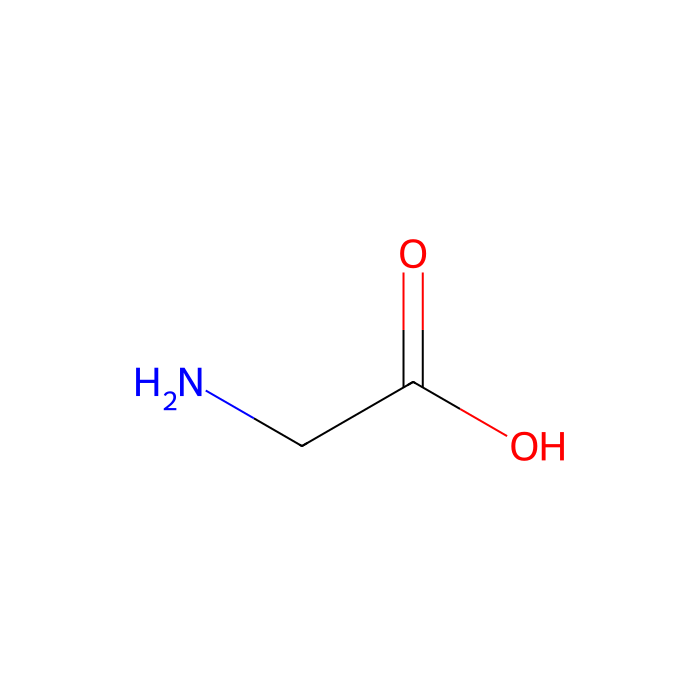
Glycine - Moligand™, for synthesis , CAS No.56-40-6

CAS: 56-40-6 Cat. No.: G432935 Formula: NH2CH2COOH Molecular Weight: 75.07 Beilstein Registry Number: 635782 EC Number: 200-272-2
AVAILABLE TO ORDER
GRADE & PURITY for Synthesis ? Synthesis grade — practical purity for chemical synthesis and preparative work. Use as a cost-effective reagent when analytical purity isn't required. Moligand™ ? Moligand™ — Aladdin's line of ligands and bioactive small molecules. Use for receptor, pathway, and binding studies needing defined small-molecule tools.
Synonyms
Aciport|Padil|[3H]glycine|GLYCINE (USP MONOGRAPH)|Glycine [USP:INN]|GLYCINE (USP-RS)|Glycine iron sulphate (1:1)|GLYCINE [VANDF]|H2N-CH2-COOH|[14C]glycine|[14C]-glycine|Aminoessigsaeure|Glycine;|Leimzucker|2-aminoacetate|Athenon|Glicina [INN-Spanish]|Glycine (USP:INN)|Acide aminoacetique [INN-French]|Glicoamin|GLYCINE [MART.]|Corilin|GLYCINE [MI]|Acido aminoacetico|Aminoazijnzuur|Corilin (Salt/Mix)|gly|Glycine (H-Gly-OH)|Glycocoll|GLYCINE (II)|GLYCINE-1-13C-15N|GLYCINE (EP MONOGRAPH)|GLYCINE [GREEN BOOK]|Glycinum [INN-Latin]|Acido aminoacetico (INN-Spanish)|Acidum aminoaceticum [INN-Latin]|GLYCINE [FHFI]|Glycine USP grade|Acido aminoacetico [INN-Spanish]|Glicina (INN-Spanish)|Glycine (JP17/USP)|GLYCINE [HSDB]|Gly-OH|Hampshire glycine|GLYCINE [EP MONOGRAPH]|Glyzin|GLY (IUPAC abbrev)|Acetic acid, amino-|Aminoethanoic acid|glycine|Amitone|GLYCINE [INCI]|Acide aminoacetique (INN-French)|GLYCINE [FCC]|Hgly|H-Gly|Glycine, labeled with carbon-14|Glycine, non-medical|Gly-CO|Acidum aminoaceticum|Gly-253|L-Glycine|aminoacetate|amino-Acetate|GLYCINE [USP MONOGRAPH]|Glycine, free base|Sucre de gelatine|Biomol-NT_000195|Acide aminoacetique|aminoacetic acid|amino-Acetic acid|Aminoethanoate|GLYCINE (MART.)|GLYCINE [II]|Glycinum|GLYCINE-2-13C-15N|Glycosthene|Glycine [INN]|Glykokoll|Aminoessigsaure|GLYCINE [JAN]|GLYCINE [WHO-DD]|2-Aminoacetic acid|GLYCINE [USP-RS]|Glycolixir|L-Gly|Glicina
Storage
Room temperature
Shipped In
Normal
★
Size
Germany (EU)
USA*
Price
Qty
250g
G432935-250g
3 In stock
3 In stock
€51.98
Enter a quantity for the sizes you want to add.

Specifications

Synonyms
Aciport | Padil | [3H]glycine | GLYCINE (USP MONOGRAPH) | Glycine [USP:INN] | GLYCINE (USP-RS) | Glycine iron sulphate (1:1) | GLYCINE [VANDF] | H2N-CH2-COOH | [14C]glycine | [14C]-glycine | Aminoessigsaeure | Glycine; | Leimzucker | 2-aminoacetate | Athenon | Glicina [INN-Spanish] | Glycine (USP:INN) | Acide aminoacetique [INN-French] | Show more
Specifications & Purity
Moligand™, for synthesis
Biochemical and Physiological Mechanisms
Glycine is a non essential amino acid. Calcium influx through the cell membrane is mediated by glycine gated channels. Glycine participates in the synthesis of porphyrins, purines, and serines. It can also serve as a competitive agonist for binding glutamate to NMDA (N-methyl-D-aspartate) receptors. In rapidly proliferating cancer cells, glycine synthesis may increase due to an increased demand for amino acids. Inhibitory neurotransmitters in the spinal cord and allosteric regulators of NMDA receptors.
Storage
Room temperature
Shipped In
Normal
Grade
for Synthesis, Moligand™
Names and Identifiers
Pubchem Sid
Pubchem Sid Url
https://pubchem.ncbi.nlm.nih.gov/substance/504750409
SMILES
C(C(=O)O)N
IUPAC Name
2-aminoacetic acid
InChIKey
DHMQDGOQFOQNFH-UHFFFAOYSA-N
InChI
1S/C2H5NO2/c3-1-2(4)5/h1,3H2,(H,4,5)
Isomeric SMILES
C(C(=O)O)N
WGK Germany
1
RTECS
MB7600000
Molecular Weight
75.07
Beilstein
635782
Reaxys
635782
Reaxys-RN_link_address
https://www.reaxys.com/reaxys/secured/hopinto.do?context=S&query=IDE.XRN=635782&ln=

Advanced Data

Taxonomic Classification

Taxonomy Tree

KingdomOrganic compounds
SuperclassOrganic acids and derivatives
ClassCarboxylic acids and derivatives
SubclassAmino acids, peptides, and analogues
Intermediate Tree Nodes Amino acids and derivatives - Alpha amino acids and derivatives
Direct ParentAlpha amino acids
Alternative Parents Amino acids  Monocarboxylic acids and derivatives  Carboxylic acids  Organopnictogen compounds  Organic oxides  Monoalkylamines  Hydrocarbon derivatives  Carbonyl compounds  
Molecular FrameworkAliphatic acyclic compounds
Substituents Alpha-amino acid - Amino acid - Carboxylic acid - Monocarboxylic acid or derivatives - Organic nitrogen compound - Organic oxide - Hydrocarbon derivative - Primary amine - Organooxygen compound - Organonitrogen compound - Organopnictogen compound - Primary aliphatic amine - Organic oxygen compound - Carbonyl group - Amine - Aliphatic acyclic compound
DescriptionThis compound belongs to the class of organic compounds known as alpha amino acids. These are amino acids in which the amino group is attached to the carbon atom immediately adjacent to the carboxylate group (alpha carbon).
External Descriptors Common amino acids - Amino acids
3D Structure
Interactive Chemical Structure Model


Associated Targets(Human)
GPRC6A Tchem G-protein coupled receptor family C group 6 member A (1 Activities)
Activity TypeActivity Value -log(M)Mechanism of ActionActivity ReferencePublications (PubMed IDs)
PDE5A Tclin Phosphodiesterase 5A (5113 Activities)
Activity TypeRelationActivity valueUnitsAction TypeJournalPubMed IddoiAssay Aladdin ID
EGFR Tclin Epidermal growth factor receptor erbB1 (33727 Activities)
Activity TypeRelationActivity valueUnitsAction TypeJournalPubMed IddoiAssay Aladdin ID
F2 Tclin Thrombin (11687 Activities)
Activity TypeRelationActivity valueUnitsAction TypeJournalPubMed IddoiAssay Aladdin ID
CA2 Tclin Carbonic anhydrase II (17698 Activities)
Activity TypeRelationActivity valueUnitsAction TypeJournalPubMed IddoiAssay Aladdin ID
ESR1 Tclin Estrogen receptor alpha (17718 Activities)
Activity TypeRelationActivity valueUnitsAction TypeJournalPubMed IddoiAssay Aladdin ID
HMGCR Tclin HMG-CoA reductase (2475 Activities)
Activity TypeRelationActivity valueUnitsAction TypeJournalPubMed IddoiAssay Aladdin ID
NR3C1 Tclin Glucocorticoid receptor (14987 Activities)
Activity TypeRelationActivity valueUnitsAction TypeJournalPubMed IddoiAssay Aladdin ID
INSR Tclin Insulin receptor (5558 Activities)
Activity TypeRelationActivity valueUnitsAction TypeJournalPubMed IddoiAssay Aladdin ID
PGR Tclin Progesterone receptor (8562 Activities)
Activity TypeRelationActivity valueUnitsAction TypeJournalPubMed IddoiAssay Aladdin ID
ADRB2 Tclin Beta-2 adrenergic receptor (11824 Activities)
Activity TypeRelationActivity valueUnitsAction TypeJournalPubMed IddoiAssay Aladdin ID
CHRM2 Tclin Muscarinic acetylcholine receptor M2 (10671 Activities)
Activity TypeRelationActivity valueUnitsAction TypeJournalPubMed IddoiAssay Aladdin ID
ADRB1 Tclin Beta-1 adrenergic receptor (6630 Activities)
Activity TypeRelationActivity valueUnitsAction TypeJournalPubMed IddoiAssay Aladdin ID
HTR1A Tclin Serotonin 1a (5-HT1a) receptor (14969 Activities)
Activity TypeRelationActivity valueUnitsAction TypeJournalPubMed IddoiAssay Aladdin ID
ADRA2A Tclin Alpha-2a adrenergic receptor (9450 Activities)
Activity TypeRelationActivity valueUnitsAction TypeJournalPubMed IddoiAssay Aladdin ID
AR Tclin Androgen Receptor (11781 Activities)
Activity TypeRelationActivity valueUnitsAction TypeJournalPubMed IddoiAssay Aladdin ID
CHRM1 Tclin Muscarinic acetylcholine receptor M1 (12690 Activities)
Activity TypeRelationActivity valueUnitsAction TypeJournalPubMed IddoiAssay Aladdin ID
ACE Tclin Angiotensin-converting enzyme (1423 Activities)
Activity TypeRelationActivity valueUnitsAction TypeJournalPubMed IddoiAssay Aladdin ID
DRD2 Tclin Dopamine D2 receptor (23596 Activities)
Activity TypeRelationActivity valueUnitsAction TypeJournalPubMed IddoiAssay Aladdin ID
GABRA1 Tclin GABA receptor alpha-1 subunit (399 Activities)
Activity TypeRelationActivity valueUnitsAction TypeJournalPubMed IddoiAssay Aladdin ID
MAOA Tclin Monoamine oxidase A (11911 Activities)
Activity TypeRelationActivity valueUnitsAction TypeJournalPubMed IddoiAssay Aladdin ID
CNR1 Tclin Cannabinoid CB1 receptor (20913 Activities)
Activity TypeRelationActivity valueUnitsAction TypeJournalPubMed IddoiAssay Aladdin ID
DRD1 Tclin Dopamine D1 receptor (9720 Activities)
Activity TypeRelationActivity valueUnitsAction TypeJournalPubMed IddoiAssay Aladdin ID
DRD4 Tchem Dopamine D4 receptor (7907 Activities)
Activity TypeRelationActivity valueUnitsAction TypeJournalPubMed IddoiAssay Aladdin ID
ACHE Tclin Acetylcholinesterase (18204 Activities)
Activity TypeRelationActivity valueUnitsAction TypeJournalPubMed IddoiAssay Aladdin ID
PTGS1 Tclin Cyclooxygenase-1 (9233 Activities)
Activity TypeRelationActivity valueUnitsAction TypeJournalPubMed IddoiAssay Aladdin ID
SLC6A2 Tclin Norepinephrine transporter (10102 Activities)
Activity TypeRelationActivity valueUnitsAction TypeJournalPubMed IddoiAssay Aladdin ID
HRH2 Tclin Histamine H2 receptor (5428 Activities)
Activity TypeRelationActivity valueUnitsAction TypeJournalPubMed IddoiAssay Aladdin ID
ADRA1D Tclin Alpha-1d adrenergic receptor (4171 Activities)
Activity TypeRelationActivity valueUnitsAction TypeJournalPubMed IddoiAssay Aladdin ID
HTR1B Tclin Serotonin 1b (5-HT1b) receptor (2801 Activities)
Activity TypeRelationActivity valueUnitsAction TypeJournalPubMed IddoiAssay Aladdin ID
HTR2A Tclin Serotonin 2a (5-HT2a) receptor (14758 Activities)
Activity TypeRelationActivity valueUnitsAction TypeJournalPubMed IddoiAssay Aladdin ID
HTR2C Tclin Serotonin 2c (5-HT2c) receptor (11471 Activities)
Activity TypeRelationActivity valueUnitsAction TypeJournalPubMed IddoiAssay Aladdin ID
SLC6A1 Tclin GABA transporter 1 (308 Activities)
Activity TypeRelationActivity valueUnitsAction TypeJournalPubMed IddoiAssay Aladdin ID
ADORA1 Tclin Adenosine A1 receptor (17603 Activities)
Activity TypeRelationActivity valueUnitsAction TypeJournalPubMed IddoiAssay Aladdin ID
CALCR Tclin Calcitonin receptor (2215 Activities)
Activity TypeRelationActivity valueUnitsAction TypeJournalPubMed IddoiAssay Aladdin ID
SLC6A4 Tclin Serotonin transporter (12625 Activities)
Activity TypeRelationActivity valueUnitsAction TypeJournalPubMed IddoiAssay Aladdin ID
ADRA1A Tclin Alpha-1a adrenergic receptor (8359 Activities)
Activity TypeRelationActivity valueUnitsAction TypeJournalPubMed IddoiAssay Aladdin ID
PTGS2 Tclin Cyclooxygenase-2 (13999 Activities)
Activity TypeRelationActivity valueUnitsAction TypeJournalPubMed IddoiAssay Aladdin ID
HRH1 Tclin Histamine H1 receptor (7573 Activities)
Activity TypeRelationActivity valueUnitsAction TypeJournalPubMed IddoiAssay Aladdin ID
ADRA1B Tclin Alpha-1b adrenergic receptor (2912 Activities)
Activity TypeRelationActivity valueUnitsAction TypeJournalPubMed IddoiAssay Aladdin ID
OPRM1 Tclin Mu opioid receptor (19785 Activities)
Activity TypeRelationActivity valueUnitsAction TypeJournalPubMed IddoiAssay Aladdin ID
DRD3 Tclin Dopamine D3 receptor (14368 Activities)
Activity TypeRelationActivity valueUnitsAction TypeJournalPubMed IddoiAssay Aladdin ID
AVPR1A Tclin Vasopressin V1a receptor (5412 Activities)
Activity TypeRelationActivity valueUnitsAction TypeJournalPubMed IddoiAssay Aladdin ID
OPRD1 Tclin Delta opioid receptor (15096 Activities)
Activity TypeRelationActivity valueUnitsAction TypeJournalPubMed IddoiAssay Aladdin ID
OPRK1 Tclin Kappa opioid receptor (16155 Activities)
Activity TypeRelationActivity valueUnitsAction TypeJournalPubMed IddoiAssay Aladdin ID
HTR3A Tclin Serotonin 3a (5-HT3a) receptor (3366 Activities)
Activity TypeRelationActivity valueUnitsAction TypeJournalPubMed IddoiAssay Aladdin ID
SLC6A3 Tclin Dopamine transporter (10535 Activities)
Activity TypeRelationActivity valueUnitsAction TypeJournalPubMed IddoiAssay Aladdin ID
GRIN1 Tclin Glutamate (NMDA) receptor subunit zeta 1 (122 Activities)
Activity TypeRelationActivity valueUnitsAction TypeJournalPubMed IddoiAssay Aladdin ID
KCNH2 Tclin HERG (29587 Activities)
Activity TypeRelationActivity valueUnitsAction TypeJournalPubMed IddoiAssay Aladdin ID
HTR4 Tclin Serotonin 4 (5-HT4) receptor (2068 Activities)
Activity TypeRelationActivity valueUnitsAction TypeJournalPubMed IddoiAssay Aladdin ID
PDE3A Tclin Phosphodiesterase 3A (3309 Activities)
Activity TypeRelationActivity valueUnitsAction TypeJournalPubMed IddoiAssay Aladdin ID
Associated Targets(non-human)
Agtr2 Angiotensin II type 2 (AT-2) receptor (803 Activities)
Activity TypeRelationActivity valueUnitsAction TypeJournalPubMed IddoiAssay Aladdin ID
Mc4r Melanocortin receptor 4 (1205 Activities)
Activity TypeRelationActivity valueUnitsAction TypeJournalPubMed IddoiAssay Aladdin ID
Ltc4s Leukotriene C4 synthase (1 Activities)
Activity TypeRelationActivity valueUnitsAction TypeJournalPubMed IddoiAssay Aladdin ID
Sigmar1 Sigma opioid receptor (160 Activities)
Activity TypeRelationActivity valueUnitsAction TypeJournalPubMed IddoiAssay Aladdin ID
Npy1r Neuropeptide Y receptor type 1 (8 Activities)
Activity TypeRelationActivity valueUnitsAction TypeJournalPubMed IddoiAssay Aladdin ID
Cckar Cholecystokinin A receptor (90 Activities)
Activity TypeRelationActivity valueUnitsAction TypeJournalPubMed IddoiAssay Aladdin ID
Nos2 Nitric oxide synthase, inducible (3573 Activities)
Activity TypeRelationActivity valueUnitsAction TypeJournalPubMed IddoiAssay Aladdin ID
Mapk1 MAP kinase ERK2 (650 Activities)
Activity TypeRelationActivity valueUnitsAction TypeJournalPubMed IddoiAssay Aladdin ID
Slc6a9 Glycine transporter 1 (255 Activities)
Activity TypeRelationActivity valueUnitsAction TypeJournalPubMed IddoiAssay Aladdin ID
Hdac6 Histone deacetylase 6 (222 Activities)
Activity TypeRelationActivity valueUnitsAction TypeJournalPubMed IddoiAssay Aladdin ID
Mmp9 Matrix metalloproteinase 9 (38 Activities)
Activity TypeRelationActivity valueUnitsAction TypeJournalPubMed IddoiAssay Aladdin ID
Glra1 Glycine receptor subunit alpha-1 (65 Activities)
Activity TypeRelationActivity valueUnitsAction TypeJournalPubMed IddoiAssay Aladdin ID
Mus musculus (284745 Activities)
Activity TypeRelationActivity valueUnitsAction TypeJournalPubMed IddoiAssay Aladdin ID
Rattus norvegicus (775804 Activities)
Activity TypeRelationActivity valueUnitsAction TypeJournalPubMed IddoiAssay Aladdin ID
Slc6a11 GABA transporter 4 (930 Activities)
Activity TypeRelationActivity valueUnitsAction TypeJournalPubMed IddoiAssay Aladdin ID
rep Replicase polyprotein 1ab (378 Activities)
Activity TypeRelationActivity valueUnitsAction TypeJournalPubMed IddoiAssay Aladdin ID
Chrna3 Neuronal acetylcholine receptor; alpha3/beta4 (1368 Activities)
Activity TypeRelationActivity valueUnitsAction TypeJournalPubMed IddoiAssay Aladdin ID
Grin1 Glutamate NMDA receptor (6467 Activities)
Activity TypeRelationActivity valueUnitsAction TypeJournalPubMed IddoiAssay Aladdin ID
Slc16a10 Monocarboxylate transporter 10 (73 Activities)
Activity TypeRelationActivity valueUnitsAction TypeJournalPubMed IddoiAssay Aladdin ID
Grin1 Glutamate NMDA receptor; Grin1/Grin2b (1028 Activities)
Activity TypeRelationActivity valueUnitsAction TypeJournalPubMed IddoiAssay Aladdin ID
Grin1 Glutamate NMDA receptor; Grin1/Grin2a (798 Activities)
Activity TypeRelationActivity valueUnitsAction TypeJournalPubMed IddoiAssay Aladdin ID
Grin1 Glutamate NMDA receptor; Grin1/Grin2c (1127 Activities)
Activity TypeRelationActivity valueUnitsAction TypeJournalPubMed IddoiAssay Aladdin ID
Glra2 Glycine receptor (1745 Activities)
Activity TypeRelationActivity valueUnitsAction TypeJournalPubMed IddoiAssay Aladdin ID
Slc1a5 Amino acid transporter (271 Activities)
Activity TypeRelationActivity valueUnitsAction TypeJournalPubMed IddoiAssay Aladdin ID
SARS-CoV-2 (38078 Activities)
Activity TypeRelationActivity valueUnitsAction TypeJournalPubMed IddoiAssay Aladdin ID
Mechanisms of Action
Certificates (CoA,COO,BSE/TSE and Analysis Chart)
C of A & Other Certificates(BSE/TSE, COO):
Analytical Chart:

Find and download the COA for your product by matching the lot number on the packaging.

4 results found

Lot NumberCertificate TypeDateItem
F2629021F2629021Certificate of AnalysisJul 04, 2026 G432935
F2327466F2327466Certificate of AnalysisJul 05, 2023 G432935
G2319568G2319568Certificate of AnalysisJul 05, 2023 G432935
F2327469F2327469Certificate of AnalysisJul 03, 2023 G432935
Chemical and Physical Properties
Melt Point240 °C
Molecular Weight75.07
XLogP3-3.200
Hydrogen Bond Donor Count2
Hydrogen Bond Acceptor Count3
Rotatable Bond Count1
Exact Mass75.032 Da
Monoisotopic Mass75.032 Da
Topological Polar Surface Area63.300 Ų
Heavy Atom Count5
Formal Charge0
Complexity42.900
Isotope Atom Count0
Defined Atom Stereocenter Count0
Undefined Atom Stereocenter Count0
Defined Bond Stereocenter Count0
Undefined Bond Stereocenter Count0
The total count of all stereochemical bonds0
Covalently-Bonded Unit Count1
Safety and Hazards(GHS)
WGK Germany
1
RTECS
MB7600000
Reaxys
635782
Reaxys-RN_link_address
https://www.reaxys.com/reaxys/secured/hopinto.do?context=S&query=IDE.XRN=635782&ln=
Merck Index
4491
Documents & Articles
“For Synthesis” grade — a clear and practical guide
Professional Guide to Streptavidin-Modified Proteins
Peptide Mapping for Protein Structure Identification
List of Natural Amino Acids
Common Protectants and Formulations for Protein Storage
Standard Operating Procedure (SOP) for the Protein Tris–Glycine Electrophoresis System
Purifying Antibodies with Magnetic Agarose Beads
How to Elute Biotinylated Proteins and Nucleic Acids from Streptavidin Beads?
11 Common Methods for Protein Concentration Determination
Differences Among Antibodies for WB/FC/IP/ChIP/IF/IHC
General Principles of Antibody Labeling with NHS-Activated Esters, F/P Calculation, and Troubleshooting Guide
Biotin-Labeled Protein Purification
Pepsin——Structural Features, Enzymatic Properties, and Experimental Application Guide
Installing a Redox Switch on Biomolecules: Principles, Conjugation Essentials, and an Application Guide for ATTO MB2 NHS ester
A Review of Ten Commonly Used Techniques for Detection, Quantification, and Interaction Analysis in Nucleic Acid Research
Protein Tags Demystified: Classification, Properties, and Suitable Experimental Applications
Why Acridine Can Turn “Trace Molecules” into a Measurable Light Signal: A Mechanistic, Selection, and Troubleshooting Guide to Acridinium Ester Chemiluminescent Immunoassays (Including Product Tables 1–4)
Chymosin: A Review of Molecular Features, Coagulation Kinetics, and Activity Evaluation
dsDNase-Mediated Hydrolysis of Double-Stranded DNA: Enzymatic Characteristics, Methodological Strategies, and Bioanalytical Applications
Glutaraldehyde-mediated Microbial Inactivation: Chemical Mechanisms, Determinants, and Key Validation Considerations
Invertebrate Oxygen Carrier Proteins in Immunology and Vaccine Research
β-Acyloxy Alkenyl Amides (AAAs): A New Approach to Amide Bond and Peptide Bond Construction Worth Attention
Silicon Reagent-Assisted Peptide Synthesis: Research Progress and Methodological Value of Peptide Bond Formation from Unprotected Substrates
From Analytical Instrument to Synthetic Platform: A New Strategy for Reconstructing Automated Flow Solid-Phase Peptide Synthesis with Standard Analytical HPLC
The Methodological Value of DSC: Building NHS-Type Activated Intermediates and Deciding When to Use Them
Progress in Research on the S-Adenosylmethionine Cycle and Regulatory Mechanisms of Methyltransfer Reactions
Technical Comparison and Method Selection for Hydroxyproline Determination
The Positioning of pNPP in ALP Testing: Quantitative Detection Logic, Application Scenarios, and Selection Criteria
Tyramide Signal Amplification in In Situ Fluorescence Detection
Methods and Applications for the Determination of Amino Acid Content and Composition
Experimental Selection of SEM-Cl: From O/N-SEM Protection and Directed Functionalization of N-Heterocycles to the Introduction of Protected C1 Fragments
Experimental Evaluation of Triphosgene in Organic Synthesis: Understanding Its Selection Logic Through Reaction Tasks
Experimental Assessment of Fmoc Introduction Routes: Impurity Profile Differences, Raw Material Carryover, and Quality Control
From Functional Groups to Experimental Decision-Making: Protein Crosslinker Selection and Experimental Essentials
Perovskite Oxides for Energy and Environmental Catalysis: How Oxygen Vacancies, B-Site Metals, and the Metal–Oxygen Bond Network Regulate Reaction Performance
Application Differences Among Glutaraldehyde, Paraformaldehyde, and Formalin in Tissue and Cell Sample Fixation
Porous Graphitic Carbon (PGC) Chromatography Columns: Creating New Selectivity for Challenging Separations through Molecular Shape and the π-Electron Cloud on the Graphitic Surface
Practical Guide to TSA Tyramide Signal Amplification: How to Select Reagents, Optimize the Workflow, and Reduce Background When Detection Signals Are Weak for Low-Abundance Targets
Performance Sources and Formulation Applications of Enzyme-Based Ingredients in Daily Chemical Products: Fermentation Transformation, Enzymatic Reactions, and Application Principles
Analysis of Amino Acid-Based Surfactants: Basic Structure, Performance Origins, Category Selection, and Applications in Personal Care Formulations
Mechanistic Analysis of Topical Glutathione in Skincare: Cellular Redox Regulation, Skin Delivery Challenges, and SLN-Based Delivery Strategies
If the DNA Sequence Remains Unchanged, Why Does Gene Expression Change? Core Mechanisms and Research Methods of Epigenetic Regulation
Analysis of Hydrolyzed Pearl as a Cosmetic Raw Material: Preparation Process, Active Components, and Skincare Formulation Applications
Moisturizing Mechanism of Polyglutamic Acid: From the γ-Glutamyl Structure to Hydration Networks and Surface Film-Forming Behavior
How Do Collagen Peptides Act on the Skin? From Surface Hydration and Percutaneous Delivery to Fibroblasts and Collagen Homeostasis
Exosome-Related Ingredients in Skincare Products: Sources and Preparation, Quality Control, Evidence of Efficacy, and Safety Assessment
Mechanisms by Which Fructan-Rich Ophiopogon japonicus Tuberous Root Extract Supports Skin Moisturization and Barrier Function
How Cyclization Changes Peptide Behavior: Conformational Preorganization, Skin Delivery, and Integrin Binding, Using Cyclopeptide-5 as an Example
How Does Collagen Tripeptide Act on the Skin: Stratum Corneum Delivery, Matrix Protection, and Regulation of Collagen Homeostasis
What Determines Collagen Function: From Triple-Helix Formation to Hierarchical Assembly, Crosslink Maturation, and Dynamic Remodeling
What Is “Plant Collagen”? Distinguishing Ingredient Types, Structural Differences, Production Methods, and Skincare Effects
The Combination Logic of Palmitoyl Tripeptide-1 and Palmitoyl Pentapeptide-4: Skin Delivery, Matrix Signaling, and Regulation of Collagen Homeostasis
Structural Characteristics of Ergothioneine, OCTN1-Mediated Uptake by Skin Cells, and Antioxidant Mechanisms
Differences Between Animal-Derived Collagen and Recombinant Collagen in Skincare: Sequence and Structure, Safety, Skin Effects, and Evidence Evaluation
Copper Tripeptide GHK-Cu and Skin Repair: From Copper Coordination Chemistry to Extracellular Matrix Remodeling
Citations of This Product
Solution Calculators
Reviews

Customer Reviews

Application Protocols

No vendor-validated biological assay protocols are provided for this small molecule. However, common laboratory uses are well-established (literature; for guidance only):

  • Preparation of 1 M glycine stock (pH 2.5 or 9.5)

    • Dissolve 75.07 g glycine in water to ~900 mL, adjust pH with HCl (to pH 2.5) or NaOH (to pH 9.5), bring to 1 L. Filter (0.22 µm) if sterility required; store at 2–8 °C for short term.
  • 10× Tris–glycine–SDS running buffer (pH ~8.3)

    • Tris base 30.3 g (250 mM), glycine 144 g (1.92 M), SDS 10 g (1% w/v), water to 1 L. Dilute 1:10 for use.
  • Metal glycinate complex preparation (example)

    • Dissolve metal salt (e.g., CuSO4) in water; add 2–3 eq glycine; adjust pH to 9 with NaOH; stir at RT–50 °C until complex forms; isolate by crystallization or evaporation.

These procedures are illustrative only. For precise, validated protocols, consult primary literature and adapt to your system. Item-specific, lot-qualified protocols are not provided.

Biological Roles
  • Fundamental biochemistry (literature)

    • Glycine is the simplest α-amino acid, incorporated into proteins and peptides. Its small side chain (H) imparts flexibility in protein backbones and is enriched at tight turns and within collagen (Gly–X–Y repeats).
    • Acts as a one-carbon unit donor/acceptor via serine–glycine interconversion (serine hydroxymethyltransferase) and participates in folate-mediated C1 metabolism.
  • Biosynthetic and metabolic roles (literature)

    • Precursor in purine, heme, and glutathione biosynthesis.
    • Conjugation partner in xenobiotic metabolism (e.g., formation of hippuric acid from benzoate), aiding detoxification and excretion.
  • Signaling and physiology (literature)

    • Serves as an inhibitory neurotransmitter in spinal cord and brainstem and as a co-agonist at NMDA receptors (context-dependent). These are mechanistic/biochemical roles; no clinical claims are made.
  • Physicochemical behavior in biology (literature)

    • Zwitterionic at physiological pH with pI ≈ 6.0; high aqueous solubility and low membrane permeability unless transported by amino acid transporters.

Note: The above information is general biochemical context for glycine and is not specific to this product lot. This product is supplied strictly for research use only.

Buffer Applications

Glycine is widely used in buffer systems, both alone and in combination, owing to pKa values near 2.3 and 9.6 (literature).

  • Glycine-only buffers (literature)

    • Acidic range: Glycine–HCl buffers effective around pH 2.2–3.6.
    • Basic range: Glycine–NaOH buffers effective around pH 8.6–10.6 (best near ~9.6).
    • Preparation: Dissolve glycine in water (e.g., 0.1–0.25 M), adjust pH with HCl or NaOH, and bring to volume. Filter sterilize if needed (0.22 µm).
  • Tris–glycine systems (literature)

    • Running buffer (SDS-PAGE): 25 mM Tris, 192 mM glycine, 0.1% SDS, pH ~8.3. Typically prepared as 10× stock and diluted to 1× for use.
    • Transfer buffer (electroblotting): 25 mM Tris, 192 mM glycine, 10–20% MeOH, pH ~8.3; with or without SDS depending on proteins.
  • CAPS/CAPSO alternatives (literature)

    • For pH 9.7–11.1 systems, CAPS or CAPSO may be preferred for better buffering at >10; glycine remains a cost-effective option near 9.6.
  • Practical tips

    • Temperature affects pH slightly; calibrate pH at the intended working temperature.
    • For metal-sensitive assays, consider that glycinate can weakly chelate metals; use chelator-free water and plastics when necessary.
Green Alternatives

Glycine itself is a benign, biodegradable amino acid; “green alternatives” primarily concern choosing buffer systems or coupling strategies with lower environmental impact.

  • When using glycine as a buffer component (literature)

    • Alternatives: HEPES, MOPS, and phosphate buffers. Tradeoffs include biodegradability (glycine, phosphate) vs. persistence (some Good’s buffers), and ionic strength/metal chelation behavior.
  • In peptide coupling (general)

    • Greener reagents: Consider water-mediated couplings, carbodiimide chemistry with catalytic NHS or oxyma, or enzymatic ligation, reducing reliance on hazardous solvents/additives.
    • Solvents: Favor water, ethanol, or 2-MeTHF where feasible over DMF/DCM; use protected derivatives to improve organic solubility if needed.
  • Metal complexation/media (general)

    • Use water as the primary solvent; avoid excess ammonia/amine auxiliaries when the glycinate ligand can achieve the desired coordination.
  • Comparison snapshot (literature)

    • Attribute | Glycine buffers | Good’s buffers
    • Biodegradability | High | Moderate–low (varies)
    • Metal interaction | Moderate chelation | Generally minimized by design
    • Cost | Low | Moderate–high

Select the system based on downstream compatibility, biodegradability, and regulatory context.

Pharmaceutical Uses

No therapeutic claims are made. The following describes common formulation roles of glycine (literature; not item-specific specifications).

  • Excipient functions

    • Buffering/tonicity agent: Helps adjust pH and osmolarity in parenteral and oral solutions.
    • Stabilizer/cryoprotectant: Frequently used in lyophilized biologics to stabilize proteins and maintain cake structure.
    • Bulking agent: Contributes solid mass and structure in freeze-dried formulations.
    • Counterion: Forms salts with APIs (e.g., glycinate forms) to modulate solubility and stability.
  • Compendial status

    • Monographed in major pharmacopeias (e.g., USP/EP/JP) as an excipient and assay standard (literature). Lot-specific compliance should be verified on the CoA/spec; not guaranteed by the current item description.
  • Processing considerations

    • Highly water-soluble; compatible with common sterilization by filtration.
    • May interact with metal ions; container/closure selection and chelator presence should be evaluated.
    • Maillard-type reactions with reducing sugars can occur upon heating; avoid co-drying with reducing sugars unless controlled.

For regulated applications, verify pharmacopoeial grade, residuals (metals, chlorides), and bioburden/endotoxin per CoA. This listing specifies “for Synthesis, Moligand™”; it is intended for research and process development rather than direct clinical use.

Physical Properties
  • Item-specific specifications: Not specified for this item; refer to CoA/Spec Sheet.

  • Literature/typical values (for reference only; not item-specific specs)

    • Physical state/appearance: White crystalline solid (literature)
    • Melting point: ~233 °C (decomposes) (literature)
    • Boiling point: Not applicable (decomposes before boiling) (literature)
    • Density (solid): ~1.59–1.61 g/cm³ at 20–25 °C (literature)
    • pKa values: pKa1 (carboxyl) ≈ 2.34; pKa2 (amino) ≈ 9.60–9.78; isoelectric point (pI) ≈ 6.0 (literature)
    • Solubility: Highly soluble in water (e.g., ~25 g/100 mL at 25 °C); sparingly soluble in alcohols; practically insoluble in nonpolar solvents (literature)
    • Partitioning: Very hydrophilic; cLogP ≈ −3.2 (literature/computed)
    • Crystal forms: Known α, β, γ polymorphs; α most common at ambient conditions (literature)
    • Hygroscopicity: Low to moderate; solutions are stable over a broad pH range (literature)
  • Practical notes (general)

    • Strongly zwitterionic at neutral pH, which governs its high aqueous solubility and low solubility in organic media.
    • Buffer capacity is maximized near pKa values; glycine alone buffers effectively near pH ~2.3 and ~9.6, and in combination (e.g., with Tris) near pH ~8.3.
Quality & Grades
  • Item-specific

    • Grade/Purity: for Synthesis, Moligand™ (as provided). This denotes suitability for general laboratory synthesis and ligand-related applications within the Moligand™ product line.
    • Stabilizers: Not specified for this item; refer to CoA/Spec Sheet.
    • UV/trace specifications: Not specified for this item; refer to CoA/Spec Sheet.
  • What “for Synthesis” typically implies (general)

    • Intended for routine synthetic and preparative work where high chemical purity is needed but ultra-trace analytical specifications (e.g., HPLC-UV baseline, metal ppb) may not be defined.
    • Appropriate for buffer preparation, ligand/complex formation, derivatization, and as a starting material for protected amino acid derivatives.
  • Moligand™ context (general)

    • Glycine serves as a simple bidentate chelator (glycinate) for many metal ions; product lineage emphasizes use in coordination chemistry, catalysis precursor preparation, and materials synthesis.
  • Documentation

    • For lot-specific assay, impurity profile (e.g., chloride, sulfate, heavy metals), bioburden/endotoxin (if applicable), water content, and UV characteristics: Not specified for this item; refer to CoA/Spec Sheet.
  • Practical QA tips

    • For peptide coupling or metal complexation, verify residual inorganic salts and water content to ensure reproducible yields.
    • For analytical/buffer applications, confirm pH of prepared solutions and filter to remove particulates.
Reaction & Applications
  • Synthesis and derivatization (literature)

    • Peptide chemistry: Starting point for N-protected derivatives (Boc-Gly-OH, Fmoc-Gly-OH) and esters (e.g., Gly-OMe·HCl). Useful for capping steps, linkers, and as a minimal residue in sequence design.
    • Amide formation: Reacts with activated carboxylic acids (acid chlorides, anhydrides, EDC/HOBt, HATU-mediated couplings) to give N-acyl glycines (e.g., hippuric acid analogs).
    • Esterification: Fischer esterification in MeOH/acid or via SOCl2/alcohol gives glycine esters (typically isolated as hydrochloride salts).
    • Reductive amination: The carboxylate can be preserved while the amine undergoes reductive alkylation (NaBH3CN, pH control).
  • Coordination/ligand chemistry (literature)

    • Acts as a bidentate chelating ligand (glycinate, –OOC–CH2–NH2/–NH–) forming stable complexes with transition metals (Ni, Cu, Co, Fe). Useful for preparing homogeneous catalysts, MOF/coordination polymers, and for metal ion speciation studies.
  • Materials and analytical use (literature)

    • Buffer component in Tris–glycine systems (electrophoresis running/transfer buffers).
    • Capping/stabilizing agent in nanoparticle synthesis (e.g., Ag, Cu) and as a modest reducing/complexing additive under alkaline conditions.
  • Practical tips (general)

    • Control pH to direct reactivity: Acidic pH activates the amine (protonation state), while basic pH generates the glycinate anion for coordination or nucleophilic amine suppression.
    • Use orthogonal protection (Boc/Fmoc/Alloc) to differentiate N-terminus versus carboxyl reactivity in multistep synthesis.
Reaction Conditions
  • Peptide coupling to form N-acyl glycines (literature)

    • Solvent: DMF, DCM, or MeCN with minimal water; or aqueous-organic media for water-tolerant couplings.
    • Reagents: EDC·HCl (1.1–1.5 eq) + HOBt/Oxyma; or HATU (1.0–1.2 eq); base DIPEA (2–3 eq).
    • Temperature/time: 0–25 °C, 1–16 h depending on substrate; monitor by TLC/HPLC.
    • Notes: Control pH to keep glycine amine unprotonated (pH 8–9 in aqueous media). Protect the carboxylate if N-selectivity is required in organic solvents.
  • Esterification to glycine alkyl ester·HCl (literature)

    • Methanol or ethanol saturated with HCl(g) or generated in situ (acetyl chloride/MeOH); 0–25 °C to reflux, 2–6 h. Isolate as hydrochloride salt to suppress zwitterion reversion.
  • Metal complexation (glycinate formation) (literature)

    • Medium: Aqueous; pH 8–10 with NaOH to deprotonate carboxyl and (partially) amine.
    • Stoichiometry: Often M(gly)2 or M(gly)3 depending on metal/charge; adjust ionic strength and temperature (20–60 °C) for crystallization.
  • Reductive amination on glycine (literature)

    • Carbonyl partner (1.0 eq), glycine (1.2–2.0 eq), NaBH3CN or NaBH(OAc)3; buffer at pH 5–6 (acetic acid) or 7–8 (phosphate); 20–25 °C, 2–18 h.

These are general literature conditions provided for guidance only and are not specifications for this item.

Safety & Handling
  • Item-specific hazard data: Not specified for this item; refer to SDS for authoritative information.

    • Signal word, H-statements, GHS classification, and pictograms: Not specified for this item; refer to CoA/Spec Sheet/SDS.
  • General safety information (literature; not item-specific)

    • Classification: Glycine is generally considered of low acute toxicity and often not classified as hazardous under GHS at typical concentrations; verify with SDS for this product/lot.
    • Exposure routes: Inhalation of dust, ingestion, eye/skin contact.
    • PPE: Use lab coat, safety glasses, and appropriate gloves. Avoid dust generation; use local exhaust when weighing/handling powders.
    • First aid (general):
      • Inhalation: Move to fresh air; seek medical attention if symptoms persist.
      • Skin/eyes: Rinse with water for several minutes; remove contact lenses; seek medical advice if irritation persists.
      • Ingestion: Rinse mouth; do not induce vomiting; seek medical advice if unwell.
    • Fire safety: Nonflammable solid; use media suitable for surrounding materials. Combustion may produce CO/CO2 and nitrogen oxides.
    • Incompatibilities: Strong oxidizers; strong acids/bases may alter form or generate aerosols. Avoid mixing with nitrites under strong acid (general caution).
    • Spill/cleanup: Sweep up gently to minimize dust; transfer to suitable container; wash spill area with water.

Always consult the SDS provided by Aladdin Scientific for definitive hazard, exposure limits, and response procedures.

Solvent Selection

As a highly polar, zwitterionic solid, glycine is best handled in aqueous media.

  • Polarity and miscibility (literature)

    • Predominantly zwitterionic near neutral pH; freely soluble in water; poorly soluble in most organic solvents (alcohols only sparingly; practically insoluble in ethers, hydrocarbons, chlorinated solvents).
    • Solubility can be enhanced by forming salts (e.g., glycine·HCl) or by adjusting pH away from the isoelectric point.
  • Typical solvent choices by application (general guidance)

    • Buffer preparation: Water (DI/sterile), with pH adjustment using HCl/NaOH or in combination with Tris for Tris–glycine systems.
    • Peptide/derivatization: Dissolve glycine in water or aqueous-organic mixtures (H2O/MeOH, H2O/ACN) compatible with coupling agents; prepare protected derivatives (Boc-Gly-OH, Fmoc-Gly-OH) for use in organic media.
    • Metal complexation: Aqueous solutions at pH 8–10 to promote bidentate coordination (glycinate).
  • Comparison notes (literature)

    • Versus other amino acids: Similar aqueous behavior; side-chain-free nature minimizes hydrophobic interactions and often affords higher solubility.
    • Versus alternative buffers (Tris, HEPES): Glycine offers buffering near pH ~2.3 and ~9.6 and, when combined with Tris, provides pH ~8.3 systems widely used in electrophoresis.
  • Practical tips

    • Warm gently and stir to accelerate dissolution; avoid strong heating to dryness (risk of decomposition/Maillard-type reactions with sugars).
Storage & Reconstitution
  • Item-specific storage and shipping (from Product Data)

    • Storage Conditions: Room temperature.
    • Shipped In: Normal conditions.
  • Solid handling

    • Store tightly capped in a clean, dry container. Protect from excessive humidity and contamination. Under normal lab conditions, glycine is stable for extended periods.
  • Reconstitution (general guidance)

    • Solvent: Water (DI or sterile). For buffer preparation, dissolve to the desired molarity (e.g., 0.1–1.0 M) and adjust pH with HCl or NaOH. Warm gently and stir to aid dissolution.
    • Sterile solutions: Filter through 0.22 µm PES/nylon; avoid autoclaving mixed formulations containing labile components.
    • Working concentration limits: Highly soluble in water; if approaching saturation, increase temperature slightly or adjust pH away from pI.
  • Stability in solution (literature)

    • Aqueous solutions are stable at ambient temperature for short-term use; for long-term storage, keep at 2–8 °C and protect from microbial growth (use sterile technique or preservatives as appropriate).
    • Avoid prolonged heating, especially with reducing sugars (risk of Maillard-type browning).
  • Freeze–thaw

    • Generally not critical for simple glycine solutions; if concentration/pH sensitive work is planned, prepare single-use aliquots to avoid pH drift or contamination.

For any lot-specific guidance (e.g., water content, heavy metals, UV cutoff), Not specified for this item; refer to CoA/Spec Sheet.

Structure & Identity

A simplest amino acid useful as a building block, buffer component, and chelating ligand.

  • Item-specific (from Product Data)

    • Product name: Glycine (SKU: G432935)
    • Grade/Purity: for Synthesis, Moligand™
    • Storage: Room temperature; shipped under normal conditions
    • Research use: For research use only
    • CAS: 56-40-6; CID: 750
    • InChIKey: Not specified for this item; refer to CoA/Spec Sheet.
    • SMILES: Not specified for this item; refer to CoA/Spec Sheet.
  • Literature identity (general reference)

    • Common names: Aminoacetic acid; Gly
    • Molecular formula: C2H5NO2 (literature)
    • Molecular weight: 75.07 g/mol (literature)
    • InChIKey (literature): DHMQDGOQFOQNFH-UHFFFAOYSA-N
    • Canonical SMILES (literature): NCC(=O)O
  • Structural features (general)

    • Functional groups: Primary amine (–NH2) and carboxylic acid (–CO2H); exists predominantly as a zwitterion (H3N+–CH2–CO2−) near neutral pH.
    • Ring systems: None; acyclic, two-carbon backbone.
    • Stereochemistry: Achiral (no stereocenter; side chain = H).
    • 2D description: A terminal amine connected to a methylene that bears a carboxyl group; the simplest member of the α-amino acid family.
Synthetic Utility

Glycine is a versatile, bifunctional synthon enabling access to peptides, amides, esters, and metal complexes.

  • Functional group reactivity (literature)

    • Amine (nucleophile/base) and carboxyl (acid/electrophile after activation). Zwitterionic nature requires pH or protection strategies to control selectivity.
    • Protection orthogonality: Boc/Fmoc for N-terminus; methyl/benzyl esters for C-terminus.
  • Named/representative transformations (literature)

    • Peptide coupling: EDCI/HOBt, DIC/Oxyma, HATU, or CDI to furnish N-acyl glycines or dipeptides.
    • Schotten–Baumann acylation of the amine (under basic aqueous conditions) to yield N-acyl derivatives.
    • Esterification to glycine alkyl esters (often as HCl salts) for use in further transformations (e.g., diketopiperazine formation, peptidomimetics).
    • Reductive amination on the amine; Curtius/acid chloride routes for amide linkages from glycine-derived acyl components.
  • Coordination chemistry (literature)

    • Glycinate acts as a bidentate chelator to form stable complexes; serves as a minimal N,O-ligand scaffold in catalysis precursor synthesis and materials chemistry.
  • Retrosynthetic value (general)

    • As an achiral amino acid, glycine provides a neutral “spacer” residue and a handle to introduce diversity through N-acyl and C-ester variations without introducing stereochemical complexity.
Target Specificity

Not applicable. This product is a small-molecule amino acid, not an antibody, enzyme, or oligonucleotide. No antigen/epitope or species reactivity is relevant.

  • Item-specific: None provided; not applicable to this compound type.

Shall we send you a message when we have discounts available?

Remind me later

Thank you! Please check your email inbox to confirm.

Oops! Notifications are disabled.