
Determine the necessary mass, volume, or concentration for preparing a solution.
| Activity Type | Relation | Activity value | Units | Action Type | Journal | PubMed Id | doi | Assay Aladdin ID |
|---|
≥98% for sensitive chromatographic and analytical workflows requiring minimal baseline interference.
Store at -20°C Ships Ice chest + Ice pads Check lot-specific COA for exact specifications.
SDS, COA, datasheet, and spec sheet available for download. Lot-specific COA accessible via lot number lookup.
Cited in 0 peer-reviewed publications across chromatography, organic synthesis, and cross-coupling reactions.
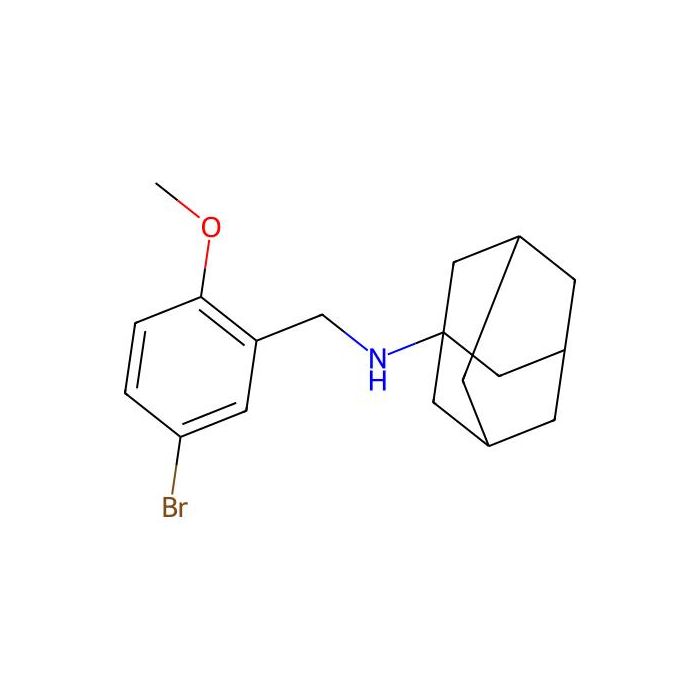
ABMA is a broad-spectrum inhibitor of intracellular toxins and pathogens. ABMA efficiently protects cells against various toxins and pathogens including viruses , intracellular bacteria and parasite . ABMA selectively acts at host cell late endosomes rather than targeting toxin or pathogen itself. ABMA has broad-spectrum anti-infection activity
In Vitro
ABMA protects cells against four bacterial toxins ( Corynebacterium diphtheriae (DT; EC 50 of 62.9 μM), Bacillus anthracis (LT), Clostridium difficile toxin B (TcdB; EC 50 of 73.3 µM), Clostridium sordellii lethal toxin (TcsL; EC 50 of 86.7 μM)), three viruses (Ebola (EC 50 of 3.3 µM), rabies (EC 50 of 19.4 µM), dengue-4 virus ( EC 50 of 8.2 µM)), two species of Chlamydiales intracellular bacteria ( Simkania negevensis and Chlamydia trachomatis ), and the parasite Leishmania infantum (EC 50 of 7.1 µM) at micromolar level. In A549 cells, ABMA treatment induces a decrease in ricin cytotoxicity with an EC 50 of 3.8 µM, and a protection factor (R) at 30 µM ranging from 5 to 10. ABMA retained almost 100% of its biological activity against ricin-induced cytotoxicity up to six days. MCE has not independently confirmed the accuracy of these methods. They are for reference only.
In Vivo
ABMA (2-200 mg/kg; intraperitoneal injection; female BALB/c mice) treatment protects mice from nasal instillation of an LD 90 of ricin . MCE has not independently confirmed the accuracy of these methods. They are for reference only. Animal Model: Pathogen-free female BALB/c mice (6 week-old) with ricin Dosage: 2 mg/kg, 20 mg/kg, 200 mg/kg Administration: Intraperitoneal injection Result: A statistically significant protection according to survival curves was observed with a single ip dose of 2 mg/kg. The 20 mg/kg dose fully protected animals through to day 21. The 200 mg/kg dose resulted in 80% of protection of mice against ricin challenge with a single animal succumbing on day 15.
Form:Solid
IC50& Target:Intracellular bacteria, Viruses, Parasite
| Canonical Smiles | COC1=C(C=C(C=C1)Br)CNC23CC4CC(C2)CC(C4)C3 |
|---|---|
| IUPAC Name | N-[(5-bromo-2-methoxyphenyl)methyl]adamantan-1-amine |
| InChIKey | UCAHJECAHMOSHI-UHFFFAOYSA-N |
| INCHI | 1S/C18H24BrNO/c1-21-17-3-2-16(19)7-15(17)11-20-18-8-12-4-13(9-18)6-14(5-12)10-18/h2-3,7,12-14,20H,4-6,8-11H2,1H3 |
| Isomeric SMILES | COC1=C(C=C(C=C1)Br)CNC23CC4CC(C2)CC(C4)C3 |
| PubChem CID | 2853512 |
| Molecular Weight | 350.29 |
Comprehensive hazard, handling, storage, and regulatory compliance document.
Download SDS →Lot-specific quality data. Enter your lot number to retrieve the exact COA.
Look up COA →Full quality attributes and acceptance criteria for this grade.
View spec sheet →Taxonomy Tree
| Kingdom | Organic compounds |
|---|---|
| Superclass | Benzenoids |
| Class | Benzene and substituted derivatives |
| Subclass | Phenylmethylamines |
| Intermediate Tree Nodes | Not available |
| Direct Parent | Phenylmethylamines |
| Alternative Parents | Phenoxy compounds Methoxybenzenes Benzylamines Anisoles Bromobenzenes Aralkylamines Alkyl aryl ethers Aryl bromides Dialkylamines Organopnictogen compounds Organobromides Hydrocarbon derivatives |
| Molecular Framework | Aromatic homopolycyclic compounds |
| Substituents | Anisole - Phenoxy compound - Benzylamine - Phenol ether - Phenylmethylamine - Methoxybenzene - Alkyl aryl ether - Bromobenzene - Halobenzene - Aralkylamine - Aryl halide - Aryl bromide - Ether - Secondary aliphatic amine - Secondary amine - Organooxygen compound - Organonitrogen compound - Organobromide - Organohalogen compound - Organic nitrogen compound - Amine - Organic oxygen compound - Organopnictogen compound - Hydrocarbon derivative - Aromatic homopolycyclic compound |
| Description | This compound belongs to the class of organic compounds known as phenylmethylamines. These are compounds containing a phenylmethtylamine moiety, which consists of a phenyl group substituted by an methanamine. |
| External Descriptors | Not available |
| Activity Type | Relation | Activity value | Units | Action Type | Journal | PubMed Id | doi | Assay Aladdin ID |
|---|
| Activity Type | Relation | Activity value | Units | Action Type | Journal | PubMed Id | doi | Assay Aladdin ID |
|---|
| Activity Type | Relation | Activity value | Units | Action Type | Journal | PubMed Id | doi | Assay Aladdin ID |
|---|
| Solubility | DMSO : 125 mg/mL (356.85 mM; Need ultrasonic) |
|---|---|
| Molecular Weight | 350.300 g/mol |
| XLogP3 | 4.600 |
| Hydrogen Bond Donor Count | 1 |
| Hydrogen Bond Acceptor Count | 2 |
| Rotatable Bond Count | 4 |
| Exact Mass | 349.104 Da |
| Monoisotopic Mass | 349.104 Da |
| Topological Polar Surface Area | 21.300 Ų |
| Heavy Atom Count | 21 |
| Formal Charge | 0 |
| Complexity | 344.000 |
| Isotope Atom Count | 0 |
| Defined Atom Stereocenter Count | 0 |
| Undefined Atom Stereocenter Count | 0 |
| Defined Bond Stereocenter Count | 0 |
| Undefined Bond Stereocenter Count | 0 |
| The total count of all stereochemical bonds | 0 |
| Covalently-Bonded Unit Count | 1 |