GRADE & PURITYMoligand™?Moligand™ — Aladdin's line of ligands and bioactive small molecules. Use for receptor, pathway, and binding studies needing defined small-molecule tools.≥99%
Moligand™, ≥99% Moligand™ for sensitive chromatographic and analytical workflows requiring minimal baseline interference.
🌡
Storage & shipping
Store at -20°C Ships Ice chest + Ice pads Check lot-specific COA for exact specifications.
📋
Quality documents
SDS, COA, datasheet, and spec sheet available for download. Lot-specific COA accessible via lot number lookup.
📚
Literature proof
Cited in 0 peer-reviewed publications across chromatography, organic synthesis, and cross-coupling reactions.
Overview
In Vitro
DC_AC50 exhibits IC 50 values of 9.88 μM, 12.57 μM, 5.96 μM and 6.68 μM in Canine Abrams, Canine D1, human HOS and human MG63) cells, respectively. ?\nDC_AC50 (0-10 μM)-treated cells are significantly less mitotically active, as demonstrated by decreased expression of phospho-histone H3 and cell cycle analysis. ?\nDC_AC50 (10 μM) potentiates carboplatin-induced apoptosis in OSA cells and decreasesclonogenic survival. ?\nDC_AC50 induces cell cycle arrest at both the 3 and 10 μM doses and? DC_AC50 induces increase S phase cells dose-independently. ?\nDC_AC50 (3 μM) inhibits the migration and of canine and human OSA cells. ?\nDC_AC50 (2.5-10 μM) is highly efficient at inhibiting cancer cell proliferation (human lung cancer H1299 cells, leukaemia cancer K562 cells, breast cancer MDA-MB-231 cells and head and neck cancer 212LN cells) in a dose-dependent manner. DC_AC50 fails to exhibit any notable inhibition of the cell proliferation of human normal epithelial lung BEAS-2B cells or breast MCF-10A cells as control cells. MCE has not independently confirmed the accuracy of these methods. They are for reference only. Cell Viability AssayCell Line: Canine OSA (Abrams, D1 and human OSA (HOS, MG63) cells. Concentration: 0-10 μM. Incubation Time: 72 h. Result: Dose-dependently decreased viability of OSA cells. Apoptosis AnalysisCell Line: Abrams and HOS cells. Concentration: 1, 3 and 10 μM (10 μM Carboplatin). Incubation Time: 24 h. Result: Potentiated carboplatin-induced apoptosis.
DC_AC50 is a dual inhibitor of Atox1 and CCS (copper chaperones). Inhibiting intracellular copper chaperones as a means of reducing/preventing acquired chemotherapy resistance.
Storage
Store at -20°C
Shipped In
Ice chest + Ice pads
This product requires cold chain shipping. Ground and other economy services are not available.
This compound belongs to the class of organic compounds known as aromatic anilides. These are aromatic compounds containing an anilide group in which the carboxamide group is substituted with an aromatic group. They have the general structure RNC(=O)R', where R= benzene, and R = aryl group.
External Descriptors
Not available
1. Djoumbou Feunang Y, Eisner R, Knox C, Chepelev L, Hastings J, Owen G, Fahy E, Steinbeck C, Subramanian S, Bolton E, Greiner R, and Wishart DS. ClassyFire: Automated Chemical Classification With A Comprehensive, Computable Taxonomy. Journal of Cheminformatics, 2016, 8:61.
We use cookies to ensure the website functions properly and, where permitted, to improve your experience. You can manage your preferences at any time in Settings. Learn more in our Cookie Policy.
Shall we send you a message when we have discounts available?
Remind me later
Thank you! Please check your email inbox to confirm.
Products are supplied to verified businesses, institutions, and qualified professionals for research and development use only. Not for use in humans, animals, diagnosis, or therapy.

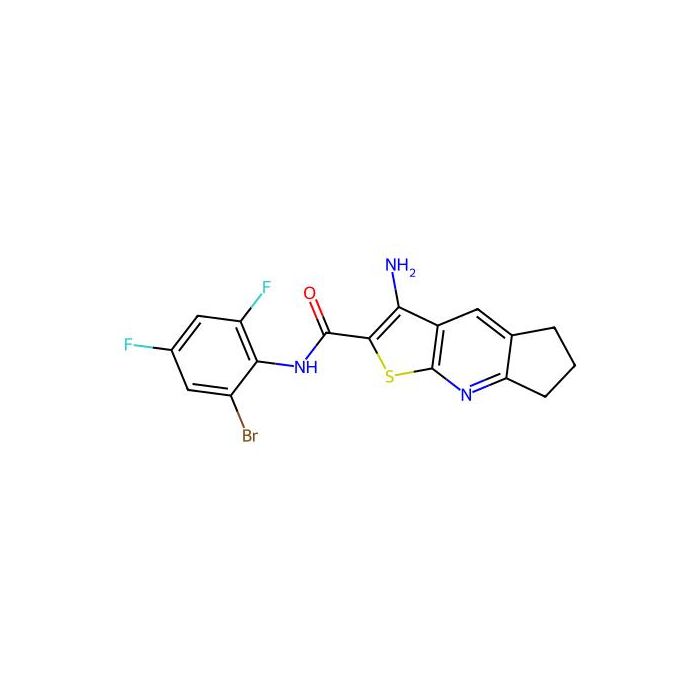
 F2629257