≥99% for sensitive chromatographic and analytical workflows requiring minimal baseline interference.
🌡
Storage & shipping
Store at -20°C Ships Ice chest + Ice pads Check lot-specific COA for exact specifications.
📋
Quality documents
SDS, COA, datasheet, and spec sheet available for download. Lot-specific COA accessible via lot number lookup.
📚
Literature proof
Cited in 0 peer-reviewed publications across chromatography, organic synthesis, and cross-coupling reactions.
Overview
Product Description Diacylglycerol pyrophosphate (DGPP), involved in a novel signaling pathway, has been found in plants, Saccharomyces cerevisiae, and Escherichia coli and macrophage-activating factor, and suggests a potential role for this compound in triggering homeostatic cellular responses.Biological Applications: Short chain DGPP (DiC8) DiC8 DGPP is added to a test tube as a chloroform solution and the solvent is removed. Add water or buffer to the dry lipid residue followed by sonication. The solution is added to cells directly. The short chain DGPP is taken up by mammalian cells and by yeast. Long chain DGPP (DiC18:1) DiC18:1 DGPP is added to a test tube as a chloroform solution and the solvent is removed. Add 0.5% Tergitol (detergent) solution and add this to cells.Notes:Biological Application — "I am not sure how well the long chain DGPP is taken up in yeast cells, that is why we synthesized the DiC8 compound. We only use the long chain compound as a standard for TLC, HPLC and for DGPP phosphatase assays".Storage Conditions — "Store concentrated, ~25mg/ml in chloroform. Concentrations below 10mg/ml are not as stable".Personal communication, George M. Carman, Sept. 1999 Dioleoylglycerophosphate (DGPP) is mainly present in plants and yeast. It carries two phosphate groups in its headgroup. DGPP 18:1 (dioleoylglycerol pyrophosphate) has two oleyl chains and is a bioactive lipid.Product ApplicationDGPP 18:1 (dioleoylglycerol pyrophosphate) may be used in biochemical assays to study its effects on transient receptor potential 1 (TRPV1) function. It may also be used in liposome binding studies.
Dioleoylglycerophosphate (DGPP) is capable of stimulating stress-related responses in plants. It may also play a role in abscisic acid (ABA) signaling.
Storage
Store at -20°C
Shipped In
Ice chest + Ice pads
This product requires cold chain shipping. Ground and other economy services are not available.
We use cookies to ensure the website functions properly and, where permitted, to improve your experience. You can manage your preferences at any time in Settings. Learn more in our Cookie Policy.
Shall we send you a message when we have discounts available?
Remind me later
Thank you! Please check your email inbox to confirm.
Products are supplied to verified businesses, institutions, and qualified professionals for research and development use only. Not for use in humans, animals, diagnosis, or therapy.

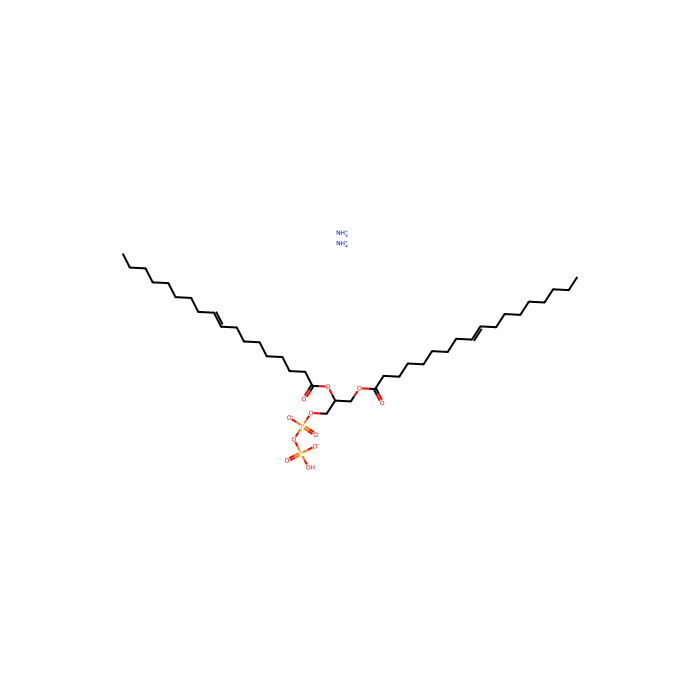
 K2226411