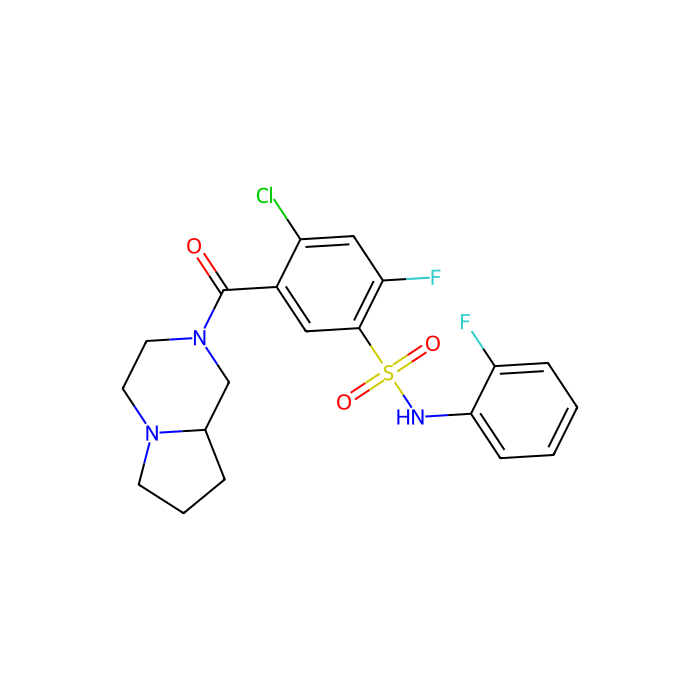
Determine the necessary mass, volume, or concentration for preparing a solution.
| Activity Type | Activity Value -log(M) | Mechanism of Action | Activity Reference | Publications (PubMed IDs) |
|---|

Moligand™, ≥98%(HPLC) Moligand™ for sensitive chromatographic and analytical workflows requiring minimal baseline interference.
Store at -20°C Ships Ice chest + Ice pads Check lot-specific COA for exact specifications.
SDS, COA, datasheet, and spec sheet available for download. Lot-specific COA accessible via lot number lookup.
Cited in 0 peer-reviewed publications across chromatography, organic synthesis, and cross-coupling reactions.
Comprehensive hazard, handling, storage, and regulatory compliance document.
Download SDS →Lot-specific quality data. Enter your lot number to retrieve the exact COA.
Look up COA →Full quality attributes and acceptance criteria for this grade.
View spec sheet →Taxonomy Tree
| Kingdom | Organic compounds |
|---|---|
| Superclass | Benzenoids |
| Classe | Benzene and substituted derivatives |
| Subclass | Sulfanilides |
| Intermediate Tree Nodes | Not available |
| Direct Parent | Sulfanilides |
| Alternative Parents | Benzenesulfonamides 4-halobenzoic acids and derivatives 2-halobenzoic acids and derivatives Benzamides Benzenesulfonyl compounds Benzoyl derivatives N-alkylpiperazines Fluorobenzenes Chlorobenzenes N-alkylpyrrolidines Aryl chlorides Aryl fluorides Organosulfonamides Aminosulfonyl compounds Tertiary carboxylic acid amides Vinylogous halides Amino acids and derivatives Trialkylamines Azacyclic compounds Hydrocarbon derivatives Organic oxides Organochlorides Organofluorides Organooxygen compounds |
| Molecular Framework | Aromatic heteropolycyclic compounds |
| Substituents | Sulfanilide - 2-halobenzoic acid or derivatives - 4-halobenzoic acid or derivatives - Benzenesulfonamide - Halobenzoic acid or derivatives - Benzenesulfonyl group - Benzamide - Benzoic acid or derivatives - Benzoyl - Halobenzene - Fluorobenzene - Chlorobenzene - N-alkylpiperazine - Aryl fluoride - 1,4-diazinane - Organosulfonic acid amide - Aryl halide - N-alkylpyrrolidine - Piperazine - Aryl chloride - Vinylogous halide - Aminosulfonyl compound - Tertiary carboxylic acid amide - Sulfonyl - Pyrrolidine - Organosulfonic acid or derivatives - Organic sulfonic acid or derivatives - Carboxamide group - Tertiary amine - Tertiary aliphatic amine - Amino acid or derivatives - Azacycle - Organoheterocyclic compound - Carboxylic acid derivative - Hydrocarbon derivative - Organohalogen compound - Amine - Organochloride - Organofluoride - Organonitrogen compound - Organooxygen compound - Organosulfur compound - Organic nitrogen compound - Organic oxygen compound - Organic oxide - Aromatic heteropolycyclic compound |
| Description | This compound belongs to the class of organic compounds known as sulfanilides. These are organic aromatic compounds containing a sulfanilide moiety, with the general structure RS(=O)(=O)NC1=CC=CC=C1. |
| External Descriptors | Not available |
| Activity Type | Activity Value -log(M) | Mechanism of Action | Activity Reference | Publications (PubMed IDs) |
|---|
| Activity Type | Activity Value -log(M) | Mechanism of Action | Activity Reference | Publications (PubMed IDs) |
|---|
| Activity Type | Activity Value -log(M) | Mechanism of Action | Activity Reference | Publications (PubMed IDs) |
|---|
Find and download the COA for your product by matching the lot number on the packaging.
| Lot Number | Certificate Type | Date | Article |
|---|---|---|---|
 C2620044 C2620044 | Certificate of Analysis | Apr 06, 2026 | A287699 |
| C2226361 | Certificate of Analysis | Jan 08, 2025 | A287699 |
| C2226362 | Certificate of Analysis | Jan 08, 2025 | A287699 |
| C2226423 | Certificate of Analysis | Jan 08, 2025 | A287699 |
| C2226437 | Certificate of Analysis | Jan 08, 2025 | A287699 |
| C2226441 | Certificate of Analysis | Jan 08, 2025 | A287699 |
| L2419263 | Certificate of Analysis | Feb 28, 2022 | A287699 |
| Solubilité | Solvent:DMSO, Max Conc. mg/mL: 9.12, Max Conc. mM: 20 |
|---|---|
| Poids moléculaire | 455.900 g/mol |
| XLogP3 | 3.100 |
| Hydrogen Bond Donor Count | 1 |
| Hydrogen Bond Acceptor Count | 7 |
| Rotatable Bond Count | 4 |
| Exact Mass | 455.088 Da |
| Monoisotopic Mass | 455.088 Da |
| Topological Polar Surface Area | 78.100 Ų |
| Heavy Atom Count | 30 |
| Formal Charge | 0 |
| Complexity | 737.000 |
| Isotope Atom Count | 0 |
| Defined Atom Stereocenter Count | 1 |
| Undefined Atom Stereocenter Count | 0 |
| Defined Bond Stereocenter Count | 0 |
| Undefined Bond Stereocenter Count | 0 |
| The total count of all stereochemical bonds | 0 |
| Covalently-Bonded Unit Count | 1 |
Only protocols validated for this specific catalog item may be listed; none are provided in the current product record.
General user‑established practices (for small‑molecule ligands)
Item‑specific protocols (WB, IHC, IF, FC, electrophysiology settings, positive controls): Not specified for this item; refer to CoA/Spec Sheet and primary literature.
Context from the scientific literature (not item‑specific, provided for background):
Typical research uses (literature)
Important caveats
For this catalog item, no target‑specific testing data are provided. Users should validate activity under their own conditions and consult the SDS/CoA and peer‑reviewed literature for potency and selectivity benchmarks.
This product is not a buffering agent. It does not define a pH range or buffering capacity.
Practical guidance for assay buffers (general)
Item‑specific buffer recipes and pKa values are not provided. Refer to your assay SOPs and optimize empirically.
As a research ligand, ABT 639 itself is not replaceable by a “greener solvent” or commodity reagent. However, greener choices can be made for the auxiliary materials used with it (solvents for dissolution, cleaning, and workup).
Greener handling choices (general)
Comparison of common carriers (general)
Waste management
Item‑specific environmental metrics (e.g., LCA, EHS scores): Not specified for this item; refer to institutional policies.
This product is supplied strictly for research use only. It is not formulated or qualified as an API, excipient, or clinical material.
Research/manufacturing context (general)
If your work requires qualified reference materials (e.g., for GLP studies or regulated bioanalysis), contact us regarding documentation needs (expanded CoA, impurity profiling, stability data). Item‑specific pharmacopeial status, residual solvent profiles, and elemental impurity assessments: Not specified for this item; refer to CoA/Spec Sheet.
Item‑specific physicochemical data are not populated in the current record. Use the CoA/SDS for authoritative values.
General guidance (literature/practice)
What Moligand™ typically implies (general guidance; not item‑specific specifications)
Stabilizers and additives
Documentation
Suitability
This product is supplied as a bioactive small‑molecule ligand for research, not primarily as a synthetic reagent.
Research applications (general/literature)
Not typical applications
Practical considerations
If your goal is synthetic derivatization or SAR expansion based on this scaffold, consult medicinal chemistry literature for suitable diversification points and protection strategies; such workflows are beyond the scope of this product listing.
Not typically applicable. ABT 639 is supplied as a bioactive small‑molecule ligand, not as a reagent or catalyst for chemical reactions.
If you are developing assays involving this compound (general guidance)
No named synthetic reaction conditions, catalysts, or yields are applicable to this listing.
Safety data for this specific item are incomplete in the product record. Always consult the SDS supplied with your shipment for authoritative guidance.
Note: No evidence of peroxide formation risk or self‑reactivity is indicated; nonetheless, defer to SDS.
Because ABT 639 is a research ligand rather than a process solvent, solvent selection pertains to dissolution for stock preparation and assay compatibility.
General solvent guidance (literature/practice)
Practical tips
Comparison (general)
Item‑specific solubility, pKa, and logP: Not specified for this item; refer to CoA/Spec Sheet.
Reconstitution (general guidance)
Stability notes
Research Use Note: For research use only.
Brief overview: ABT 639 is a cataloged small‑molecule research ligand (Moligand grade). Detailed structural identifiers are limited in the current product record.
Notes
ABT 639 is offered as a finished research ligand rather than as a synthetic building block. It is not typically employed as a reagent or intermediate in routine organic synthesis.
General notes (for users exploring SAR or analog preparation)
Catalog‑item caveat
Conclusion
Only product‑provided data may be listed here. For this item, target‑specific details are not provided in the product record.
Note: While scientific literature discusses biological activities associated with ABT 639, such information is not item‑validated here and should not be construed as product‑specific specifications.
Our grade selection guide covers purity, stabilizer status, and application suitability for all variants in our catalog.
View Moligand™ grade guide →