
Determine the necessary mass, volume, or concentration for preparing a solution.
| Activity Type | Relation | Activity value | Units | Action Type | Journal | PubMed Id | doi | Assay Aladdin ID |
|---|
10mM in DMSO for sensitive chromatographic and analytical workflows requiring minimal baseline interference.
Store at -80°C Ships Dry ice packs + Cold packs Check lot-specific COA for exact specifications.
SDS, COA, datasheet, and spec sheet available for download. Lot-specific COA accessible via lot number lookup.
Cited in 3 peer-reviewed publications across chromatography, organic synthesis, and cross-coupling reactions.
Information
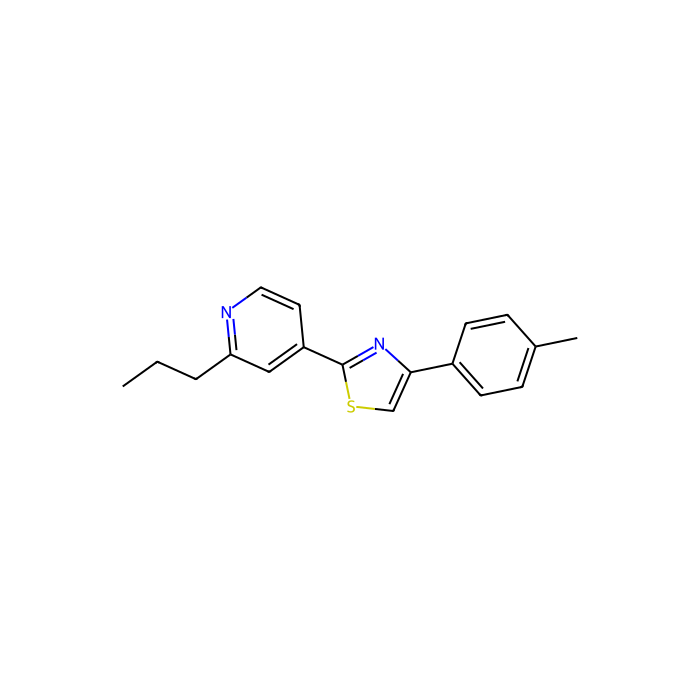
Fatostatin Fatostatin (125B11), a diarylthiazole derivative, is a specific inhibitor of Sterol regulatory element binding proteins (SREBPs) activation. Fatostatin binds to SCAP (SREBP cleavage-activating protein), and inhibits the ER-Golgi translocation of SREBPs. Fatostatin suppresses growth and enhances apoptosis in cancer cells.
Targets
SREBP
In vitro
Fatostatin impairs the activation process of sterol regulatory element binding proteins (SREBPs), thereby decreasing the transcription of lipogenic genes in cells. Fatostatin inhibits the ER-Golgi translocation of SREBPs through binding to their escort protein, the SREBP cleavage-activating protein (SCAP), at a distinct site from the sterol-binding domain.
In vivo
Fatostatin blocks increases in body weight, blood glucose, and hepatic fat accumulation in obese ob/ob mice, even under uncontrolled food intake. Fatostatin may serve as a tool for gaining further insights into the regulation of SREBP.
Cell Research(from reference)
Cell lines:CHO-K1 cells
Concentrations:20 μM
Incubation Time:20 h
| ALogP | 4.898 |
|---|---|
| hba_count | 2 |
| Rotatable Bond | 4 |
| Canonical Smiles | CCCC1=NC=CC(=C1)C2=NC(=CS2)C3=CC=C(C=C3)C |
|---|---|
| IUPAC Name | 4-(4-methylphenyl)-2-(2-propylpyridin-4-yl)-1,3-thiazole |
| InChIKey | ZROSUBKIGBSZCG-UHFFFAOYSA-N |
| INCHI | 1S/C18H18N2S/c1-3-4-16-11-15(9-10-19-16)18-20-17(12-21-18)14-7-5-13(2)6-8-14/h5-12H,3-4H2,1-2H3 |
| Isomeric SMILES | CCCC1=NC=CC(=C1)C2=NC(=CS2)C3=CC=C(C=C3)C |
| Molecular Weight | 294.41 |
| Reaxy-Rn | 18507978 |
| Reaxys-RN_link_address | https://www.reaxys.com/reaxys/secured/hopinto.do?context=S&query=IDE.XRN=18507978&ln= |
Comprehensive hazard, handling, storage, and regulatory compliance document.
Download SDS →Lot-specific quality data. Enter your lot number to retrieve the exact COA.
Look up COA →Full quality attributes and acceptance criteria for this grade.
View spec sheet →Taxonomy Tree
| Kingdom | Organic compounds |
|---|---|
| Superclass | Organoheterocyclic compounds |
| Class | Azoles |
| Subclass | Thiazoles |
| Intermediate Tree Nodes | Not available |
| Direct Parent | 2,4-disubstituted thiazoles |
| Alternative Parents | Toluenes Pyridines and derivatives Heteroaromatic compounds Azacyclic compounds Organopnictogen compounds Organonitrogen compounds Hydrocarbon derivatives |
| Molecular Framework | Aromatic heteromonocyclic compounds |
| Substituents | Toluene - 2,4-disubstituted 1,3-thiazole - Benzenoid - Pyridine - Monocyclic benzene moiety - Heteroaromatic compound - Azacycle - Organic nitrogen compound - Organopnictogen compound - Hydrocarbon derivative - Organonitrogen compound - Aromatic heteromonocyclic compound |
| Description | This compound belongs to the class of organic compounds known as 2,4-disubstituted thiazoles. These are compounds containing a thiazole ring substituted at the positions 2 and 3. |
| External Descriptors | Not available |
| Activity Type | Relation | Activity value | Units | Action Type | Journal | PubMed Id | doi | Assay Aladdin ID |
|---|
| DMSO(mg / mL) Max Solubility | 75 |
|---|---|
| DMSO(mM) Max Solubility | 254.746781698991 |
| Water(mg / mL) Max Solubility | <1 |
| Molecular Weight | 294.400 g/mol |
| XLogP3 | 4.800 |
| Hydrogen Bond Donor Count | 0 |
| Hydrogen Bond Acceptor Count | 3 |
| Rotatable Bond Count | 4 |
| Exact Mass | 294.119 Da |
| Monoisotopic Mass | 294.119 Da |
| Topological Polar Surface Area | 54.000 Ų |
| Heavy Atom Count | 21 |
| Formal Charge | 0 |
| Complexity | 314.000 |
| Isotope Atom Count | 0 |
| Defined Atom Stereocenter Count | 0 |
| Undefined Atom Stereocenter Count | 0 |
| Defined Bond Stereocenter Count | 0 |
| Undefined Bond Stereocenter Count | 0 |
| The total count of all stereochemical bonds | 0 |
| Covalently-Bonded Unit Count | 1 |
| 1. Xiaolin Zhang, Zhen Dong, Yuanmiao Yang, Chaolong Liu, Jisheng Li, Wenli Sun, Yikang Zhu, Yang Shen, Zhi Wang, Muhan Lü, Hongjuan Cui. (2023) Morusinol Extracted from Morus alba Inhibits Cell Proliferation and Induces Autophagy via FOXO3a Nuclear Accumulation-Mediated Cholesterol Biosynthesis Obstruction in Colorectal Cancer. JOURNAL OF AGRICULTURAL AND FOOD CHEMISTRY, [PMID:37870273] [10.1021/acs.jafc.3c01244] |
| 2. Yu Su, Haobo Wen, Ke Hu, Cuiping Wen, Ping Wang, Lulu Zhao, Gang Zou, Wei Jiang, Yaxi Chen, Yunfei Zhao, Qiu Li. (2026) An oral nanocombinatorial agent exhibits pleiotropic improvement in diabetic nephropathy via modulation of the SCAP/SREBPs pathway. JOURNAL OF NANOBIOTECHNOLOGY, [PMID:41866523] [10.1186/s12951-026-04301-9] |
| 3. Li Yitao, Zheng Weijia, Ma Jiao, Liu Lu, Yang Xintong, Kuang Junliang, Chan Nickie, Wang Chengqiang, Li Yang, Zhao Aihua, Wang Ruonan, Zheng Xiaojiao, Melino Gerry, Lu Aiping, Yang Xiaolu, Jia Wei. (2026) Gut-derived hyodeoxycholate reprograms the spleen–eye immunometabolic axis to suppress autoimmune uveitis. CELL DEATH AND DIFFERENTIATION, [PMID:] [10.1038/s41418-026-01696-8] |