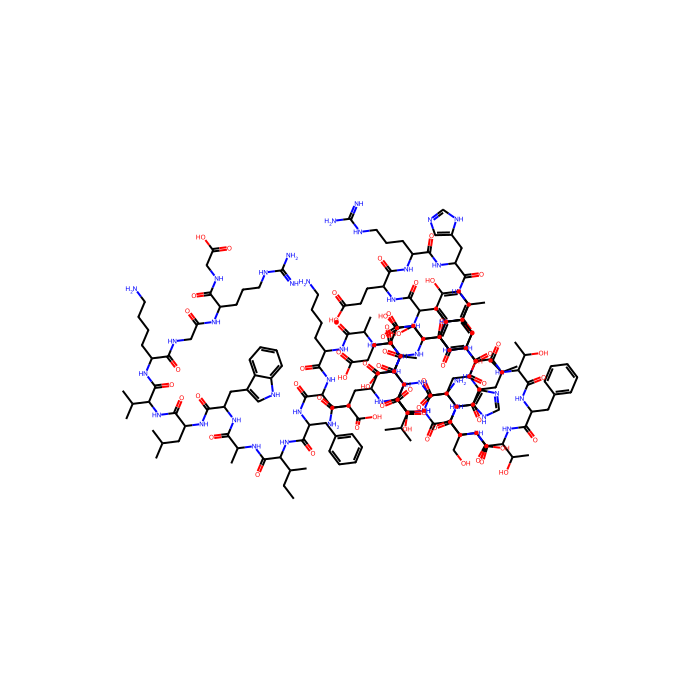
GLP 1 (1-37) (human) - ≥95% , CAS No.87805-34-3

CAS: 87805-34-3 Cat. No.: G274832 Molecular Weight: 4169 PubChem CID: 16131070
AVAILABLE TO ORDER
GRADE & PURITY ≥95%
Synonyms
GLP-1 (1-37) | DTXSID10236651 | UNII-SQ6SA9L9XQ | SQ6SA9L9XQ | Glp-I (1-37) | GLP-1 (1-37) (human, bovine, guinea pig, mouse, rat) trifluoroacetate salt
Storage
Store at -20°C,Desiccated
Shipped In
Ice chest + Ice pads
 ·  off list, applied to all prices below.
Size
Status
Price
Qty
1mg
G274832-1mg
8-12 wks(?) Production requires sourcing of materials. We appreciate your patience and understanding.
$427.90
Enter a quantity for the sizes you want to add.
🧪

Why this grade

≥95% for sensitive chromatographic and analytical workflows requiring minimal baseline interference.

🌡

Storage & shipping

Store at -20°C,Desiccated Ships Ice chest + Ice pads Check lot-specific COA for exact specifications.

📋

Quality documents

SDS, COA, datasheet, and spec sheet available for download. Lot-specific COA accessible via lot number lookup.

📚

Literature proof

Cited in 0 peer-reviewed publications across chromatography, organic synthesis, and cross-coupling reactions.

Overview

Store at -20°C. Store under desiccating conditions. The product can be stored for up to 12 months.

Specifications

Synonyms
GLP-1 (1-37) | DTXSID10236651 | UNII-SQ6SA9L9XQ | SQ6SA9L9XQ | Glp-I (1-37) | GLP-1 (1-37) (human, bovine, guinea pig, mouse, rat) trifluoroacetate salt
Specifications & Purity
≥95%
Biochemical and Physiological Mechanisms
Glukagon-like peptide (GLP) 1 analog which is produced through posttranslational processing of proGlukagon. Converts intestinal epithelial cells into insulin-producing cells.
Storage
Store at -20°C, Desiccated
Shipped In
Ice chest + Ice pads
This product requires cold chain shipping. Ground and other economy services are not available.
Action Type
AGONIST
Note
This product is supplied in one (or more) pack size which is freeze dried. Therefore the contents may not be readily visible, as they can coat the bottom or walls of the vial. Please see our FAQs and information page for more details on handling. Wherever possible, you should prepare and use solutions on the same day. However, if you need to make up stock solutions in advance, we recommend that you store the solution as aliquots in tightly sealed vials at -20°C. Generally, these will be useable for up to one week. Before use, and prior to opening the vial we recommend that you allow your product to equilibrate to room temperature for at least 1 hour. Need more advice on solubility, usage and handling? Please visit our frequently asked questions (FAQ) page for more details.
Purity
≥95%
Names and Identifiers
Canonical SmilesCCC(C)C(C(=O)NC(C)C(=O)NC(CC1=CNC2=CC=CC=C21)C(=O)NC(CC(C)C)C(=O)NC(C(C)C)C(=O)NC(CCCCN)C(=O)NCC(=O)NC(CCCNC(=N)N)C(=O)NCC(=O)O)NC(=O)C(CC3=CC=CC=C3)NC(=O)C(CCC(=O)O)NC(=O)C(CCCCN)NC(=O)C(C)NC(=O)C(C)NC(=O)C(CCC(=O)N)NC(=O)CNC(=O)C(CCC(=O)O)NC(=O)C(CC(C)C)NC(=O)C(CC4=CC=C(C=C4)O)NC(=O)C(CO)NC(=O)C(CO)NC(=O)C(C(C)C)NC(=O)C(CC(=O)O)NC(=O)C(CO)NC(=O)C(C(C)O)NC(=O)C(CC5=CC=CC=C5)NC(=O)C(C(C)O)NC(=O)CNC(=O)C(CCC(=O)O)NC(=O)C(C)NC(=O)C(CC6=CN=CN6)NC(=O)C(CCCNC(=N)N)NC(=O)C(CCC(=O)O)NC(=O)C(CC7=CC=CC=C7)NC(=O)C(CCC(=O)O)NC(=O)C(CC(=O)O)NC(=O)C(CC8=CN=CN8)N
IUPAC Name(4S)-5-[[2-[[(2S,3R)-1-[[(2S)-1-[[(2S,3R)-1-[[(2S)-1-[[(2S)-1-[[(2S)-1-[[(2S)-1-[[(2S)-1-[[(2S)-1-[[(2S)-1-[[(2S)-1-[[2-[[(2S)-5-amino-1-[[(2S)-1-[[(2S)-1-[[(2S)-6-amino-1-[[(2S)-1-[[(2S)-1-[[(2S,3S)-1-[[(2S)-1-[[(2S)-1-[[(2S)-1-[[(2S)-1-[[(2S)-6-amino-1-[[2-[[(2S)-5-carbamimidamido-1-(carboxymethylamino)-1-oxopentan-2-yl]amino]-2-oxoethyl]amino]-1-oxohexan-2-yl]amino]-3-methyl-1-oxobutan-2-yl]amino]-4-methyl-1-oxopentan-2-yl]amino]-3-(1H-indol-3-yl)-1-oxopropan-2-yl]amino]-1-oxopropan-2-yl]amino]-3-methyl-1-oxopentan-2-yl]amino]-1-oxo-3-phenylpropan-2-yl]amino]-4-carboxy-1-oxobutan-2-yl]amino]-1-oxohexan-2-yl]amino]-1-oxopropan-2-yl]amino]-1-oxopropan-2-yl]amino]-1,5-dioxopentan-2-yl]amino]-2-oxoethyl]amino]-4-carboxy-1-oxobutan-2-yl]amino]-4-methyl-1-oxopentan-2-yl]amino]-3-(4-hydroxyphenyl)-1-oxopropan-2-yl]amino]-3-hydroxy-1-oxopropan-2-yl]amino]-3-hydroxy-1-oxopropan-2-yl]amino]-3-methyl-1-oxobutan-2-yl]amino]-3-carboxy-1-oxopropan-2-yl]amino]-3-hydroxy-1-oxopropan-2-yl]amino]-3-hydroxy-1-oxobutan-2-yl]amino]-1-oxo-3-phenylpropan-2-yl]amino]-3-hydroxy-1-oxobutan-2-yl]amino]-2-oxoethyl]amino]-4-[[(2S)-2-[[(2S)-2-[[(2S)-2-[[(2S)-2-[[(2S)-2-[[(2S)-2-[[(2S)-2-[[(2S)-2-amino-3-(1H-imidazol-5-yl)propanoyl]amino]-3-carboxypropanoyl]amino]-4-carboxybutanoyl]amino]-3-phenylpropanoyl]amino]-4-carboxybutanoyl]amino]-5-carbamimidamidopentanoyl]amino]-3-(1H-imidazol-5-yl)propanoyl]amino]propanoyl]amino]-5-oxopentanoic acid
InChIKeyUKVFVQPAANCXIL-FJVFSOETSA-N
INCHI1S/C186H275N51O59/c1-17-94(10)149(182(294)209-98(14)155(267)220-128(73-105-78-199-111-42-28-27-41-109(105)111)171(283)223-123(68-91(4)5)173(285)234-147(92(6)7)180(292)219-113(43-29-31-63-187)158(270)200-81-136(245)210-112(45-33-65-197-185(191)192)157(269)203-84-146(262)263)236-174(286)126(70-102-37-23-19-24-38-102)225-165(277)120(55-61-142(254)255)216-162(274)114(44-30-32-64-188)212-153(265)96(12)206-152(264)95(11)207-161(273)118(51-57-135(190)244)211-137(246)82-201-160(272)117(53-59-140(250)251)215-168(280)122(67-90(2)3)222-170(282)125(72-104-47-49-108(243)50-48-104)226-177(289)132(85-238)230-179(291)134(87-240)231-181(293)148(93(8)9)235-176(288)131(77-145(260)261)228-178(290)133(86-239)232-184(296)151(100(16)242)237-175(287)127(71-103-39-25-20-26-40-103)229-183(295)150(99(15)241)233-138(247)83-202-159(271)116(52-58-139(248)249)213-154(266)97(13)208-167(279)129(75-107-80-196-89-205-107)227-163(275)115(46-34-66-198-186(193)194)214-164(276)119(54-60-141(252)253)217-169(281)124(69-101-35-21-18-22-36-101)224-166(278)121(56-62-143(256)257)218-172(284)130(76-144(258)259)221-156(268)110(189)74-106-79-195-88-204-106/h18-28,35-42,47-50,78-80,88-100,110,112-134,147-151,199,238-243H,17,29-34,43-46,51-77,81-87,187-189H2,1-16H3,(H2,190,244)(H,195,204)(H,196,205)(H,200,270)(H,201,272)(H,202,271)(H,203,269)(H,206,264)(H,207,273)(H,208,279)(H,209,294)(H,210,245)(H,211,246)(H,212,265)(H,213,266)(H,214,276)(H,215,280)(H,216,274)(H,217,281)(H,218,284)(H,219,292)(H,220,267)(H,221,268)(H,222,282)(H,223,283)(H,224,278)(H,225,277)(H,226,289)(H,227,275)(H,228,290)(H,229,295)(H,230,291)(H,231,293)(H,232,296)(H,233,247)(H,234,285)(H,235,288)(H,236,286)(H,237,287)(H,248,249)(H,250,251)(H,252,253)(H,254,255)(H,256,257)(H,258,259)(H,260,261)(H,262,263)(H4,191,192,197)(H4,193,194,198)/t94-,95-,96-,97-,98-,99+,100+,110-,112-,113-,114-,115-,116-,117-,118-,119-,120-,121-,122-,123-,124-,125-,126-,127-,128-,129-,130-,131-,132-,133-,134-,147-,148-,149-,150-,151-/m0/s1
Isomeric SMILES CC[C@H](C)[C@@H](C(=O)N[C@@H](C)C(=O)N[C@@H](CC1=CNC2=CC=CC=C21)C(=O)N[C@@H](CC(C)C)C(=O)N[C@@H](C(C)C)C(=O)N[C@@H](CCCCN)C(=O)NCC(=O)N[C@@H](CCCNC(=N)N)C(=O)NCC(=O)O)NC(=O)[C@H](CC3=CC=CC=C3)NC(=O)[C@H](CCC(=O)O)NC(=O)[C@H](CCCCN)NC(=O)[C@H](C)NC(=O)[C@H](C)NC(=O)[C@H](CCC(=O)N)NC(=O)CNC(=O)[C@H](CCC(=O)O)NC(=O)[C@H](CC(C)C)NC(=O)[C@H](CC4=CC=C(C=C4)O)NC(=O)[C@H](CO)NC(=O)[C@H](CO)NC(=O)[C@H](C(C)C)NC(=O)[C@H](CC(=O)O)NC(=O)[C@H](CO)NC(=O)[C@H]([C@@H](C)O)NC(=O)[C@H](CC5=CC=CC=C5)NC(=O)[C@H]([C@@H](C)O)NC(=O)CNC(=O)[C@H](CCC(=O)O)NC(=O)[C@H](C)NC(=O)[C@H](CC6=CN=CN6)NC(=O)[C@H](CCCNC(=N)N)NC(=O)[C@H](CCC(=O)O)NC(=O)[C@H](CC7=CC=CC=C7)NC(=O)[C@H](CCC(=O)O)NC(=O)[C@H](CC(=O)O)NC(=O)[C@H](CC8=CN=CN8)N
PubChem CID 16131070
Molecular Weight 4169

Documentation

📋 Safety Data Sheet (SDS)

Comprehensive hazard, handling, storage, and regulatory compliance document.

Download SDS →

✅ Certificate of Analysis (COA)

Lot-specific quality data. Enter your lot number to retrieve the exact COA.

Look up COA →

📊 Datasheet

Quick-reference summary of product specifications and applications.

View datasheet →

🔬 Specification Sheet

Full quality attributes and acceptance criteria for this grade.

View spec sheet →

Advanced Data

Taxonomic Classification

Taxonomy Tree

KingdomOrganic compounds
SuperclassOrganic Polymers
ClassPolypeptides
SubclassNot available
Intermediate Tree Nodes Not available
Direct ParentPolypeptides
Alternative Parents Peptides  Tyrosine and derivatives  Arginine and derivatives  Phenylalanine and derivatives  Histidine and derivatives  Glutamine and derivatives  Glutamic acid and derivatives  Aspartic acid and derivatives  Isoleucine and derivatives  Leucine and derivatives  N-acyl-alpha amino acids  Valine and derivatives  Tryptamines and derivatives  Serine and derivatives  Alpha amino acid amides  Alanine and derivatives  Amphetamines and derivatives  3-alkylindoles  1-hydroxy-2-unsubstituted benzenoids  Aralkylamines  N-acyl amines  Substituted pyrroles  Imidazoles  Heteroaromatic compounds  Secondary carboxylic acid amides  Amino acids  Primary carboxylic acid amides  Secondary alcohols  Guanidines  Carboxylic acids  Carboximidamides  Azacyclic compounds  Hydrocarbon derivatives  Carbonyl compounds  Imines  Monoalkylamines  Organic oxides  Primary alcohols  
Molecular FrameworkAromatic heteropolycyclic compounds
Substituents Polypeptide - Alpha peptide - Tyrosine or derivatives - Arginine or derivatives - Phenylalanine or derivatives - Histidine or derivatives - Glutamine or derivatives - Glutamic acid or derivatives - Leucine or derivatives - Isoleucine or derivatives - Aspartic acid or derivatives - N-acyl-alpha amino acid or derivatives - N-acyl-alpha-amino acid - Valine or derivatives - Alpha-amino acid amide - Triptan - Serine or derivatives - Alanine or derivatives - 3-alkylindole - Alpha-amino acid or derivatives - Amphetamine or derivatives - N-substituted-alpha-amino acid - Indole - Indole or derivatives - 1-hydroxy-2-unsubstituted benzenoid - Aralkylamine - Phenol - Monocyclic benzene moiety - Fatty acyl - Fatty amide - Benzenoid - Substituted pyrrole - N-acyl-amine - Pyrrole - Imidazole - Heteroaromatic compound - Azole - Amino acid or derivatives - Amino acid - Carboxamide group - Guanidine - Secondary carboxylic acid amide - Secondary alcohol - Primary carboxylic acid amide - Azacycle - Carboxylic acid derivative - Carboxylic acid - Organoheterocyclic compound - Carboximidamide - Primary alcohol - Organonitrogen compound - Organic oxygen compound - Carbonyl group - Organooxygen compound - Hydrocarbon derivative - Alcohol - Primary aliphatic amine - Primary amine - Organic oxide - Organic nitrogen compound - Imine - Amine - Aromatic heteropolycyclic compound
DescriptionThis compound belongs to the class of organic compounds known as polypeptides. These are peptides containing ten or more amino acid residues.
External Descriptors Not available
Certificates(CoA,COO,BSE/TSE and Analysis Chart)
C of A & Other Certificates(BSE/TSE, COO):
Analytical Chart:
Chemical and Physical Properties
SolubilitySoluble in water
Solution Calculators
Reviews

Customer Reviews

Shall we send you a message when we have discounts available?

Remind me later

Thank you! Please check your email inbox to confirm.

Oops! Notifications are disabled.