
Determine the necessary mass, volume, or concentration for preparing a solution.
LV-320 - ≥95% , CAS No.2449093-46-1
AVAILABLE TO ORDER
GRADE & PURITY ≥95%
Storage
Store at -20°C
Shipped In
Ice chest + Ice pads
≥95% for sensitive chromatographic and analytical workflows requiring minimal baseline interference.
Store at -20°C Ships Ice chest + Ice pads Check lot-specific COA for exact specifications.
SDS, COA, datasheet, and spec sheet available for download. Lot-specific COA accessible via lot number lookup.
Cited in 0 peer-reviewed publications across chromatography, organic synthesis, and cross-coupling reactions.
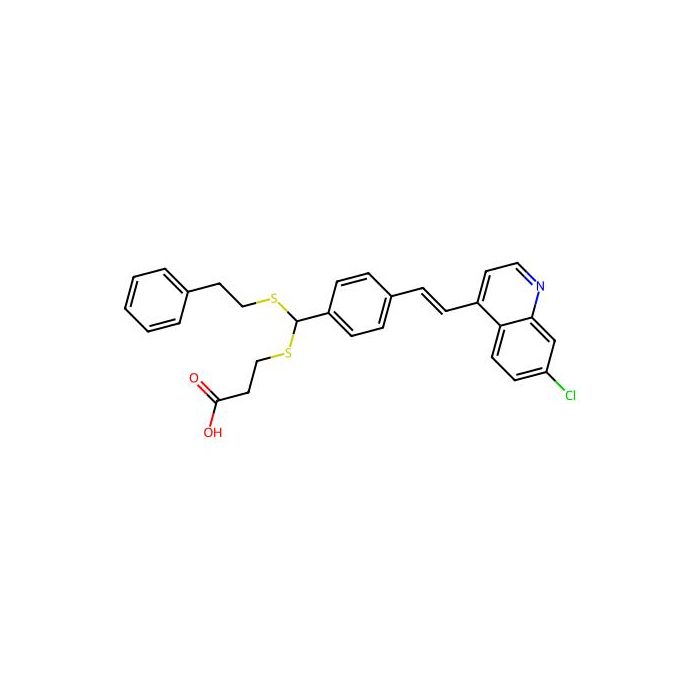
LV-320 is a potent and uncompetitive ATG4B inhibitor with an IC 50 of 24.5 µM and a K d of 16 µM. LV-320 inhibits ATG4B enzymatic activity, blocks autophagic flux in cells, and is stable, non-toxic and active in vivo
In Vitro
LV-320 (0-120 µM; SKBR3, MCF7, JIMT1, and MDA-MB-231 cells) treatment results in a dose-dependent increase in endogenous LC3B-II and protein p62 levels in all four cell lines. LV-320 (120 µM; 48 hours; MDA-MB-231 cells) treatment results in an increase in LC3B-II, indicating that LV-320 blocks autophagic flux. MCE has not independently confirmed the accuracy of these methods. They are for reference only. Western Blot AnalysisCell Line: SKBR3, MCF7, JIMT1, and MDA-MB-231 cells Concentration: 0 µM, 25 µM, 50 µM, 75 µM, 100 µM, or 120 µM Incubation Time: Result: Resulted in a dose-dependent increase in endogenous LC3B-II and protein p62 levels in all four cell lines. Cell Autophagy AssayCell Line: MDA-MB-231 cells Concentration: 120 µM Incubation Time: 48 hours Result: Blocked autophagic flux.
In Vivo
LV-320 (100-200 mg/kg; oral gavage; three times over two days; GFP-LC3 mice) treatment results in a terminal blood level of 169 µM and a liver level of 104 µM. The expression of GFP-LC3 puncta is significantly greater accumulation in LV-320 treated animals compared to controls. LC3B-II protein is also increased in LV-320-treated animals. The treatment do not cause significant toxicity in mice at either dose . MCE has not independently confirmed the accuracy of these methods. They are for reference only. Animal Model: GFP-LC3 mice (females, 9-14 weeks) Dosage: 100 mg/kg or 200 mg/kg Administration: Oral gavage; three times over two days (Pharmacokinetic study) Result: Terminal blood levels were 169 µM and liver levels were 104 µM. LC3B-II protein level was also increased.
Form:Solid
IC50& Target:IC50: 24.5 µM (ATG4B),Kd: 16 μM (ATG4B)
| Canonical Smiles | C1=CC=C(C=C1)CCSC(C2=CC=C(C=C2)C=CC3=C4C=CC(=CC4=NC=C3)Cl)SCCC(=O)O |
|---|---|
| IUPAC Name | 3-[[4-[(E)-2-(7-chloroquinolin-4-yl)ethenyl]phenyl]-(2-phenylethylsulfanyl)methyl]sulfanylpropanoic acid |
| InChIKey | PHENTWJNXGESKT-RMKNXTFCSA-N |
| INCHI | 1S/C29H26ClNO2S2/c30-25-12-13-26-23(14-17-31-27(26)20-25)9-6-22-7-10-24(11-8-22)29(35-19-16-28(32)33)34-18-15-21-4-2-1-3-5-21/h1-14,17,20,29H,15-16,18-19H2,(H,32,33)/b9-6+ |
| Isomeric SMILES | C1=CC=C(C=C1)CCSC(C2=CC=C(C=C2)/C=C/C3=C4C=CC(=CC4=NC=C3)Cl)SCCC(=O)O |
| PubChem CID | 134817239 |
| Molecular Weight | 520.11 |
Comprehensive hazard, handling, storage, and regulatory compliance document.
Download SDS →Lot-specific quality data. Enter your lot number to retrieve the exact COA.
Look up COA →Full quality attributes and acceptance criteria for this grade.
View spec sheet →Taxonomy Tree
| Kingdom | Organic compounds |
|---|---|
| Superclass | Organoheterocyclic compounds |
| Class | Quinolines and derivatives |
| Subclass | Haloquinolines |
| Intermediate Tree Nodes | Not available |
| Direct Parent | Haloquinolines |
| Alternative Parents | Hydroxypyridines Benzene and substituted derivatives Heteroaromatic compounds Sulfenyl compounds Monocarboxylic acids and derivatives Dialkylthioethers Carboxylic acids Azacyclic compounds Organopnictogen compounds Organooxygen compounds Organonitrogen compounds Organochlorides Organic oxides Hydrocarbon derivatives |
| Molecular Framework | Aromatic heteropolycyclic compounds |
| Substituents | Haloquinoline - Hydroxypyridine - Benzenoid - Pyridine - Monocyclic benzene moiety - Heteroaromatic compound - Azacycle - Dialkylthioether - Sulfenyl compound - Thioether - Monocarboxylic acid or derivatives - Carboxylic acid - Carboxylic acid derivative - Organic nitrogen compound - Organic oxygen compound - Organopnictogen compound - Organic oxide - Hydrocarbon derivative - Organosulfur compound - Organooxygen compound - Organonitrogen compound - Organochloride - Organohalogen compound - Aromatic heteropolycyclic compound |
| Description | This compound belongs to the class of organic compounds known as haloquinolines. These are compounds containing a quinoline moiety, which is substituted at one or more ring positions by n halogen atom. |
| External Descriptors | Not available |
| Solubility | DMSO : 135 mg/mL (259.56 mM; Need ultrasonic) |
|---|