
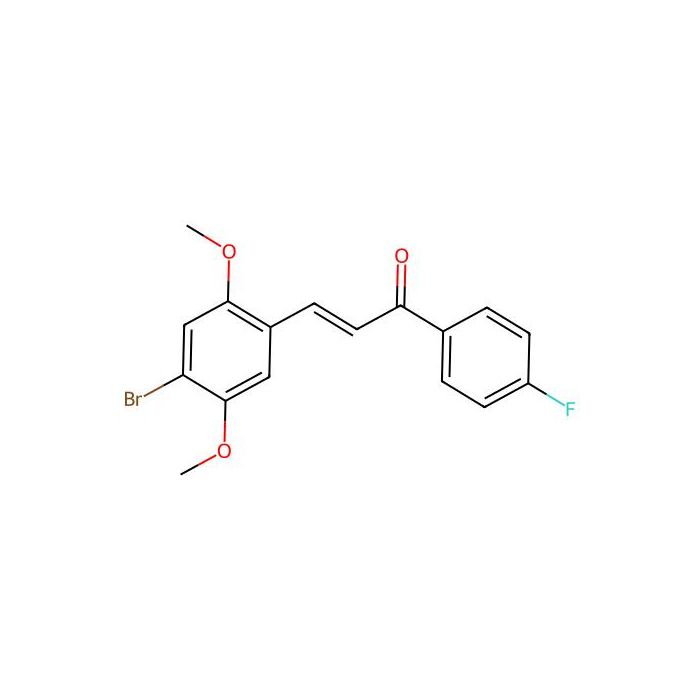
Determine the necessary mass, volume, or concentration for preparing a solution.
NLRP3-IN-10 - ≥98% , CAS No.2641826-39-1
AVAILABLE TO ORDER
GRADE & PURITY ≥98%
Storage
Store at -20°C
Shipped In
Ice chest + Ice pads
≥98% for sensitive chromatographic and analytical workflows requiring minimal baseline interference.
Store at -20°C Ships Ice chest + Ice pads Check lot-specific COA for exact specifications.
SDS, COA, datasheet, and spec sheet available for download. Lot-specific COA accessible via lot number lookup.
Cited in 0 peer-reviewed publications across chromatography, organic synthesis, and cross-coupling reactions.
NLRP3-IN-10 is a potent NLRP3 inhibitor, inhibits IL-1β release with an IC 50 value of 251.1 nM. NLRP3-IN-10 suppresses NLRP3 inflammasome activation by attenuating ASC speck formation
In Vitro
NLRP3-IN-10 (compound 14c) (0.4, 1.6, 6.4 μM; 40 min) exerts remarkable inhibitory activity on NLRP3 inflammasome activation induced by LPS-MSU (12 h) in THP-1 cells in a dose-dependent manner. NLRP3-IN-10 (0.1-6.4 μM; 1.5 h) shows no cytotoxicity against THP-1 cells and (0.1, and 0.4 μM; 40 min) avoids Nigericin -induced pyroptosis. NLRP3-IN-10 (0.1, 0.2, and 0.4 μM; 40 min) reduces the processing of caspase-1 p20 and IL-1β, in supernatants in THP-1 cells in a dose-dependent manner. NLRP3-IN-10 (3 μM and 5 μM; 40 min) decreases LPS-induced THF-α, and (0.2 μM and 0.8 μM; 40 min) reduces the rate of THP-1 cells with ASC specks, indicating ASC oligomerization interruptionsup>. NLRP3 inflammasome is regarded as a two-step process, including priming and action. NLRP3-IN-10 (1, 10, and 100 μM; 40 min) suppresses LPS-induced NLRP3 priming through directly interacting with NLRP3. MCE has not independently confirmed the accuracy of these methods. They are for reference only.
In Vivo
NLRP3-IN-10 (compound 14c) (10 mg/kg; i.v.; single dose) reduces peritoneal neutrophil influx in mice and IL-1β in the spleen in the MSU-induced peritonitis in LPS-primed mouse model . NLRP3-IN-10 (10, 30, 90 mg/kg; p.o.; single dose) exhibits extremely low exposure (14.6−23.53 μg·h/L), poor bioavailability (2.47−13.79%), and high plasma clearance (2201.58−5551.12 L/h/kg) after different doses for oral administration . Pharmacokinetics of NLRP3-IN-10 in mouse Route Dose (mg/kg) AUC 0-t (μg·h/L) CL (L/h/kg) C max (μg/L) T 1/2 (h) T max (h) F (%) IV 10 105.88 133.75 81.97 3.13 0.11 PO 10 14.60 2201.58 3.35 7.43 2.11 13.79 PO 30 15.84 2583.27 16.42 7.92 1.26 4.99 PO 90 23.53 5551.12 13.59 6.08 4.21 2.47 MCE has not independently confirmed the accuracy of these methods. They are for reference only. Animal Model: MSU-induced peritonitis in a LPS-primed mouse model (C57BL/6J mice, 7-week-old, male) LPS: 1 mg/kg, i.p.; MSU: 100 mg/kg, i.v. Dosage: 10 mg/kg Administration: Intravenous injection; single dose Result: Significantly reduced IL-1β release in the spleen of mice after 6 h treatment. Significantly reduced the increase of peritoneal neutrophil influx compared with the control group.
Form:Solid
IC50& Target:NLRP3 251.1 nM (IC 50 )
| Canonical Smiles | BrC(C=C1OC)=C(C=C1/C=C/C(C2=CC=C(C=C2)F)=O)OC |
|---|---|
| Molecular Weight | 365.19 |
Comprehensive hazard, handling, storage, and regulatory compliance document.
Download SDS →Lot-specific quality data. Enter your lot number to retrieve the exact COA.
Look up COA →Full quality attributes and acceptance criteria for this grade.
View spec sheet →