
Common Reducing Agents in Antibody–Drug Conjugates (ADCs)
Common Reducing Agents in Antibody–Drug Conjugates (ADCs)
Antibody–drug conjugates (ADCs) combine the high specificity of monoclonal antibodies with the high potency of small-molecule cytotoxins to achieve targeted tumor cell killing, thereby improving efficacy while minimizing systemic toxicity. Compared with unconjugated antibodies or fragments, ADCs can release highly active toxins within the tumor microenvironment and are, in principle, capable of greater therapeutic benefit.
I. Background and Mechanistic Overview
In thiol-based conjugation strategies, a critical step is the controlled reduction of disulfide bonds. Disulfides are key “scaffolds” maintaining antibody higher-order structure; they occur both inter-chain and intra-chain. For example, human IgG1 typically contains ~16 disulfide bonds (about 4 inter-chain and 12 intra-chain). When using thiol coupling, the goal is to selectively open the intended disulfides without disrupting those essential for conformational stability.
II. Common Reducing Agents
In practice, TCEP, β-mercaptoethanol (β-ME), and dithiothreitol (DTT) are widely used. They differ in chemical nature, reaction mechanism, reducing strength/kinetics, stability, and compatibility with subsequent conjugation, and should be chosen to fit the antibody architecture and the process window.
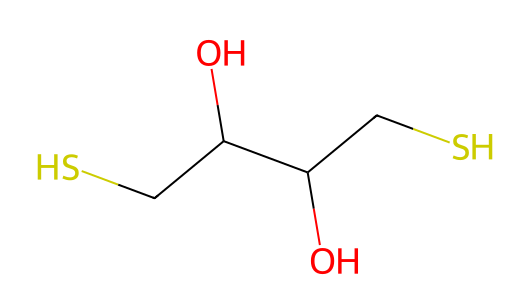
Figure 1. Chemical structure of DTT
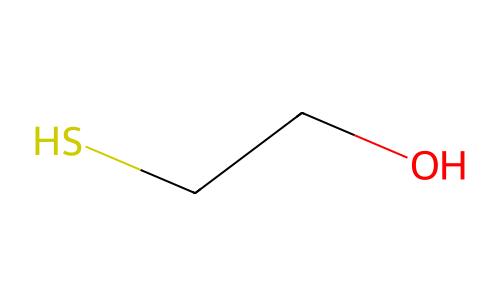
Figure 2. Chemical structure of β-ME
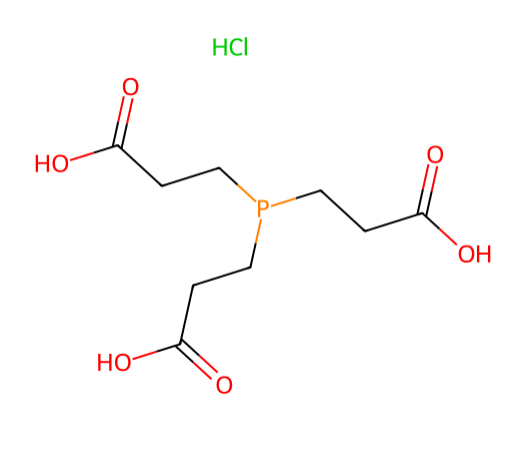
Figure 3. Chemical structure of TCEP
III. Chemistry and Mechanisms (Overview)
Reducing agent | Chemical nature | Typical mechanism | Volatility/odor | Usual pH range |
Trivalent phosphine | Nucleophilic attack by phosphine induces two-electron S–S cleavage (forming phosphine oxide); thiol-free | Very low volatility; no strong odor | 1.5–8.5 (near-neutral preferred) | |
Monothiol small molecule | Forms a mixed disulfide via nucleophilic attack, followed by exchange | Strong, irritating odor; volatile | 7.0–8.5 | |
Dithiol | Intramolecular ring formation drives reduction; thermodynamically favorable | Low volatility; mild odor | 7.0–8.5 (faster under basic conditions) |
IV. Performance Comparison
Reducing agent | Strength | Typical concentration | Typical time |
Strong (largely irreversible) | 5–50 mM | Minutes | |
Weak | 10–100 mM | Hours (slow) | |
Moderate | 1–100 mM |
V. Safety and Operational Stability
Dimension | |||
Toxicity/irritation | Relatively mild | Mucosal/skin irritant | Strong, pungent odor; respiratory irritant |
Volatility | Very low | Low | High (a common lab odor source) |
Storage & lifetime | Stable in aqueous solution; oxidation-resistant | Oxidizes readily; make fresh | Volatile and oxidizes; aliquot into small vials |
VI. Common Issues and Troubleshooting
- DAR too high / aggregates increasing: Reduction time/temperature too aggressive → lower TCEP equivalents or shorten time; add EDTA to suppress metal-catalyzed thiol exchange.
- Low conjugation efficiency: pH too low or under-reduction → adjust to pH 6.8–7.0 and modestly increase TCEP; confirm complete removal of DTT/β-ME residues.
- Re-oxidation → DAR falls back: Excess delay between desalting and conjugation → transfer rapidly to conjugation under inert atmosphere and/or with trace antioxidants.
- Strong odor: β-ME in use → switch to TCEP or DTT; improve ventilation and sealed handling.
Considering stability, controllability, and downstream compatibility, TCEP is increasingly the first-choice mild reducer in ADC processes. DTT fits scenarios requiring rapid, strong reduction when immediate and thorough desalting is feasible. β-ME is mainly used in exploratory lab work or cost-sensitive early trials where odor/safety constraints are less stringent. Looking ahead, more selective, site-specific and milder reduction systems (including enzyme/chemo-assisted disulfide re-engineering) may further improve ADC quality consistency and scalability.
Aladdin: https://www.aladdinsci.com/