Determine the necessary mass, volume, or concentration for preparing a solution.
| Activity Type | Activity Value -log(M) | Mechanism of Action | Activity Reference | Publications (PubMed IDs) |
|---|

Information
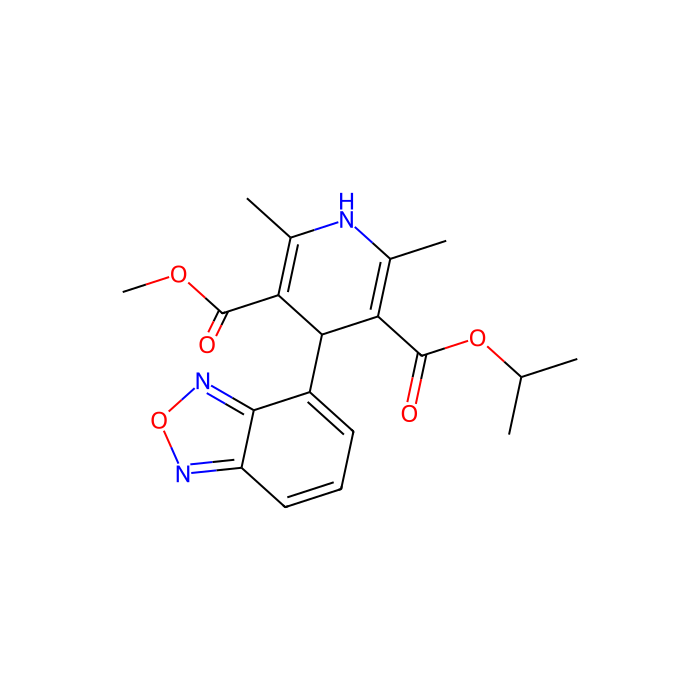
Isradipine Isradipine (PN 200-110) is a potent and selective L-type voltage-gated calcium channel blocker, used to treat high blood pressure.
In vitro
Isradipine produces inhibition of both growth cultures and oxygen consumption on epimastigotes of Trypanosoma cruzi Tulahuen strain, at micromolar concentrations. Isradipine is found to be the most potent derivative in both, in growth cultures (I50 = 20.8 mM) and in vivo oxygen uptake (I50 = 31.1 mM).
In vivo
Isradipine reduces hypoxia-induced activation of calcium dependent xanthine oxidases, monoamine oxidases, cytosolic phospholipase A(2) and cyclooxygenases (COX-2) along with concomitant decrease in free radical generation and cytochrome c release. Isradipine prevents hypobaric hypoxia along with augmented neurodegeneration and memory impairment induced increased expression of calpain and caspase 3. Isradipine (at the dose of 1 mg/kg three times a day) reduces ethanol intake by over 70% in ethanol-preferring rats, the reduction in ethanol intake is compensated by a proportional increase in water consumption and the inhibitory effect persisted throughout the 5 days of treatment. Isradipine significantly reduces the arterial wall collagen contents in both strains, with marked increases in the elastin content in the carotid but not in the aortic wall in spontaneously hypertensive rats. Isradipine suppresses the reinforcing properties of morphine and cocaine and may be an effective pharmacotherapy for treatment of cocaine and heroin abuse in mice.
Cell Data
cell lines:MCSF-dependent mouse myeloid M-NFS-60 cell line
Concentrations:
Incubation Time:
Powder Purity:≥99%
| Activity Type | Activity Value -log(M) | Mechanism of Action | Activity Reference | Publications (PubMed IDs) |
|---|
| Activity Type | Activity Value -log(M) | Mechanism of Action | Activity Reference | Publications (PubMed IDs) |
|---|
| Activity Type | Activity Value -log(M) | Mechanism of Action | Activity Reference | Publications (PubMed IDs) |
|---|
| Punto di fusione (°C) | 169 °C |
|---|
H319:Causes serious eye irritation
H301:Toxic if swallowed
H400:Very toxic to aquatic life
H410:Very toxic to aquatic life with long lasting effects
H372:Causes damage to organs through prolonged or repeated exposure
P305+P351+P338:IF IN EYES: Rinse cautiously with water for several minutes. Remove contact lenses if present and easy to do - continue rinsing.
P273:Avoid release to the environment.
P280:Wear protective gloves/protective clothing/eye protection/face protection.
P321:Specific treatment (see ... on this label).
P405:Store locked up.
P501:Dispose of contents/container to an approved waste disposal plant.
P264:Wash hands [and …] thoroughly after handling.
P260:Do not breathe dust/fume/gas/mist/vapors/spray.
P270:Do not eat, drink or smoke when using this product.
P391:Collect spillage.
P330:Rinse mouth.
P264+P265:Wash hands [and …] thoroughly after handling. Do not touch eyes.
P301+P316:IF SWALLOWED: Get emergency medical help immediately.
P337+P317:If eye irritation persists: Get medical help.
P319:Get medical help if you feel unwell.
La nostra guida alla selezione delle qualità copre purezza, stato dello stabilizzatore e idoneità all'applicazione per tutte le varianti del nostro catalogo.
Visualizza la guida alle qualità Moligand™ →