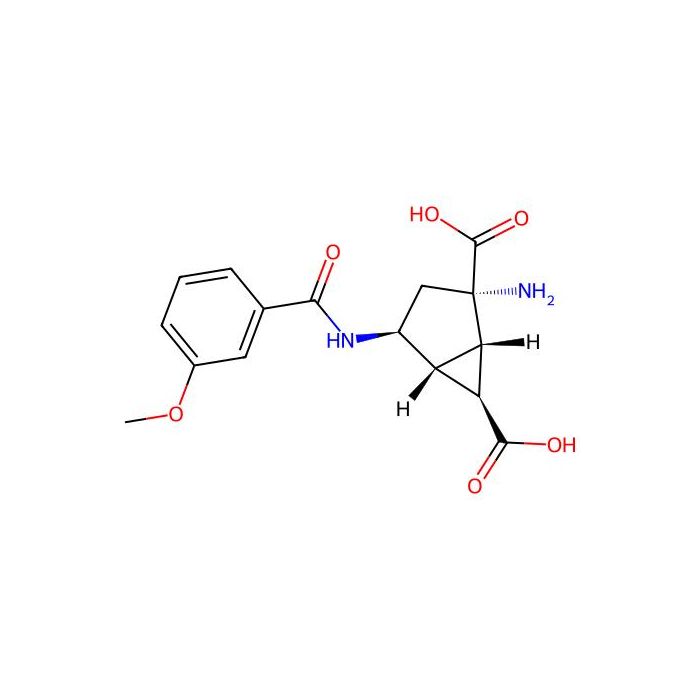
LY2794193 - ≥98% , CAS No.2173037-97-1

CAS: 2173037-97-1 Cat. No.: L651851 Formula: C16H18N2O6 Peso molecolare: 334.32 PubChem CID: 60096231
Disponibile su ordine
QUALITÀ & PUREZZA ≥98%
Storage
Store at -20°C
Shipped In
Ice chest + Ice pads
★
Dimensione
Germania (EU)
USA*
Prezzo
Qtà
5mg
L651851-5mg
Su ordinazione · 8–12 settimane
955,29€
10mg
L651851-10mg
Su ordinazione · 8–12 settimane
1.475,94€
50mg
L651851-50mg
Su ordinazione · 8–12 settimane
4.946,89€
100mg
L651851-100mg
Su ordinazione · 8–12 settimane
6.855,92€
Enter a quantity for the sizes you want to add.

Panoramica

LY2794193 is a highly potent and selective mGlu3 receptor agonist ( hmGlu3 K i =0.927 nM, EC 50 =0.47 nM; hmGlu2 K i =412 nM, EC 50 =47.5 nM)

In Vitro

LY2794193 exhihits inhibition of spontaneous Ca 2+ oscillations in cultured rat cortical neurons with an EC 50 of 43.6 nM. In the rat cortical neuron Ca 2+ oscillation assay, LY2794193 exhibits a biphasic inhibition of spontaneous Ca 2+ transients (high affinity EC 50 =0.44 nM; 48% of the total agonist response; low affinity EC 50 =43.6 nM; 52% of the total agonist response) with combined maximal agonist efficacy (E max ) of 66%. MCE has not independently confirmed the accuracy of these methods. They are for reference only.

In Vivo

LY2794193 (1-30 mg/kg, s.c.), given 30 min prior to PCP (5 mg/kg, s.c.) leads a dose-related reduction in ambulations . LY2794193 (1 mg/kg; i.v.) exhibits moderate clearance (18.3 mL/min per kg) and volume of distribution (1.17 L/kg) with a calculated plasma half-life (T 1/2 ) of 3.1 h in Male Sprague-Dawley rats . LY2794193 (3 mg/kg; s.c.) leads to the rapid appearance in the plasma (AUC=9.9 μM; C max =6.78 μM; T max =0.44 h) and a calculated bioavailability of 121% in male Sprague-Dawley rats . MCE has not independently confirmed the accuracy of these methods. They are for reference only. Animal Model: Male Sprague-Dawley rats Dosage: 1, 3, 10, or 30 mg/kg Administration: Administrated s.c.; given 30 min prior to PCP (5 mg/kg, s.c.) Result: A dose-related reduction in ambulations was observed, with the 10 and 30 mg/kg dose groups found to be statistically significant.

Form:Solid

IC50& Target:mGluR3 0.47 nM (EC 50 ) mGluR3 0.927 nM (Ki) mGluR2 47.5 (EC 50 ) mGluR2 412 (Ki)

Specifiche

Specifiche e purezza
≥98%
Meccanismi biochimici e fisiologici
LY2794193 is a highly potent and selective mGlu3 receptor agonist ( hmGlu3 K i =0.927 nM, EC 50 =0.47 nM; hmGlu2 K i =412 nM, EC 50 =47.5 nM).
Condizioni di conservazione di stoccaggio
Store at -20°C
Spedito in
Ice chest + Ice pads
Questo prodotto richiede spedizione a catena fredda. I servizi di terra e altri servizi economici non sono disponibili.
Tipo di azione
AGONIST
Purezza
≥98%
Nomi e identificatori
Sorrisi canonici
COC1=CC=CC(=C1)C(=O)NC2CC(C3C2C3C(=O)O)(C(=O)O)N
IUPAC Name
(1S,2S,4S,5R,6S)-2-amino-4-[(3-methoxybenzoyl)amino]bicyclo[3.1.0]hexane-2,6-dicarboxylic acid
InChIKey
UXNRHIJPZNNDDJ-VZAVHYRXSA-N
INCHI
1S/C16H18N2O6/c1-24-8-4-2-3-7(5-8)13(19)18-9-6-16(17,15(22)23)12-10(9)11(12)14(20)21/h2-5,9-12H,6,17H2,1H3,(H,18,19)(H,20,21)(H,22,23)/t9-,10-,11-,12-,16-/m0/s1
Isomeri SMILES
COC1=CC=CC(=C1)C(=O)N[C@H]2C[C@]([C@H]3[C@@H]2[C@@H]3C(=O)O)(C(=O)O)N
PubChem CID
60096231
Peso molecolare
334.32

Dati avanzati

Taxonomic Classification

Taxonomy Tree

KingdomOrganic compounds
SuperclassOrganic acids and derivatives
ClasseCarboxylic acids and derivatives
SubclassAmino acids, peptides, and analogues
Intermediate Tree Nodes Amino acids and derivatives - Alpha amino acids and derivatives - Alpha amino acids
Direct ParentL-alpha-amino acids
Alternative Parents D-alpha-amino acids  Benzamides  Phenoxy compounds  Methoxybenzenes  Benzoyl derivatives  Anisoles  Alkyl aryl ethers  Dicarboxylic acids and derivatives  Cyclopropanecarboxylic acids  Secondary carboxylic acid amides  Amino acids  Carboxylic acids  Organopnictogen compounds  Organic oxides  Monoalkylamines  Hydrocarbon derivatives  Carbonyl compounds  
Molecular FrameworkAromatic homopolycyclic compounds
Substituents L-alpha-amino acid - D-alpha-amino acid - Benzoic acid or derivatives - Benzamide - Phenoxy compound - Methoxybenzene - Phenol ether - Benzoyl - Anisole - Alkyl aryl ether - Benzenoid - Dicarboxylic acid or derivatives - Cyclopropanecarboxylic acid or derivatives - Cyclopropanecarboxylic acid - Monocyclic benzene moiety - Amino acid - Secondary carboxylic acid amide - Carboxamide group - Ether - Carboxylic acid - Organic nitrogen compound - Organic oxygen compound - Organopnictogen compound - Organic oxide - Hydrocarbon derivative - Primary amine - Organooxygen compound - Organonitrogen compound - Primary aliphatic amine - Carbonyl group - Amine - Aromatic homopolycyclic compound
DescrizioneThis compound belongs to the class of organic compounds known as l-alpha-amino acids. These are alpha amino acids which have the L-configuration of the alpha-carbon atom.
External Descriptors Not available
Struttura 3D
Modello di struttura chimica interattiva


Obiettivi associati (umani)
GRM2 Tchem Metabotropic glutamate receptor 2 (1 Activities)
Activity TypeActivity Value -log(M)Mechanism of ActionActivity ReferencePublications (PubMed IDs)
GRM3 Tchem Metabotropic glutamate receptor 3 (3 Activities)
Activity TypeActivity Value -log(M)Mechanism of ActionActivity ReferencePublications (PubMed IDs)
KCNH2 Tclin HERG (29587 Activities)
Activity TypeRelationActivity valueUnitsAction TypeJournalPubMed IddoiAssay Aladdin ID
GRM3 Tchem Metabotropic glutamate receptor 3 (732 Activities)
Activity TypeRelationActivity valueUnitsAction TypeJournalPubMed IddoiAssay Aladdin ID
GRM4 Tchem Metabotropic glutamate receptor 4 (2320 Activities)
Activity TypeRelationActivity valueUnitsAction TypeJournalPubMed IddoiAssay Aladdin ID
GRM6 Tchem Metabotropic glutamate receptor 6 (361 Activities)
Activity TypeRelationActivity valueUnitsAction TypeJournalPubMed IddoiAssay Aladdin ID
GRM1 Tchem Metabotropic glutamate receptor 1 (2309 Activities)
Activity TypeRelationActivity valueUnitsAction TypeJournalPubMed IddoiAssay Aladdin ID
GRM5 Tchem Metabotropic glutamate receptor 5 (5733 Activities)
Activity TypeRelationActivity valueUnitsAction TypeJournalPubMed IddoiAssay Aladdin ID
CYP2D6 Tclin Cytochrome P450 2D6 (33882 Activities)
Activity TypeRelationActivity valueUnitsAction TypeJournalPubMed IddoiAssay Aladdin ID
CYP2C9 Tchem Cytochrome P450 2C9 (32119 Activities)
Activity TypeRelationActivity valueUnitsAction TypeJournalPubMed IddoiAssay Aladdin ID
CYP3A4 Tclin Cytochrome P450 3A4 (53859 Activities)
Activity TypeRelationActivity valueUnitsAction TypeJournalPubMed IddoiAssay Aladdin ID
Liver (3974 Activities)
Activity TypeRelationActivity valueUnitsAction TypeJournalPubMed IddoiAssay Aladdin ID
Obiettivi associati (non umani)
Grm2 Metabotropic glutamate receptor 2 (1326 Activities)
Activity TypeRelationActivity valueUnitsAction TypeJournalPubMed IddoiAssay Aladdin ID
Grm8 Metabotropic glutamate receptor 8 (169 Activities)
Activity TypeRelationActivity valueUnitsAction TypeJournalPubMed IddoiAssay Aladdin ID
Grm7 Metabotropic glutamate receptor 7 (580 Activities)
Activity TypeRelationActivity valueUnitsAction TypeJournalPubMed IddoiAssay Aladdin ID
Rattus norvegicus (775804 Activities)
Activity TypeRelationActivity valueUnitsAction TypeJournalPubMed IddoiAssay Aladdin ID
Brain (1 Activities)
Activity TypeRelationActivity valueUnitsAction TypeJournalPubMed IddoiAssay Aladdin ID
Plasma (328 Activities)
Activity TypeRelationActivity valueUnitsAction TypeJournalPubMed IddoiAssay Aladdin ID
Cerebrospinal fluid (288 Activities)
Activity TypeRelationActivity valueUnitsAction TypeJournalPubMed IddoiAssay Aladdin ID
Meccanismi d'azione
Certificati (CoA, COO, BSE/TSE e tabella di analisi)
C of A & Other Certificates(BSE/TSE, COO):
Analytical Chart:
Proprietà chimiche e fisiche
SolubilitàDMSO : 200 mg/mL (598.23 mM; Need ultrasonic) H2O : 2 mg/mL (5.98 mM; ultrasonic and adjust pH to 14 with NaOH)
Peso molecolare334.320 g/mol
XLogP3-2.600
Hydrogen Bond Donor Count4
Hydrogen Bond Acceptor Count7
Rotatable Bond Count5
Exact Mass334.116 Da
Monoisotopic Mass334.116 Da
Topological Polar Surface Area139.000 Ų
Heavy Atom Count24
Formal Charge0
Complexity567.000
Isotope Atom Count0
Defined Atom Stereocenter Count5
Undefined Atom Stereocenter Count0
Defined Bond Stereocenter Count0
Undefined Bond Stereocenter Count0
The total count of all stereochemical bonds0
Covalently-Bonded Unit Count1
Calcolatori di soluzioni
Recensioni

Recensioni dei clienti

Application Protocols
  • Item-specific (Product Data)

    • Tested applications, recommended dilutions, and positive controls: Not specified for this item; refer to CoA/Spec Sheet.
  • General best practices for small-molecule test articles (not item-specific)

    • Prepare fresh working solutions from frozen DMSO stocks; control for solvent effects by matching DMSO across all wells/samples.
    • Include vehicle controls and, where possible, positive/negative reference compounds relevant to the assay biology.
    • Monitor for precipitation/turbidity at working concentrations using plate-based nephelometry or visual inspection.
    • Record batch/lot number, stock age, and storage history to ensure reproducibility.

Only protocols explicitly validated for this SKU should be considered item-specific; none are provided in the current data.

Biological Roles
  • Item-specific (Product Data)

    • Biological target/role: Not specified for this item; refer to literature and CoA/Spec Sheet.
  • General context (not item-specific)

    • LY2794193 is a designated small molecule within a compound library. Such entities are often used as tool compounds or reference standards in discovery biology to interrogate pathways, enzymes, receptors, or cellular phenotypes.
    • Before assigning function, confirm the compound’s identity and consult authoritative databases (primary literature, PubChem CID 60096231) to determine any reported targets, mode of action, and off-target liabilities.
    • For cellular work, characterize baseline cytotoxicity (e.g., CellTiter-Glo, resazurin) across the dosing range to distinguish on-target effects from general toxicity.
    • Consider physicochemical drivers of cellular activity (permeability, efflux susceptibility, ionization state at physiological pH) once the structure is verified.
  • Best practices

    • Document lot number, stock concentration, solvent percentage, and exposure times in reports.
    • Where possible, use orthogonal target-engagement assays (e.g., CETSA vs biochemical IC50) to corroborate biological roles.

No clinical or therapeutic claims are made; this product is supplied strictly for research use only.

Buffer Applications

This product is a discrete small molecule and is not a buffering agent.

  • Item-specific (Product Data)

    • No buffer system specifications are provided for LY2794193.
  • Practical assay buffer guidance (general, not item-specific)

    • Maintain constant final DMSO across all wells/conditions (commonly 0.1–1% v/v) when diluting stocks into physiological buffers (e.g., PBS, HEPES, Tris-based). Validate that surfactants (e.g., 0.01–0.05% Tween 20/80) or carriers (0.1% BSA) do not interfere with readouts.
    • Adjust pH only within assay-appropriate windows; some small molecules exhibit pH-dependent solubility and stability—pre-test precipitation and recovery by LC–UV/MS.
    • Filter sterilize buffers (0.22 µm) if used for cell-based assays and confirm compound recovery post-filtration to avoid adsorption losses.

For actual buffer capacities, recipes, or pKa-related guidance, consult the verified chemical structure and CoA/Spec Sheet.

Green Alternatives

While LY2794193 is a discrete small molecule rather than a process solvent, greener practice considerations mainly concern solvent systems used to dissolve and handle the compound.

  • General solvent sustainability comparison (not item-specific)

| Option | Greenness profile | Typical use notes | |---|---|---| | DMSO | Readily biodegradable; low volatility; occupational exposure manageable | Broadly compatible with assays; watch final % to reduce cytotoxicity | | Ethanol (EtOH) | Renewable feedstocks available; low toxicity | Good for moderately lipophilic compounds; miscible with water | | 2-MeTHF | Bio-based ether; greener alternative to THF for synthetic steps | Less relevant to biological assays; useful for preparative work | | CPME | Low peroxide formation; recyclable | Organic synthesis/extractions; not typical for bioassays | | PEG 400 | Low volatility; low flammability | Can aid solubilization but may impact assay readouts |

  • Practical greener choices (general)
    • Favor aqueous buffers with minimal DMSO (≤0.1–0.5% v/v) when feasible.
    • Use ethanol as a co-solvent instead of higher-toxicity amide solvents (DMF/NMP) if compatible.
    • Minimize solvent volumes in stock preparation; employ microdosing for assay setup to reduce waste.
    • Reuse/segregate solvent waste streams to facilitate recycling.

No item-specific green chemistry constraints can be stated without structural information.

Pharmaceutical Uses
  • Item-specific (Product Data)

    • No pharmacopeial status, excipient role, or formulation information is specified for this item.
  • General formulation/CMC context for discovery compounds (not item-specific)

    • Preformulation screening may include salt selection, polymorph assessment (PXRD/DSC/TGA), and solubility enhancement strategies (co-solvents, lipid vehicles, cyclodextrins) to support nonclinical studies.
    • For in vitro/in vivo research, vehicle systems often employ minimal DMSO combined with PEG 400, ethanol, or surfactants (e.g., Tween 80) tailored to solubility and tolerability constraints; all such uses require internal safety review and are outside the scope of this product listing.
    • Stability-indicating methods (LC with photodiode array/MS) should be established to track degradation (hydrolysis, oxidation) if the structure suggests liability.

No therapeutic or clinical claims are made. This product is supplied strictly for research and laboratory use only.

Physical Properties
  • Item-specific (Product Data)

    • Appearance: Not specified for this item; refer to CoA/Spec Sheet.
    • Grade/Purity: Not specified for this item; refer to CoA/Spec Sheet.
  • Key physicochemical parameters (not provided for this item)

    • Molecular Weight: Not specified for this item; refer to CoA/Spec Sheet.
    • Molecular Formula: Not specified for this item; refer to CoA/Spec Sheet.
    • Melting point (MP): Not specified for this item; refer to CoA/Spec Sheet.
    • Boiling point (BP): Not specified for this item; refer to CoA/Spec Sheet.
    • Density: Not specified for this item; refer to CoA/Spec Sheet.
    • LogP/logD, pKa, refractive index: Not specified for this item; refer to CoA/Spec Sheet.
    • Solubility: Not specified for this item; refer to CoA/Spec Sheet.
  • Literature/general guidance for small-molecule library compounds (not item-specific)

    • Many discovery-stage heteroaromatic small molecules exhibit limited aqueous solubility and are commonly handled as DMSO stocks (e.g., 10–50 mM) for bioassays.
    • If the structure contains ionizable groups, aqueous solubility may be improved by salt formation (acidic compounds as sodium/potassium salts; basic compounds as HCl/mesylate salts) or by co-solvents (DMSO, DMF, ethanol) and surfactants (e.g., 0.01–0.05% Tween 80) in assay buffers.
    • Prior to quantitative work, determine basic solubility and stability in intended matrices (buffer, media) by visual inspection, nephelometry, or LC–UV/MS, and establish a no-precipitation window across the dose range.
Quality and Grades
  • Item-specific (Product Data)

    • Grade/Purity: Not specified for this item; refer to CoA/Spec Sheet.
  • How to interpret grades for small-molecule library compounds (general guidance)

    • Screening/library grade typically targets high chemical purity (often ≥95% by HPLC/UPLC) adequate for biochemical or cell-based assays. Impurity profiles (positional isomers, residual solvents, salts) should be reviewed in the CoA.
    • Research-grade materials may not include pharmacopeial testing (USP/EP) or elemental impurities per ICH Q3D. For analytical method development or in vivo exploratory studies, tighter control of identity and purity (chiral purity, counter-ion content) may be required.
  • Recommended QC upon receipt (general)

    • Verify identity by LC–MS and, if feasible, 1H NMR. Confirm purity by HPLC/UPLC with orthogonal detection (UV and MS) at multiple wavelengths. Document water content (Karl Fischer) and residual solvents if relevant to your application. For chiral molecules, assess enantiomeric excess (chiral HPLC or SFC) if applicable.
  • Stabilizers/additives

    • Not specified for this item; refer to CoA/Spec Sheet. If none are used, stability will depend on intrinsic functional groups (e.g., susceptibility to hydrolysis, oxidation, or photolysis). Consider storing under inert gas and desiccation if warranted by structure.
Reaction and Applications
  • Item-specific intent

    • Category: Small molecule and compound library (screening/chemical biology). The product is intended for research use only.
  • Applicability as a reagent

    • Without a disclosed structure, LY2794193 is not typically used as a synthetic reagent or building block. It is more commonly deployed as a test article/reference compound in biochemical, cellular, or target-validation studies.
  • General research applications for library compounds (not item-specific)

    • Assay development and screening: Evaluate potency and selectivity in enzyme, receptor, or phenotypic assays.
    • Mechanistic studies: Probe pathway modulation, SAR development, and target engagement (e.g., CETSA, NanoBRET).
    • ADME profiling: Solubility, permeability (PAMPA/MDCK), metabolic stability (microsomes/hepatocytes), and plasma protein binding to contextualize biological readouts.
  • Practical tips (general)

    • Prepare concentrated DMSO stocks (e.g., 10 mM), confirm solubility visually and by LC–MS. For serial dilutions, use low-binding plastics/glass and maintain constant DMSO across conditions.
    • Assess compound stability in assay buffers and storage solvents (freeze–thaw, light, and oxidative sensitivity). Employ amber vials and inert atmosphere if the structure suggests liability.
    • For data reproducibility, record exact batch/lot, stock age, and any observed precipitation or color change.
Reaction Conditions

This product is not typically used as a reagent in chemical synthesis, and no structure-specific reaction conditions are provided.

  • Item-specific (Product Data)

    • None specified; refer to CoA/Spec Sheet if available.
  • General guidance for handling during assay preparation (not item-specific)

    • Stock preparation: Dissolve in dry, anhydrous DMSO at a defined concentration (e.g., 10 mM), vortex/sonicate as needed, and verify complete dissolution visually and by LC–MS.
    • Dilution into aqueous media: Add stock to vigorously mixed buffer or media to avoid localized supersaturation; maintain consistent DMSO across conditions.
    • Light/oxygen sensitivity: If unknown, work under subdued light and consider inert gas blanket during long preparations; store aliquots in amber vials.

For any chemical transformations or stability studies, establish conditions empirically once the definitive structure is confirmed.

Safety and Handling
  • Item-specific (Product Data)

    • Storage Conditions: Store at -20°C.
    • Shipped In: Ice chest + ice pads.
    • GHS/CLP details (signal word, H-statements, pictograms, classification): Not specified for this item; refer to SDS.
  • General laboratory precautions (not item-specific; always defer to SDS)

    • PPE: lab coat, safety glasses, and appropriate chemically resistant gloves (e.g., nitrile). Handle powder and stock solutions in a fume hood to avoid inhalation of dust/vapors or aerosol exposure.
    • Avoid contact with skin and eyes; wash thoroughly after handling. Prevent release to the environment.
    • Incompatibilities are structure-dependent (oxidizers, acids/bases, reducing agents) and cannot be assumed without a verified structure; segregate away from reactive chemicals until SDS guidance is available.
  • First-aid overview (general)

    • Inhalation: Move to fresh air; seek medical attention if symptoms persist.
    • Skin/eye contact: Rinse with water for at least 15 minutes; remove contaminated clothing; obtain medical advice.
    • Ingestion: Rinse mouth; do not induce vomiting unless directed by medical personnel; seek medical attention.
  • Spill/leak response (general)

    • Avoid dust generation. Absorb solutions with inert material; collect in compatible waste containers. Decontaminate surfaces with suitable solvent/detergent per SDS guidance.

Always consult the product’s SDS for authoritative hazard classifications and response measures.

Solvent Selection
  • Item-specific (Product Data)

    • Solubility: Not specified for this item; refer to CoA/Spec Sheet.
  • Practical solvent choices for small-molecule library members (general, not item-specific)

    • Primary stock solvent: DMSO is typically preferred due to broad solvating power and assay compatibility at ≤0.5–1% v/v.
    • Alternative solvents: DMF, NMP, 2-pyrrolidone, ethanol, or mixtures (e.g., DMSO:water) can assist with dissolution; verify assay tolerance to each.
    • Buffer dilution: Pre-warm and vortex; add DMSO stock into vigorously stirred buffer to minimize localized supersaturation. Maintain final DMSO ≤0.1–1% depending on biological system.
  • Considerations and decision points

    • If the compound is ionizable, adjust pH to favor the soluble ionic form when making aqueous working solutions (within biologically acceptable ranges).
    • For poorly soluble compounds, consider co-solvents (up to assay-allowed limits), cyclodextrins (HP-β-CD), or surfactants (Tween 80, Pluronic F-68) after compatibility testing.
    • Use 0.2 µm filtration only after confirming no adsorption or significant loss; avoid for low-concentration working solutions of hydrophobic analytes.
  • Comparative notes (general)

    • DMSO vs ethanol: DMSO typically offers higher solubility for polar/heteroaromatic scaffolds; ethanol can be preferable for hydrophobic, neutral compounds in certain assays.
    • DMF/NMP provide strong solvation but may have greater cytotoxicity—limit final assay percentages accordingly.
Storage and Reconstitution
  • Item-specific (Product Data)

    • Storage Conditions: Store at -20°C.
    • Shipping: Ice chest + ice pads.
  • Item-specific details not provided

    • Appearance, stabilizers, and aqueous/organic solubility: Not specified for this item; refer to CoA/Spec Sheet.
    • Recommended reconstitution solvent and concentration: Not specified for this item; refer to CoA/Spec Sheet.
  • General guidance (not item-specific; verify with your internal SOPs)

    • Upon receipt, keep material cold and desiccated. If supplied as a solid, allow vial to equilibrate to room temperature before opening to prevent moisture condensation.
    • For small-molecule library compounds, prepare concentrated stocks in anhydrous DMSO (e.g., 10–50 mM) once solubility is confirmed. Filter only if necessary and compatible. Aliquot into amber vials or low-bind tubes to avoid repeated freeze–thaw.
    • Store aliquots at -20°C or below. Minimize freeze–thaw cycles; thaw on ice and promptly return unused material to cold storage. Track stock age and any observed changes (color, precipitate).
    • Protect from light and moisture if the structure suggests sensitivity; use inert atmosphere for long-term storage when feasible.

Always consult the product’s CoA/Spec Sheet and SDS for definitive storage and handling instructions.

Structure and Identity

Brief overview: LY2794193 is a cataloged small-molecule library member supplied for research use. Item-specific structural identifiers are limited in the provided data.

  • Item-specific (Product Data)

    • Product Name: LY2794193
    • CAS: 2173037-97-1
    • PubChem CID: 60096231
    • InChIKey: 371781 (as provided)
    • SMILES: Not specified for this item; refer to CoA/Spec Sheet.
    • Molecular Formula: Not specified for this item; refer to CoA/Spec Sheet.
    • Molecular Weight: Not specified for this item; refer to CoA/Spec Sheet.
  • Literature/computed notes (general)

    • LY- prefixes often denote discovery-stage small molecules from Eli Lilly portfolios; however, specific functional groups and scaffolds vary widely across LY-series compounds. Without a structure, no assumptions should be made about ring systems, heteroatoms, or stereochemistry.
  • Structural description (not available)

    • A 2D structural description (ring systems, heterocycles, stereocenters, ionizable groups) cannot be provided without a verified structure. Consult the product CoA/Spec Sheet or the referenced CID for a definitive structure prior to analytical method development or docking/modeling work.
  • Recommended verification (general guidance)

    • Confirm identity by orthogonal methods appropriate for small molecules: LC–MS (exact mass), 1H/13C NMR, and HPLC/UPLC purity profiling; compare against an authentic reference where available.
Synthetic Utility
  • Item-specific (Product Data)

    • Structural/reactive functionality for LY2794193 is not disclosed here; thus, specific synthetic transformations cannot be recommended.
  • General notes (not item-specific)

    • As a finished small molecule within a screening library, this item is typically used as a test article rather than a synthetic intermediate. If the structure contains modifiable handles (e.g., aryl halides, amines, carboxylates), derivatization or bioconjugation may be possible, but this must be verified from the authenticated structure.
    • For SAR campaigns, design and synthesis of analogs should be based on a confirmed scaffold with mapped hot spots; employ robust cross-coupling, amide coupling, or heterocycle-forming tactics as dictated by the core structure.
  • Analytical support for any synthetic manipulation

    • Use LC–MS and NMR to confirm integrity post-modification.
    • If the compound is chiral, enforce stereochemical control and measure enantiomeric excess via chiral HPLC/SFC.

Without a verified structure, retrosynthetic analysis and named-reaction guidance are not applicable to this specific item.

Target Specificity
  • Item-specific (Product Data)

    • Target, pathway, or enzyme specificity: Not specified for this item; refer to CoA/Spec Sheet and primary literature.
  • General guidance (not item-specific)

    • To define specificity, employ a panel of orthogonal assays: biochemical potency (IC50/Ki), cellular target engagement (e.g., CETSA, NanoBRET), and counter-screens for common off-targets.
    • Use broad profiling (e.g., kinome panels, GPCR binding screens, safety pharmacology panels) as appropriate once a putative target class is known from literature.

Only target-related details from authoritative sources should be used to describe specificity; none are provided here.

Domande frequenti

What is the purity of this product?
This product is supplied at ≥98% purity (chemical assay). Lot-specific values are stated on the Certificate of Analysis.
How should this product be stored?
Store at ?20 °C. Freezer storage is required to maintain the specified shelf life.
How is this product shipped?
This product ships in an insulated container with ice pads. Unpack on arrival and transfer it to the storage condition stated above.
What are the CAS number, molecular formula and molecular weight?
The CAS Number is 2173037-97-1, the molecular formula is C16H18N2O6, and the molecular weight is 334.32 g/mol. InChIKey UXNRHIJPZNNDDJ-VZAVHYRXSA-N.
What documentation is provided?
Available product documentation, including Certificates of Analysis (COA), Safety Data Sheets (SDS), and specification sheets, is shown in the product document area. Document availability and access follow the current site policy.

Desidera che le inviamo un messaggio quando avremo sconti disponibili?

Ricordamelo più tardi

Grazie! Controlli la sua casella di posta per confermare.

Ops! Le notifiche sono disabilitate.