
Determine the necessary mass, volume, or concentration for preparing a solution.
| Activity Type | Activity Value -log(M) | Mechanism of Action | Activity Reference | Publications (PubMed IDs) |
|---|
Moligand™, 10mM in DMSO Moligand™ for sensitive chromatographic and analytical workflows requiring minimal baseline interference.
Store at -80°C Ships Dry ice packs + Cold packs Check lot-specific COA for exact specifications.
SDS, COA, datasheet, and spec sheet available for download. Lot-specific COA accessible via lot number lookup.
Cited in 7 peer-reviewed publications across chromatography, organic synthesis, and cross-coupling reactions.
Information
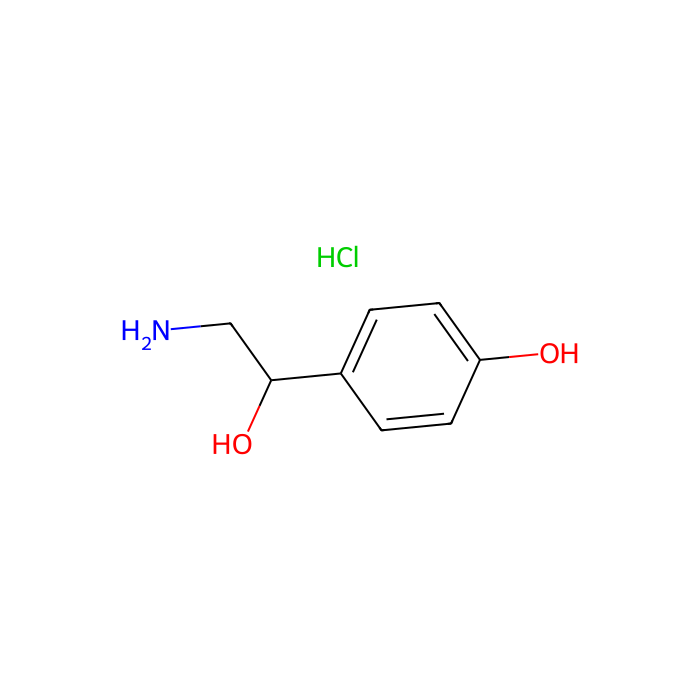
Octopamine (OA), a biogenic monoamine structurally related to noradrenaline, acts as a neurohormone, a neuromodulator and a neurotransmitter in invertebrates.
In vitro
Octopamine is present in relatively high concentrations in neuronal as well as in non-neuronal tissues of most invertebrate species studied, and modulates almost every physiological process. Octopamine acts as neurohormone including desensitization of sensory inputs, influence on learning and memory, or regulation of the mood of the animal in the central nervous system. Octopamine is the only neuroactive non-peptide transmitter whose physiological role is restricted to invertebrates, and all octopamine receptors belong to the family of G-protein coupled receptors.
In vivo
Octopamine (10 mg/mL) is necessary for the acquisition of sugar memory in Drosophila. Octopamine treatment increases responsiveness to brood pheromone and decreased responsiveness to social inhibition. Octopamine acts as an important source of variation in response thresholds and as a modulator of pheromonal communication in insect societies. Octopamine (10 μM) injected into the mushroom body (MB) calyces or the antennal lobe but not the lateral protocerebral lobe produces a lasting, pairing-specific enhancement of extension of the proboscis. Octopamine (10 μM) injected into the MB calyces results in an additional pairing-specific effect, because it does not lead to an acquisition but a consolidation after conditioning. Octopamine treatment significantly elevates levels of octopamine in the brain and caused a significant dose-dependent increase in the number of new foragers. Octopamine treatment is effective only when given to bees old enough to forage, i.e., older than 4 days of age. Octopamine influences division of labor in honey bee colonies.
Cell Data
cell lines:
Concentrations:
Incubation Time:
Powder Purity:≥99%
| Isomeric SMILES | C1=CC(=CC=C1C(CN)O)O.Cl |
|---|---|
| WGK Germany | 3 |
| Molecular Weight | 189.64 |
| Beilstein | 3915414 |
| Reaxy-Rn | 3915414 |
| Reaxys-RN_link_address | https://www.reaxys.com/reaxys/secured/hopinto.do?context=S&query=IDE.XRN=3915414&ln= |
Comprehensive hazard, handling, storage, and regulatory compliance document.
Download SDS →Lot-specific quality data. Enter your lot number to retrieve the exact COA.
Look up COA →Full quality attributes and acceptance criteria for this grade.
View spec sheet →| Activity Type | Activity Value -log(M) | Mechanism of Action | Activity Reference | Publications (PubMed IDs) |
|---|
| Molecular Weight | 189.640 g/mol |
|---|---|
| XLogP3 | |
| Hydrogen Bond Donor Count | 4 |
| Hydrogen Bond Acceptor Count | 3 |
| Rotatable Bond Count | 2 |
| Exact Mass | 189.056 Da |
| Monoisotopic Mass | 189.056 Da |
| Topological Polar Surface Area | 66.500 Ų |
| Heavy Atom Count | 12 |
| Formal Charge | 0 |
| Complexity | 111.000 |
| Isotope Atom Count | 0 |
| Defined Atom Stereocenter Count | 0 |
| Undefined Atom Stereocenter Count | 1 |
| Defined Bond Stereocenter Count | 0 |
| Undefined Bond Stereocenter Count | 0 |
| The total count of all stereochemical bonds | 0 |
| Covalently-Bonded Unit Count | 2 |
| 1. Xirui Chen, Yujie Tu, Song Cheng, Xujing Guo, Tianying Lu, Yuqian Guo, Xiaolin Huang, Yonghua Xiong, Ben Zhong Tang. (2022) A colorimetric and ratiometric fluorescent paper chip for biogenic amine monitoring based on a simple pH-sensitive AIEgen. CHEMICAL ENGINEERING JOURNAL, [PMID:] [10.1016/j.cej.2022.137928] |
| 2. Xujing Guo, Xirui Chen, Rui Chen, Yujie Tu, Tianying Lu, Yuqian Guo, Liang Guo, Yonghua Xiong, Xiaolin Huang, Ben Zhong Tang. (2022) Ratiometric Monitoring of Biogenic Amines by a Simple Ammonia-Response Aiegen. Foods, 11 (7): (932). [PMID:35407018] [10.3390/foods11070932] |
| 3. Xiaomei Ning, Yuhang Li, Hao Yu, Feng Peng, Hongjuan Wang, Yanhui Yang. (2016) Promoting role of bismuth and antimony on Pt catalysts for the selective oxidation of glycerol to dihydroxyacetone. JOURNAL OF CATALYSIS, [PMID:] [10.1016/j.jcat.2015.12.020] |
| 4. Han Huang, Yudi Liu, Yanjun Tong, Wei Zhao, Xiaomei Lyu, Ruijin Yang. (2024) High-Pressure Processing for Pickled Crabs: Safety, Quality and Flavor Assessment and Correlation Analysis of Spoilage Indicators. Food Bioscience, [PMID:] [10.1016/j.fbio.2024.105227] |
| 5. Siru Ren, Qi Zhang, Song Xue, Siyao Liu, Mengjie Rui. (2020) Use of Gamithromycin as a Chiral Selector in Capillary Electrophoresis. JOURNAL OF CHROMATOGRAPHY A, [PMID:32327223] [10.1016/j.chroma.2020.461099] |
| 6. Jian-Jun Zhong, Ningbo Liao, Tian Ding, Xingqian Ye, Dong-Hong Liu. (2015) Liquid chromatographic method for toxic biogenic amines in foods using a chaotropic salt. JOURNAL OF CHROMATOGRAPHY A, [PMID:26141272] [10.1016/j.chroma.2015.06.048] |
| 7. Shiyan Liu, Xuefeng Zhang, Xin Gong, Jinxin Yu, Tao Lin, Qian Xiang, Xinnian Zeng, Jiali Liu. (2025) molecular and pharmacological characterization of the dopamine receptors in the oriental fruit fly, Bactrocera dorsalis. INSECT BIOCHEMISTRY AND MOLECULAR BIOLOGY, [PMID:40245998] [10.1016/j.ibmb.2025.104312] |
Our grade selection guide covers purity, stabilizer status, and application suitability for all variants in our catalog.
View Moligand™ grade guide →