
JP
Japanese Pharmacopoeia grade — conforms to JP monograph standards. Use for pharmaceutical products subject to Japanese regulatory requirements.
Popular Products
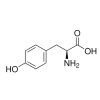 L-TyrosineAnimal Free ? Animal-free — produced without animal-derived components to reduce contamination risk. Use in biomanufacturing and culture avoiding animal-origin material. USP ? United States Pharmacopeia grade — meets USP monograph specs for pharmaceutical use. Use for drug manufacturing, QC, and applications requiring US compendial compliance. JP ? Japanese Pharmacopoeia grade — conforms to JP monograph standards. Use for pharmaceutical products subject to Japanese regulatory requirements. Moligand™ ? Moligand™ — Aladdin's line of ligands and bioactive small molecules. Use for receptor, pathway, and binding studies needing defined small-molecule tools. Ph.Eur. ? European Pharmacopoeia grade — conforms to Ph.Eur. monographs across EU member states. Use for pharmaceutical work needing European compendial compliance. for Cell culture ? Cell-culture grade — low endotoxin and contaminants to support viable cell growth. Use in mammalian/other cell culture media and supplements. ≥99%In Stock Item #: T115962View ProductPricing & Pack Sizes
Technical Identifiers
- IUPAC Name
- (2S)-2-amino-3-(4-hydroxyphenyl)propanoic acid
- SMILES
- C1=CC(=CC=C1CC(C(=O)O)N)O
- InChIKey
- OUYCCCASQSFEME-QMMMGPOBSA-N
- InChI
- 1S/C9H11NO3/c10-8(9(12)13)5-6-1-3-7(11)4-2-6/h1-4,8,11H,5,10H2,(H,12,13)/t8-/m0/s1
- Synonyms
- 3-(4-Hydroxyphenyl)-L-alanine | H-Tyr-OH | L-tyrosine | tyrosine | (S)-Tyrosine | p-Tyrosine | L-p-Tyrosine | H-Tyr-O...
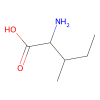 L-IsoleucineCAS: 73-32-5 Formula: C6H13NO2 Molecular Weight: 131.18Animal Free ? Animal-free — produced without animal-derived components to reduce contamination risk. Use in biomanufacturing and culture avoiding animal-origin material. USP ? United States Pharmacopeia grade — meets USP monograph specs for pharmaceutical use. Use for drug manufacturing, QC, and applications requiring US compendial compliance. JP ? Japanese Pharmacopoeia grade — conforms to JP monograph standards. Use for pharmaceutical products subject to Japanese regulatory requirements. Moligand™ ? Moligand™ — Aladdin's line of ligands and bioactive small molecules. Use for receptor, pathway, and binding studies needing defined small-molecule tools. Ph.Eur. ? European Pharmacopoeia grade — conforms to Ph.Eur. monographs across EU member states. Use for pharmaceutical work needing European compendial compliance. for Cell culture ? Cell-culture grade — low endotoxin and contaminants to support viable cell growth. Use in mammalian/other cell culture media and supplements. ≥98.5%In Stock Item #: I115775View ProductPricing & Pack Sizes
Technical Identifiers
- IUPAC Name
- (2S,3S)-2-amino-3-methylpentanoic acid
- SMILES
- CC[C@H](C)[C@@H](C(=O)O)N
- InChIKey
- AGPKZVBTJJNPAG-WHFBIAKZSA-N
- InChI
- 1S/C6H13NO2/c1-3-4(2)5(7)6(8)9/h4-5H,3,7H2,1-2H3,(H,8,9)/t4-,5-/m0/s1
- Synonyms
- H-Ile-OH | FEMA No. 3295 | HSDB 7798 | L-Norvaline, 3-methyl-, erythro- | bmse000884 | EINECS 200-798-2 | (L)-Isoleuc...
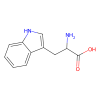 L-TryptophanSolid Animal Free ? Animal-free — produced without animal-derived components to reduce contamination risk. Use in biomanufacturing and culture avoiding animal-origin material. USP ? United States Pharmacopeia grade — meets USP monograph specs for pharmaceutical use. Use for drug manufacturing, QC, and applications requiring US compendial compliance. JP ? Japanese Pharmacopoeia grade — conforms to JP monograph standards. Use for pharmaceutical products subject to Japanese regulatory requirements. Moligand™ ? Moligand™ — Aladdin's line of ligands and bioactive small molecules. Use for receptor, pathway, and binding studies needing defined small-molecule tools. Ph.Eur. ? European Pharmacopoeia grade — conforms to Ph.Eur. monographs across EU member states. Use for pharmaceutical work needing European compendial compliance. for Cell culture ? Cell-culture grade — low endotoxin and contaminants to support viable cell growth. Use in mammalian/other cell culture media and supplements. ≥99%In Stock Item #: T118579View ProductPricing & Pack Sizes
Technical Identifiers
- IUPAC Name
- (2S)-2-amino-3-(1H-indol-3-yl)propanoic acid
- SMILES
- C1=CC=C2C(=C1)C(=CN2)CC(C(=O)O)N
- InChIKey
- QIVBCDIJIAJPQS-VIFPVBQESA-N
- InChI
- 1S/C11H12N2O2/c12-9(11(14)15)5-7-6-13-10-4-2-1-3-8(7)10/h1-4,6,9,13H,5,12H2,(H,14,15)/t9-/m0/s1
- Synonyms
- (S)-2-Amino-3-(3-indolyl)propionic acid | h-Trp-oh | L-Trytophan
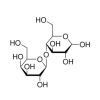 Lactosum , anhydrousSolid PharmPure™ ? PharmPure™ — Aladdin's line of biopharmaceutical raw and starting materials. Use for pharma manufacturing inputs needing high purity and documentation. USP ? United States Pharmacopeia grade — meets USP monograph specs for pharmaceutical use. Use for drug manufacturing, QC, and applications requiring US compendial compliance. JP ? Japanese Pharmacopoeia grade — conforms to JP monograph standards. Use for pharmaceutical products subject to Japanese regulatory requirements. Ph.Eur. ? European Pharmacopoeia grade — conforms to Ph.Eur. monographs across EU member states. Use for pharmaceutical work needing European compendial compliance. NF ? National Formulary grade — meets NF monograph standards, often for excipients. Use for pharmaceutical excipients and products requiring NF compliance.In Stock Item #: L103493View ProductPricing & Pack Sizes
Technical Identifiers
- Synonyms
- Anhydrous lactose | D-Glucose, 4-O-beta-D-galactopyranosyl | Lactose Fast-flo | Tablettose | 4-O-beta-D-Galactopyrano...
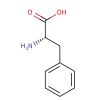 L-PhenylalanineAnimal Free ? Animal-free — produced without animal-derived components to reduce contamination risk. Use in biomanufacturing and culture avoiding animal-origin material. USP ? United States Pharmacopeia grade — meets USP monograph specs for pharmaceutical use. Use for drug manufacturing, QC, and applications requiring US compendial compliance. JP ? Japanese Pharmacopoeia grade — conforms to JP monograph standards. Use for pharmaceutical products subject to Japanese regulatory requirements. Moligand™ ? Moligand™ — Aladdin's line of ligands and bioactive small molecules. Use for receptor, pathway, and binding studies needing defined small-molecule tools. Ph.Eur. ? European Pharmacopoeia grade — conforms to Ph.Eur. monographs across EU member states. Use for pharmaceutical work needing European compendial compliance. for Cell culture ? Cell-culture grade — low endotoxin and contaminants to support viable cell growth. Use in mammalian/other cell culture media and supplements. ≥98.5%In Stock Item #: P110425View ProductPricing & Pack Sizes
Technical Identifiers
- IUPAC Name
- (2S)-2-amino-3-phenylpropanoic acid
- SMILES
- C1=CC=C(C=C1)CC(C(=O)O)N
- InChIKey
- COLNVLDHVKWLRT-QMMMGPOBSA-N
- InChI
- 1S/C9H11NO2/c10-8(9(11)12)6-7-4-2-1-3-5-7/h1-5,8H,6,10H2,(H,11,12)/t8-/m0/s1
- Synonyms
- phenylalanine | (2S)-2-amino-3-phenylpropanoic acid | (S)-2-Amino-3-phenylpropionic acid | 3-Phenyl-L-alanine | (S)-2...
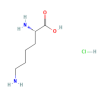 L-(+)-Lysine MonohydrochlorideSolid Animal Free ? Animal-free — produced without animal-derived components to reduce contamination risk. Use in biomanufacturing and culture avoiding animal-origin material. USP ? United States Pharmacopeia grade — meets USP monograph specs for pharmaceutical use. Use for drug manufacturing, QC, and applications requiring US compendial compliance. JP ? Japanese Pharmacopoeia grade — conforms to JP monograph standards. Use for pharmaceutical products subject to Japanese regulatory requirements. Ph.Eur. ? European Pharmacopoeia grade — conforms to Ph.Eur. monographs across EU member states. Use for pharmaceutical work needing European compendial compliance. for Cell culture ? Cell-culture grade — low endotoxin and contaminants to support viable cell growth. Use in mammalian/other cell culture media and supplements. ≥98.5%In Stock Item #: L113006View ProductPricing & Pack Sizes
Technical Identifiers
- IUPAC Name
- (2S)-2,6-diaminohexanoic acid;hydrochloride
- SMILES
- C(CCN)CC(C(=O)O)N.Cl
- InChIKey
- BVHLGVCQOALMSV-JEDNCBNOSA-N
- InChI
- 1S/C6H14N2O2.ClH/c7-4-2-1-3-5(8)6(9)10;/h5H,1-4,7-8H2,(H,9,10);1H/t5-;/m0./s1
- Synonyms
- LYSINE HYDROCHLORIDE (MART.) | Q27124123 | (S)-2,6-Diaminohexanoic acid hydrochloride(1:x) | DTXSID10904868 | NSC7601...
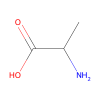 L-AlanineSolid Animal Free ? Animal-free — produced without animal-derived components to reduce contamination risk. Use in biomanufacturing and culture avoiding animal-origin material. USP ? United States Pharmacopeia grade — meets USP monograph specs for pharmaceutical use. Use for drug manufacturing, QC, and applications requiring US compendial compliance. JP ? Japanese Pharmacopoeia grade — conforms to JP monograph standards. Use for pharmaceutical products subject to Japanese regulatory requirements. Moligand™ ? Moligand™ — Aladdin's line of ligands and bioactive small molecules. Use for receptor, pathway, and binding studies needing defined small-molecule tools. Ph.Eur. ? European Pharmacopoeia grade — conforms to Ph.Eur. monographs across EU member states. Use for pharmaceutical work needing European compendial compliance. for Cell culture ? Cell-culture grade — low endotoxin and contaminants to support viable cell growth. Use in mammalian/other cell culture media and supplements. ≥98.5%In Stock Item #: A118860View ProductPricing & Pack Sizes
Technical Identifiers
- IUPAC Name
- (2S)-2-aminopropanoic acid
- SMILES
- CC(C(=O)O)N
- InChIKey
- QNAYBMKLOCPYGJ-REOHCLBHSA-N
- InChI
- 1S/C3H7NO2/c1-2(4)3(5)6/h2H,4H2,1H3,(H,5,6)/t2-/m0/s1
- Synonyms
- 14C-L-Alanine | EC 200-273-8 | HSDB 1801 | NSC-206315 | Alanine (VAN) | ALA-OH | L-Alanine, labeled with tritium | L-...
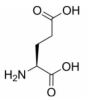 L(+)-Glutamic acidSolid Animal Free ? Animal-free — produced without animal-derived components to reduce contamination risk. Use in biomanufacturing and culture avoiding animal-origin material. USP ? United States Pharmacopeia grade — meets USP monograph specs for pharmaceutical use. Use for drug manufacturing, QC, and applications requiring US compendial compliance. JP ? Japanese Pharmacopoeia grade — conforms to JP monograph standards. Use for pharmaceutical products subject to Japanese regulatory requirements. Ph.Eur. ? European Pharmacopoeia grade — conforms to Ph.Eur. monographs across EU member states. Use for pharmaceutical work needing European compendial compliance. for Cell culture ? Cell-culture grade — low endotoxin and contaminants to support viable cell growth. Use in mammalian/other cell culture media and supplements. ≥98.5%In Stock Item #: G107510View ProductPricing & Pack Sizes
Technical Identifiers
- IUPAC Name
- (2S)-2-aminopentanedioic acid
- SMILES
- C(CC(=O)O)C(C(=O)O)N
- InChIKey
- WHUUTDBJXJRKMK-VKHMYHEASA-N
- InChI
- 1S/C5H9NO4/c6-3(5(9)10)1-2-4(7)8/h3H,1-2,6H2,(H,7,8)(H,9,10)/t3-/m0/s1
- Synonyms
- DTXCID30659 | glt | 1ii5 | Glutamate, L- | Glutamic acid, (S)- | Glutaton | glutamate | L-Glutaminic acid | Gamma-L-G...
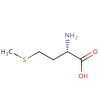 L-Methionine(H-Met-OH)Solid Animal Free ? Animal-free — produced without animal-derived components to reduce contamination risk. Use in biomanufacturing and culture avoiding animal-origin material. USP ? United States Pharmacopeia grade — meets USP monograph specs for pharmaceutical use. Use for drug manufacturing, QC, and applications requiring US compendial compliance. JP ? Japanese Pharmacopoeia grade — conforms to JP monograph standards. Use for pharmaceutical products subject to Japanese regulatory requirements. Moligand™ ? Moligand™ — Aladdin's line of ligands and bioactive small molecules. Use for receptor, pathway, and binding studies needing defined small-molecule tools. Ph.Eur. ? European Pharmacopoeia grade — conforms to Ph.Eur. monographs across EU member states. Use for pharmaceutical work needing European compendial compliance. for Cell culture ? Cell-culture grade — low endotoxin and contaminants to support viable cell growth. Use in mammalian/other cell culture media and supplements. ≥99%In Stock Item #: M101131View ProductPricing & Pack Sizes
Technical Identifiers
- IUPAC Name
- (2S)-2-amino-4-methylsulfanylbutanoic acid
- SMILES
- CSCC[C@H](N)C(O)=O
- InChIKey
- FFEARJCKVFRZRR-BYPYZUCNSA-N
- InChI
- 1S/C5H11NO2S/c1-9-3-2-4(6)5(7)8/h4H,2-3,6H2,1H3,(H,7,8)/t4-/m0/s1
- Synonyms
- (35S)Methionine | carbon-11 methionine | L-2-Amino-4methylthiobutyric acid | METHIONINE [II] | L-Methionin | L-Methio...
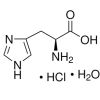 L-Histidine monohydrate monohydrochlorideCAS: 5934-29-2 Formula: C6H9N3O2·HCl·H2O Molecular Weight: 209.63Animal Free ? Animal-free — produced without animal-derived components to reduce contamination risk. Use in biomanufacturing and culture avoiding animal-origin material. USP ? United States Pharmacopeia grade — meets USP monograph specs for pharmaceutical use. Use for drug manufacturing, QC, and applications requiring US compendial compliance. JP ? Japanese Pharmacopoeia grade — conforms to JP monograph standards. Use for pharmaceutical products subject to Japanese regulatory requirements. Moligand™ ? Moligand™ — Aladdin's line of ligands and bioactive small molecules. Use for receptor, pathway, and binding studies needing defined small-molecule tools. Ph.Eur. ? European Pharmacopoeia grade — conforms to Ph.Eur. monographs across EU member states. Use for pharmaceutical work needing European compendial compliance. for Cell culture ? Cell-culture grade — low endotoxin and contaminants to support viable cell growth. Use in mammalian/other cell culture media and supplements. ≥98.5%In Stock Item #: H106211View ProductPricing & Pack Sizes
Technical Identifiers
- IUPAC Name
- (2S)-2-amino-3-(1H-imidazol-5-yl)propanoic acid;hydrate;hydrochloride
- SMILES
- O.Cl.N[C@@H](Cc1c[nH]cn1)C(O)=O
- InChIKey
- CMXXUDSWGMGYLZ-XRIGFGBMSA-N
- InChI
- 1S/C6H9N3O2.ClH.H2O/c7-5(6(10)11)1-4-2-8-3-9-4;;/h2-3,5H,1,7H2,(H,8,9)(H,10,11);1H;1H2/t5-;;/m0../s1
- Synonyms
- D02072 | L-Histidine monohydrochloride monohydrate, >=99.0% (AT) | 5-Chloro-1-methyl-4-nitroimidazole, 98% | AS-64939...
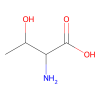 L-ThreonineAnimal Free ? Animal-free — produced without animal-derived components to reduce contamination risk. Use in biomanufacturing and culture avoiding animal-origin material. USP ? United States Pharmacopeia grade — meets USP monograph specs for pharmaceutical use. Use for drug manufacturing, QC, and applications requiring US compendial compliance. JP ? Japanese Pharmacopoeia grade — conforms to JP monograph standards. Use for pharmaceutical products subject to Japanese regulatory requirements. Moligand™ ? Moligand™ — Aladdin's line of ligands and bioactive small molecules. Use for receptor, pathway, and binding studies needing defined small-molecule tools. Ph.Eur. ? European Pharmacopoeia grade — conforms to Ph.Eur. monographs across EU member states. Use for pharmaceutical work needing European compendial compliance. for Cell culture ? Cell-culture grade — low endotoxin and contaminants to support viable cell growth. Use in mammalian/other cell culture media and supplements. ≥99%In Stock Item #: T108222View ProductPricing & Pack Sizes
Technical Identifiers
- IUPAC Name
- (2S,3R)-2-amino-3-hydroxybutanoic acid
- SMILES
- CC(C(C(=O)O)N)O
- InChIKey
- AYFVYJQAPQTCCC-GBXIJSLDSA-N
- InChI
- 1S/C4H9NO3/c1-2(6)3(5)4(7)8/h2-3,6H,5H2,1H3,(H,7,8)/t2-,3+/m1/s1
- Synonyms
- L-2-Amino-3-hydroxybutyrate | NSC46701 | CHEBI:16857 | GTPL4785 | L-THREONINE [JAN] | (2S,3R)-rel-2-Amino-3-hydroxybu...
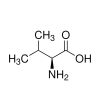 L-ValineSolid Animal Free ? Animal-free — produced without animal-derived components to reduce contamination risk. Use in biomanufacturing and culture avoiding animal-origin material. USP ? United States Pharmacopeia grade — meets USP monograph specs for pharmaceutical use. Use for drug manufacturing, QC, and applications requiring US compendial compliance. JP ? Japanese Pharmacopoeia grade — conforms to JP monograph standards. Use for pharmaceutical products subject to Japanese regulatory requirements. Moligand™ ? Moligand™ — Aladdin's line of ligands and bioactive small molecules. Use for receptor, pathway, and binding studies needing defined small-molecule tools. Ph.Eur. ? European Pharmacopoeia grade — conforms to Ph.Eur. monographs across EU member states. Use for pharmaceutical work needing European compendial compliance. for Cell culture ? Cell-culture grade — low endotoxin and contaminants to support viable cell growth. Use in mammalian/other cell culture media and supplements. ≥98.5%In Stock Item #: V139523View ProductPricing & Pack Sizes
Technical Identifiers
- IUPAC Name
- (2S)-2-amino-3-methylbutanoic acid
- SMILES
- CC(C)C(C(=O)O)N
- InChIKey
- KZSNJWFQEVHDMF-BYPYZUCNSA-N
- InChI
- 1S/C5H11NO2/c1-3(2)4(6)5(7)8/h3-4H,6H2,1-2H3,(H,7,8)/t4-/m0/s1
- Synonyms
- bmse000052 | HY-N0717 | L-(+)-.alpha.-Aminoisovaleric acid | BDBM50463208 | L-Valine (JP17) | NSC760111 | bmse000860 ...
Frequently Asked Questions — JP
JP indicates that the material complies with the published monographs of the relevant pharmacopoeia (JP). Specifications include identity, assay, impurity limits, residual solvents and other tests defined in the monograph. JP-compliant material is suitable for pharmacopoeia-compliant pharmaceutical use, including pharmaceutical manufacturing, QC and regulatory submission.
JP and other compendial grades (USP, BP, JP, ChP, Ph.Eur., NF) cover overlapping but not identical specifications. For multi-region manufacturing, look for materials that comply with multiple pharmacopoeias simultaneously, or confirm that the specific monograph version meets your region's requirements.
No. Pharmacopoeia compliance defines the chemical specifications. GMP refers to the manufacturing quality system. A single material can be both pharmacopoeia-compliant and produced under GMP — check the product page for current GMP status, or contact us for documentation.
Each lot ships with a Certificate of Analysis referencing the pharmacopoeia monograph. SDS, regulatory letters, GMP statements (where applicable) and customs documentation are available on request.
Yes. Bulk and custom packaging — including drums, lined containers, GMP packaging and recurring supply contracts — are available through the Bulk & Custom Quote workflow. Quality documentation is provided per lot.