
for Spectroscopy
Spectroscopy grade — low spectral background for clean optical measurements. Use across UV/Vis/IR work where solvent signals must be minimal.
Popular Products
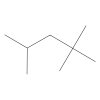 Isooctanefor Spectroscopy ? Spectroscopy grade — low spectral background for clean optical measurements. Use across UV/Vis/IR work where solvent signals must be minimal.In Stock Item #: I103242View ProductPricing & Pack Sizes
Technical Identifiers
- IUPAC Name
- 2,2,4-trimethylpentane
- SMILES
- CC(C)CC(C)(C)C
- InChIKey
- NHTMVDHEPJAVLT-UHFFFAOYSA-N
- InChI
- 1S/C8H18/c1-7(2)6-8(3,4)5/h7H,6H2,1-5H3
- Synonyms
- 2,4,4-Trimethylpentane | 2,2,4-Trimethylpentane, HPLC Grade | W-109087 | NSC 39117 | 2,2,4-Trimethylpentane, puriss. ...
Frequently Asked Questions — for Spectroscopy
for spectroscopy indicates that the chemical has been purified and tested specifically for use in UV-visible and fluorescence spectroscopy. Key specifications typically include controlled UV absorbance at common detection wavelengths, low non-volatile residue, controlled moisture content, and verified lot-to-lot consistency. for spectroscopy is used for mobile phases, sample preparation and analytical standards in this workflow.
ACS and AR grades are general-purpose analytical purity tiers. for spectroscopy adds workflow-specific specifications — particularly UV absorbance cutoffs and impurity profiles that matter for chromatographic detection. Many for spectroscopy solvents also meet ACS or AR specifications, but the reverse is not always true. For routine analytical work outside chromatography, ACS or AR grade is often more economical.
Yes. Premium grades such as UltraPureChrom™, 'for HPLC plus', or grades dedicated to MS work generally exceed the specifications of standard chromatography grades. Use a higher tier when method sensitivity, regulated workflows, or trace analysis demand it. Switching down to a lower-tier grade is not recommended without method revalidation.
Standard chromatography grades can support many LC-MS applications, but for trace MS work or methods sensitive to ionic background and metals, dedicated LC-MS or UHPLC-MS grade solvents are recommended. These include additional metal-content testing and lower particulate levels.
Liquid products are commonly offered in 500 mL, 1 L, 2.5 L and 4 L glass bottles; solid reagents in 25 g, 100 g and 500 g units. Larger drums and custom packaging (amber, septum-sealed, pre-cleaned) are available on request through the Bulk & Custom Quote workflow.