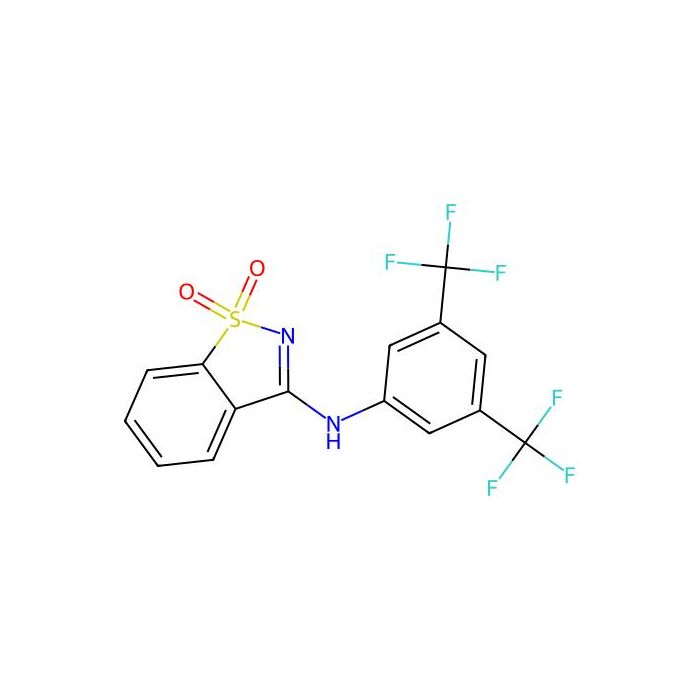
≥99% for sensitive chromatographic and analytical workflows requiring minimal baseline interference.
🌡
Storage & shipping
Store at -20°C Ships Ice chest + Ice pads Check lot-specific COA for exact specifications.
📋
Quality documents
SDS, COA, datasheet, and spec sheet available for download. Lot-specific COA accessible via lot number lookup.
📚
Literature proof
Cited in 0 peer-reviewed publications across chromatography, organic synthesis, and cross-coupling reactions.
Overview
M1002 is a hypoxia-inducible factor-2 ( HIF-2 ) agonist, and can enhance the expression of HIF-2 target genes. M1002 shows synergy with prolyl-hydroxylase domain (PHD) inhibitors.
In Vitro
M1002 (10 μM; 24 h) enhances the expression of HIF-2 target genes with great efficacy. M1002 (5 μM; 24 h) treatment shows synergy with prolyl hydroxylase domain (PHD) inhibitors. MCE has not independently confirmed the accuracy of these methods. They are for reference only. RT-PCRCell Line: 786-O cells Concentration: 10 μM Incubation Time: 24 hours Result: Showed clear agonistic effects on the expression of HIF-2 target genes in 786-O cells as compared with the control. RT-PCRCell Line: Hep3B cells Concentration: 5 μM Incubation Time: 24 hours Result: Elevated the expression of EPO and NDRG1 by co-treatment of M1002 together with PHD inhibitors, compared with M1002 alone treatment.
Form:Solid
Specifications
Specifications & Purity
≥99%
Biochemical and Physiological Mechanisms
M1002 is a hypoxia-inducible factor-2 ( HIF-2 ) agonist, and can enhance the expression of HIF-2 target genes. M1002 shows synergy with prolyl-hydroxylase domain (PHD) inhibitors.
Storage
Store at -20°C
Shipped In
Ice chest + Ice pads
This product requires cold chain shipping. Ground and other economy services are not available.
Action Type
AGONIST
Purity
≥99%
Names and Identifiers
Molecular Weight
394.29
Documentation
📋 Safety Data Sheet (SDS)
Comprehensive hazard, handling, storage, and regulatory compliance document.
DMF : 50 mg/mL (126.81 mM; Need ultrasonic) DMSO : 50 mg/mL (126.81 mM; ultrasonic and warming and heat to 60°C)
Solution Calculators
Molarity Calculator
Determine the necessary mass, volume, or concentration for preparing a solution.
Dilution Calculator
Determine the dilution needed to prepare a stock solution.
Reconstitution Calculator
Reviews
Customer Reviews
Application Protocols
Item-specific facts (from Product Data)
No tested application protocols are provided for this item.
General example workflows (not item-specific; adapt to your assay)
Preparation of 10 mM DMSO stock: Allow vial to equilibrate to room temperature inside a desiccator, weigh compound quickly, add anhydrous DMSO to volume, vortex until dissolved, sterile-filter if needed (0.2 µm PTFE), aliquot into low-bind tubes, and store at -20°C.
Biochemical assay dilution: Prepare serial dilutions in DMSO (e.g., 3-fold), then transfer to buffer to achieve final DMSO ≤0.5% v/v. Include vehicle controls and, if available, a positive control ligand.
Cell-based assay: Verify cytotoxicity of vehicle; pre-screen compound solubility in complete medium. Maintain consistent DMSO across wells. Monitor precipitation microscopically when feasible.
Data quality controls: Include replicates, redox/aggregation interference tests, and orthogonal readouts to confirm activity.
Biological Roles
Applicability to this item
Biological functions or pathways cannot be assigned without the compound’s identity. No mode-of-action or target information is provided for M1002.
General considerations for screening compounds (not item-specific)
Library members may modulate enzymes, receptors, ion channels, transporters, or protein–protein interfaces. Any observed activity should be treated as provisional until validated by orthogonal assays and counter-screens.
Early deconvolution: Combine biochemical potency with biophysical binding (SPR/ITC/DSF) and cell-based phenotypes to build confidence in a true on-target effect.
Off-target risk and assay interference (autofluorescence, redox cycling, metal chelation, detergent-sensitive aggregation) should be assessed before investing in follow-up chemistry.
For chemoproteomic exploration, attach photoaffinity or clickable tags to validated scaffolds to map interactomes—only after confirming the structure supports derivatization without loss of activity.
Research use note
For research use only. Not for human or veterinary use. No clinical or diagnostic claims are made or implied.
Buffer Applications
Applicability to this item
Specific buffer systems cannot be recommended without knowledge of the compound’s ionization properties (pKa) and stability profile.
General guidance (not item-specific)
For biochemical assays, prepare concentrated DMSO stocks and dilute into assay buffer ensuring final DMSO ≤0.1–1% v/v depending on target tolerance.
Select buffers with minimal assay interference: HEPES, Tris, phosphate, or acetate depending on the desired pH range. Verify compound stability across the working pH and ionic strength.
If precipitation is observed on dilution, adjust pH (to favor ionized form), increase temperature slightly (to 25–37°C during mixing), or add compatible co-solvent (0.1–1% DMSO/EtOH) or low levels of non-ionic surfactant.
Include 0.01–0.1% Tween-20 or Pluronic F-127 if aggregation is suspected and target biology tolerates surfactant.
Filter buffers (0.2 µm) and use low-binding plastics or glass to minimize adsorption of hydrophobic compounds.
Green Alternatives
Context
Without structural information, specific greener substitutes cannot be assigned. However, sustainability considerations in handling small-molecule libraries focus on solvent choice, energy use, and waste minimization.
General greener practices (not item-specific)
Prefer water or water-rich buffers when feasible; otherwise choose greener co-solvents (ethanol, 2-propanol) over DMF/NMP where assay compatibility allows.
For synthesis or reformatting steps, consider 2-MeTHF or CPME in place of THF/MTBE, and EtOAc in place of DCM, subject to compound stability.
Minimize DMSO waste by preparing concentrated master stocks and performing on-plate dilutions. Consolidate compatible waste streams to reduce disposal impact.
Energy reduction: Store only required working aliquots at -20°C; archive long-term material at the minimum necessary volume to reduce freezer load.
Illustrative solvent comparison (general)
Greener: water, ethanol, ethyl acetate, 2-MeTHF (renewable source, lower peroxide risk than THF). Tradeoffs: solubility limits, boiling point, assay tolerance.
Less green: DMF, NMP, DCM—excellent solvency but with higher toxicity/regulatory burdens. Use only when necessary and capture vapors efficiently.
Pharmaceutical Uses
Applicability to this item
No pharmacopeial status, excipient role, or manufacturing application is provided. This product is supplied for research use only and is not intended for therapeutic, diagnostic, or GMP manufacturing purposes.
General information (not item-specific)
Small-molecule screening compounds can inform medicinal chemistry campaigns that may later consider formulation aspects (salt selection, polymorphism, enabling excipients) after target validation. Such development is outside the scope of this catalog entry.
If preformulation experiments are undertaken in research settings, evaluate solid form, hygroscopicity, and pH–solubility profiles under non-GMP conditions and document strictly for internal R&D use.
Physical Properties
Item-specific facts (from Product Data)
No physical-chemical specifications were provided for this catalog entry.
Typical data to consult (literature/computed; not item-specific unless sourced from CoA)
Melting/boiling point, density, logP/logD, pKa, refractive index, UV–vis/fluorescence properties, and aqueous/organic solubility. In the absence of structure, these values cannot be reported here. Retrieve from CoA/Spec Sheet or measure experimentally.
Practical guidance (general)
Solubility screening for library compounds is often performed in DMSO at 10–50 mM, followed by dilution into assay buffer. Verify absence of precipitation and adsorption to plastics at working concentrations.
If the compound contains ionizable groups (unknown here), determine pKa (potentiometric or UV–vis) to select appropriate buffer pH for assays.
For purity assessment and stability indicating methods, establish an LC–MS method (C18, water/acetonitrile + 0.1% formic acid is a common starting point) and monitor for degradation on storage and after repeated freeze–thaw.
Quality & Grades
Item-specific facts (from Product Data)
Grade/Purity: Not specified for this item; refer to CoA/Spec Sheet.
Appearance: Not specified for this item; refer to CoA/Spec Sheet.
Context and expectations (general; not item-specific)
Small-molecule library members are typically supplied as ≥95% purity by HPLC for screening applications. Verify actual purity and identity on the accompanying CoA. If UV cutoffs, residual solvent, water content, or salt form are critical to your assay, request the detailed specification sheet.
If a specific “screening grade” is used: this generally indicates suitability for biochemical/cell-based assays, with controlled levels of common impurities. It does not imply suitability for GMP manufacturing.
Batch-to-batch verification: Confirm identity (LC–MS, 1H NMR) and purity before quantitative pharmacology or SAR. Document exact counterion, hydrate/solvate state, and polymorph if applicable, as these can affect solubility and activity.
Stabilizers/additives: None are listed for this item. If antioxidants or acid scavengers are present in any batch, they will be declared on the CoA; consider their potential interference with assays.
Reaction & Applications
Applicability to this item
This catalog entry is categorized as a small molecule/compound library member intended for screening and discovery workflows. It is not primarily sold as a synthetic reagent. Consequently, specific reaction applications cannot be detailed without a disclosed structure.
General research applications (not item-specific)
High-throughput screening (biochemical, biophysical, phenotypic) to identify hits against enzymes, receptors, or protein–protein interactions.
Secondary assays and orthogonal confirmation (dose–response curves, counterscreens for aggregation or assay interference such as redox activity or fluorescence overlap).
Mechanistic studies once a target is implicated (thermal shift assays, SPR, ITC, CETSA, chemoproteomics) to assess direct binding and mode of action.
Early ADME profiling: solubility, microsomal stability, CYP inhibition, and permeability to support SAR campaigns.
Practical tips
Prepare fresh DMSO stocks (e.g., 10 mM), filter if necessary (0.2 µm PTFE), and aliquot to avoid freeze–thaw. Track exact concentration by weight-in with solvent density correction or by quantitative NMR/UV if chromophores are present.
Include appropriate interference controls (detergent tests for aggregators, redox/PAINS filters, autofluorescence scans) during screening.
Reaction Conditions
Applicability to this item
Not typically applicable. This catalog entry is not supplied as a reagent for carrying out named reactions, and no structure is provided to discuss reactivity or optimal conditions.
General considerations for handling during experiments (not item-specific)
Solution preparation: Dissolve at 10–50 mM in anhydrous DMSO for master stocks; vortex and sonicate briefly if needed. Filter through 0.2 µm PTFE for particulate removal.
Dilution into assay media: Add stock last with vigorous mixing to avoid local supersaturation; confirm clarity by visual inspection and, if critical, by nephelometry.
Stability checks: Monitor by LC–MS/UPLC at time zero and after assay exposure (temperature/pH/light) to confirm chemical integrity. Protect light-sensitive compounds with amberware.
Safety & Handling
Item-specific facts (from Product Data)
GHS classification: Not specified for this item; refer to SDS.
Signal word: Not specified for this item; refer to SDS.
Hazard statements (H-codes): Not specified for this item; refer to SDS.
Pictograms: Not specified for this item; refer to SDS.
Storage: Store at -20°C. Shipped in ice chest with ice pads.
General laboratory precautions (not item-specific; defer to SDS)
Handle unknown small molecules in a fume hood with appropriate PPE: lab coat, safety glasses, and nitrile gloves. Avoid inhalation of dusts/aerosols and skin contact; wash thoroughly after handling.
Prevent exposure to ignition sources until flammability is known. Avoid strong oxidizers, strong acids/bases, and reactive metals unless compatibility is established.
For solids: minimize dust generation; for solutions: cap tightly to limit volatilization and moisture uptake. Dispose of waste in accordance with local regulations as organic hazardous waste unless otherwise specified on the SDS.
First aid (generic): if inhaled—move to fresh air; if on skin—wash with soap and water; if in eyes—rinse cautiously for several minutes; if swallowed—rinse mouth and seek medical advice. Always consult the SDS for authoritative guidance.
Transport and receipt: Keep cold during transit; on receipt, inspect for container integrity and store immediately at the specified temperature to maintain stability.
Solvent Selection
Item-specific facts (from Product Data)
No solvent preferences are specified for this item.
General guidance for small-molecule library members (not item-specific)
Primary stock solvent: DMSO is broadly preferred for discovery libraries due to high solvating power for diverse chemotypes and compatibility with most biochemical and cell-based assays up to 0.1–1% v/v final DMSO.
Alternative solvents: DMF, ethanol, methanol, and aqueous buffers with co-solvent are common. Select based on compound polarity/ionization (guided by calculated logP/logD/pKa when available).
Buffer compatibility: Avoid precipitation upon aqueous dilution by pre-warming, adding compound stock slowly with vigorous mixing, and matching pH to maintain ionization of weak acids/bases if relevant.
Adsorption/aggregation: For very hydrophobic or cationic aromatic compounds, adsorption to polystyrene and aggregation can be mitigated by using low-binding polypropylene plates/tubes and adding low levels of surfactant (e.g., 0.01% Tween-20) if assay-tolerated.
Quick comparison (general)
DMSO: highest solubility, low volatility; may affect enzyme kinetics at >1%.
Ethanol: miscible with water, higher volatility; cytotoxic above ~1–2% in many cell systems.
DMF: strong solvent but higher toxicity; use sparingly in biological assays.
Aqueous buffer: best biological compatibility; may require pH adjustment or co-solvent for solubilization.
Storage & Reconstitution
Item-specific facts (from Product Data)
Storage conditions: Store at -20°C.
Shipping: Ice chest with ice pads.
General guidance (not item-specific)
Reconstitution solvent: If no guidance is provided, DMSO is typically preferred for small-molecule library members. Start at 10–50 mM stocks. If aqueous solubility is required, adjust pH or use co-solvent following small-scale solubility tests.
Aliquoting: Divide into single-use aliquots to avoid repeated freeze–thaw. Use low-binding polypropylene or amber glass if light-sensitive.
Stability: Record preparation date and concentration; monitor by LC–MS/HPLC for degradation over time. Limit bench time; return unused material promptly to -20°C. Avoid frost/moisture ingress by equilibrating closed vials to room temperature before opening.
Freeze–thaw: Minimize cycles; thaw on ice or at room temperature, mix thoroughly before use. Discard aliquots showing precipitation or discoloration unless reversed by controlled warming and verified by analytics.
Documentation: For precise handling, consult the CoA/Spec Sheet for any item-specific details on solubility, stability, and recommended diluents.
Structure & Identity
Item-specific facts (from Product Data)
SKU: M646453 (Aladdin Scientific)
Product Name: M1002
CAS: 823830-85-9
Molecular formula: Not specified for this item; refer to CoA/Spec Sheet.
Molecular weight: Not specified for this item; refer to CoA/Spec Sheet.
SMILES: Not specified for this item; refer to CoA/Spec Sheet.
InChIKey: Not specified for this item; refer to CoA/Spec Sheet.
General notes (chemistry/literature, not item-specific)
The product is listed under a small-molecule/compound library category, suggesting it is intended as a screening compound or reference molecule for discovery workflows (HTS, target validation, SAR). 2D structural features (functional groups, ring systems, stereochemistry) cannot be described without a structural string or formula; consult the CoA or SDS for definitive identifiers.
For uncharacterized library members, confirm identity by orthogonal methods where appropriate (e.g., LC–MS and 1H NMR), and record the exact tautomer/salt state if relevant to your assay.
Synthetic Utility
Applicability to this item
The product is presented as a small-molecule library member rather than a building block or reagent; without structural details, specific synthetic transformations or named-reaction roles cannot be provided.
General guidance (not item-specific)
If derivatization is planned for SAR or probe development, first obtain full structural information (including stereochemistry and salt/solvate state) and confirm via LC–MS and NMR.
Map diversification vectors on the scaffold to maintain activity while enabling property tuning (logD, TPSA). Common strategies include bioisosteric exchanges, heteroatom substitution, and appendage modifications guided by docking or co-crystal structures where available.
Establish robust, convergent routes for rapid analogue synthesis (microwave-enabled steps, late-stage functionalization) and incorporate scalable purification (preparative HPLC or crystallization) to support iterative design.
Target Specificity
Item-specific facts (from Product Data)
No target, epitope, or specificity information is provided for M1002.
General notes (not item-specific)
For screening hits, target specificity should be established through orthogonal assays, selectivity panels (e.g., broad kinase or GPCR panels as relevant), and counterscreens to rule out assay artifacts.
If a specific target is suspected, determine binding kinetics/thermodynamics (SPR/ITC), confirm cellular on-target engagement (e.g., CETSA, NanoBRET), and assess off-target liabilities early.
We use cookies to ensure the website functions properly and, where permitted, to improve your experience. You can manage your preferences at any time in Settings. Learn more in our Cookie Policy.
Shall we send you a message when we have discounts available?
Remind me later
Thank you! Please check your email inbox to confirm.
Products are supplied to verified businesses, institutions, and qualified professionals for research and development use only. Not for use in humans, animals, diagnosis, or therapy.