
 G2629618
Determine the necessary mass, volume, or concentration for preparing a solution.
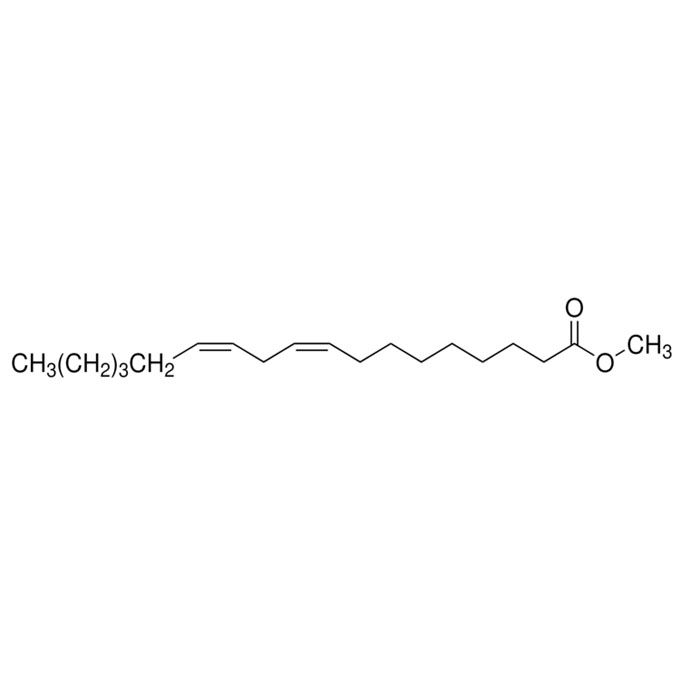
Methyl linoleate - analytical standard, ≥99%(GC) , CAS No.112-63-0
AVAILABLE TO ORDER
GRADE & PURITY Analytical standard ? Analytical standard — certified-purity material for quantitative calibration. Use to prepare calibration standards and validate analytical methods. ≥99%(GC)
Synonyms
(9Z,12Z)-9,12-Octadecadienoic acid methyl ester|Methyl (Z,Z)-9,12-octadecadienoate|Telfairic Acid methyl ester|(9Z,12Z)-Methyl octadeca-9,12-dienoate|(9Z,12Z)methyl octadeca-9,12-dienoate|FEMA NO. 3411, METHYL LINOLEATE-|Methyl linoleate, native|linoleic acid-methyl ester|Methyl octadeca-9,12-dienoate|methyl (9Z,12Z)-octadeca-9,12-dienoate|Linoleic acid, methyl ester|METHYL OCTADEC-9,12-DIENOATE|Methyl (9Z,12Z)-9,12-octadecadienoate #|1-O-methyl-(9Z,12Z)-octadecadienoate|Methyl (9Z,12Z)-9,12-octadecadienoate|METHYL LINOLEATE|9,12-Octadecadienoic acid, methyl ester|Methyl cis,cis-9, 12-octadecadienoate|(9Z,12Z)-octadeca-9,12-dienoic acid methyl ester|Methyl (Z,Z)-9,12-octadienoate|METHYL CIS-9,CIS-12 LINOLEATE|Methyl linolate|Linoleic acid, methyl ester (8CI)|METHYL LINOLEATE [USP-RS]|Linoleic acid,methyl ester|(9Z,12Z)-Methyloctadeca-9,12-dienoate|9,12-Octadecadienoic acid (Z,Z)-, methyl ester|METHYL LINOLEATE [INCI]|Methyl ester(Z,Z)-9,12-Octadecadienoic acid|(9Z,12Z)-Octadecadienoic acid methyl ester|cis-Linoleic acid methyl ester|METHYL CIS-9,CIS-12-OCTADECADIENOATE|METHYL LINOLEATE [MI]|9,12-Octadecadienoic acid, methyl ester, (Z,Z)-|Octadecadienoic acid methyl ester, 9,12-(Z,Z)-|cis-9,cis-12-Octadecadienoic acid, methyl ester|(Z,Z)-9,12-octadecadienoic acid methyl ester|Natural methyl linoleate|Methyl lineoleate|9,12-Octadecadienoic acid (9Z,12Z)-, methyl ester|Methyl 9-cis,12-cis-octadecadienoate|Methyl cis,cis-9,12-octadecadienoate|cis,cis-octadeca-9,12-dienoic acid methyl ester|Linoleic acid methyl ester|methyl (9E,12Z)-octadeca-9,12-dienoate
Storage
Store at 2-8°C
Shipped In
Wet ice