Determine the necessary mass, volume, or concentration for preparing a solution.
Microcrystalline cellulose is very strong and chemically inert, so it is a very ideal carrier. API layered microcrystalline cellulose can be filled into capsules or pressed into tablets. They have a very tight particle size distribution, which can better control and improve the consistency of API release between batches. The uniformity of particle size minimizes the risk of packaging or tablet pressing, resulting in higher uniformity of API content. In addition, different APIs can be used in a variety of concentrates and combined with pellet core coating in a unit dose.
Product specifications
|
Benefits
1.High compactability,
2.Robust tablets with low friability,
3.High production yields,
4.Practically inert – compatible with most APIs,
5.Created from sustainable organic materials,
6.Contains no additives, impurities, or irradiated components,
7.Advanced carton packaging design for fast NIR identification.
Taxonomy Tree
| Kingdom | Organic compounds |
|---|---|
| Superclass | Organic oxygen compounds |
| Class | Organooxygen compounds |
| Subclass | Carbohydrates and carbohydrate conjugates |
| Intermediate Tree Nodes | Glycosyl compounds |
| Direct Parent | O-glycosyl compounds |
| Alternative Parents | Disaccharides Oxanes Secondary alcohols Hemiacetals Polyols Oxacyclic compounds Acetals Primary alcohols Hydrocarbon derivatives |
| Molecular Framework | Aliphatic heteromonocyclic compounds |
| Substituents | O-glycosyl compound - Disaccharide - Oxane - Secondary alcohol - Hemiacetal - Oxacycle - Organoheterocyclic compound - Polyol - Acetal - Hydrocarbon derivative - Primary alcohol - Alcohol - Aliphatic heteromonocyclic compound |
| Description | This compound belongs to the class of organic compounds known as o-glycosyl compounds. These are glycoside in which a sugar group is bonded through one carbon to another group via a O-glycosidic bond. |
| External Descriptors | Not available |
Find and download the COA for your product by matching the lot number on the packaging.
| Lot Number | Certificate Type | Date | Item |
|---|---|---|---|
| Certificate of Analysis | Oct 23, 2026 | M489093 | |
| Certificate of Analysis | Oct 09, 2026 | M489093 | |
| Certificate of Analysis | Oct 09, 2026 | M489093 | |
| Certificate of Analysis | Sep 04, 2026 | M489093 | |
| Certificate of Analysis | Sep 04, 2026 | M489093 | |
| Certificate of Analysis | Sep 04, 2026 | M489093 | |
| Certificate of Analysis | Jul 30, 2026 | M489093 | |
| Certificate of Analysis | Jul 30, 2026 | M489093 | |
| Certificate of Analysis | Jul 30, 2026 | M489093 | |
| Certificate of Analysis | Jul 30, 2026 | M489093 | |
| Certificate of Analysis | Jun 30, 2026 | M489093 | |
| Certificate of Analysis | Jun 30, 2026 | M489093 | |
| Certificate of Analysis | Jun 30, 2026 | M489093 | |
| Certificate of Analysis | Apr 01, 2026 | M489093 | |
| Certificate of Analysis | Apr 01, 2026 | M489093 | |
| Certificate of Analysis | Jan 05, 2026 | M489093 | |
| Certificate of Analysis | Jan 05, 2026 | M489093 | |
| Certificate of Analysis | Jan 05, 2026 | M489093 | |
| Certificate of Analysis | Jan 05, 2026 | M489093 | |
| Certificate of Analysis | Dec 10, 2025 | M489093 | |
| Certificate of Analysis | Dec 10, 2025 | M489093 | |
| Certificate of Analysis | Dec 10, 2025 | M489093 | |
| Certificate of Analysis | Dec 10, 2025 | M489093 | |
| Certificate of Analysis | Mar 05, 2025 | M489093 | |
| Certificate of Analysis | Mar 05, 2025 | M489093 | |
| Certificate of Analysis | Mar 05, 2025 | M489093 | |
| Certificate of Analysis | Mar 05, 2025 | M489093 | |
| Certificate of Analysis | Mar 05, 2025 | M489093 | |
| Certificate of Analysis | Mar 05, 2025 | M489093 | |
| Certificate of Analysis | Feb 06, 2025 | M489093 | |
| Certificate of Analysis | Feb 06, 2025 | M489093 | |
| Certificate of Analysis | Feb 06, 2025 | M489093 | |
| Certificate of Analysis | Feb 06, 2025 | M489093 | |
| Certificate of Analysis | Feb 06, 2025 | M489093 | |
| Certificate of Analysis | Dec 11, 2024 | M489093 | |
| Certificate of Analysis | Dec 11, 2024 | M489093 | |
| Certificate of Analysis | Dec 11, 2024 | M489093 | |
| Certificate of Analysis | Dec 11, 2024 | M489093 | |
| Certificate of Analysis | May 08, 2024 | M489093 | |
| Certificate of Analysis | May 08, 2024 | M489093 | |
| Certificate of Analysis | May 08, 2024 | M489093 | |
| Certificate of Analysis | Apr 10, 2024 | M489093 | |
| Certificate of Analysis | Apr 10, 2024 | M489093 | |
| Certificate of Analysis | Apr 10, 2024 | M489093 | |
| Certificate of Analysis | Apr 10, 2024 | M489093 | |
| Certificate of Analysis | Apr 10, 2024 | M489093 | |
| Certificate of Analysis | Apr 02, 2024 | M489093 | |
| Certificate of Analysis | Apr 02, 2024 | M489093 | |
| Certificate of Analysis | Apr 02, 2024 | M489093 | |
| Certificate of Analysis | Apr 02, 2024 | M489093 | |
| Certificate of Analysis | Apr 02, 2024 | M489093 | |
| Certificate of Analysis | Mar 28, 2024 | M489093 | |
| Certificate of Analysis | Mar 28, 2024 | M489093 | |
| Certificate of Analysis | Mar 28, 2024 | M489093 | |
| Certificate of Analysis | Mar 28, 2024 | M489093 | |
| Certificate of Analysis | Mar 28, 2024 | M489093 | |
| Certificate of Analysis | Sep 26, 2023 | M489093 | |
| Certificate of Analysis | Sep 19, 2023 | M489093 | |
| Certificate of Analysis | Sep 19, 2023 | M489093 | |
| Certificate of Analysis | Sep 19, 2023 | M489093 | |
| Certificate of Analysis | Sep 19, 2023 | M489093 | |
| Certificate of Analysis | Sep 19, 2023 | M489093 | |
| Certificate of Analysis | Jul 04, 2023 | M489093 |
| Molecular Weight | 342.300 g/mol |
|---|---|
| XLogP3 | -4.700 |
| Hydrogen Bond Donor Count | 8 |
| Hydrogen Bond Acceptor Count | 11 |
| Rotatable Bond Count | 4 |
| Exact Mass | 342.116 Da |
| Monoisotopic Mass | 342.116 Da |
| Topological Polar Surface Area | 190.000 Ų |
| Heavy Atom Count | 23 |
| Formal Charge | 0 |
| Complexity | 382.000 |
| Isotope Atom Count | 0 |
| Defined Atom Stereocenter Count | 2 |
| Undefined Atom Stereocenter Count | 8 |
| Defined Bond Stereocenter Count | 0 |
| Undefined Bond Stereocenter Count | 0 |
| The total count of all stereochemical bonds | 0 |
| Covalently-Bonded Unit Count | 1 |
No item-specific validated protocols were provided. The following general procedures (literature) can guide use; adjust to your equipment and scale.
Aqueous dispersion for rheology studies:
Direct compression blend preparation:
Support impregnation (for catalysis/materials):
For application-specific parameters (particle size, moisture, compaction profile), Not specified for this item; refer to CoA/Spec Sheet and SDS.
This section summarizes general biochemistry of cellulose; it does not imply biological activity for therapeutic use.
Cellulose in nature (literature):
Interaction with biological systems (literature):
Relevance to research:
Physicochemical determinants:
Note: No item-specific biological testing is provided for this SKU. For research use only.
MCC is not a buffering agent and does not establish defined pH ranges. However, it can be used within buffered systems as an inert structural/rheological component.
Practical uses in buffered media (literature):
Operational tips:
For formulating buffer recipes or pH control, use dedicated buffering agents (e.g., phosphate, HEPES, Tris).
MCC itself is a bio-based, renewable material with low toxicity and broad regulatory acceptance. Still, selection among cellulosic and non-cellulosic options should weigh sustainability, performance, and process compatibility.
Why MCC is “green” (general):
Alternatives and trade-offs (literature):
Comparison snapshot (literature, qualitative):
Process greener choices:
No therapeutic claims are made. The following describes excipient roles consistent with the compendial grades indicated for this item.
Compendial status (from Product Data): ChP, JP, Ph.Eur., E 460(i), FCC, NF.
Typical excipient functions (literature):
Process considerations (literature):
Regulatory/formulation context:
Item-specific specs were not provided. The following are typical literature characteristics of microcrystalline cellulose; they are NOT product specifications.
For exact values relevant to this SKU, including moisture content or particle size distribution, Not specified for this item; refer to CoA/Spec Sheet.
Item-specific grade designations (from Product Data): ChP, JP, Ph.Eur., E 460(i), FCC, NF.
What these grades indicate (general context):
Implications for this item:
Stabilizers/processing aids:
Functional performance considerations (general):
MCC serves primarily as an inert, renewable, microstructured scaffold and excipient, with growing roles in materials science and green chemistry.
Materials/formulation applications (literature):
Catalysis/support (literature):
Chromatography/filtration (literature):
Green chemistry utility (literature):
Practical tips:
No manufacturer-specific application text was provided; the above expands on typical MCC uses relevant to materials science and formulation research.
The following are general literature conditions for modifying or using MCC as a substrate/support; they are not specifications for this product.
Esterification/Etherification (literature):
Oxidation (literature):
Catalyst/support preparation (literature):
Composite fabrication (literature):
Analytical controls:
Note: Conditions depend heavily on solvent system, activation, and target substitution; optimize empirically.
Item-specific GHS details were not provided; defer to the SDS for authoritative information.
GHS/Classification (general guidance):
Potential hazards (general):
PPE recommendations (good laboratory practice):
Handling tips:
Incompatibilities (general):
First aid (overview; see SDS):
Storage per Product Data: Room temperature; keep container tightly closed in a dry place. Shipped at ambient conditions (Normal).
As a solid, insoluble biopolymer, MCC is not used as a solvent. However, understanding its interaction with liquids is crucial for dispersion, processing, and derivatization.
Polarity/miscibility (literature):
Media for dispersion (literature):
True dissolution (literature):
When to choose MCC vs alternatives:
Comparative note (literature):
Storage (from Product Data):
General storage guidance (literature/best practice):
Shelf life/quality checks:
Reconstitution/dispersion (for use):
Freeze–thaw:
Always consult the SDS and CoA/Spec Sheet for this SKU for any item-specific limits or handling instructions not listed here. For research use only.
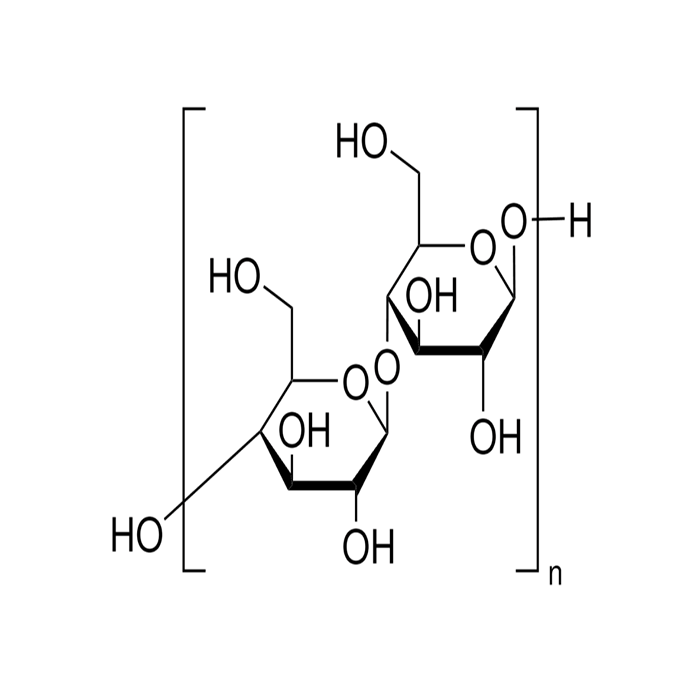
Microcrystalline cellulose (MCC) is a purified, partially depolymerized cellulose composed of linear β(1→4)-linked D-glucopyranose units.
Item-specific identifiers (from Product Data):
Structural features (general/literature):
2D structure description (general):
Distinguishing attributes (general):
While MCC is not a small-molecule reagent, it is a versatile substrate and scaffold for synthesis and materials fabrication.
Functional handles (literature):
Heterogeneous derivatization (literature):
Support/templating (literature):
Retrosynthetic value:
Processing:
Not applicable. This product is a polysaccharide material, not a biological targeting reagent. No antigen/epitope, clone, or isotype information applies.