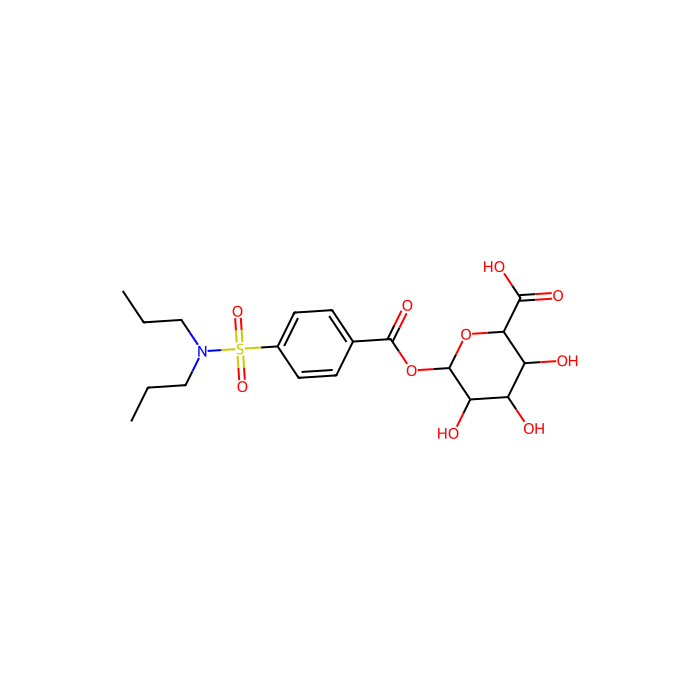
This compound belongs to the class of organic compounds known as o-glucuronides. These are glucuronides in which the aglycone is linked to the carbohydrate unit through an O-glycosidic bond.
External Descriptors
Not available
1. Djoumbou Feunang Y, Eisner R, Knox C, Chepelev L, Hastings J, Owen G, Fahy E, Steinbeck C, Subramanian S, Bolton E, Greiner R, and Wishart DS. ClassyFire: Automated Chemical Classification With A Comprehensive, Computable Taxonomy. Journal of Cheminformatics, 2016, 8:61.
Determine the necessary mass, volume, or concentration for preparing a solution.
Dilution Calculator
Determine the dilution needed to prepare a stock solution.
Reconstitution Calculator
Reviews
Customer Reviews
Application Protocols
No manufacturer-tested immunoassay protocols are provided for this item. The following general-use protocols are offered as literature-based guidance for metabolite standards (not product specifications):
LC–MS/MS Calibration Curve Preparation:
Prepare a 10–50 mM DMSO stock. Serially dilute into 50:50 ACN:water containing 0.1% formic acid or 5 mM ammonium formate to prepare working solutions.
Spike into matrix or surrogate matrix to achieve required calibration levels; keep samples on ice and analyze within a working day.
Use chilled autosampler (4–8 °C). Monitor MRM transitions for the glucuronide and check for isomeric peaks.
Enzymatic Stability Assay (buffered solution):
Incubate a known concentration in phosphate or HEPES buffer (pH 7.0) at 37 °C with and without β-glucuronidase/esterase inhibitors.
Sample at defined intervals; quench with cold ACN (3–4× volume). Centrifuge and analyze supernatant by LC–MS.
Transport Assay Spiking:
Prepare DMSO stocks and dilute to ≤0.5% DMSO in assay buffer. Keep plates on ice until assay start, and process efflux/uptake samples rapidly.
Note: Optimize parameters for your instrumentation and matrices. Always validate accuracy, precision, recovery, and stability per your lab’s SOPs.
Biological Roles
General/literature context (no clinical claims):
Endogenous fate of xenobiotics: Probenecid Acyl β-D-Glucuronide is the glucuronide conjugate formed by UDP-glucuronosyltransferase (UGT)-mediated metabolism of probenecid, increasing polarity to facilitate renal and biliary excretion.
Conjugation chemistry: Represents the acyl glucuronide class, where a carboxylic acid-containing drug is transformed into an ester-type glucuronide at the anomeric position of β-D-glucuronic acid.
Isomerization: Acyl glucuronides can undergo intramolecular acyl migration across the sugar hydroxyls (1→2/3/4), yielding positional isomers that may interconvert in biological matrices. This is important for accurate bioanalysis and interpretation of metabolic profiles.
Transport and disposition: Glucuronide conjugates often interact with solute carriers and efflux pumps (e.g., OATs, MRPs) influencing tissue distribution and excretion pathways (literature). Probenecid-derived glucuronide can serve as a probe in transporter research.
Hydrolytic lability: In plasma and tissues, esterases and glucuronidases may hydrolyze acyl glucuronides back to parent aglycone and glucuronic acid, with rates dependent on species, pH, and temperature (literature observations).
Use in research:
As a reference standard to map metabolic pathways of probenecid in microsomes, hepatocytes, and in excreta.
To assess enzyme/transporter selectivity and to develop robust bioanalytical assays that distinguish isomers and degradation products.
Buffer Applications
This product is not a buffering reagent. However, buffer choice affects stability and analytics when working with acyl glucuronides.
Recommended working pH: Mildly acidic to neutral (pH ~5–7) to mitigate hydrolysis and acyl migration while maintaining solubility (literature guidance).
Common buffers for LC–MS: 5–20 mM ammonium formate or acetate at pH 5.0–6.5 (volatile, MS-friendly). Keep autosampler at 4–8 °C.
Biochemical assays: Phosphate or HEPES at pH 7.0–7.4 for transporter/enzyme studies; prepare fresh solutions on ice and minimize incubation times where stability is critical.
Ionic strength: Use the lowest ionic strength consistent with assay performance to reduce ion suppression and limit salt loads on MS sources.
Recipes/amounts: Item-specific buffer recipes are not applicable; tailor to your assay. Always verify that buffer components do not catalyze ester hydrolysis and that pH is controlled tightly during experiments.
Green Alternatives
As a defined metabolite standard, Probenecid Acyl β-D-Glucuronide has no direct “green substitute.” However, greener practices can be applied to its preparation and use.
Greener handling and method choices (general guidance):
Prefer aqueous/ACN mobile phases with volatile buffers (ammonium acetate/formate) over non-volatile salts for LC–MS to reduce waste hazards and facilitate solvent recycling.
Minimize organic solvent volumes in sample preparation by using microextraction or dilute-and-shoot strategies where matrix allows.
Choose ACN over MeOH when it improves efficiency (shorter runs = less solvent), or vice versa if MeOH provides comparable performance with lower toxicity in your lab context.
Cold autosamplers reduce degradation, cutting the need for repeat injections and re-preparation of standards.
Synthesis route considerations (if preparing in-house; literature context):
Enzymatic glucuronidation using UDPGA/UGT enzymes in aqueous systems can be a greener alternative to multi-step chemical glycosylation, avoiding protecting groups and chlorinated solvents.
If chemical synthesis is required, employ catalytic glycosylation strategies and minimize hazardous promoters, and use safer solvents (e.g., 2-MeTHF, CPME) where compatible.
Reference standard: Utilized in pharmaceutical R&D and quality labs as a primary or secondary standard to support metabolism studies of probenecid, including metabolite identification, stability-indicating methods, and impurity profiling.
Bioanalytical method validation: Employed for calibration curves, QC samples, and matrix spike/recovery experiments in LC–MS/MS methods quantifying probenecid and its glucuronide metabolite(s) in biological matrices.
In vitro ADME studies: Used to evaluate glucuronidation pathways, transport, and hydrolysis under controlled conditions to inform development of analytical procedures.
Pharmacopeial status, excipient role, or compendial references for this specific metabolite: Not specified for this item; refer to internal method files and CoA. Any use in regulated environments should be supported by appropriate characterization data (identity, purity, stability) for the specific lot.
Physical Properties
Item-specific numeric specifications (BP, MP, density, refractive index, UV cutoff, etc.): Not specified for this item; refer to CoA/Spec Sheet.
General/literature-based characteristics for acyl β-D-glucuronides and this class of metabolite (for context; not product specifications):
Physical state: Typically isolated as a solid or as lyophilized/amorphous material; strongly hydrophilic due to glucuronic acid (literature, glucuronide conjugates).
Solubility: High aqueous solubility at neutral to basic pH due to the uronate carboxylate; often DMSO-miscible for stock solutions (literature). Solubility can decrease under strongly acidic conditions where the uronic acid is protonated and the ester becomes prone to hydrolysis.
pKa (uronic acid): Carboxylic acid pKa typically ~3.0–3.5 for glucuronic acid derivatives (literature, typical values). The aglycone acidic group is masked as an ester in the acyl glucuronide.
LogP/LogD: Strongly shifted toward hydrophilicity versus the parent aglycone; LogD7.4 is typically negative to low positive for acyl glucuronides (literature tendencies).
Stability: Acyl glucuronides undergo pH- and temperature-dependent hydrolysis and acyl migration (1→2/3/4 positional isomers on the sugar) and can form minor anhydro species under dehydrating conditions (literature). These processes are minimized at low temperature and mildly acidic to neutral pH.
Note: For quantitative property values specific to this lot/item, please consult the CoA/Spec Sheet.
Quality & Grades
Grade/Purity: Not specified for this item; refer to CoA/Spec Sheet.
Appearance: Not specified for this item; refer to CoA/Spec Sheet.
How to interpret grades for this compound class (general guidance):
Analytical reference/standard grade (if applicable): Typically indicates high chemical purity, well-defined identity (NMR, HRMS), and minimal isomeric impurities—critical for quantitative bioanalytical assays (e.g., LC–MS/MS). For acyl glucuronides, acyl migration isomers may be controlled or reported.
Research grade: Suitable for discovery research, metabolism studies, qualitative identification, and transporter assays. Isomeric composition may be provided but not necessarily minimized.
Item-specific considerations for acyl β-D-glucuronides:
Isomer profile: Acyl migration (1→2/3/4) can occur; reputable lots will characterize or limit positional isomers. Review CoA chromatograms for isomer distribution.
Water content/peroxides/metals/UV cutoff: Not specified for this item; refer to CoA/Spec Sheet.
Stabilizers: Not specified for this item; refer to CoA/Spec Sheet. If present (e.g., formate buffers), they will be disclosed on the CoA as they can affect LC–MS response.
Recommendation: Match grade to intended use—calibration standards demand tighter purity/identity characterization than qualitative metabolism experiments. Always verify the CoA for your lot.
Reaction & Applications
This compound is primarily used as a research chemical standard and probe rather than a synthetic solvent or general reagent.
Research/literature applications:
Metabolite standard: Acts as a definitive LC–MS/MS or HPLC standard for identifying and quantifying the glucuronidation product of probenecid in in vitro and in vivo samples (bioanalytical method development, recovery, matrix effects, and stability studies).
Enzymology: Substrate/product in UGT-mediated glucuronidation studies (e.g., UGT1A and UGT2B isoforms). Facilitates determination of kinetic parameters (Km/Vmax) for probenecid glucuronidation and interconversion among acyl-migrated isomers (literature context).
Chemical stability probes: Model for acyl glucuronide rearrangement/hydrolysis kinetics across pH and temperature, informing sample handling protocols.
Transport assays: Tool compound for evaluating glucuronide transport via OAT/OATP/MRP families in membrane vesicles or cell systems (literature usage), without implying any therapeutic effect.
Practical tips:
Minimize time in aqueous/basic media; keep at low temperature to limit acyl migration and hydrolysis.
For LC–MS: Use mild pH (≈5–6) volatile buffers and chilled autosampler. Track potential 1→2/3/4 migration isomers; consider chromatographic resolution or MRM transitions specific to positional isomers.
Validate recovery from protein precipitation/solid-phase extraction (SPE) as acyl glucuronides can exhibit variable retention on mixed-mode sorbents.
Manufacturer Applications: Not provided in Product Data; the above expands on common literature uses for acyl glucuronide standards.
Reaction Conditions
Not a general reagent for synthetic transformations; however, handling conditions critically impact integrity in analytical and biochemical workflows (literature guidance):
Solution preparation: Dissolve in cold anhydrous DMSO to make concentrated stocks (e.g., 10–100 mM), then dilute into chilled aqueous buffers immediately before use. Prepare fresh daily working solutions.
pH effects: Hydrolysis increases at pH >7.5; acyl migration is pronounced in neutral to basic media. Mildly acidic conditions (pH 5–6) often balance stability and chromatographic performance.
Temperature: Keep samples at 0–8 °C for short-term handling; store at −20 °C or lower. Autosamplers at 4–8 °C reduce degradation during LC runs.
Light/oxygen: No special photolability is generally reported for acyl glucuronides, but amber containers are prudent for long runs; oxygen has minimal direct effect compared to pH/temperature.
matrices: Protein binding and enzymatic hydrolysis (e.g., β-glucuronidase, esterases) in biological matrices can reduce recovery; add enzyme inhibitors as appropriate for stability studies and process samples promptly.
Workup/extraction: Protein precipitation with ACN/MeOH at low temperature is common; HILIC or anion-exchange SPE can improve cleanup. Validate recovery and carryover.
Expected yields/kinetics: No item-specific kinetic constants are provided. Literature indicates half-lives ranging from minutes to hours depending on pH/temperature; determine empirically for your conditions.
Safety & Handling
Regulatory/GHS details for this specific item:
Signal Word: Not specified for this item; refer to SDS.
GHS Classification: Not specified for this item; refer to SDS.
Pictograms: Not specified for this item; refer to SDS.
H-Statements: Not specified for this item; refer to SDS.
General safety considerations (literature/practice; not a substitute for SDS):
Expected hazards: Organic salts/esters of this class are generally regarded as laboratory chemicals; treat as potentially harmful if swallowed, inhaled, or in contact with skin/eyes. Avoid generation of dust/aerosols.
PPE: Use lab coat, safety glasses/goggles, and appropriate chemically resistant gloves (e.g., nitrile). Handle solutions in a fume hood to avoid inhalation of mists.
Incompatibilities: Strong acids/bases and elevated temperatures accelerate hydrolysis and acyl migration. Avoid prolonged exposure to heat, strong nucleophiles, and dehydrating agents.
Special risks for acyl glucuronides: They can isomerize (acyl migration) and hydrolyze, producing parent aglycone and positional isomers. Minimize time in aqueous/basic media and keep cold to limit rearrangement (literature guidance).
First aid (overview): In case of contact, rinse with water for at least 15 minutes. If inhaled, move to fresh air. If ingested, rinse mouth; do not induce vomiting; seek medical attention. Provide SDS to responders.
Always consult the product-specific SDS for authoritative hazard, exposure limits, and response procedures.
Solvent Selection
Given the hydrophilicity of β-D-glucuronides, solvent choice should prioritize stability and analytical compatibility.
Polarity/miscibility (general):
Water: Typically highly soluble at neutral to basic pH due to the uronate carboxylate (literature).
Aqueous buffers: Phosphate or ammonium bicarbonate (pH 6–8) commonly used for LC–MS sample prep; minimize residence time to limit hydrolysis/isomerization.
DMSO: Excellent for concentrated stocks (e.g., 10–100 mM) to be diluted into assay buffers immediately before use; reduces hydrolysis risk during storage.
Methanol/Acetonitrile: Miscible; useful for LC–MS mobile phases and precipitation workflows; avoid strong acid modifiers that promote hydrolysis.
When to choose what:
Long-term stock: Anhydrous DMSO at −20 °C (aliquoted) to minimize aqueous exposure.
Short-term working solutions: Neutral aqueous buffer on ice; prepare fresh daily.
LC–MS: Aqueous phase with volatile buffers (ammonium formate/acetate, pH ~5–6) and organic phase ACN/MeOH; keep autosampler chilled.
Comparisons:
Aqueous buffer vs. DMSO: Buffer enables biological assays; DMSO offers stability for storage. A compromise is DMSO stocks with on-ice buffer dilutions immediately before use.
Note: Item-specific solubility limits are not provided; confirm empirically or consult the CoA.
Storage & Reconstitution
Item-specific directions:
Storage Conditions: Store at −20 °C (as provided in Product Data).
Shipped In: Ice chest + ice pads (as provided).
General best practices for acyl β-D-glucuronides (literature/practice):
Long-term storage: Keep the solid tightly closed under dry, inert atmosphere at −20 °C or below. If supplied in solution, maintain frozen aliquots to avoid repeated freeze–thaw.
Reconstitution: Use cold anhydrous DMSO to prepare concentrated stocks. Alternatively, reconstitute in cold aqueous buffer at pH 5–6 immediately before use if DMSO is unsuitable; expect limited bench stability.
Aliquoting: Prepare single-use aliquots to minimize thaw cycles and headspace moisture. Label aliquots with concentration, solvent, and date.
Freeze–thaw: Avoid multiple cycles; thaw on ice and return unused portions to −20 °C promptly. Discard aliquots showing significant degradation or isomerization by LC–MS.
Light and pH: Protect from unnecessary heat and extremes of pH to preserve the acyl glucuronide ester linkage.
Stability/shelf life: Not specified for this item; refer to CoA/Spec Sheet and SDS for product-specific stability and handling notes.
Structure & Identity
Probenecid Acyl β-D-Glucuronide is the phase II glucuronide conjugate of the carboxylic acid drug probenecid, in which the aglycone’s acyl group is ester-linked to the anomeric hydroxyl of β-D-glucuronic acid (an “acyl glucuronide”).
Item identifiers (this product):
SKU: P343344
Product Name: Probenecid Acyl β-D-Glucuronide
CAS: 34017-15-7
PubChem CID: 182154
InChIKey: 38355 (as provided)
Molecular formula: Not specified for this item; refer to CoA/Spec Sheet.
Molecular weight: Not specified for this item; refer to CoA/Spec Sheet.
SMILES: Not specified for this item; refer to CoA/Spec Sheet.
Structural features (general chemistry/literature description):
Contains a β-D-glucuronide moiety (pyranose ring with carboxylate at C6) esterified at C1 to the aglycone’s carboxyl group (acyl O-glucuronide).
Functional groups: ester (acyl–O–glucuronide), multiple alcohols on the sugar (C2–C5), a uronic acid carboxylate, and the intact aromatic/sulfonamide-containing scaffold of probenecid as aglycone (general description from literature).
Stereochemistry: β-configuration at the anomeric center; D-series configuration on the glucuronic acid ring (literature). The aglycone is achiral; overall molecule has multiple stereocenters on the sugar.
2D description in words: a substituted aromatic probenecid core bearing a carboxyl-derived acyl group that forms an ester bond to the anomeric oxygen of a β-D-glucuronic acid ring; the sugar carries three secondary hydroxyls and one carboxylate side chain.
Synthetic Utility
This compound is not typically used as a building block for multistep synthesis due to its lability and high polarity. Its principal value is as a characterized metabolite standard.
Utility in chemical/analytical synthesis (general):
Benchmark for reaction monitoring: When synthesizing probenecid conjugates or performing enzymatic UGT reactions, this standard provides retention time, MS/MS fragmentation, and response-factor references.
Stability studies: Serves as a substrate to probe acyl migration kinetics, enabling comparison of buffer systems, temperatures, and additives that stabilize ester-type glucuronides.
Method development: Guides the selection of SPE sorbents (e.g., weak anion exchange, HILIC) and LC columns (HILIC vs. reversed-phase) by providing a representative acidic, highly polar analyte.
Transformations to avoid (practical note):
Strong acid/base hydrolysis (cleaves ester to regenerate probenecid and glucuronic acid).
Prolonged heating or dehydrating conditions (promotes isomerization/anhydride formation).
Target Specificity
Not an antibody, enzyme, or receptor ligand product with defined “target specificity.”
No antigen/epitope, species reactivity, clone, or isotype information applies to this chemical standard.
For biological studies, it functions as a chemical metabolite of probenecid and may interact with transporters in research systems; however, no product-specific target binding data are provided.
We use cookies to ensure the website functions properly and, where permitted, to improve your experience. You can manage your preferences at any time in Settings. Learn more in our Cookie Policy.
Shall we send you a message when we have discounts available?
Remind me later
Thank you! Please check your email inbox to confirm.
Products are supplied to verified businesses, institutions, and qualified professionals for research and development use only. Not for use in humans, animals, diagnosis, or therapy.