ester terminated for sensitive chromatographic and analytical workflows requiring minimal baseline interference.
🌡
Storage & shipping
Store at 2-8°C Ships Wet ice Check lot-specific COA for exact specifications.
📋
Quality documents
SDS, COA, datasheet, and spec sheet available for download. Lot-specific COA accessible via lot number lookup.
📚
Literature proof
Cited in 216 peer-reviewed publications across chromatography, organic synthesis, and cross-coupling reactions.
Overview
Application
Biodegradable, biocompatible, and bioresorbable polymer composed of ε-caprolactone. This semi-crystalline material has been used in the fabrication of research medical devices and research tissue engineering solutions, such as orthopedic or soft tissue fixation devices. Degradation of this material has been thoroughly studied and has been shown to be safely resorbed by the body after implantation. Modification of molecular weight and polymer composition allows for control of the degradation rate and mechanical stability of the polymer.
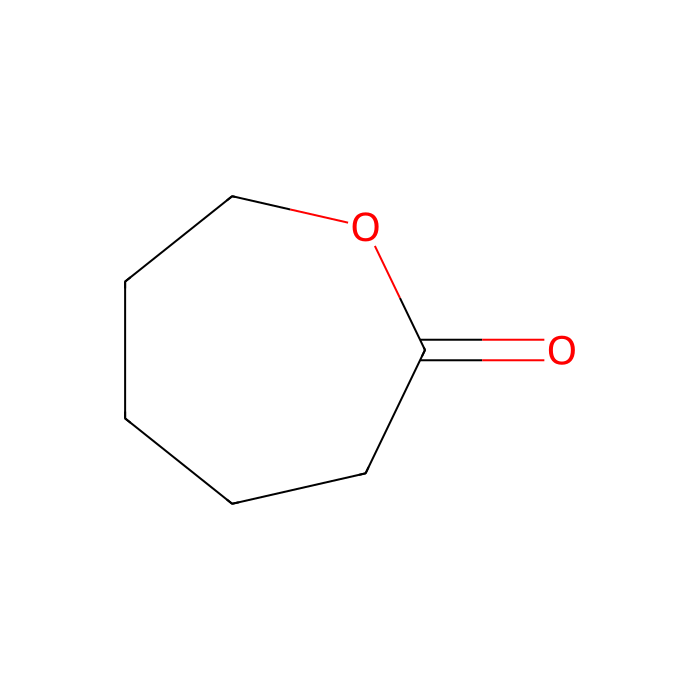
This compound belongs to the class of organic compounds known as lactones. These are cyclic esters of hydroxy carboxylic acids, containing a 1-oxacycloalkan-2-one structure, or analogues having unsaturation or heteroatoms replacing one or more carbon atoms of the ring.
External Descriptors
a small molecule
1. Djoumbou Feunang Y, Eisner R, Knox C, Chepelev L, Hastings J, Owen G, Fahy E, Steinbeck C, Subramanian S, Bolton E, Greiner R, and Wishart DS. ClassyFire: Automated Chemical Classification With A Comprehensive, Computable Taxonomy. Journal of Cheminformatics, 2016, 8:61.
Determine the necessary mass, volume, or concentration for preparing a solution.
Dilution Calculator
Determine the dilution needed to prepare a stock solution.
Reconstitution Calculator
Reviews
Customer Reviews
Application Protocols
No manufacturer-tested application protocols are provided for this SKU.
Typical research workflows include: solvent casting of films, electrospinning of fibers, melt extrusion/3D printing, and nanoparticle formation by emulsion–solvent evaporation. Parameters must be optimized for the specific molecular weight and end-group chemistry.
Consult the literature and adapt protocols after confirming Mn/Đ and solubility characteristics from the CoA/Spec Sheet.
Biological Roles
General/literature context (non-clinical)
Biodegradation: PCL’s aliphatic ester bonds undergo slow hydrolytic cleavage in aqueous environments. Enzymes such as lipases and esterases can catalyze surface erosion, especially in amorphous regions.
Structure–property–biodegradation relationships: Higher crystallinity and higher molecular weight slow water ingress and chain scission; smaller device dimensions and increased amorphous content accelerate mass loss. Copolymerization or blending (e.g., with PEG, PLA) modulates hydration and degradation kinetics.
Biointerface: PCL is hydrophobic with low surface energy; protein adsorption occurs readily, supporting subsequent cell attachment in vitro when combined with adsorbed ECM proteins. Surface oxidation, plasma treatment, or grafting hydrophilic chains improves wettability and biofunctionalization.
Diffusion characteristics: In polymer matrices, small neutral molecules diffuse through amorphous regions more readily than through crystalline lamellae; thus, crystallinity and processing history govern release kinetics for embedded probes or actives in research systems.
Thermal/enzymatic stability: Below its Tm (~60 °C), PCL maintains structural integrity in aqueous media for extended periods; elevated temperatures and alkaline pH accelerate degradation.
Note
The above describes general biological behavior of PCL materials. This SKU is designated for research use only (per Product Data) and is not intended for clinical or therapeutic applications.
Buffer Applications
Not typically applicable.
PCL is a hydrophobic, water-insoluble thermoplastic polymer and does not serve as a buffering agent.
For research workflows involving PCL in aqueous environments, focus instead on surface treatments, emulsification strategies, or dispersions stabilized by surfactants/polyelectrolytes rather than buffer formulation.
Green Alternatives
Perspective
PCL itself is a degradable aliphatic polyester derived from ε-caprolactone (which can be sourced from petrochemical routes; emerging bio-based routes exist). Greener choices often refer to solvent systems and co-polymers rather than replacing PCL outright.
Anisole: Solubility — moderate (hot); b.p. — 154 °C; Environmental score — better; slower evaporation aids film uniformity.
Polymer-level alternatives (context)
PLA, PBS, PBAT, and PHAs: Biodegradable polymers with differing Tg/Tm/mechanics. Selection depends on desired stiffness, degradation rate, and processing temperature. PCL offers uniquely low Tg (flexibility) and slow hydrolysis compared with PLA/PBS.
Practical tips
Start with EtOAc or 2-MeTHF for solution processing; increase temperature and time rather than defaulting to DCM/CHCl3. Validate solubility for your Mn and target solids content.
Implement solvent recovery and closed systems to reduce emissions regardless of solvent choice.
Pharmaceutical Uses
Research/formulation context (no therapeutic claims)
Role in experimental dosage forms: PCL is widely studied as a matrix polymer for controlled-release depots, films, and micro/nanoparticles prepared by solvent evaporation/extraction, melt extrusion, or hot-melt coating. The slow hydrolysis and low Tg enable flexible, long-term release matrices in research.
Processing methods: Emulsion–solvent evaporation (oil-in-water), microfluidics, electrospinning, and hot-melt extrusion are common lab-scale approaches. Solvent choice (e.g., EtOAc vs DCM) balances safety with processing performance.
Excipient status: No pharmacopeial grade or monograph is stated for this item. Where compendial compliance is required, material must be verified independently.
Compatibility: Generally compatible with many small molecules and hydrophobic biologics; interactions (plasticization, crystallinity suppression) can attenuate release rate. Moisture-sensitive actives benefit from melt processing without solvent; heat-sensitive actives may require low-T solvent casting.
Sterilization considerations: Gamma, e-beam, or EtO are used in research; each impacts Mw and mechanicals differently (irradiation can reduce Mn). Validate sterilization impact on your specific PCL grade.
Item-specific
This SKU is for research use only. No medical or clinical use is implied. Grade/purity and regulatory testing are not specified; consult CoA/Spec Sheet for details.
Physical Properties
Item-specific (from Product Data)
Appearance: Not specified for this item; refer to CoA/Spec Sheet.
General/literature values for PCL (not specifications)
Thermal transitions: Glass-transition temperature (Tg) typically ~ −60 to −54 °C (literature). Melting temperature (Tm) ~ 58–64 °C for common molar masses; can vary with molecular weight and thermal history.
Crystallinity: Semi-crystalline; typical degree of crystallinity 40–60% depending on Mw, cooling rate, and processing (literature).
Density: ~1.14–1.15 g/cm3 at 25 °C (literature).
Refractive index: ~1.46 at 20–25 °C (literature, depends on crystallinity).
Solubility: Insoluble in water. Soluble in many organic solvents including chloroform, dichloromethane, THF, toluene (hot), acetone (warm), tetrahydrofuran, and DMF (often on heating). Limited solubility in alcohols; insoluble in hexanes at ambient (literature).
Film formation: Excellent; forms clear, tough films by solvent casting or melt processing (literature).
Melt viscosity: Strongly Mw- and temperature-dependent; shear-thinning typical of linear thermoplastics (literature).
Hydrolytic stability: Ester linkages undergo slow hydrolysis at neutral pH; rate increases with heat, base, enzymes; decreases with higher crystallinity (literature).
Notes
Specific intrinsic viscosity, Mn/Mw, polydispersity (Đ), and end-group chemistry for this catalog item are not provided; consult the CoA/Spec Sheet for exact values if critical to your application.
Quality & Grades
Item-specific (from Product Data)
Grade/purity: Not specified for this item; refer to CoA/Spec Sheet.
Guidance on PCL quality parameters (general)
Molecular weight distribution: Reported as Mn, Mw, and dispersity (Đ). These parameters govern melt viscosity, mechanical properties, degradation rate, and solution processing behavior.
End-group chemistry: Determined by initiator/terminator used during ring-opening polymerization (ROP). Common end-groups: hydroxy-terminated (–OH/–OH), mono-functional (–R/–OH), or functionalized (e.g., –COOH, –NH2 after post-modification). End-groups impact reactivity for further coupling, grafting, or surface modification.
Residual monomer/catalyst: Trace ε-caprolactone or ROP catalyst (e.g., Sn(Oct)2) should be minimized for sensitive applications; levels are item-specific and reported on CoA when applicable.
Additives/stabilizers: Thermo-oxidative stabilizers or processing aids may be present in some commercial grades; none are specified for this item. If low additive content is required (e.g., for analytical or biointerface studies), verify via CoA.
Optical/UV purity: Not typically reported for bulk polymers, but relevant when PCL is used as a matrix in optical assays; consult absorbance data if needed.
Regulatory notes: For research use only (per Product Data). If regulatory or medical-grade specifications (e.g., ISO 10993-tested) are required, verify separately; this listing does not state such status.
Takeaway
Use the CoA/Spec Sheet to confirm Mn/Mw/Đ, end-groups, residuals, and any additive profile for this SKU before designing critical experiments.
Reaction & Applications
Applications (general; expand-on use-cases)
Materials science: Fabrication of flexible, semi-crystalline films, fibers, and 3D-printed objects; useful in blends and composites with inorganic fillers (e.g., CaCO3, hydroxyapatite) or other polymers (e.g., PLA, PEG) to tune mechanics and degradation.
Coatings/adhesives: Good adhesion to many substrates and slow hydrolysis make PCL useful as a degradable coating or binder in research.
Electrospinning: PCL solutions (often 8–18 wt% depending on Mw/solvent) yield uniform nanofibers; conductivity and viscosity controlled by solvent blend (e.g., THF/DMF).
Porous scaffolds: Solvent casting/particulate leaching and thermally induced phase separation (TIPS) produce controlled porosity.
Additive manufacturing: Melt extrusion at temperatures above Tm (commonly 70–120 °C depending on Mw) affords custom shapes; crystallization kinetics affect dimensional stability.
Chemical reactivity/functionalization (literature)
End-group transformations: Hydroxyl-terminated PCL can be converted to acrylates/methacrylates (for UV-curing), urethanes (via diisocyanates), or grafted with bioactive moieties using carbodiimide coupling (if carboxyl ends present).
Block/graft copolymers: ROP of ε-caprolactone from macroinitiators (e.g., PEG, polystyrene) creates amphiphiles or thermoplastic elastomers; catalysts include Sn(Oct)2 or organic catalysts (e.g., TBD) under dry conditions.
Crosslinking: UV or thermal curing of (meth)acrylated PCL macromers yields elastomeric networks with tunable modulus and degradation.
Degradation studies: Hydrolytic and enzymatic pathways enable controlled mass loss; rate influenced by crystallinity, Mn, and device geometry.
Note
Manufacturer applications were not provided for this SKU; the above are common research uses of PCL and should be validated for your specific material characteristics (Mn/Đ/end-groups).
Reaction Conditions
General conditions for chemistries involving PCL (literature; not item-specific specifications)
Ring-opening polymerization (to make PCL blocks from ε-caprolactone): Typical catalysts include stannous octoate [Sn(Oct)2] at 110–160 °C in bulk or solution; alcohol initiators define Mn. Organic catalysts (e.g., TBD) enable lower-temperature ROP under dry, inert conditions. Strict dryness inhibits transesterification.
End-group functionalization: Acrylation with acryloyl chloride or methacrylic anhydride in dry DCM/THF with base (e.g., triethylamine), 0–25 °C, followed by purification via precipitation (e.g., cold methanol).
Urethane formation: React HO–PCL–OH with diisocyanates (e.g., HDI, MDI) in dry solvent (DMF/THF) or melt at 50–90 °C with tin/biocatalysts; monitor NCO conversion by FTIR.
Crosslinking: UV curing of PCL-diacrylate with photoinitiator (e.g., 1–3 wt%); post-cure at 40–60 °C to complete conversion.
Hydrolysis/degradation studies: Incubate films or specimens in PBS or NaOH solutions (e.g., 0.01–0.1 M) at 25–60 °C; track mass loss/Mn by GPC and crystallinity by DSC.
Electrospinning: Solutions 8–18 wt% in THF/DMF or CHCl3/DMF; voltage 10–20 kV; tip-to-collector 10–20 cm; flow 0.2–1.0 mL/h. Optimize per Mn/solvent volatility.
Notes
Conditions vary with molecular weight, end-groups, and desired architecture. Always verify catalyst residuals and thermal limits for your specific material.
For this SKU, item-specific Mn/Đ/end-groups are not provided; adjust stoichiometry and processing accordingly.
Safety & Handling
Item-specific (from Product Data)
Storage conditions: Store at 2–8 °C.
Shipped in: Wet ice.
GHS classification, signal word, pictograms, H-statements: Not specified for this item; refer to SDS.
General safety guidance for PCL (literature/typical)
Hazard profile: Solid thermoplastic aliphatic polyester; generally regarded as low acute toxicity. Dust may cause mechanical irritation. Avoid inhalation of dust/fumes.
Thermal hazards: Overheating during melt processing can cause thermal decomposition releasing irritating vapors; process with adequate local exhaust. Avoid temperatures well above typical processing ranges unless under inert atmosphere.
Combustibility: Combustible polymer; keep away from ignition sources. Fine dusts may form explosive mixtures with air — implement dust controls and housekeeping.
Incompatibilities: Strong oxidizing agents; strong bases/acids accelerate hydrolysis. Moisture promotes hydrolysis over time, especially at elevated temperature.
PPE: Safety glasses, lab coat, suitable gloves (e.g., nitrile) when handling pellets/films or solutions. Use a dust mask/respirator if dust is generated; consult SDS for respirator selection.
First aid (overview): Eye/skin contact — rinse with water; remove contaminated clothing. Inhalation of dust/fumes — move to fresh air. Ingestion — rinse mouth. Seek medical attention if symptoms persist. Always defer to SDS.
Waste: Dispose according to institutional and local regulations for polymeric solid waste or organic solutions/contaminated solvents.
Solvent Selection
Applicability
PCL is a solid polymer processed via solvent casting/spinning or melt techniques. Solvent choice is critical for film formation, coatings, and composite fabrication.
General/literature guidance
Polarity/miscibility: Hydrophobic polyester; insoluble in water. Dissolution favored in moderately polar aprotic solvents and some chlorinated solvents.
Good solvents (ambient to warm): Chloroform, dichloromethane, THF, acetone (warm), ethyl acetate (warm), toluene (hot), DMF/DMAc (often with heat). Limited solubility in methanol/ethanol; generally insoluble in aliphatic hydrocarbons.
Green(er) solvent options: Ethyl acetate, 2-MeTHF, anisole, cyclopentyl methyl ether (CPME) have shown utility for PCL dissolution or processing with heating and time; solubility may be lower than in chlorinated solvents.
Concentration/viscosity: Chain length governs solution viscosity; optimize wt% for casting or electrospinning (e.g., 5–20 wt% typical ranges; determine empirically for your Mn and application).
Additives/co-solvents: Small amounts of DMSO or DMF can increase dielectric constant for blending with polar fillers; balance against potential polymer swelling and residuals.
Drying: Residual solvent removal requires adequate time/vacuum; elevated temperature below Tm (e.g., 30–40 °C) assists without melting morphology.
When to choose PCL-compatible solvents vs alternatives
Choose THF/EtOAc/2-MeTHF for greener profiles and rapid evaporation; use DCM/CHCl3 for maximum solubility and fast film formation when allowed. For high-boiling uniformity, use toluene or anisole with controlled evaporation.
Storage & Reconstitution
Item-specific (from Product Data)
Storage: Store at 2–8 °C.
Shipping: Shipped on wet ice.
General handling guidance for PCL (literature/practice)
Protect from heat, light, and moisture to minimize hydrolysis and oxidative degradation. Keep container tightly closed. For extended storage, consider desiccation and inert atmosphere.
Before use: Allow to equilibrate to room temperature in a sealed container to avoid condensation. Dry under vacuum at 25–40 °C if low moisture content is critical (e.g., for ROP or precise melt rheology).
Reconstitution/dissolution: Add PCL gradually to a compatible solvent (e.g., THF, ethyl acetate warm, chloroform, DCM) with stirring. Mild heating (30–50 °C) accelerates dissolution; avoid exceeding temperatures that could initiate degradation.
Filtration/casting: Filter solutions if particulates are undesired. For films, cast onto clean substrates and evaporate solvent under controlled conditions, then post-dry under vacuum to reduce residual solvent.
Freeze–thaw: Not applicable to solid polymers; however, avoid repeated thermal cycling near/above Tm which may change crystallinity and properties.
Notes
Appearance, molecular weight, and end-group details are not specified for this item; refer to CoA/Spec Sheet for any additional handling instructions specific to this lot.
Structure & Identity
Item-specific (from Product Data)
Product name: Resomer® C 209, Poly(caprolactone) (PCL)
CAS: 24980-41-4 (polymer)
CID: 10401
InChIKey: 272436 (note: polymers do not have a unique InChIKey; provided key may refer to related structure)
SMILES: Not specified for this item; refer to CoA/Spec Sheet.
Molecular formula: Not specified for this item; refer to CoA/Spec Sheet.
Molecular weight: Not specified for this item; refer to CoA/Spec Sheet.
General/literature description
Polymer type: Aliphatic polyester derived from ε-caprolactone. Repeat unit is –[O–(CH2)5–C(=O)]–.
Repeat-unit formula (literature): C6H10O2 (per repeat); overall polymer (C6H10O2)n.
Architecture: Typically linear thermoplastic; head-to-tail chain growth from ring-opening polymerization (ROP) of ε-caprolactone.
Functional groups: Ester linkages along the backbone; end-groups depend on initiator (e.g., –OH/–H, –OH/–CO2R, –NH2 after post-modification) — item-specific end-groups not provided.
Stereochemistry: ε-Caprolactone polymerization yields an atactic aliphatic polyester (no main-chain stereocenters in the repeat unit).
2D description in words: A repeating six-methylene segment interrupted by an ester linkage, creating a flexible hydrophobic chain with periodically spaced carbonyls; partial crystallinity arises from methylene packing between carbonyls.
Synthetic Utility
Perspective
As a polymeric building block, PCL provides ester functionality along the backbone and tunable end groups, enabling diverse chemistries for advanced materials.
Key transformations (literature)
End-group derivatization: Convert HO–PCL–OH or HO–PCL–R to acrylate/methacrylate macromonomers for photopolymerization; to isocyanate-terminated prepolymers for polyurethane elastomers; or to NHS esters for bioconjugation.
Block copolymer synthesis: Use PCL as a block in amphiphiles (e.g., PEG-b-PCL, PS-b-PCL) or thermoplastic elastomers. ROP from macroinitiators under Sn(Oct)2, organic catalysts (TBD/DBU), or rare-earth catalysts yields controlled architectures.
Grafting-from strategies: Surface-initiated ROP on particles/fibers creates PCL brushes improving compatibility or barrier properties.
Crosslinkable networks: PCL-diacrylates crosslink by UV or thermal radical cure to form elastomeric networks with programmable modulus and degradation.
Reactive blending: Transesterification during melt blending with other polyesters (e.g., PLA) can occur under catalysis, generating copolyesters in situ; control catalysts and residence times to manage properties.
Utility highlights
Low Tg (flexibility), semi-crystallinity (strength), and slow hydrolysis make PCL a versatile segment for soft, degradable materials, compatibilizers, and binders.
Note
Exact Mn/Đ and end-groups for this SKU are not provided; reaction stoichiometry and conversion should be adapted after confirming via CoA.
Target Specificity
Not applicable.
This product is a synthetic polymer (PCL), not a biological targeting reagent (e.g., antibody, enzyme, nucleic acid). No target/epitope specificity is relevant.
Frequently Asked Questions
How should this product be stored?
Store at 2–8 °C. Refrigerated storage is required to maintain the specified shelf life.
How is this product shipped?
This product ships chilled on wet ice. Unpack on arrival and transfer it to the storage condition stated above.
What are the CAS number, molecular formula and molecular weight?
The CAS Number is 24980-41-4, the molecular formula is (C6H10O2)n. InChIKey PAPBSGBWRJIAAV-UHFFFAOYSA-N.
What documentation is provided?
Available product documentation, including Certificates of Analysis (COA), Safety Data Sheets (SDS), and specification sheets, is shown in the product document area. Document availability and access follow the current site policy.
We use cookies to ensure the website functions properly and, where permitted, to improve your experience. You can manage your preferences at any time in Settings. Learn more in our Cookie Policy.
Shall we send you a message when we have discounts available?
Remind me later
Thank you! Please check your email inbox to confirm.
Products are supplied to verified businesses, institutions, and qualified professionals for research and development use only. Not for use in humans, animals, diagnosis, or therapy.

 D2609372