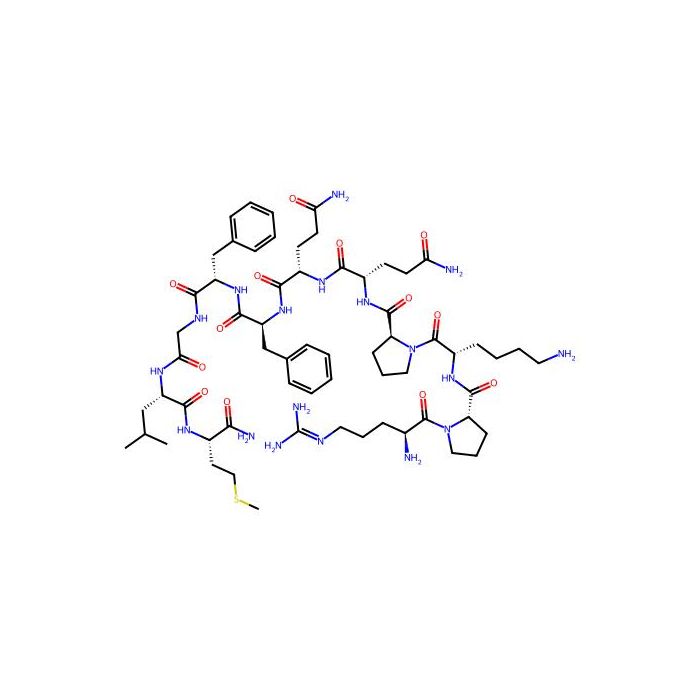
Substance P TFA - ≥99% , CAS No.148470-19-3

CAS: 148470-19-3 Cat. No.: S651155 Formula: C63H98N18O13S Molecular Weight: 1347.6 PubChem CID: 36511
AVAILABLE TO ORDER
GRADE & PURITY ≥99%
Synonyms
Substance p (1-11)|Substanz-P|[125I]SP (human, mouse, rat)|Neurokinin P TFA|Arg-Pro-Lys-Pro-Gln-Gln-Phe-Phe-Gly-Leu-Met-NH2.(Substance P)|Neurokinin-1|Arg-Pro-Lys-Pro-Gln-Gln-Phe-Phe-Gly-Leu-Met-NH2|substance-P|[3H]SP (human, mouse, rat)|Substance P (Arg-Pro-Lys-Pro-Gln-Gln-Phe-Phe-Gly-Leu-MetNH2)|Arg-Pro-Lys-Pro-Gln-Gln-Phe-Phe-Gly-Leu-Met NH2|H-Arg-Pro-Lys-Pro-Gln-Gln-Phe-D-Phe-Gly-Leu-Met-NH2|tachykinin substance P (SP)|Sh-oligopeptide-73|Neuropeptide sp-1|ArgProLysProGlnGlnPhePheGlyLeuMet|H-Arg-Pro-Lys-Pro-Gln-Gln-Phe-Phe-Gly-Leu-Met-NH2|RPKPQQFFGLM (modifications: C-terminal amide)|[3H]-substance P|Arg-Pro-Lys-Pro-Gln-Gln-Phe-Phe-Gly-Leu-Met-NH2(substance P)|(SP)Arg-Pro-Lys-Pro-Gln-Gln-Phe-Phe-Gly-Leu-Met-NH2|Arg-Pro-Lys-Pro-Gln-Gln-Phe-Phe-Gly-Leu-Met-amine|Neurokinin P|[125I]-substance P|H-Arg-Pro-Lys-Pro-Gln-Gln-Phe-Phe-Gly-Leu-Met-NH2(Substance P)|Substance P
Storage
Argon charged,Desiccated,Store at -80°C
Shipped In
Dry ice packs + Cold packs
★
Size
USA
Germany (EU)*
Price
Qty
1mg
S651155-1mg
Made to order · 8–12 wks
$100.90
5mg
S651155-5mg
Made to order · 8–12 wks
$220.90
10mg
S651155-10mg
Made to order · 8–12 wks
$400.90
25mg
S651155-25mg
Made to order · 8–12 wks
$700.90
Enter a quantity for the sizes you want to add.

Overview

Substance P TFA (Neurokinin P TFA) is a neuropeptide, acting as a neurotransmitter and as a neuromodulator in the CNS. The endogenous receptor for substance P is neurokinin 1 receptor ( NK1-receptor , NK1R )

In Vitro

The neuropeptide substance P (SP) that are mediated by the neurokinin 1 receptor (NK1-R) desensitize and resensitize, which may be associated with NK1-R endocytosis and recycling. SP and the NK1-R are internalized into the same clathrin immunoreactive vesicles, and then sorted into different compartments. SP is intact at the cell surface and in early endosomes, but slowly degraded in perinuclear vesicles. SP induces clathrin-dependent internalization of the NK1-R. The SP/NK1-R complex dissociates in acidified endosomes. SP is degraded, whereas the NK1-R recycles to the cell surface. SP induces internalization of the NK1-R both in transfected epithelial cells. MCE has not independently confirmed the accuracy of these methods. They are for reference only.

Form:Solid

IC50& Target:NK1 Human Endogenous Metabolite

Specifications

Synonyms
Substance p (1-11) | Substanz-P | [125I]SP (human, mouse, rat) | Neurokinin P TFA | Arg-Pro-Lys-Pro-Gln-Gln-Phe-Phe-Gly-Leu-Met-NH2.(Substance P) | Neurokinin-1 | Arg-Pro-Lys-Pro-Gln-Gln-Phe-Phe-Gly-Leu-Met-NH2 | substance-P | [3H]SP (human, mouse, rat) | Substance P (Arg-Pro-Lys-Pro-Gln-Gln-Phe-Phe-Gly-Leu-MetNH2) | Arg-Pro-Lys-Pro-Gln-G Show more
Specifications & Purity
≥99%
Biochemical and Physiological Mechanisms
Substance P TFA (Neurokinin P TFA) is a neuropeptide, acting as a neurotransmitter and as a neuromodulator in the CNS. The endogenous receptor for substance P is neurokinin 1 receptor ( NK1-receptor , NK1R ).
Storage
Argon charged,Desiccated,Store at -80°C
Shipped In
Dry ice packs + Cold packs
This product requires cold chain shipping. Ground and other economy services are not available.
Purity
≥99%
Names and Identifiers
Canonical Smiles
CC(C)CC(C(=O)NC(CCSC)C(=O)N)NC(=O)CNC(=O)C(CC1=CC=CC=C1)NC(=O)C(CC2=CC=CC=C2)NC(=O)C(CCC(=O)N)NC(=O)C(CCC(=O)N)NC(=O)C3CCCN3C(=O)C(CCCCN)NC(=O)C4CCCN4C(=O)C(CCCN=C(N)N)N
IUPAC Name
(2S)-2-[[(2S)-1-[(2S)-6-amino-2-[[(2S)-1-[(2S)-2-amino-5-(diaminomethylideneamino)pentanoyl]pyrrolidine-2-carbonyl]amino]hexanoyl]pyrrolidine-2-carbonyl]amino]-N-[(2S)-5-amino-1-[[(2S)-1-[[(2S)-1-[[2-[[(2S)-1-[[(2S)-1-amino-4-methylsulfanyl-1-oxobutan-2-yl]amino]-4-methyl-1-oxopentan-2-yl]amino]-2-oxoethyl]amino]-1-oxo-3-phenylpropan-2-yl]amino]-1-oxo-3-phenylpropan-2-yl]amino]-1,5-dioxopentan-2-yl]pentanediamide
InChIKey
ADNPLDHMAVUMIW-CUZNLEPHSA-N
INCHI
1S/C63H98N18O13S/c1-37(2)33-45(57(89)74-41(53(68)85)27-32-95-3)73-52(84)36-72-54(86)46(34-38-15-6-4-7-16-38)78-58(90)47(35-39-17-8-5-9-18-39)79-56(88)42(23-25-50(66)82)75-55(87)43(24-26-51(67)83)76-59(91)49-22-14-31-81(49)62(94)44(20-10-11-28-64)77-60(92)48-21-13-30-80(48)61(93)40(65)19-12-29-71-63(69)70/h4-9,15-18,37,40-49H,10-14,19-36,64-65H2,1-3H3,(H2,66,82)(H2,67,83)(H2,68,85)(H,72,86)(H,73,84)(H,74,89)(H,75,87)(H,76,91)(H,77,92)(H,78,90)(H,79,88)(H4,69,70,71)/t40-,41-,42-,43-,44-,45-,46-,47-,48-,49-/m0/s1
Isomeric SMILES
CC(C)C[C@@H](C(=O)N[C@@H](CCSC)C(=O)N)NC(=O)CNC(=O)[C@H](CC1=CC=CC=C1)NC(=O)[C@H](CC2=CC=CC=C2)NC(=O)[C@H](CCC(=O)N)NC(=O)[C@H](CCC(=O)N)NC(=O)[C@@H]3CCCN3C(=O)[C@H](CCCCN)NC(=O)[C@@H]4CCCN4C(=O)[C@H](CCCN=C(N)N)N
PubChem CID
36511
Molecular Weight
1347.6

Advanced Data

Taxonomic Classification

Taxonomy Tree

KingdomOrganic compounds
SuperclassOrganic Polymers
ClassPolypeptides
SubclassNot available
Intermediate Tree Nodes Not available
Direct ParentPolypeptides
Alternative Parents Peptides  Phenylalanine and derivatives  Glutamine and derivatives  Leucine and derivatives  Methionine and derivatives  N-acyl-alpha amino acids and derivatives  Proline and derivatives  Alpha amino acid amides  Amphetamines and derivatives  Pyrrolidinecarboxamides  N-acylpyrrolidines  N-acyl amines  Tertiary carboxylic acid amides  Primary carboxylic acid amides  Guanidines  Secondary carboxylic acid amides  Propargyl-type 1,3-dipolar organic compounds  Azacyclic compounds  Carboximidamides  Dialkylthioethers  Sulfenyl compounds  Carbonyl compounds  Organic oxides  Monoalkylamines  Hydrocarbon derivatives  Organopnictogen compounds  
Molecular FrameworkAromatic heteromonocyclic compounds
Substituents Polypeptide - Alpha peptide - Phenylalanine or derivatives - Glutamine or derivatives - Leucine or derivatives - Methionine or derivatives - Proline or derivatives - N-acyl-alpha amino acid or derivatives - Alpha-amino acid amide - N-substituted-alpha-amino acid - Alpha-amino acid or derivatives - Amphetamine or derivatives - Pyrrolidine-2-carboxamide - Pyrrolidine carboxylic acid or derivatives - N-acylpyrrolidine - Monocyclic benzene moiety - Fatty amide - N-acyl-amine - Benzenoid - Fatty acyl - Pyrrolidine - Tertiary carboxylic acid amide - Amino acid or derivatives - Carboxamide group - Guanidine - Primary carboxylic acid amide - Secondary carboxylic acid amide - Thioether - Carboximidamide - Sulfenyl compound - Carboxylic acid derivative - Azacycle - Organoheterocyclic compound - Dialkylthioether - Organic 1,3-dipolar compound - Propargyl-type 1,3-dipolar organic compound - Organopnictogen compound - Amine - Organic nitrogen compound - Organic oxygen compound - Primary aliphatic amine - Organic oxide - Hydrocarbon derivative - Organonitrogen compound - Organooxygen compound - Organosulfur compound - Carbonyl group - Primary amine - Aromatic heteromonocyclic compound
DescriptionThis compound belongs to the class of organic compounds known as polypeptides. These are peptides containing ten or more amino acid residues.
External Descriptors Not available
3D Structure
Interactive Chemical Structure Model


Associated Targets(Human)
OPRM1 Tclin Mu opioid receptor (19785 Activities)
Activity TypeRelationActivity valueUnitsAction TypeJournalPubMed IddoiAssay Aladdin ID
OPRD1 Tclin Delta opioid receptor (15096 Activities)
Activity TypeRelationActivity valueUnitsAction TypeJournalPubMed IddoiAssay Aladdin ID
TACR1 Tclin Neurokinin 1 receptor (6273 Activities)
Activity TypeRelationActivity valueUnitsAction TypeJournalPubMed IddoiAssay Aladdin ID
TACR2 Tchem Neurokinin 2 receptor (3341 Activities)
Activity TypeRelationActivity valueUnitsAction TypeJournalPubMed IddoiAssay Aladdin ID
TACR3 Tchem Neurokinin 3 receptor (1696 Activities)
Activity TypeRelationActivity valueUnitsAction TypeJournalPubMed IddoiAssay Aladdin ID
GHSR Tclin Ghrelin receptor (6229 Activities)
Activity TypeRelationActivity valueUnitsAction TypeJournalPubMed IddoiAssay Aladdin ID
MCF7 (126967 Activities)
Activity TypeRelationActivity valueUnitsAction TypeJournalPubMed IddoiAssay Aladdin ID
MDA-MB-231 (73002 Activities)
Activity TypeRelationActivity valueUnitsAction TypeJournalPubMed IddoiAssay Aladdin ID
POLK Tbio DNA polymerase kappa (8653 Activities)
Activity TypeRelationActivity valueUnitsAction TypeJournalPubMed IddoiAssay Aladdin ID
ADORA1 Tclin Adenosine receptor (26 Activities)
Activity TypeRelationActivity valueUnitsAction TypeJournalPubMed IddoiAssay Aladdin ID
Associated Targets(non-human)
Abcb1b P-glycoprotein 1 (174 Activities)
Activity TypeRelationActivity valueUnitsAction TypeJournalPubMed IddoiAssay Aladdin ID
Hdac6 Histone deacetylase 6 (222 Activities)
Activity TypeRelationActivity valueUnitsAction TypeJournalPubMed IddoiAssay Aladdin ID
Cavia porcellus (23802 Activities)
Activity TypeRelationActivity valueUnitsAction TypeJournalPubMed IddoiAssay Aladdin ID
Canis familiaris (36305 Activities)
Activity TypeRelationActivity valueUnitsAction TypeJournalPubMed IddoiAssay Aladdin ID
Oryctolagus cuniculus (11301 Activities)
Activity TypeRelationActivity valueUnitsAction TypeJournalPubMed IddoiAssay Aladdin ID
Mus musculus (284745 Activities)
Activity TypeRelationActivity valueUnitsAction TypeJournalPubMed IddoiAssay Aladdin ID
Rattus norvegicus (775804 Activities)
Activity TypeRelationActivity valueUnitsAction TypeJournalPubMed IddoiAssay Aladdin ID
CHO (4503 Activities)
Activity TypeRelationActivity valueUnitsAction TypeJournalPubMed IddoiAssay Aladdin ID
rep Replicase polyprotein 1ab (378 Activities)
Activity TypeRelationActivity valueUnitsAction TypeJournalPubMed IddoiAssay Aladdin ID
Plasma (328 Activities)
Activity TypeRelationActivity valueUnitsAction TypeJournalPubMed IddoiAssay Aladdin ID
Ileum (29 Activities)
Activity TypeRelationActivity valueUnitsAction TypeJournalPubMed IddoiAssay Aladdin ID
Mechanisms of Action
Certificates (CoA,COO,BSE/TSE and Analysis Chart)
C of A & Other Certificates(BSE/TSE, COO):
Analytical Chart:
Chemical and Physical Properties
SolubilityH2O : 100 mg/mL (68.42 mM; Need ultrasonic)
Molecular Weight1347.600 g/mol
XLogP3-2.300
Hydrogen Bond Donor Count15
Hydrogen Bond Acceptor Count17
Rotatable Bond Count42
Exact Mass1346.73 Da
Monoisotopic Mass1346.73 Da
Topological Polar Surface Area544.000 Ų
Heavy Atom Count95
Formal Charge0
Complexity2620.000
Isotope Atom Count0
Defined Atom Stereocenter Count10
Undefined Atom Stereocenter Count0
Defined Bond Stereocenter Count0
Undefined Bond Stereocenter Count0
The total count of all stereochemical bonds0
Covalently-Bonded Unit Count1
Documents & Articles
Citations of This Product
Solution Calculators
Reviews

Customer Reviews

Application Protocols

No vendor-validated protocols are provided for this SKU. The following general-purpose workflows (literature/practice) can be adapted:

  • GPCR activation assay (calcium mobilization):

    1. Prepare a 1 mM stock in water + 0.1% acetic acid or DMSO.
    2. Load cells expressing NK1 with a Ca2+ indicator dye per kit instructions.
    3. Dilute peptide into assay buffer to a concentration series (e.g., 0.1 nM–1 µM).
    4. Add to cells and record fluorescence; analyze concentration–response (EC50).
  • Radioligand displacement/binding (if applicable):

    1. Prepare serial dilutions in binding buffer containing carrier protein.
    2. Incubate with membranes/cells and NK1 radioligand; separate bound/free; quantify and fit Ki.
  • Stability check by HPLC: dissolve peptide, incubate under assay conditions, quench at set times, analyze by RP-HPLC to quantify intact peptide vs. oxidized/metabolized forms.

These are general, illustrative procedures. Optimize details (cell line, buffer, temperature, readout) for your laboratory setup. For lot-specific guidance (purity, peptide content), refer to the CoA/Spec Sheet.

Biological Roles

Substance P is a member of the tachykinin neuropeptide family with a conserved C-terminal motif essential for receptor activation. It acts as an endogenous agonist at the neurokinin-1 (NK1) receptor (literature), modulating neuronal excitability and diverse signaling pathways in peripheral and central systems.

Literature/general functions:

  • Neurotransmission and neuromodulation: released from primary afferent neurons; co-localizes with other transmitters and influences synaptic plasticity.
  • Signal transduction: NK1 receptor activation couples primarily to Gq/11, stimulating phospholipase C, IP3-mediated Ca2+ release, and PKC activation; downstream engagement of MAPK/ERK and other kinases is well-documented.
  • Secretory and contractile responses: in smooth muscle and glandular tissues, substance P elicits contractility and secretion in ex vivo models; used as a probe for receptor presence and pathway integrity.
  • Metabolism and degradation: rapidly cleaved by peptidases such as neutral endopeptidase (NEP, neprilysin) and angiotensin-converting enzyme; C-terminal amidation increases resistance to carboxypeptidases.
  • Structure–activity: the C-terminal sequence Phe–Phe–Gly–Leu–Met–NH2 is critical for NK1 affinity; N-terminal substitutions modulate efficacy and receptor selectivity across NK receptors.

The TFA salt does not alter the intrinsic biological role but may influence solubility and handling. For quantitative biology, correct for peptide content and counterion mass to ensure accurate molar dosing.

Buffer Applications

Substance P is not a buffer component and does not define a buffering system. However, its performance in assays is strongly dependent on buffer composition.

Practical guidance (literature/general):

  • Assay buffers: use physiological ionic strength (e.g., 1× PBS or HEPES-buffered saline, pH 7.2–7.4) for receptor studies. Add 0.01–0.1% carrier protein (BSA) or a nonionic surfactant (e.g., 0.01–0.05% polysorbate 20) to minimize adsorption losses at low concentrations.
  • pH considerations: prepare initial stocks in slightly acidic water (e.g., 0.1% acetic acid) for efficient dissolution, then dilute into neutral buffer; avoid strong bases that can promote peptide degradation.
  • Metal ions: divalent cations are generally compatible but validate in your specific system; trace metals plus oxygen can accelerate Met oxidation—use chelators only if compatible with the assay.
  • Filtration: if sterilization is required, use low-protein-binding 0.22 µm filters; pre-rinse with buffer containing carrier protein to reduce peptide loss.

These are general laboratory practices for peptide handling. For buffer recipes or special conditions, optimize empirically for your cell line or receptor preparation.

Green Alternatives

While the peptide itself is the functional reagent, environmental considerations often center on the counterion, solvents, and waste.

Counterion considerations (literature/general):

  • TFA vs acetate: TFA is persistent and contributes fluoride-containing waste. When feasible, exchanging TFA for acetate (via desalting on volatile acetate buffers) reduces halogenated waste. Tradeoff: acetate salts may alter solubility and HPLC retention; TFA often affords sharper RP-HPLC peaks.
  • Volatile buffers: using formate/acetate in purification facilitates lyophilization to non-halogenated counterions.

Solvent choices for handling:

  • Prefer water or aqueous buffers for dissolution and dilution. Minimize or avoid DMSO where possible, or use minimal DMSO stock volumes with rapid dilution to reduce organic solvent use.
  • If chromatographic repurification is needed, consider greener eluents (e.g., MeOH–water with 0.1% acetic/formic acid) over ACN–water with TFA, acknowledging possible changes in selectivity and peak shape.

Waste minimization:

  • Work at the highest practical stock concentration to reduce container count and rinses. Use low-retention plastics/glass to minimize losses and repeated washes.

Comparison snapshot (general):

  • TFA counterion: excellent chromatographic behavior; environmental persistence; halogenated waste.
  • Acetate/formate counterions: greener, volatile; may require optimization of solubility and methods.

Note: any counterion exchange or formulation change should be validated for your assay performance and peptide stability.

Pharmaceutical Uses

This product is supplied strictly for research use only. No clinical or therapeutic use is implied or permitted.

Formulation and manufacturing context (literature/general):

  • Excipient interactions: Substance P is a peptide active and not used as an excipient. Nonetheless, formulation studies in research often explore stabilizers (e.g., mannitol, trehalose) for lyophilized peptide storage and delivery in preclinical models.
  • Salt form considerations: TFA salts are common from RP-HPLC purification; for development work, counterion exchange (e.g., to acetate or chloride) may be evaluated to meet internal specifications on residual TFA.
  • Device/material compatibility: adsorption to glass and plastics can be significant at low concentrations; preconditioning with formulation excipients or selecting low-bind materials is standard practice in analytical development laboratories.
  • Analytical controls: RP-HPLC for purity/related substances, LC–MS for identity, and peptide content assays (amino acid analysis or quantitative NMR) are used to calibrate dose solutions. These are general research-development practices and are not item-specific.

No pharmacopeial status or monograph is provided for this SKU. Refer to the CoA/Spec Sheet for test results relevant to research formulation.

Physical Properties

Item-specific physicochemical specifications (mp, BP, density, exact TFA content, UV cutoff) are not provided for this SKU. Refer to the CoA/Spec Sheet for definitive values.

Literature/general properties for Substance P and similar TFA peptide salts:

  • Appearance: typically a white to off-white, amorphous, lyophilized solid (literature; not specified for this item).
  • Solubility: readily soluble in water and aqueous buffers; initial dissolution often benefits from slight acidification (e.g., 0.1% acetic acid or dilute HCl) to disrupt peptide–peptide interactions. Soluble in DMSO; limited solubility in alcohols and virtually insoluble in nonpolar solvents (literature/general guidance).
  • pI (calculated, free peptide; literature): high/basic due to Arg/Lys; reported in the ~10–11 range depending on algorithm and C-terminal amidation. Actual isoelectric behavior is influenced by TFA association and ionic strength.
  • UV absorbance (literature): strong at 257–262 nm and 280 nm due to phenylalanine residues; extinction coefficient depends on environment; not specified for this item.
  • Stability considerations: sensitive to oxidation at Met; minimize exposure to air, light, and elevated temperatures. Acidic conditions reduce aggregation, whereas high pH can promote deamidation/side reactions (literature/general).

Do not treat literature values as specifications. For chromatography, mass balance, and precise concentration work, use the item’s CoA for salt content (TFA equivalents) and peptide purity to calculate effective peptide mass.

Quality & Grades

Grade/purity for this SKU is not specified. Refer to the product CoA/Spec Sheet for actual peptide purity (e.g., % by analytical RP-HPLC), identity (MS), and residual solvents/reagents.

General notes on peptide quality metrics (literature/industry practice):

  • Purity description: peptides are commonly offered at >95%, >98%, or crude grades by analytical HPLC. Reported purity reflects UV area percent and does not account for counterion or water content. Minor impurities may include deletion sequences, oxidized species (Met(O)), or protecting-group remnants.
  • Identity: typically confirmed by ESI/LC–MS or MALDI-TOF showing monoisotopic/average mass consistent with the expected sequence and C-terminal amidation. For TFA salts, MS is reported for the free peptide; TFA content is measured separately (e.g., by ion chromatography or 19F NMR).
  • Counterion content: the number of TFA equivalents often correlates with basic residue count (e.g., Arg/Lys and N-terminus), but actual stoichiometry varies with purification and lyophilization conditions. Precise TFA content should be reported on the CoA for accurate molarity calculations.
  • Water content: lyophilized peptides may contain residual moisture; Karl Fischer values are item-specific. Not specified for this item; refer to CoA/Spec Sheet.
  • Stabilizers: none stated for this product. If present, stabilizers/excipients would be disclosed on the CoA.

Selection guidance: for receptor pharmacology or quantitative bioassays, choose lots with clearly defined purity, peptide content, and counterion/water percentages to ensure accurate dosing.

Reaction & Applications

This peptide is widely used as a selective agonist of the neurokinin-1 (NK1) receptor in pharmacological and biochemical studies. The TFA salt form provides convenient handling and dissolution following purification.

Representative applications (literature/general):

  • GPCR pharmacology: benchmark agonist in NK1 receptor binding assays, G-protein activation, calcium mobilization, and β-arrestin recruitment. Used to establish assay windows, EC50/IC50 determinations with antagonists, and receptor desensitization studies.
  • Neuroscience: probe of tachykinin signaling in neuronal and glial preparations; used to trigger neuropeptide release/processing studies and to validate NK1 receptor expression in tissues or heterologous systems.
  • Physiology/biochemistry: activates downstream pathways (e.g., PLC/IP3/Ca2+) enabling studies of kinase cascades and transcriptional responses; suitable as a positive control in substance P ELISA recovery and stability assessments.
  • Materials/surface science: adsorption studies on polymeric labware; model for peptide–surface interactions due to mixed basic/hydrophobic sequence.

Practical tips:

  • Prepare concentrated stocks under acidic aqueous conditions or in DMSO, then dilute into assay buffer. Include carrier protein or surfactant for sub-µM applications to minimize non-specific adsorption.
  • Protect from oxidation (Met) by sparging solutions with inert gas and adding minimal reducing agents where compatible. Avoid prolonged exposure to light/elevated temperatures.
  • For quantitative work, adjust dosing by peptide content (correcting for TFA/water per CoA) rather than gross mass to ensure accurate molarity.
Reaction Conditions

No item-specific reaction conditions are defined for this research peptide. The following are literature/general guidelines for typical manipulations:

Conjugation/labeling (general):

  • NHS ester coupling to N-terminus or Lys: 10–50 mM peptide in phosphate or bicarbonate buffer (pH 7.5–8.5), 1.1–2.0 eq NHS-activated label, 0–25°C, 0.5–2 h. Quench with primary amine or buffer exchange. Avoid prolonged basic pH to limit side reactions.
  • Isothiocyanate labels (e.g., FITC): pH 8–9, organic cosolvent (10–20% DMF/DMSO) as needed, protect from light; monitor by HPLC.
  • Maleimide–thiol chemistries are not directly applicable to native Substance P (no Cys); require introduction of a cysteine analog if thiol conjugation is desired.

Handling for bioassays (general):

  • Stock solutions: 0.1–1.0 mM in water with 0.1% acetic acid or in DMSO. Dilute into assay buffer to nM–µM ranges immediately before use.
  • Temperature: prepare and store working solutions on ice when feasible; avoid >25°C for extended periods.
  • Oxidation control: degas buffers, sparge with N2/Ar, and add minimal antioxidants only if compatible with the readout.

Yields/time are application-dependent. Always verify extent of reaction/conjugation and peptide integrity by LC–MS and HPLC. These conditions are provided as general guidance and are not specifications for this SKU.

Safety & Handling

GHS classification, signal word, and H-statements are not specified for this item; consult the SDS for authoritative safety information. As a research peptide TFA salt, it is generally of low volatility but should be handled with standard laboratory precautions.

Practical safety guidance (general):

  • PPE: lab coat, safety glasses, and disposable nitrile gloves. Avoid creating dust/aerosols when handling the lyophilized powder. Use a fume hood during weighing/reconstitution to minimize inhalation exposure.
  • Sensitization: peptides can act as allergens in susceptible individuals; avoid skin contact and inhalation of powders.
  • Incompatibilities: avoid strong oxidizers (risk of Met oxidation) and prolonged exposure to basic solutions (possible backbone/side-chain modifications). Avoid metal catalysts in solution unless intended for a specific derivatization protocol.
  • First aid (overview): in case of skin or eye contact, rinse with plenty of water; if inhaled, move to fresh air; if ingested, rinse mouth and seek medical advice. Always follow SDS instructions.
  • TFA counterions: while incorporated as a salt in the solid, free TFA is corrosive; ensure neutral pH during handling and dispose of TFA-containing wastes according to institutional procedures.
  • Decomposition hazards: peptide may degrade under heat, light, or repeated freeze–thaw; oxidation of Met to sulfoxide is a known pathway. Work under inert atmosphere when possible.

Research use only: not for human or veterinary use.

Solvent Selection

As a cationic, amphipathic undecapeptide, Substance P (TFA) dissolves best in polar protic media or DMSO. Solvent choice affects aggregation, adsorption losses, and chemical stability.

General solvent guidance (literature/practice):

  • Aqueous media: initial dissolution in water acidified with 0.1% acetic acid or 0.1% TFA helps disrupt intermolecular interactions. After complete dissolution, adjust to buffer conditions as needed. For cell-based assays, avoid residual strong acids by diluting/neutralizing.
  • DMSO: high solvating power for hydrophobic motifs; prepare a small, concentrated DMSO stock, then dilute into buffered saline containing carrier protein (e.g., 0.1% BSA) to minimize adsorption to plastics. Keep final DMSO below assay tolerance.
  • Buffers: phosphate- or HEPES-buffered saline at pH 7.2–7.4 are commonly used after an acidic pre-dissolution step. Add 0.01–0.1% surfactant (e.g., polysorbate 20) or carrier protein to reduce adsorption for low-nanomolar work.
  • Alcohols: MeOH/EtOH have limited utility; prefer water/DMSO.

Comparison (literature/general):

  • Water (acidified): best for initial solubilization; may require subsequent neutralization.
  • DMSO: excellent solubilizer; watch for assay interference and ensure rapid dilution.
  • PBS/HEPES: suitable for working solutions after stock preparation; maintain near-neutral pH to preserve biological activity.

Note: exact solubility and compatibility can vary by lot and counterion content. Verify clarity and concentration empirically.

Storage & Reconstitution

Item-specific storage instructions (from Product Data):

  • Store at −80°C, desiccated, under argon (argon charged).
  • Shipped with dry ice packs + cold packs.

General reconstitution guidance (literature/practice):

  • Equilibrate the vial to room temperature in a desiccator before opening to avoid condensation. Briefly centrifuge to collect material.
  • Initial dissolution: add sterile water with 0.1% acetic acid to achieve a concentrated stock (e.g., 0.5–2 mM). Alternatively, dissolve in DMSO if required by the assay, then dilute into buffer immediately before use.
  • Aliquoting: divide into single-use portions in low-bind tubes to avoid repeated freeze–thaw cycles. Purge headspace with inert gas, if possible.
  • Storage of solutions: store aliquots at −80°C; avoid multiple freeze–thaw events. Short-term (hours–1 day) storage on ice/4°C is acceptable for working solutions; assess stability experimentally.
  • Light/oxidation protection: protect from light; minimize air exposure to reduce Met oxidation. Degas buffers and consider adding compatible antioxidants only if they do not interfere with assays.

Specifications such as exact solubility, peptide content, TFA equivalents, water content, and stabilizers are not specified for this item; refer to the CoA/Spec Sheet for lot-specific details to calculate accurate working concentrations.

Structure & Identity

Substance P (TFA salt) is an undecapeptide neuropeptide typically isolated and supplied as a trifluoroacetate counterion form following RP-HPLC purification. The peptide sequence (literature) is Arg–Pro–Lys–Pro–Gln–Gln–Phe–Phe–Gly–Leu–Met–NH2 (RPKPQQFFGLM-NH2).

  • SKU: S651155
  • CAS: 148470-19-3 (assigned to Substance P TFA in some catalogs; verify per CoA)
  • CID: 36511 (Substance P, free base; literature identifier)
  • InChIKey: Not specified for this item; refer to CoA/Spec Sheet.
  • SMILES: Not specified for this item; refer to CoA/Spec Sheet.
  • Molecular formula: Not specified for this item; refer to CoA/Spec Sheet.
    • Typical for free-base Substance P (literature): C63H98N18O13S; exact formula varies with salt form and TFA stoichiometry.
  • Molecular weight: Not specified for this item; refer to CoA/Spec Sheet.
    • Typical MW (literature, free-base): ~1347.64 g/mol; TFA salt increases apparent mass depending on number of TFA counterions.

Structural features (literature/general):

  • 11-mer peptide with an amidated C-terminus (–CONH2) and free N-terminal primary amine (unless further modified).
  • Basic residues: Arg (guanidinium) and Lys (ε-amine) commonly associated with TFA counterions; proline imino acid induces turns.
  • Hydrophobic core: Phe–Phe–Gly–Leu–Met; Met is oxidation-sensitive (to sulfoxide).
  • No disulfides or Cys residues; multiple potential sites for acylation or labeling at the N-terminus and Lys side chain.
  • 2D depiction (verbal): a linear peptide backbone with sidechains alternating above/below the plane; basic (Arg/Lys) and hydrophobic (Phe/Leu/Met) residues cluster toward the C-terminal segment typical for tachykinins.
Synthetic Utility

As an 11-residue peptide with a free N-terminus and one Lys side-chain amine (plus an amidated C-terminus), Substance P provides defined handles for chemical modification, probe conjugation, and structure–activity studies.

Utility in synthesis and derivatization (literature/general):

  • N-terminal acylation/labeling: install fluorophores (e.g., FITC via isothiocyanate), biotin, or affinity tags using NHS esters under mildly basic conditions; control stoichiometry to avoid Lys modification when site-selectivity is desired (temporary protection or orthogonal strategies).
  • Lys ε-amine modification: targeted acylation or PEGylation to modulate solubility and pharmacokinetics in research models. Reaction selectivity managed via pH, protecting groups, or activated esters with controlled access.
  • Methionine caution: avoid strong oxidants during synthesis/handling; oxidation to Met(O) alters activity and chromatographic behavior.
  • Backbone analogs: alanine-scan libraries or D-amino-acid substitutions inform NK receptor SAR; C-terminal amidation is essential for activity (literature).
  • Solid-phase synthesis context: sequence is representative for Fmoc-SPPS workflows with double couplings on difficult steps (e.g., consecutive Gln/Gln, Phe/Phe) and careful final deprotection to limit side reactions.

For conjugation, purify products by RP-HPLC and confirm identity by LC–MS. Quantify degree of labeling via UV/Vis or MS. These practices are general and not specific to a tested lot.

Target Specificity

Not applicable to this product. This is a synthetic peptide reagent, not an antibody or targeted biologic with defined clone/isotype/species reactivity.

General literature context: Substance P is an endogenous agonist primarily for the neurokinin-1 (NK1) receptor, with lower affinity at NK2/NK3. However, no item-specific binding characterization or selectivity data are provided for this SKU. Consult primary literature for receptor pharmacology under your experimental conditions.

Frequently Asked Questions

What is the purity of this product?
This product is supplied at ≥99% purity (chemical assay). Lot-specific values are stated on the Certificate of Analysis.
How should this product be stored?
Store at ?80 °C, desiccated, under argon. It is supplied under an argon blanket; reseal under inert gas after each use.
How is this product shipped?
This product ships frozen with dry ice and cold packs. Unpack on arrival and transfer it to the storage condition stated above; handle dry ice with insulated gloves in a ventilated area.
What are the CAS number, molecular formula and molecular weight?
The CAS Number is 148470-19-3, the molecular formula is C63H98N18O13S, and the molecular weight is 1347.6 g/mol. InChIKey ADNPLDHMAVUMIW-CUZNLEPHSA-N.
What documentation is provided?
Available product documentation, including Certificates of Analysis (COA), Safety Data Sheets (SDS), and specification sheets, is shown in the product document area. Document availability and access follow the current site policy.

Shall we send you a message when we have discounts available?

Remind me later

Thank you! Please check your email inbox to confirm.

Oops! Notifications are disabled.