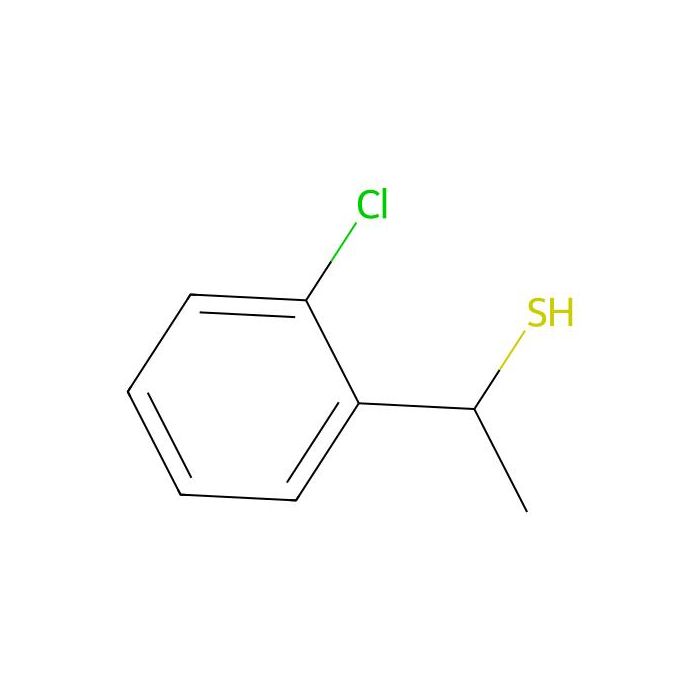
This compound belongs to the class of organic compounds known as chlorobenzenes. These are compounds containing one or more chlorine atoms attached to a benzene moiety.
External Descriptors
Not available
1. Djoumbou Feunang Y, Eisner R, Knox C, Chepelev L, Hastings J, Owen G, Fahy E, Steinbeck C, Subramanian S, Bolton E, Greiner R, and Wishart DS. ClassyFire: Automated Chemical Classification With A Comprehensive, Computable Taxonomy. Journal of Cheminformatics, 2016, 8:61.
Determine the necessary mass, volume, or concentration for preparing a solution.
Dilution Calculator
Determine the dilution needed to prepare a stock solution.
Reconstitution Calculator
Reviews
Customer Reviews
Application Protocols
Not applicable. No validated bioassay protocols (WB, IHC, IF, FC) are associated with this small-molecule reagent. For synthetic applications, refer to the Reaction Conditions and Synthetic Utility sections for general laboratory guidance.
Biological Roles
This product is a synthetic aryl alkanethiol not known as a natural metabolite. Item-specific biological data are not provided. The following notes are general thiol chemistry considerations in biochemical contexts (not specific to this compound):
Thiols (R–SH) are central to redox biology (e.g., cysteine residues, glutathione) where reversible oxidation to disulfides modulates protein function. The current compound is hydrophobic and not designed for biological systems.
Hydrophobic aryl thiols can interact non-specifically with membranes and proteins through hydrophobic and sulfur-based interactions; such effects are typically considered liabilities, not targeted features, in bioassays.
In biochemical conjugations, thiols are leveraged for Michael additions and disulfide exchange; however, the benzylic thiol here lacks water solubility and is generally unsuitable for aqueous bioconjugation without cosolvents or prior derivatization (e.g., maleimide-ready linkers).
Odor and potential cytotoxicity concerns dictate strict fume hood use and containment if explored in cell-free assays. Any bioassay use should be preceded by rigorous solubility and compatibility screening in appropriate organic cosolvents.
Research use only: No medical, diagnostic, or therapeutic use is intended or implied.
Buffer Applications
Not typically applicable. 1-(2-Chlorophenyl)ethane-1-thiol is a hydrophobic organic thiol with very low water solubility and no defined buffering range. It is not used to prepare laboratory buffer systems. For aqueous-phase chemistry with thiols, consider water-soluble thiols (e.g., cysteine, mercaptoethanesulfonate) or perform reactions in mixed aqueous–organic media with suitable buffers.
Green Alternatives
While 1-(2-chlorophenyl)ethane-1-thiol is often synthetically efficient, thiols carry EHS and odor burdens. Consider greener strategies when possible (literature guidance):
Masked thiols to reduce odor/exposure
Thioacetates (R–S–C(O)Me) or S-alkyl xanthates can be handled with diminished odor and unveiled under mild basic or radical conditions. Tradeoff: extra step and byproduct management (AcOH/MeOAc or CS-containing wastes).
Alternative coupling logic
Use disulfides (R–S–S–R) as less-volatile precursors; reductive activation (e.g., with PPh3) can release thiol equivalents in situ.
Deploy sulfenylating reagents (e.g., N-sulfenylsuccinimides) to transfer the R–S– group without handling free thiol; synthesis of these reagents may still require thiol.
Solvent choices
Prefer 2-MeTHF, CPME, EtOAc, or toluene over DMF/DCM when performance allows; these improve sustainability and workup.
Process containment
Closed systems with carbon scrubbing dramatically reduce environmental odor impact and worker exposure — often the largest ESG win when thiols are unavoidable.
Comparison highlights (qualitative)
Free thiol: highest reactivity and step economy; highest odor/EHS risk.
Thioacetate/disulfide: lower odor and volatility; requires activation step.
Sulfenylating reagents: efficient transfer; may be substrate-limited and require custom prep.
Choice depends on scale, regulatory constraints, and tolerance for additional steps versus odor/ESG impact.
Pharmaceutical Uses
No pharmacopeial status or excipient role is provided in the Product Data. This compound is offered for research use only.
General, non-clinical context (not item-specific claims)
Aryl alkanethiols such as this may serve as sulfur-containing intermediates for API development in discovery chemistry, enabling rapid SAR by installing thioether motifs or serving as handles for oxidation-state and polarity tuning.
In process development, masked derivatives (thioacetates/disulfides) are sometimes preferred to control odor and worker exposure, with unmasking late in the sequence.
The ortho-chloro substituent can be carried through routes where halogen is a vector for subsequent cross-coupling, or retained to adjust lipophilicity and metabolic stability of analogs.
Regulatory note: Any use in human or veterinary products requires appropriate qualification and compliance; this product is not supplied for clinical or GMP applications.
Physical Properties
Item-specific physical specifications (BP, MP, density, refractive index, UV cutoff, impurity limits) are not provided in the Product Data for this SKU. For exact release specifications, please consult the CoA/Specification Sheet for your lot.
General/literature expectations for closely related aryl alkanethiols (for planning purposes only; not item-specific specs):
Physical state: typically colorless to pale yellow liquids with strong thiol odor (literature, class behavior)
Boiling point: many C6–C8 aryl/benzylic thiols boil in the ~200–250 °C range at 1 atm; reduced under vacuum (literature ranges for analogs)
Melting point: often liquid at room temperature (literature trends for similar structures)
Density: commonly around 1.1–1.2 g/mL at 20–25 °C for chlorinated aryl thiols (literature analogs)
pKa (thiol): alkanethiols typically pKa ~10–11; benzylic/aryl influence may slightly lower (literature)
LogP: aryl thiols are generally hydrophobic (logP >2; literature class behavior)
Solubility: low in water; miscible with common organic solvents (ethers, alcohols, chlorinated solvents, hydrocarbons) (literature)
Notes
The ortho-chloro substituent and benzylic thiol increase hydrophobicity and odor intensity compared with aliphatic thiols.
Because this compound is prone to air oxidation to the disulfide, measured properties can vary if samples are not fully reduced.
Always verify critical parameters experimentally under your conditions.
Quality & Grades
Item-specific grade/purity: Not specified for this item; refer to CoA/Spec Sheet.
Appearance: Not specified for this item; refer to CoA/Spec Sheet.
Guidance on grades (general; not item-specific)
Research grade indicates suitability for synthetic and analytical R&D. Where HPLC or GC applications are intended, low-UV/low-residue solvent compatibility and impurity control (including disulfide content) may be critical; consult the CoA for assay, GC purity, and residual solvent data.
For odor-critical facilities, materials may be offered in odor-barrier packaging; if not stated, consider secondary containment.
Stabilizers/inhibitors: No stabilizer is listed in the Product Data. Some thiols are shipped air-tight without stabilizers; if your method is oxidation-sensitive, consider inert-atmosphere storage.
Quality considerations specific to benzylic thiols
Disulfide formation (R–S–S–R) is the most common impurity upon storage; request recent CoA or test with HPLC/GC/MS prior to use in sensitive reactions.
Water content can impact base-mediated deprotonation and nucleophilicity; Karl Fischer data, if required, should be verified per lot.
Residual odorant impurities can persist at trace levels; closed-transfer techniques limit cross-contamination in analytical suites.
Reaction & Applications
This benzylic thiol serves as a versatile sulfur nucleophile and radical donor in synthesis, useful for installing a 2-chlorophenethylthio motif or leveraging thiol reactivity.
Key transformations (literature; general guidance)
S-Alkylation (RS− + R′–X → R–S–R′): Generate the thiolate with K2CO3, NaH, or tertiary amine bases in DMF/MeCN/acetone; excellent for forming thioethers and thioacetals.
Thiol–ene/thiol–yne additions: Radical-mediated anti-Markovnikov additions to alkenes/alkynes under AIBN or photoinitiation, often at rt–80 °C; oxygen exclusion improves selectivity.
Electrophilic sulfenylation: Iodine- or NBS-promoted transfer to electron-rich aromatics/heteroarenes via in situ disulfide/sulfenyl halide formation.
Oxidation state manipulations: Controlled oxidation to disulfides (I2, air/base, H2O2/cat.) or to sulfenic/sulfinic/sulfonic acids under stronger conditions.
Thioester formation: Activation with acyl halides/anhydrides to provide aryl-ethyl thioesters; useful protecting/activating groups.
SNAr/cross-coupling (indirect): The thiol itself is not an aryl halide partner, but its derived thioethers can engage in further cross-couplings (e.g., C–S to C–C via nickel catalysis; literature).
Practical tips
Maintain anhydrous conditions for base-mediated steps; residual water suppresses thiolate formation.
Prevent premature oxidation by degassing solvents and working under N2/Ar.
For odor containment, use septum-capped vials, low-permeation tubing, and carbon traps during purges.
Monitor by GC or LC–MS; disulfide byproducts elute later and show [M+2] isotopic pattern from chlorine and S–S coupling.
Reaction Conditions
General literature conditions for typical transformations of aryl alkanethiols (provide as guidance only; optimize for your system):
Formation of thioethers (S-alkylation)
Base: K2CO3 (1.5–3.0 equiv) or NaH (1.1–1.5 equiv)
Solvent: DMF, MeCN, or acetone (anhydrous)
Temperature/time: 20–60 °C, 1–12 h
Notes: Halide leaving groups (I, Br) proceed faster than Cl; phase-transfer catalysts (TBAB) can accelerate in biphasic systems.
Thiol–ene additions (radical)
Initiation: AIBN (5–10 mol%) at 60–80 °C, or photoinitiation (365–450 nm) with Ir/Ni photocatalysts or Type I photoinitiators
Solvent: toluene, MeCN, EtOAc, or bulk
Atmosphere: N2/Ar, exclude O2
Time: 0.5–6 h depending on substrate/irradiance
Oxidation to disulfide
Reagents: I2 (0.5 equiv), air/O2 with base, or H2O2 (0.5–1.0 equiv) catalyzed by acids/bases
Solvent: MeOH, DCM, or MeCN
Temp: 0–25 °C
Control: Add oxidant slowly; monitor to avoid overoxidation to sulfoxide/sulfone.
Thioester formation
Reagents: acyl chloride/anhydride (1.1–1.5 equiv), base (Et3N, pyridine)
Solvent: DCM, toluene, or MeCN
Temp: 0–25 °C
Workup/handling tips
Quench basic thiolates with buffered aqueous solutions to minimize volatilization/odor.
Use carbon-packed vents during heating/evaporation to capture odor.
Purify rapidly by column chromatography; avoid prolonged exposure to air and silica which can promote oxidation.
Safety & Handling
Item-specific GHS details (signal word, hazard statements, pictograms, classification) are not provided in the Product Data. Always consult the SDS for authoritative, lot-specific safety information.
General safety guidance for aryl/benzylic thiols (not item-specific):
Hazards
Strong, persistent thiol odor; extremely low odor threshold. Prevent laboratory contamination and odor complaints by working in a well-functioning fume hood.
Thiols can cause skin and eye irritation; some may cause allergic skin reactions. Vapor may be irritating to respiratory tract.
Combustible/flammable depending on flash point (varies by compound); keep away from ignition sources.
Air oxidation to disulfides; heat or basic conditions can accelerate oxidation.
PPE
Nitrile gloves (double-gloving recommended for extended contact), lab coat, splash goggles. Use odor-adsorbing materials (e.g., activated carbon) in waste lines where appropriate.
Handling
Work strictly in a fume hood. Keep containers tightly closed; wipe rims and exterior to avoid odor trails.
Use septum-cap bottles and syringe/needle transfers for small-scale operations to minimize releases.
Avoid strong oxidizers and strong bases unless intended for reaction; separate from acids that may promote volatilization.
First aid (general)
Skin: Wash with soap and water; remove contaminated clothing.
Eyes: Rinse cautiously with water for several minutes; seek medical attention.
Inhalation: Move to fresh air; seek medical attention if symptoms persist.
Ingestion: Rinse mouth; seek medical attention.
Spills/Waste
Absorb with inert material; seal in odor-tight containers. Oxidize cautiously to disulfide for odor reduction before disposal per institutional protocols.
Solvent Selection
This compound is a hydrophobic aryl alkanethiol. Solvent choice is typically governed by the planned transformation (deprotonation, S-alkylation, thiol–ene, oxidation) and odor control.
General solubility/miscibility profile (literature, class behavior)
Shipped in: Not specified for this item; refer to CoA/Spec Sheet.
Physical form/appearance: Not specified for this item; refer to CoA/Spec Sheet.
Practical storage guidance for thiols (general; not item-specific):
Keep tightly sealed in an odor-impermeable container. Minimize headspace and air exposure to reduce oxidation to disulfides.
Store under inert gas (N2/Ar) where feasible; add a PTFE-lined cap or septum closure to enable closed transfers.
Protect from heat and light; room temperature storage is typically acceptable, but cooler, dry storage further slows oxidation.
If crystallization or phase separation occurs (rare for aryl alkanethiols), gently warm to redissolve; verify purity by GC/LC before use.
Reconstitution
Not applicable; supplied neat unless otherwise specified. If solidification occurs, dissolve in a suitable anhydrous organic solvent (e.g., THF, DCM, toluene) immediately prior to use.
Research use note: For research use only. Not for human or veterinary use.
Structure & Identity
A benzylic alkanethiol featuring an ortho-chloro substituent on the aromatic ring; the thiol is located at the benzylic (1-) position of an ethyl side chain (o-chlorophenyl–CH(SH)–CH3).
Item-specific identifiers (from Product Data)
CAS: 1016716-81-6
CID (PubChem): 20318485
InChIKey: 203883 (as provided)
SMILES: Not specified for this item; refer to CoA/Spec Sheet.
Computed/literature structural information (not item-specific specs)
Molecular formula (by structure interpretation): C8H9ClS (literature/structure-derived)
Benzylic thiol (–SH at the secondary benzylic carbon)
Secondary center at benzylic carbon (formally prochiral in the free thiol)
Potential to form disulfides upon oxidation (R–S–S–R)
2D structure description
A six-membered benzene ring bearing chlorine at the ortho position relative to the ethyl substituent. The side chain is –CH(SH)–CH3 attached at the benzylic carbon to the ring; the thiol hydrogen projects from sulfur; the benzylic carbon is bonded to the aromatic ring, sulfur, and a methyl group.
Nucleophilicity: Upon deprotonation (pKa ~10–11 for alkanethiols), the thiolate is a strong soft nucleophile for SN2 alkylation to give thioethers, including late-stage diversification of benzylic/allylic electrophiles.
Radical chemistry: Efficient H-atom donor and radical trap for thiol–ene/yne additions; photoinitiated protocols allow mild, functional-group-tolerant C–S installation.
Oxidation manifold: Access to disulfides (R–S–S–R), sulfenyl halides (with NBS/NCS + base), sulfoxides and sulfones (m-CPBA, Oxone, H2O2), enabling stepwise polarity and reactivity adjustment.
Protecting/activating group logic: Conversion to thioesters or thioacetates provides masked thiols and acyl transfer reagents; desulfurization (e.g., Raney Ni) can ultimately remove sulfur to yield deoxygenated hydrocarbons, offering reductive manipulation pathways.
Orthogonality: The aryl chloride may survive many C–S forming steps, retaining a handle for later cross-coupling (Buchwald–Hartwig/Negishi/Suzuki after chloride activation) or directed lithiation.
Practical considerations
Air exclusion minimizes disulfide formation. If disulfide forms, it can sometimes be reduced back (e.g., with PPh3 or DTT in appropriate media) prior to use.
GC/LC monitoring is aided by the chlorine isotopic pattern (M and M+2).
Use odor-minimizing practices: micro-scale closed transfers, carbon-scrubbed vents, and chilled receivers during distillative workups.
Target Specificity
Not applicable. This product is a small-molecule reagent, not a biological targeting reagent or antibody. No antigen/epitope or species reactivity applies.
Frequently Asked Questions
What is the purity of this product?
This product is supplied at ≥95% purity (chemical assay). Lot-specific values are stated on the Certificate of Analysis.
How should this product be stored?
Store at room temperature.
What are the CAS number, molecular formula and molecular weight?
The CAS Number is 1016716-81-6, the molecular formula is C8H9SCl, and the molecular weight is 172.67 g/mol. InChIKey LNABFJUDGPKURG-UHFFFAOYSA-N.
What documentation is provided?
Available product documentation, including Certificates of Analysis (COA), Safety Data Sheets (SDS), and specification sheets, is shown in the product document area. Document availability and access follow the current site policy.
We use cookies to ensure the website functions properly and, where permitted, to improve your experience. You can manage your preferences at any time in Settings. Learn more in our Cookie Policy.
Shall we send you a message when we have discounts available?
Remind me later
Thank you! Please check your email inbox to confirm.
Products are supplied to verified businesses, institutions, and qualified professionals for research and development use only. Not for use in humans, animals, diagnosis, or therapy.