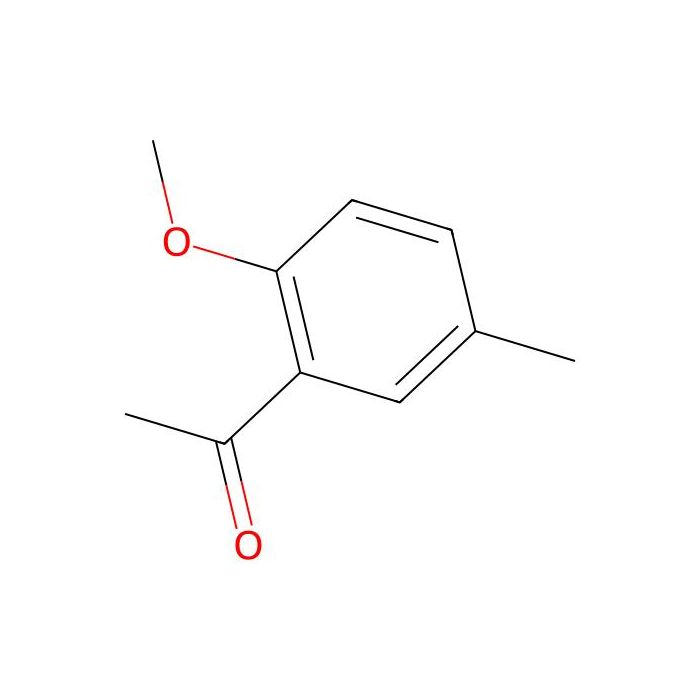
This compound belongs to the class of organic compounds known as alkyl-phenylketones. These are aromatic compounds containing a ketone substituted by one alkyl group, and a phenyl group.
External Descriptors
Not available
1. Djoumbou Feunang Y, Eisner R, Knox C, Chepelev L, Hastings J, Owen G, Fahy E, Steinbeck C, Subramanian S, Bolton E, Greiner R, and Wishart DS. ClassyFire: Automated Chemical Classification With A Comprehensive, Computable Taxonomy. Journal of Cheminformatics, 2016, 8:61.
Determine the necessary mass, volume, or concentration for preparing a solution.
Dilution Calculator
Determine the dilution needed to prepare a stock solution.
Reconstitution Calculator
Reviews
Customer Reviews
Application Protocols
No vendor-tested biological application protocols apply to this small-molecule building block. For chemical use, see the Reaction Conditions and Synthetic Utility sections for representative procedures and parameters drawn from the literature. Always adapt to your specific substrate set and perform small-scale trials first.
Biological Roles
This product is a synthetic aromatic ketone intended for chemical research. It does not have a defined biological role.
General note
Aryl methyl ketones and anisoles can appear as substructures in bioactive molecules; however, this item is supplied solely as a research chemical building block.
No medical, diagnostic, or therapeutic use is intended or implied. For research use only.
Buffer Applications
Not typically applicable. 1-(2-Methoxy-5-methylphenyl)ethanone is a hydrophobic organic building block and is not used to prepare aqueous buffer systems. For practical considerations relevant to its use, see the Reaction & Applications, Synthetic Utility, and Solvent Selection sections.
Green Alternatives
While the substance itself is a building block rather than a solvent, greener choices can be made in its synthesis and use.
Solvent and reagent choices (literature guidance)
Replace chlorinated solvents (DCM, chloroform) where feasible with EtOAc, toluene, 2-MeTHF, or CPME for extractions/reactions.
For reductions of the ketone, consider catalytic hydrogenation in ethanol/isopropanol versus stoichiometric metal hydrides.
O-demethylation: alternatives to BBr3 include aluminum halides in safer media or catalytic demethylation with iodide under phase-transfer conditions; each has tradeoffs in selectivity and waste.
Example comparison (general)
Traditional: Friedel–Crafts acylation in DCM/AlCl3 → high salt waste, chlorinated solvent.
Greener: Acylation using solid acid catalysts (zeolites, montmorillonite K10) in toluene or solvent-free; easier workup and reduced halogenated waste.
Tradeoffs: Greener solvents may alter regioselectivity or rates; verify on small scale and monitor by GC/HPLC. Waste minimization via telescoped steps and catalytic conditions often provides the largest environmental benefit.
Pharmaceutical Uses
Formulation/excipient status: Not applicable; this compound is not specified as an excipient and is provided for research use only.
Process chemistry context (general)
May serve as an intermediate in discovery or route-scouting for small-molecule APIs, benefiting from the anisole as a transient protecting group (demethylation to phenol allowed late-stage diversification).
No clinical or therapeutic claims are made or implied.
Physical Properties
Item-specific specifications are not provided in the Product Data. Values below are general literature information for the named structure and are NOT product specifications.
Appearance: Not specified for this item; refer to CoA/Spec Sheet.
Melting/boiling behavior (literature): Typically a low-melting solid or high-boiling liquid; aryl methyl ketones of similar size show bp in the ~240–270 °C range at 1 atm.
Density (literature): Expected near ~1.05 g/mL at 20–25 °C for analogous methoxyacetophenones.
Refractive index (literature): Comparable anisole/acetophenone derivatives show nD20 ~1.52–1.55.
pKa (literature): No ionizable groups in water under neutral conditions; α-CH3 of the acetyl group has pKa ~19–20 in DMSO for related acetophenones (useful for enolate chemistry).
Solubility (literature):
Miscible with many organic solvents (EtOAc, DCM, THF, toluene, MeOH).
Low aqueous solubility expected (<1 g/L).
Important: For method validation, thermal limits, or chromatographic suitability, use actual lot CoA/Spec Sheet. Do not treat literature values above as specifications.
Quality & Grades
Item-specific grade/purity: Not specified for this item; refer to CoA/Spec Sheet.
Impurity profile considerations (general for aryl methyl ketones)
Potential related substances: positional isomers (e.g., 3-/4-methoxy isomers), residual anisole, over-acylation byproducts, and trace demethylated phenolic analogs.
Residual solvents typical of Friedel–Crafts acylation workups (e.g., chlorinated solvents) may be controlled depending on synthesis route.
Grade meaning (general guidance)
Research grade: suitable for most synthetic and analytic workflows.
If offered as “HPLC” or “GC” grade (not specified here), this implies low UV background/volatile impurities for chromatography; if “≥98%” or similar is claimed, it indicates assay by GC/HPLC/1H NMR.
Stabilizers/additives
None specified. If present in a specific lot, the CoA will note any stabilizers or inhibitors.
For critical applications (e.g., quantitative kinetics, materials with tight impurity tolerances), verify actual assay, water content, and residual solvent data on the lot-specific CoA/Spec Sheet.
Reaction & Applications
As an electron-rich, ortho-methoxy–substituted acetophenone, 1-(2-methoxy-5-methylphenyl)ethanone is a versatile intermediate in aromatic and carbonyl chemistry.
Representative applications (literature)
Building block for substituted phenols via selective O-demethylation (e.g., BBr3), enabling downstream etherification or cross-coupling (through triflation/halogenation).
Precursor to heterocycles: intramolecular cyclizations after ortho-functionalization can access benzofurans and related motifs.
Enolate-based elaboration at the acetyl methyl: aldol condensations, Claisen-type condensations, and α-halogenation (NBS/NCS) followed by substitution.
Electrophilic aromatic substitution (EAS): the methoxy group activates ortho/para; the acyl group is meta-directing; substitution patterns can be tuned by conditions/protecting the phenol.
Reductive transformations: chemoselective reduction of the aryl ketone to secondary alcohols (NaBH4, Luche conditions) or to the ethyl derivative (Wolff–Kishner/Clemmensen) when needed.
Practical considerations
Regioselectivity in EAS is influenced by the strong +M effect of –OMe vs the –M/–I effect of the acyl; careful choice of acid strength/temperature moderates outcomes.
For enolate chemistry, use dry, oxygen-free conditions; quench carefully to avoid over-alkylation.
The anisole ether increases solubility in organic media and can act as a protecting group for phenols until late-stage demethylation.
Reaction Conditions
General literature guidance for common transformations of 1-(2-methoxy-5-methylphenyl)ethanone. Values are indicative, not product specifications.
Enolate alkylation
Base: LDA or NaHMDS (1.1–1.5 equiv) in dry THF or DME.
Temperature: −78 to −20 °C for enolate formation; 0 to rt for alkylation.
Time: 0.5–2 h for enolization; 1–4 h after electrophile addition.
O-Demethylation to phenol
Reagent: BBr3 (1–3 equiv) in anhydrous DCM.
Temperature: −78 to 0 °C addition, then 0 °C to rt for 2–16 h.
Workup: Methanol quench, then aqueous bicarbonate; monitor for overbromination.
Baeyer–Villiger oxidation
Oxidant: mCPBA (1.2–2.0 equiv) in DCM or CHCl3.
Temperature: 0 °C to rt; 4–24 h.
Note: Buffer residual acids; control for rearrangement selectivity.
α-Halogenation
Reagent: NBS/NCS (1.1–1.2 equiv) with catalytic acid or AIBN under light.
Solvent: CCl4, DCM, or acetonitrile; 0 °C to reflux; 1–6 h.
EAS (nitration/halogenation)
Mild Lewis/Brønsted acids; solvent toluene/AcOH; low temperatures help manage regioselectivity.
Monitor by TLC/GC/LC–MS; exclude moisture/air as needed. Optimize on small scale before scale-up.
Safety & Handling
Item-specific GHS details
Signal word, hazard statements, pictograms, and classification: Not specified for this item; refer to SDS.
General safety profile (aromatic methyl ketone/anisole ether; literature guidance)
Likely to be combustible; avoid ignition sources and excessive heating.
May cause skin/eye irritation on contact; vapors/mists may irritate respiratory tract.
Avoid prolonged exposure; use in a fume hood.
PPE and handling
Wear lab coat, nitrile gloves, and splash goggles.
Use local exhaust ventilation; minimize aerosol formation.
Avoid contact with strong oxidizers and strong bases/acids that can promote side reactions (e.g., demethylation under strong Lewis acids like BBr3).
Incompatibilities and reactivity (general)
Strong oxidants (risk of exotherm/oxidation).
Very strong Lewis/Brønsted acids can cleave the anisole ether; strong bases form enolates at the acetyl methyl.
First aid (overview; defer to SDS)
Skin/eye: Rinse with water for ≥15 min; remove contaminated clothing.
Inhalation: Move to fresh air; seek medical attention if symptoms persist.
Ingestion: Rinse mouth; do not induce vomiting; get medical advice.
Always consult the Aladdin SDS for authoritative hazard, exposure controls, and spill/fire-fighting procedures. For research use only.
Solvent Selection
This product is an aryl methyl ketone building block, not a process solvent. Solvent selection therefore refers to media for its handling/reactions.
Polarity and handling (general)
Moderately nonpolar and aromatic; dissolves well in EtOAc, DCM, THF, acetone, toluene, and MeOH; sparingly soluble in water.
For chromatography, normal-phase silica gel with hexanes/EtOAc or toluene/EtOAc gradients gives good resolution of related isomers.
Choosing media by transformation
Enolate chemistry: polar aprotic (THF, DME, DMF) at low temperature with LDA/NaHMDS.
Electrophilic aromatic substitution: nonpolar aromatic (toluene) or acetic acid, with appropriate catalysts.
O-demethylation: halogenated solvents (DCM) under Lewis acids (e.g., BBr3) or polar aprotic for alternative protocols.
Practical tips
Avoid strongly protic media when enolate formation is intended.
If UV monitoring is required, note that aryl ketones absorb strongly near 240–280 nm; choose solvents with low UV cutoff accordingly.
For preparative scale, prefer lower-toxicity solvents (EtOAc, 2-MeTHF, CPME) when compatible with the chemistry and workup.
Container: Store tightly closed in an amber glass bottle to minimize light exposure and contamination. Use inert atmosphere (nitrogen/argon) if repeatedly opening for air/moisture-sensitive transformations (e.g., enolate chemistry), although the neat material is generally stable under dry conditions.
Stability: Aromatic ketones and anisoles are typically stable under ambient lab conditions; avoid strong acids/bases and oxidizers. Do not freeze/thaw cycles are not relevant to neat liquids/solids, but avoid thermal cycling that can introduce condensation in partially filled bottles.
Reconstitution: Not applicable; supplied neat. For solution preparation, dissolve in a suitable anhydrous organic solvent (e.g., DCM, THF, toluene, EtOAc) at the required concentration. Filter if particulate forms.
Shipping: Not specified for this item; refer to CoA/Spec Sheet.
Labeling: For research use only. Verify lot-specific data (assay, water, residual solvents) on the CoA when required for GMP-adjacent research workflows.
Structure & Identity
A substituted acetophenone bearing an ortho-methoxy and a meta-methyl relative to the acyl group; useful as an electron-rich aryl methyl ketone building block.
Item-specific identifiers (Product Data)
CAS: 20628-07-3
PubChem CID: 4991867
InChIKey: Not specified for this item; refer to CoA/Spec Sheet.
SMILES: Not specified for this item; refer to CoA/Spec Sheet.
Computed/literature structural data (non-specification)
Preferred IUPAC name (literature): 1-(2-methoxy-5-methylphenyl)ethanone
Molecular formula (derived from structure): C10H12O2
Formula weight (calculated): ~164.20 g/mol (literature)
Ring/feature description (2D): A benzene ring bearing three substituents: (1) an ethanone (acetyl) at C1, (2) a methoxy group ortho to the acetyl at C2, and (3) a methyl group at C5. No stereocenters; planarity dominated by the aromatic ring; carbonyl slightly twisted relative to the ring.
Notes
The name implies an o-methoxy/m-methyl substitution pattern on an acetophenone core. Verify exact identifiers (SMILES/InChI) against the CoA if required for registration or informatics.
Synthetic Utility
Key reactivity arises from the combination of an aryl methyl ketone and an anisole ether on the same ring.
Functional group leverage
Carbonyl: enolate generation (LDA/NaHMDS) enables α-alkylation, aldol condensations, and α-halogenation followed by substitution or elimination.
Ether: O-demethylation unveils a phenol for further coupling (e.g., triflation then Suzuki/Buchwald–Hartwig) or for directed ortho metalation (DoM) chemistry.
Aromatic ring: EAS (nitration, halogenation, sulfonation) with regioselectivity influenced by +M (OMe) vs –M (acyl) effects.
Transformations (literature examples)
Baeyer–Villiger oxidation of the aryl ketone to anisyl methyl ester analogs (using mCPBA or peracids), followed by alcoholysis.
Reductive strategies: Luche reduction to benzylic alcohol with CeCl3/NaBH4; Wolff–Kishner to remove the carbonyl entirely.
Cross-coupling after halogenation at remaining ring positions to elaborate substitution patterns.
Retrosynthetic value
Accessible from 2-methoxy-5-methylbenzene via Friedel–Crafts acylation (acetyl chloride/anhydride) under Lewis/Brønsted acid catalysis.
These features make it a flexible synthon for constructing substituted anisoles, phenols, benzofurans, and elaborated aryl ethanone scaffolds.
Target Specificity
Not applicable. This product is a small-molecule chemical building block and is not an antibody, probe, or biological targeting reagent. No antigen/epitope or species reactivity applies.
We use cookies to ensure the website functions properly and, where permitted, to improve your experience. You can manage your preferences at any time in Settings. Learn more in our Cookie Policy.
Shall we send you a message when we have discounts available?
Remind me later
Thank you! Please check your email inbox to confirm.
Products are supplied to verified businesses, institutions, and qualified professionals for research and development use only. Not for use in humans, animals, diagnosis, or therapy.