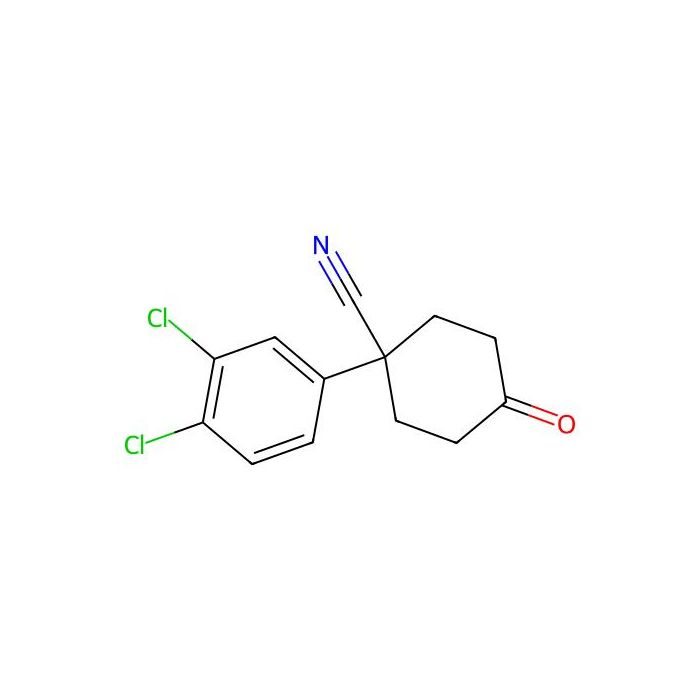
This compound belongs to the class of organic compounds known as dichlorobenzenes. These are compounds containing a benzene with exactly two chlorine atoms attached to it.
External Descriptors
Not available
1. Djoumbou Feunang Y, Eisner R, Knox C, Chepelev L, Hastings J, Owen G, Fahy E, Steinbeck C, Subramanian S, Bolton E, Greiner R, and Wishart DS. ClassyFire: Automated Chemical Classification With A Comprehensive, Computable Taxonomy. Journal of Cheminformatics, 2016, 8:61.
Determine the necessary mass, volume, or concentration for preparing a solution.
Dilution Calculator
Determine the dilution needed to prepare a stock solution.
Reconstitution Calculator
Reviews
Customer Reviews
Application Protocols
Not applicable. No immunoassay or bioanalytical kit protocols apply to this small-molecule building block. For chemical applications, see the Reaction Conditions and Synthetic Utility sections for general laboratory guidance.
Biological Roles
This product is a synthetic small-molecule building block and is not known as a native metabolite, cofactor, or biopolymer component.
General notes (context, not product claims)
The 3,4-dichlorophenyl motif appears in various research compounds due to its lipophilicity and metabolic stability; however, specific biological activity depends on the broader scaffold and substituents.
Nitrile- and ketone-containing molecules can act as electrophiles in biochemical contexts, but no biological function is attributed to this specific structure.
Research positioning
Useful for constructing screening libraries where multiple vector points (aryl chlorides, nitrile, ketone) enable SAR around polarity, HBA/HBD counts, and three-dimensionality.
No medical or clinical use is implied. For research use only.
Buffer Applications
Not typically applicable. This is a hydrophobic organic building block, not a buffering reagent. It has no defined acid/base pair suitable for maintaining pH in aqueous systems. For work-up and purification, select buffers based on your reaction chemistry (e.g., phosphate, acetate), but the compound itself does not serve as a buffer.
Green Alternatives
While the compound itself is a target building block (not a solvent), greener choices can be made in its use and in analogous chemistry.
Greener solvent choices (literature guidance)
Replace chlorinated solvents: use 2-MeTHF, CPME, or dimethyl carbonate instead of DCM/1,4-dioxane where compatible. For Pd couplings, 2-MeTHF or CPME with water co-solvent can maintain activity while reducing environmental impact.
Polar aprotics: consider propylene carbonate or Cyrene as alternatives to DMF/DMAc in some couplings or SNAr reactions; solubility should be confirmed.
Aqueous micellar catalysis: for cross-couplings on aryl chlorides, designer surfactants (e.g., TPGS-750-M) in water can reduce organic solvent use.
Reagent and process considerations
Switch from stoichiometric metal hydrides to catalytic hydrogenation (H2/Pd or Ni) for reductions of the nitrile/ketone when chemoselectivity allows.
Employ flow processing for hazardous steps (e.g., strong base enolizations), improving heat/mass transfer and reducing solvent volumes.
Use base-metal catalysts (Ni, Fe) with N-heterocyclic carbene or bipyridine ligands for aryl chloride couplings in place of Pd, where feasible.
Trade-offs
Solubility and rate often decrease in greener media; temperature or catalyst loading may need adjustment.
Functional-group compatibility (nitrile/ketone) must be verified when moving to aqueous or protic systems.
Implement LCA-minded selection: prioritize safety, waste minimization (E-factor), and solvent recovery without compromising data quality.
Pharmaceutical Uses
Role: This material is a research-grade synthetic intermediate/building block. It is not an approved excipient or API and is supplied for research use only.
Formulation context (general)
If incorporated into discovery-stage studies, it is typically handled in organic solution (e.g., DMSO stocks) for in vitro assays after further derivatization. Any formulation development for regulated use would require comprehensive safety and quality evaluation not covered by this listing.
Pharmacopeial status: None reported for this compound.
No therapeutic claims are made or implied. For research use only.
Physical Properties
Item-specific specifications (this lot):
Appearance: Not specified for this item; refer to CoA/Spec Sheet.
Grade/Purity: Not specified for this item; refer to CoA/Spec Sheet.
Molecular Formula: Not specified for this item; refer to CoA/Spec Sheet.
Molecular Weight: Not specified for this item; refer to CoA/Spec Sheet.
Literature/computed (for reference only; not product specifications)
Empirical formula (derived from name): C13H11Cl2NO (literature)
Formula weight: ~268.11 g/mol (calculated)
Functional group implications: neutral organic solid expected; aryl chlorides increase hydrophobicity; nitrile and ketone increase polarity relative to hydrocarbons.
Solubility (qualitative, literature expectation): low solubility in water; soluble in polar aprotic organics such as DMSO, DMF, acetonitrile, dichloromethane, THF; moderate in ethyl acetate and toluene. Actual solubility should be verified experimentally for your system.
LogP/logD: Not available (literature values not located here); anticipate moderate to high lipophilicity due to dichlorophenyl moiety, tempered by ketone/nitrile polarity.
Melting/boiling points, density, refractive index: Not specified here; refer to SDS/CoA or measure as needed for method development.
Note: Do not treat literature/calculated values as specifications. Always consult the lot-specific CoA for QC-released physical data and use the SDS for physical hazard information.
Quality & Grades
Item-specific grade/purity: Not specified for this item; refer to CoA/Spec Sheet for purity, residual solvent profile, and any stabilizers.
Guidance on interpreting grades (general)
Research grade: suitable for discovery chemistry, method development, and non-regulated synthesis. CoA typically includes identity (1H NMR/LC-MS/HRMS), purity (HPLC/GC), and sometimes water content (KF) or residual solvents.
Higher grades (if applicable): HPLC grade and LC/MS grade usually refer to solvents/reagents with low UV-absorbing impurities; not typically assigned to complex building blocks like this compound.
Identity/purity confirmation (best practices)
Identity: confirm by 1H/13C NMR, IR (sharp CN stretch ~2220–2260 cm−1; C=O ~1680–1720 cm−1; literature), HRMS (M+ or [M+H]+ at m/z ~269.1; literature), and melting point where applicable.
Purity: HPLC at 220–254 nm often sensitive for aryl chlorides and conjugated carbonyls; consider ELSD if chromophores are weak or to detect non-UV impurities.
Impurities to watch: dehalogenated aryl analogs, hydrolyzed nitrile (amide/acid), reduced carbonyl (alcohol), and positional isomers from arylation.
Stabilizers: None are expected or specified for this structural class; if any stabilizer or salt form is used, it will be listed on the CoA. Always defer to item-specific documentation.
Reaction & Applications
As an arylated α-cyanocyclohexanone, this compound is a versatile intermediate for medicinal and agrochemical discovery chemistry.
Transformations of the nitrile (general, literature)
Hydrolysis: to primary amide (controlled, e.g., H2O2/Na2CO3 or acidic hydration) or to carboxylic acid (strong acid/base, elevated T). The adjacent quaternary center resists rearrangement; monitor for ring-opening under forcing conditions.
Reduction: to primary amine (e.g., catalytic hydrogenation, Raney Ni, or borane) or to imine/enamine intermediates enabling further functionalization.
Cyclizations: intramolecular condensations with the ketone (or after ketone modification) to access bicyclic scaffolds or lactams (via Ritter-like sequences after nitrile activation).
Transformations of the ketone (general, literature)
Reductions: NaBH4 or selective hydride reagents to the corresponding secondary alcohol; stereocontrol may be influenced by the bulky 3,4-dichlorophenyl substituent.
Enolate chemistry: deprotonation α to the carbonyl (at C3/C5) allows alkylation, acylation, or Michael additions; cyanide and aryl substituents at C1 tune acidity and diastereoselectivity.
Oxime/hydrazone formation: precursors for Wolff–Kishner or Beckmann-type rearrangements to ring-expanded amides/lactams.
Aryl chloride handles (general, literature)
Cross-coupling: 3- and 4-chloro positions can undergo Pd-catalyzed Suzuki–Miyaura, Buchwald–Hartwig, or Heck couplings with appropriate catalysts/ligands (e.g., Pd2(dba)3/XPhos, Pd-PEPPSI). Chlorides may require higher temperatures or activating ligands relative to bromides/iodides.
Lithium–halogen exchange or metalation is generally not advised on dichlorophenyl in presence of nitrile/ketone without careful protection/temperature control.
Use cases
Scaffold diversification for SAR: orthogonal modification of aryl chlorides, nitrile, and ketone enables rapid library generation.
Advanced intermediates: precursor to carboxylic acids/esters at C1 and to aminoalcohols after sequential reduction.
Reaction Conditions
General literature-guided conditions for common transformations of aryl chlorides, nitriles, and ketones. These are examples for planning; optimize for your substrate. Not product specifications.
Suzuki–Miyaura cross-coupling on aryl chloride
Catalyst: Pd2(dba)3 (1–2 mol%) with XPhos/SPhos (2–4 mol%) or precatalysts (PEPPSI). Base: K3PO4 or Cs2CO3 (2–3 equiv). Solvent: 1,4-dioxane/H2O (4:1) or 2-MeTHF. Temp: 80–110 °C. Time: 6–18 h. Typical yields: 50–85% for aryl chlorides (literature).
Buchwald–Hartwig amination (para/meta chloro)
Catalyst: Pd(OAc)2 (1–3 mol%) with tBuBrettPhos or RuPhos (2–6 mol%). Base: NaOtBu or Cs2CO3. Solvent: toluene or dioxane. Temp: 90–110 °C. Time: 8–20 h.
Nitrile hydrolysis to amide/acid
To amide: H2O2/Na2CO3 in MeOH/H2O, 0–25 °C to control over-hydrolysis; or Ni-catalyzed hydration in MeCN/H2O. To acid: refluxing H2SO4/H2O or NaOH/H2O/EtOH; monitor for ketone stability.
Ketone reduction to alcohol
NaBH4 (1.2–2.0 equiv) in MeOH/EtOH or THF at 0–25 °C; work up with NH4Cl. Alternatively, catalytic hydrogenation (H2, Pd/C) in EtOAc/MeOH at 1–3 bar for chemoselective reductions.
Enolate alkylation (at C3/C5)
Base: LDA or LiHMDS (1.1–1.5 equiv) in dry THF at −78 to −40 °C; electrophile: MeI/allyl bromide/acyl chlorides. Quench at low temperature; warm to rt.
Nitrile reduction to amine
BH3·THF (2–3 equiv) in THF, 0 °C to reflux; or Raney Ni/H2 (10–30 bar) in EtOH/THF. Protect ketone if needed to avoid over-reduction.
Always run small-scale scouting experiments to establish chemoselectivity with both the ketone and nitrile present.
Safety & Handling
GHS classification and hazard statements (item-specific): Not specified for this item; refer to the SDS for authoritative classification, signal word, pictograms, and H/P statements.
General safety considerations for arylated nitrile/ketones (general guidance)
Potential hazards: irritant effects to skin/eyes/respiratory tract are possible for many nitriles and ketones. Aryl chlorides are typically of low acute reactivity but may present environmental persistence concerns. This compound is not a simple alkyl nitrile (which can release cyanide on hydrolysis); nonetheless, avoid ingestion/inhalation and prevent environmental release.
PPE: lab coat, safety glasses (ANSI Z87.1 or EN166), and appropriate chemical-resistant gloves (e.g., nitrile). Use in a fume hood to minimize inhalation exposure to dust or solvent vapors.
Handling: avoid dust generation; dispense with spatulas in ventilated enclosure. Prevent contact with oxidizing agents and strong bases/acids until compatibility is assessed.
Storage incompatibilities (general): segregate from strong oxidizers and strong reducing agents. Aryl chlorides are generally stable; avoid prolonged exposure to strong nucleophiles at elevated temperatures that could dechlorinate or cause side reactions.
First aid (overview; follow SDS): in case of skin/eye contact, rinse with water for at least 15 minutes; remove contaminated clothing. If inhaled, move to fresh air. If ingested, rinse mouth; do not induce vomiting; seek medical attention.
Always consult the SDS for definitive hazard classification, exposure limits, and spill/accident response.
Solvent Selection
This compound is a neutral, moderately polar aromatic ketone/nitrile building block.
Polar aprotic solvents (DMSO, DMF, DMAc, acetonitrile): high solubility; useful for stock solutions and SNAr/cross-coupling reactions.
Chlorinated/ether solvents (DCM, THF, 1,4-dioxane): typically good to moderate solubility; favored for reductive transformations or metalations that are moisture-sensitive.
Aromatic/ester solvents (toluene, xylene, EtOAc): moderate solubility; useful for Pd-catalyzed couplings and crystallizations.
Water/alcohols: expected very low water solubility; limited solubility in alcohols at room temperature; co-solvent strategies may be required.
When to choose which solvent (practical tips)
Cross-coupling on aryl chloride positions: 1,4-dioxane, toluene, or CPME with a polar co-solvent (DMF/MeCN) can balance solubility and catalyst performance.
Nitrile hydrolysis to amide/acid: aqueous alcohols or mixed MeCN/H2O with acid/base catalysts; control temperature to mitigate side reactions at the aryl chlorides.
Carbonyl chemistry (enolization/alkylation): THF or MTBE with strong non-nucleophilic bases (LDA, LiHMDS) under inert atmosphere; dry solvents are critical.
Reductive chemistry (ketone to alcohol or nitrile to amine): protic vs aprotic solvent choice depends on reducing agent (e.g., NaBH4 in MeOH/EtOH vs hydrosilanes in toluene).
Note: Verify solubility and stability experimentally; adjust solvent based on reaction kinetics, base/nucleophile compatibility, and desired isolation/crystallization route.
Storage & Reconstitution
Storage (item-specific)
Storage Conditions: Room temperature (as provided in Product Data). Store tightly closed in a dry, well-ventilated place away from direct light. For long-term stability, a desiccator or inert atmosphere (argon/nitrogen) is recommended to minimize moisture uptake and potential slow hydrolysis reactions.
Shipped In: Not specified for this item; refer to CoA/Spec Sheet.
Stability considerations (general)
Aryl chlorides, nitriles, and ketones are typically stable under ambient conditions. Avoid prolonged exposure to strong bases/acids and high humidity. No tendency for peroxide formation.
Reconstitution and stock solutions (general guidance)
Solvents: DMSO, DMF, acetonitrile, THF, or dichloromethane are commonly effective. Start at 10–50 mg/mL, warming gently (≤40 °C) or sonicating if needed. Filter (0.2 µm PTFE) for assay stocks.
Aqueous use: Insoluble in water; prepare concentrated DMSO or MeCN stocks and dilute into assay medium with vigorous mixing to avoid precipitation. Keep final DMSO ≤1–2% v/v if using biological assays.
Freeze–thaw: If solutions are stored, aliquot to avoid repeated freeze–thaw. Solid material is generally robust at room temperature when kept dry.
Research Use Note: For research use only.
Structure & Identity
Brief description: 1-(3,4-dichlorophenyl)-4-oxocyclohexanecarbonitrile is an arylated α-cyanocyclohexanone bearing a 3,4-dichlorophenyl substituent at the ring carbon that also carries the nitrile group, and a ketone at the 4-position of the cyclohexane ring.
Item-specific identifiers (from Product Data)
SKU: O708719
CAS: 65619-30-9
PubChem CID: 3525534
InChIKey: 434709 (as provided; verify against SDS/CoA)
SMILES: Not specified for this item; refer to CoA/Spec Sheet.
Computed/literature structural data (for reference; not item specifications)
Molecular formula (derived from name): C13H11Cl2NO (literature)
Molecular weight: ~268.11 g/mol (literature, calculated from formula)
Core features: one cyclohexanone ring (4-oxo), one nitrile (–C≡N) at ring carbon-1, and a 3,4-dichlorophenyl substituent bonded to the same ring carbon-1.
Unsaturation/rings (literature): one aromatic ring, one aliphatic ring, one carbonyl (C=O), one nitrile (C≡N).
2D structure in words (literature-based): a cyclohexanone ring in chair conformation with C4 as the carbonyl carbon; C1 is quaternary, bearing both a –C≡N substituent and a 3,4-dichlorophenyl group. The phenyl ring contains chlorines at the meta (3) and para (4) positions relative to the cyclohexyl attachment.
Synthetic Utility
Functional group leverage
Nitrile (C≡N): convertible to amide, acid, amine, amidine, tetrazole (via [2+3] cycloaddition with azide after activation), or used as a directing group in metal-catalyzed C–H functionalization (literature precedent primarily on benzylic/aryl nitriles; applicability to tertiary aliphatic nitriles requires optimization).
Ketone (cyclohexanone): gateway to enolate chemistry (alkylation/acylation), reductive transformations (alcohols), oxime/hydrazone derivatives, and ring expansions (Beckmann after oxime formation).
Aryl chlorides (3,4-positions): two orthogonal handles for sequential Pd/Ni-catalyzed cross-couplings (Suzuki–Miyaura, Buchwald–Hartwig, Sonogashira, etc.), enabling rapid diversification of the aryl substituent.
Retrosynthetic value
Serves as a convergent node: a functionalized aryl fragment connected to a substituted cyanocyclohexanone core. Downstream diversification can proceed along three axes (aryl, nitrile, carbonyl), making it ideal for late-stage modification programs.
Selectivity considerations
Enolate formation at C3/C5 versus competing reactions at the nitrile requires temperature control and non-nucleophilic bases (e.g., LDA, LiHMDS, NaHMDS). Bulky ligands in cross-coupling help address the lower reactivity of aryl chlorides.
Protecting-group strategies are rarely necessary, but sensitive steps (e.g., strong nucleophiles) should consider ketone protection as ketal if needed.
Purification
Normal-phase silica with nonpolar to moderately polar eluents (hexanes/EtOAc, toluene/EtOAc). Reverse-phase methods (C18, MeCN/H2O with 0.1% formic acid) can be used if polarity is increased via derivatization.
Target Specificity
Not applicable. This product is a small-molecule building block, not a biological macromolecule or affinity reagent. No antigen/epitope or species reactivity information is relevant.
We use cookies to ensure the website functions properly and, where permitted, to improve your experience. You can manage your preferences at any time in Settings. Learn more in our Cookie Policy.
Shall we send you a message when we have discounts available?
Remind me later
Thank you! Please check your email inbox to confirm.
Products are supplied to verified businesses, institutions, and qualified professionals for research and development use only. Not for use in humans, animals, diagnosis, or therapy.