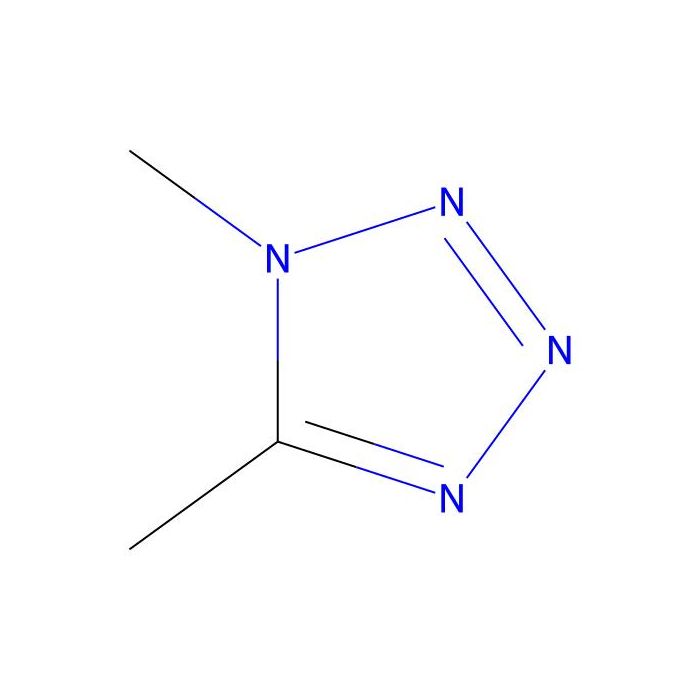
This compound belongs to the class of organic compounds known as tetrazoles. These are organic compounds containing a tetrazole ring, which is a five-member aromatic heterocycle made up of four nitrogen atoms and a one carbon atom.
External Descriptors
Not available
1. Djoumbou Feunang Y, Eisner R, Knox C, Chepelev L, Hastings J, Owen G, Fahy E, Steinbeck C, Subramanian S, Bolton E, Greiner R, and Wishart DS. ClassyFire: Automated Chemical Classification With A Comprehensive, Computable Taxonomy. Journal of Cheminformatics, 2016, 8:61.
Determine the necessary mass, volume, or concentration for preparing a solution.
Dilution Calculator
Determine the dilution needed to prepare a stock solution.
Reconstitution Calculator
Reviews
Customer Reviews
Application Protocols
Not applicable to immunoassay/biological detection methods. This product is a chemical building block and does not have protocols such as WB, IHC, IF, or FC.
General laboratory usage notes (chemistry-focused):
Weigh quickly and cap promptly to minimize atmospheric exposure during sensitive operations.
Prepare stock solutions in dry MeCN, DMF, DMSO, or EtOAc as required by the planned transformation; filter if necessary before use.
For reactions involving radical or photochemical steps, standardize light intensity and path length; include actinometry or internal standards for reproducibility.
Item-specific tested applications/dilutions: Not specified for this item.
Biological Roles
Item-specific biological data are not provided for this product; no biological testing is claimed. The following are general context notes for tetrazoles in chemical biology and medicinal chemistry (no medical/clinical claims):
Bioisosterism: Tetrazoles frequently serve as bioisosteres of carboxylic acids, mimicking acidity and hydrogen-bonding patterns. The 1,5-dimethyl derivative is neutral (N1-alkylated, C5-alkylated) and thus does not reproduce carboxylate ionization; it can serve as a neutral heteroaromatic fragment to modulate polarity and H-bond acceptor character.
Binding interactions: The ring nitrogens act as hydrogen-bond acceptors and weak metal ligands, offering potential to engage in coordinate bonds with metalloenzymes or metal co-factors in model systems (general literature).
Metabolic considerations: N-alkyl tetrazoles may undergo oxidative metabolism at the alkyl substituents (e.g., benzylic-like oxidation of the 5-methyl or N-dealkylation analogs in related systems). Specific ADME data for 1,5-dimethyltetrazole are not provided here.
Probe/scaffold potential: As a compact, nitrogen-rich heteroaromatic, 1,5-dimethyltetrazole can function as a fragment-sized motif in screening libraries to explore heteroatom-directed recognition.
Any use in biological systems must be designed, reviewed, and conducted under appropriate institutional approvals, and this product is supplied strictly for research use only.
Buffer Applications
This compound is not a classical buffering agent and lacks a suitable conjugate acid/base pair in the physiological pH range due to N1-alkylation and C5-alkylation. It is therefore not typically used to prepare buffers.
If the compound must be dissolved for bioassays or screening, select a compatible cosolvent system (e.g., DMSO stock solutions diluted into aqueous buffers) while monitoring solubility and precipitation.
For true buffering needs, use established systems (phosphate, HEPES, MOPS, acetate) appropriate to your pH target.
Item-specific buffer recipes or pKa data: Not specified for this item; consult the literature if pKa-guided applications are contemplated.
Green Alternatives
This product is a heteroaromatic building block rather than a solvent or reagent with obvious green replacements. Green chemistry considerations therefore focus on the choice of solvents, oxidants, and halogenation conditions when using 1,5-dimethyltetrazole.
Recommendations (general literature guidance):
Solvents: Prefer ethyl acetate, 2-MeTHF, CPME, or acetonitrile over chlorinated solvents where feasible. For high-temperature steps, consider propylene carbonate or dimethyl carbonate as greener polar aprotics when compatible.
Halogenation of 5-methyl:
Replace NBS/CCl4 with NBS in EtOAc or MeCN and photochemical initiation (blue LEDs). Avoid benzoyl peroxide initiators; choose AIBN or photocatalysts with minimal hazard profiles.
Oxidations:
Substitute SeO2 or Cr(VI) reagents with catalytic TEMPO/NaOCl or oxoammonium salts in biphasic water/organic systems; alternatively, use IBX/DMP in minimal solvent. For aldehyde formation from 5-methyl, MnO2 in green solvents (MeCN, toluene) is practical.
Energy and safety:
Conduct reactions at ambient pressure and moderate temperatures when possible; consider flow photochemistry for safer radical processes and improved heat/mass transfer.
Illustrative comparison (general):
NBS bromination: CCl4, reflux, thermal initiation vs MeCN, rt–40 C, blue LED photolysis (lower toxicity solvent, reduced energy input).
Oxidation: SeO2 in toluene, reflux, stoichiometric selenium waste vs TEMPO/NaOCl in EtOAc/H2O, 0–25 C (reduced toxicity and waste).
Item-specific environmental metrics (E-factor, solvent recovery): Not specified for this item.
Pharmaceutical Uses
Item-specific pharmacopeial status, impurity profiles, or excipient roles: Not specified for this item; refer to CoA/Spec Sheet. This product is provided for research use only and is not intended for human or veterinary use.
General formulation/manufacturing context (no therapeutic claims):
Tetrazole motifs are widely used in medicinal chemistry as bioisosteric replacements for carboxylic acids. While 1,5-dimethyltetrazole is neutral and not a direct carboxylate mimetic, it can serve as a fragment or masked intermediate to access other tetrazole derivatives.
Process chemistry considerations:
Solubility: Likely requires polar aprotic solvents for API intermediate workups; salt formation is not typical for neutral N-alkyl tetrazoles.
Stability: Tetrazoles are generally stable to moderate heat and neutral aqueous workups; avoid strong oxidizers/reductants. Validate stability by forced degradation studies when used as an intermediate.
Analytical control: Employ orthogonal analytical methods (LC-UV, LC-MS, NMR) to track carryover of tetrazole-containing impurities in multi-step syntheses.
No compendial monographs or excipient roles are known for this specific isomer in major pharmacopeias (general observation); confirm against current references for your regulatory jurisdiction.
Physical Properties
Item-specific specifications for this SKU (BP, MP, density, refractive index, solubility, UV cutoff, water/peroxide/metal limits): Not specified for this item; refer to CoA/Spec Sheet.
Literature/expected properties for 1,5-dimethyltetrazole (for general reference only; not product specifications):
Molecular formula: C3H6N4 (literature)
Molecular weight: ~98.11 g/mol (literature)
Physical state/appearance: Often reported as a low-melting solid or high-boiling liquid depending on purity and tautomeric/solid-state behavior (literature/general). Exact appearance for this item: Not specified; refer to CoA.
Polarity/solubility (qualitative, literature): Typically soluble in polar aprotic solvents (DMSO, DMF, acetonitrile), moderately soluble in lower alcohols, and poorly soluble in nonpolar alkanes due to the nitrogen-rich ring.
Acid/base: Neutral N-alkyl tetrazole; significantly less acidic than 1H-tetrazole; behaves as a weak Lewis base via ring nitrogens (literature general).
LogP and pKa: Not commonly tabulated for this specific isomer; expect modest polarity relative to hydrocarbons. Specific numerical values: Not specified for this item; consult primary literature.
Notes on measurement:
Tetrazoles can exhibit polymorphism and strong hydrogen-bonding/π–π interactions with solvents, which can shift observed MP/appearance between reports. Always verify with the item’s CoA for batch-specific values.
Quality & Grades
Item-specific grade/purity: Not specified for this item; refer to CoA/Spec Sheet for assay, residual solvents, and chromatographic purity.
General guidance on grades for small-molecule building blocks (context; not specific to this SKU):
Research-grade/technical: Suitable for most synthetic transformations; may contain trace organic/metallic impurities. Verify by NMR/GC/LC before sensitive steps.
Analytical (AR) or higher: Tighter control of impurities, moisture, and residual solvents; useful for kinetic studies or impurity-sensitive catalysis.
Stabilizers: None indicated for this item in Product Data. If present in a specific batch, the CoA will note the identity and w/w% and any implications for downstream chemistry (e.g., base-sensitive reactions).
Quality control recommendations when sourcing tetrazoles:
Identity confirmation: 1H/13C NMR (look for N1–CH3 singlet and C5–CH3 signals), HRMS, and IR (ring N–N stretches typically 1000–1200 cm−1). Consider 15N NMR for detailed assignments.
Purity assessment: HPLC/GC where applicable. Tetrazoles can tail on silica; consider reversed-phase LC or derivatization if normal-phase chromatography is challenging.
Peroxide/UV cutoff/metal limits: Not specified for this item; refer to CoA/Spec Sheet.
Reaction & Applications
Use cases (general literature; expand/plan experiments accordingly):
Benzylic-type functionalization at C5-methyl:
Radical bromination with NBS/AIBN or photoredox catalysts to form 5-(bromomethyl)-1-methyltetrazole, enabling subsequent SN2, azidation, or cross-coupling.
Oxidation to 5-formyl or 5-carboxyl derivatives using SeO2, MnO2, or catalytic TEMPO/bleach systems; these motifs are valuable as linkers or bioisosteric fragments.
N-chemistry and coordination:
Although N1 is alkylated, remaining ring nitrogens can coordinate to metals (Cu, Ag, Pd), allowing this heterocycle to function as a weakly donating ligand or directing group in C–H functionalization.
N-oxide formation (e.g., mCPBA) is reported for related azoles; can tune electronics and reactivity of the ring (check substrate compatibility).
Cross-coupling via benzylic pseudohalides:
After converting the 5-methyl to a bromide or sulfonate (via alcohol intermediate), Pd-catalyzed couplings (Suzuki, Stille) onto introduced handles expand substitution patterns on the tether.
Medicinal chemistry context (no clinical claims):
Tetrazoles are established bioisosteres for carboxylic acids; the 1,5-dimethyl variant can serve as a neutral tetrazole fragment or a masked handle to access ionizable tetrazoles after dealkylation/oxidation sequences.
Materials/energetics note:
Alkyl-tetrazoles are used as nitrogen-rich components in energetic formulations; 1,5-dimethyl is comparatively less energetic but still nitrogen-dense—observe scale-up caution.
Always validate routes with small-scale trials and monitor by LC/MS or GC/MS.
Reaction Conditions
General literature guidance for typical transformations of 1,5-dimethyltetrazole or close analogs (not product specifications):
Solvent: MeCN, EtOAc, or chlorinated solvents if necessary (DCM); 0.05–0.2 M.
Temperature/time: rt–80 C; 2–12 h depending on light/initiator.
Workup: Quench with Na2S2O3 to consume bromine; silica gel purification (use polar eluents to reduce tailing).
Oxidation of 5-methyl to aldehyde:
Reagents: SeO2 (1.2–1.5 equiv) in toluene or dioxane at reflux; or MnO2 (5–10 equiv) in MeCN/toluene at rt–60 C.
Alternatives: TEMPO/NaOCl (0–25 C) after benzylic alcohol formation.
Conversion to 5-(chloromethyl) derivative:
Sequence: Benzylic alcohol via oxidation/hydroxylation, then SOCl2 or MsCl followed by chloride displacement.
Conditions: DCM or MeCN, 0–25 C, base (Et3N) as needed.
Coordination/ligand applications:
Metalation: Combine with metal salts (e.g., AgNO3, Cu(OAc)2) in MeCN/EtOH; ambient to 60 C to form coordination complexes.
Analysis/monitoring:
TLC may show streaking; prefer LC-MS or HPLC.
Expected yields (broad ranges): 50–85% for radical brominations; 40–75% for SeO2 oxidations; highly substrate- and condition-dependent.
Always optimize on small scale and observe appropriate safety measures, particularly when using radical initiators or oxidants.
Safety & Handling
Item-specific hazard classification and statements: Not specified for this item; refer to the product SDS for authoritative information. Signal word, H-statements, pictograms, and GHS class are not provided in the Product Data.
General safety considerations for tetrazoles and small N-rich heterocycles (literature/general guidance):
Hazards: May cause irritation to skin, eyes, and respiratory tract. Some tetrazoles are combustible; nitrogen-rich heterocycles can decompose exothermically when heated strongly. Avoid dust generation and ignition sources.
Special risks: Although 1,5-dimethyltetrazole is N- and C-alkylated (reducing acidity and some energetic character), exercise caution with heat and during scale-up. Avoid mixing with strong oxidizers or strong reducing agents.
Incompatibilities: Strong acids/bases (may lead to ring-opening under forcing conditions), strong oxidizers (risk of exotherm), acylating/alkylating reagents (can quaternize ring nitrogens).
PPE: Lab coat, safety glasses or chemical splash goggles, and suitable gloves (e.g., nitrile). Use in a fume hood to minimize inhalation exposure.
First aid (summary; follow institutional protocols):
Inhalation: Move to fresh air; seek medical attention if symptoms persist.
Skin: Wash with soap and water; remove contaminated clothing.
Eyes: Rinse cautiously with water for several minutes; remove contact lenses if easy.
Ingestion: Rinse mouth; do not induce vomiting; seek medical attention.
Fire response: Use CO2, dry chemical, or foam. Cool containers with water spray from a safe distance.
Always consult the SDS for this catalog item before use.
Solvent Selection
This product is a heteroaromatic building block, not a solvent. However, solvent choice is critical for its handling and use in synthesis.
Polarity and miscibility (literature/general):
Expected to dissolve well in polar aprotic solvents (DMSO, DMF, NMP, acetonitrile) due to the nitrogen-rich ring.
Moderately soluble in lower alcohols (MeOH, EtOH); limited solubility in nonpolar alkanes (hexane, heptane).
Choosing a solvent by task:
NBS/AIBN radical bromination of the 5-methyl group: Often conducted in dichlorinated solvents (e.g., dichlloromethane) or CCl4 in older literature; greener choices include EtOAc or MeCN with photochemical initiation.
Oxidation of 5-methyl to aldehyde/acid (e.g., MnO2, SeO2, or TEMPO-based systems): Use toluene, DCM, or MeCN; polar media can improve rates with heterogeneous oxidants.
Metal-catalyzed C–H activation at the benzylic-like 5-methyl: DMF/DMSO commonly used for high-temperature runs.
Practical tips:
If product is poorly soluble, employ cosolvent systems (e.g., MeCN/MeOH or THF/DMF) to balance solubility and work-up.
For moisture-sensitive steps (e.g., metalations), rigorously dry solvents (molecular sieves or solvent purification systems) and use inert atmosphere techniques.
Item-specific solubility data and UV cutoff: Not specified for this item; refer to CoA/Spec Sheet.
Storage & Reconstitution
Storage (from Product Data): Store at room temperature.
Container: Keep tightly closed in the original container to limit moisture/air exposure. Use chemically compatible caps/liners.
Atmosphere: Inert gas blanket (nitrogen or argon) can be beneficial for long-term storage of heteroaromatics, especially if performing air/moisture-sensitive reactions later; however, item-specific requirements are not specified.
Light: Store away from direct sunlight and strong UV sources, particularly if you plan photochemical transformations to avoid unintended degradation.
Stability: Item-specific shelf life and stability data are not provided; refer to CoA/SDS. As a general practice, minimize repeated heating/cooling cycles.
Reconstitution/solution preparation:
Not supplied lyophilized; no reconstitution required. To make solutions, dissolve in an appropriate dry organic solvent (e.g., MeCN, DMF, DMSO, EtOAc) with mild warming and stirring if needed.
Prepare working solutions fresh when possible. For stored solutions, use amber vials, fill headspace with inert gas, and refrigerate if compatible with solvent to slow degradation.
Shipping: Item-specific shipping conditions are not specified; standard ambient shipment is typical for room-temperature-stable heterocycles unless otherwise noted in the order confirmation.
Always verify batch-specific guidance on the CoA and consult the SDS before use.
Structure & Identity
Brief overview: 1,5-Dimethyltetrazole is a small, neutral, 1,5-disubstituted tetrazole bearing a methyl at the ring N1 position and a methyl at the ring C5 position. It is a compact, nitrogen-rich heteroaromatic used as a building block and ligand motif in synthesis.
Item-specific (from Product Data)
Product name: 1,5-DIMETHYLTETRAZOLE
CAS: 5144-11-6
PubChem CID: 78825
InChIKey: 132742
Storage conditions: Room temperature
Research Use: For research use only
Literature/computed identifiers (for reference; not item specifications)
2D structure description: A five-membered aromatic ring containing four contiguous nitrogens (positions 1–4) and one carbon (position 5). The N1 bears a methyl substituent (N–CH3); the C5 (sp2 carbon in the ring) bears a methyl substituent (C–CH3). No stereocenters are present; molecule is achiral.
Structural features and implications (general chemistry)
Functional group(s): Tetrazole (1,2,3,4-tetraaza-heteroaromatic), N-alkyl (N1–Me), and aryl-like C–Me at C5.
Aromaticity: 6 π-electron aromatic system distributed over the N4C ring.
Donor sites: Ring nitrogens provide Lewis basicity/coordination ability (reduced by N1-alkylation relative to 1H-tetrazole).
Synthetic Utility
Key reactivity handles (general literature):
5-Methyl group (sp3 C–H at benzylic-like position to an azole ring):
Radical functionalization: NBS or photoredox-mediated halogenation to install a leaving group for substitution or cross-coupling sequences.
Oxidation: Stepwise oxidation to alcohol/aldehyde/acid, enabling further diversification (e.g., amidation, coupling to linkers).
Tetrazole ring nitrogens:
Coordination to transition metals (Cu, Ag, Pd) enabling catalysis or templated C–H functionalization on adjacent substituents.
Electrophilic N-functionalization (e.g., N-oxide formation) to tune electronics, though N1 is blocked; other ring nitrogens may still be modified under strong conditions.
Retrosynthetic value:
1,5-Disubstitution mirrors common substitution patterns in tetrazoles; this fragment can be embedded into larger scaffolds via the C5 substituent after benzylic activation or oxidation, allowing late-stage diversification without perturbing the N1 linkage integrity.
Applications:
Fragment-based design: Neutral tetrazole motif contributes H-bond acceptor capacity and modulates polarity without strong basicity.
Ligand design: Weakly coordinating azole ring useful in assembling metal–organic architectures or fine-tuning catalyst-ligand environments where hard donor atoms are desired.
Handling note: The electron-deficient ring can stabilize adjacent cationic intermediates, improving yields in SN1-like solvolyses of 5-(halomethyl) derivatives compared to aliphatic analogs (literature trend). Validate with small-scale experiments.
Target Specificity
Not applicable. This product is a small organic molecule (heteroaromatic building block), not a biological macromolecule or affinity reagent. No antigen/epitope, species reactivity, clone, or isotype information is relevant.
Item-specific target data: Not specified for this item.
We use cookies to ensure the website functions properly and, where permitted, to improve your experience. You can manage your preferences at any time in Settings. Learn more in our Cookie Policy.
Shall we send you a message when we have discounts available?
Remind me later
Thank you! Please check your email inbox to confirm.
Products are supplied to verified businesses, institutions, and qualified professionals for research and development use only. Not for use in humans, animals, diagnosis, or therapy.