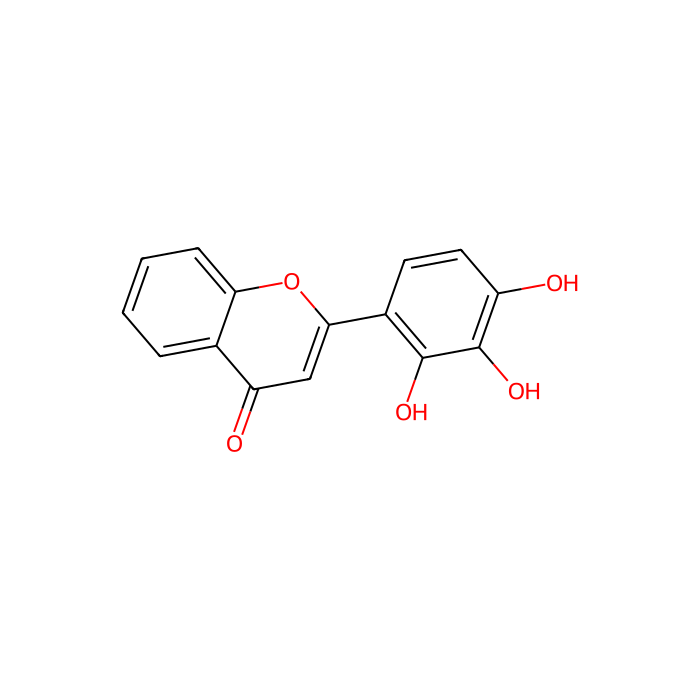
This compound belongs to the class of organic compounds known as flavones. These are flavonoids with a structure based on the backbone of 2-phenylchromen-4-one (2-phenyl-1-benzopyran-4-one).
External Descriptors
Not available
1. Djoumbou Feunang Y, Eisner R, Knox C, Chepelev L, Hastings J, Owen G, Fahy E, Steinbeck C, Subramanian S, Bolton E, Greiner R, and Wishart DS. ClassyFire: Automated Chemical Classification With A Comprehensive, Computable Taxonomy. Journal of Cheminformatics, 2016, 8:61.
Determine the necessary mass, volume, or concentration for preparing a solution.
Dilution Calculator
Determine the dilution needed to prepare a stock solution.
Reconstitution Calculator
Reviews
Customer Reviews
Application Protocols
Tested/validated applications
Not specified for this item; refer to CoA/Spec Sheet.
General example workflows (non-validated, for planning)
Preparation of DMSO stock
Allow vial to equilibrate to room temperature in a desiccator. Weigh quickly. Dissolve to 10–50 mM in anhydrous DMSO. Vortex/sonicate briefly. Aliquot into low-binding microtubes. Record exact concentration by weight-in/weight-out.
Biochemical enzyme assay (example setup)
Prepare 10-point 1:3 serial dilutions from 10 mM stock to yield 0.5 nM–50 µM final assay range at constant DMSO (0.5% v/v). Include DMSO-only control and a known reference inhibitor if available. Incubate per assay protocol, read signal, and fit to a 4PL model to extract IC50.
Cell-based assay (example setup)
Seed cells the day prior to treatment to reach 70–80% confluence at assay time. Prepare working dilutions to achieve 0.01–20 µM in media with ≤0.1% DMSO. Incubate for 4–48 h based on endpoint. Assess cytotoxicity in parallel (e.g., resazurin or ATP luminescence) to bracket non-lethal exposure windows.
Analytical QC before/after use
Run HPLC/UPLC and LC-MS on fresh and stored solutions to monitor integrity. Discard solutions showing new peaks >2–5% area unless qualified for your application.
Note
Parameters above are illustrative and not validated for this specific item. Optimize for your assay and consult the CoA/SDS for item-specific constraints.
Biological Roles
Item-specific
Biological function/targeting information is not provided in the Product Data for 2-D08. Treat this compound as a general research tool molecule; consult literature and the CoA for any known target associations before designing experiments.
General considerations for small-molecule tool compounds
Role in research: Tool compounds modulate biological pathways to interrogate mechanism, validate targets, and serve as positive/negative controls in assays.
Selectivity and potency: Verify reported selectivity in your specific system. Cross-validate outcomes with orthogonal assays (e.g., phenotypic vs biochemical) to reduce the risk of artifact-driven conclusions.
ADME and permeability: When moving from biochemical to cellular assays, assess permeability (e.g., PAMPA), efflux (e.g., MDR1 interactions), and stability in cell culture media/serum.
Aggregation/artifacts: Some chemotypes form colloidal aggregates at micromolar concentrations, causing nonspecific inhibition. Use detergent counterscreens (e.g., 0.01% Tween-20) and DLS where appropriate.
Chemical liabilities: Screen for pan-assay interference (PAINS) motifs, redox cyclers, Michael acceptors, and photoreactive groups if structure is available. Confirm absence/presence via literature and your analytical data.
Practical tips
Start with a broad concentration range (e.g., 0.01–50 µM) and refine based on observed responses and cytotoxicity baselines.
Maintain constant vehicle control across conditions (e.g., 0.1% DMSO) and document exposure times, media composition, and plate format for reproducibility.
Note
No medical/clinical claims are made. This product is for research use only.
Buffer Applications
Relevance
2-D08 is a small-molecule tool compound, not a buffering agent. It does not define or stabilize pH in the way classical buffers do.
Practical handling with buffers (general)
Stock preparation: Dissolve the compound in anhydrous DMSO to prepare a concentrated stock (e.g., 10–50 mM). Filter-sterilize through 0.2 µm PTFE if aseptic conditions are required.
Aqueous dilution: Add the DMSO stock to pre-warmed, well-stirred buffer to achieve the target final concentration, keeping DMSO typically ≤0.1–1% v/v depending on system tolerance. Common biological buffers include PBS (pH 7.2–7.4), HEPES (pH 7.2–7.6), and Tris (pH 7.4–8.0); choose based on assay needs and compatibility.
Precipitation management: If cloudiness or precipitation occurs, reduce the dilution factor per step (staged dilution), modestly raise temperature (e.g., to 30–37°C if assay-compatible), or include low levels of nonionic surfactant (0.01–0.02% v/v) after validating assay compatibility.
Adsorption: Hydrophobic compounds may adsorb to plastics. Use low-binding tubes/plates or precondition wells with assay buffer containing protein (e.g., 0.1% BSA) when suitable.
Notes
Buffer composition and pH can affect compound ionization state and solubility. If the structure is known, estimate pKa to anticipate behavior; otherwise, determine empirically.
No item-specific pKa or solubility values are provided in the Product Data; consult the CoA or perform small-scale tests.
Green Alternatives
Context
For small-molecule tool compounds, environmental impact often stems from solvent choice and assay throughput rather than the compound itself.
Greener solvent strategies (general)
Prefer DMSO over DMF/NMP for stock solutions where feasible (lower hazard profile, better biodegradability scores in several solvent guides).
Use ethanol or water-cosolvent systems for working solutions when assay-compatible.
For chromatography, consider ethanol–water or ACN–water in place of chlorinated solvents; avoid unnecessary modifiers if resolution allows.
Process-intensity reduction
Miniaturize assays (e.g., 384-/1536-well formats) to cut solvent usage per data point.
Employ acoustic dispensing to reduce DMSO volumes and plastic consumables.
Implement plate re-use policies and solvent recovery where validated.
No item-specific hazards or stabilizers are disclosed; consult SDS for precise environmental and safety considerations for this product.
Pharmaceutical Uses
Scope
This product is supplied strictly for research use only (Product Data). It is not intended for human or veterinary use, nor for diagnostic or therapeutic applications.
Formulation relevance (general, non-clinical)
In preclinical research settings, small-molecule tool compounds may be formulated for in vitro or ex vivo studies. Typical vehicles for nonclinical dosing studies (if applicable to your research) include aqueous solutions containing cosolvents (e.g., 10% DMSO + 40% PEG400 + 50% saline) or suspensions with surfactants. Any such use requires internal safety assessment and is outside the scope of the product’s intended use.
Excipient/compendial status
No pharmacopeial monograph or excipient status is provided for this item. Treat as a non-GMP research chemical.
Analytical considerations
For method development (e.g., LC-MS bioanalytical), establish specificity and stability in relevant matrices. Validate extraction recovery and matrix effects.
Regulatory note
Do not incorporate this compound into products for human or animal administration. For GLP/GMP or IND-enabling work, request a custom synthesis and full CMC package under a separate agreement.
Item-specific details
Grade/purity, residual solvent limits, and impurity profiles are Not specified for this item; refer to CoA/Spec Sheet if you require data for internal risk assessments.
Physical Properties
Item-specific (from Product Data)
Appearance: Not specified for this item; refer to CoA/Spec Sheet.
Molecular weight: Not specified for this item; refer to CoA/Spec Sheet.
Molecular formula: Not specified for this item; refer to CoA/Spec Sheet.
Storage: Store at 2–8°C (Product Data). Shipped on wet ice (Product Data).
Literature/general (not item-certified; for planning only)
For library/tool compounds of this class, physicochemical properties can vary; do not assume values such as logP, pKa, mp/bp, or refractive index without item-specific documentation.
Practical guidance for use
Solubility screening: Begin with anhydrous DMSO (e.g., 10–50 mM trial stock). If needed, co-solvent blends (DMSO:water, DMSO:EtOH, DMSO:PEG400) can help reach working concentrations. Determine solubility empirically; avoid heating above ambient unless stability is known.
Aqueous compatibility: To prepare assay-ready solutions, dilute concentrated DMSO stock into buffer with vigorous mixing to keep final DMSO ≤0.1–1% v/v (cell/biochemical assays). Include nonionic surfactant (e.g., 0.01–0.05% Tween-20) only if compatible with the assay.
Hygroscopicity/photosensitivity: Not specified for this item. As a precaution for many aromatic tool compounds, minimize light exposure and moisture during handling until stability is confirmed.
Stability: Not specified for this item; refer to CoA/SDS. If long-term solution storage is required, perform a stability-indicating HPLC check after freeze–thaw and at intended storage temperatures.
Quality & Grades
Item-specific
Grade/purity: Not specified for this item; refer to CoA/Spec Sheet for certified purity, impurity profile, and analytical methods.
How to interpret typical grades for small-molecule tool compounds (general guidance)
Screening/Research Grade: Intended for in vitro/in-cell assays. Purity often reported by HPLC/UPLC area % with single-wavelength or DAD detection; identity confirmed by MS and/or NMR. Trace residual solvents and water may be present within acceptable ranges for research.
Analytical/Reference Standard Grade: Includes full characterization (1H/13C NMR, HRMS, HPLC with multiple wavelengths, sometimes qNMR), tight impurity limits, and stability data. Suitable for quantitative assay benchmarking.
Stabilizers: If a stabilizer or counter-ion is present (e.g., as a salt form or with antioxidants), it will be explicitly listed on the CoA. None are specified for this item.
Best practices for QC on receipt
Verify identity against CoA using an orthogonal method available in your lab (e.g., HRMS exact mass, 1H NMR). For potency-critical work, consider qNMR for mass-balance purity.
Confirm purity under your analytical conditions (gradient, wavelength(s)) since UV response factors can differ from the vendor method.
Document batch/lot, date opened, and initial HPLC trace for stability trending.
Notes
If you require special specifications (e.g., residual solvent limits, metal analysis, water content by KF), contact Aladdin Scientific prior to ordering to arrange custom QC. Otherwise, treat unspecified attributes as Not specified for this item; refer to CoA/Spec Sheet.
Reaction & Applications
Scope
This product is positioned as a screening/tool compound for research use rather than as a synthetic reagent or catalyst.
Non-synthetic applications (general, not item-specific claims)
Chemical biology: Used in assay development, target validation workflows, or phenotypic screens as a small-molecule perturbant. Employ appropriate vehicle controls (DMSO-only) and titration curves to quantify potency and window.
Mechanism studies: When literature information on target/pathway is available for a given tool compound, replicate with orthogonal readouts (e.g., biochemical vs cellular) to mitigate off-target interpretations.
If employing in assays
Establish concentration–response (8–12 points, 1:3 or 1:2 serial dilutions). Include counterscreens to detect aggregation (detergent sensitization), redox cycling, or assay interference (fluorescence/absorbance artifacts).
Validate compound integrity by LC-MS before critical experiments, especially after prolonged storage.
Synthetic chemistry note
Not typically used as a building block/starting reagent. If derivatization is desired (e.g., for probe immobilization or SAR), request the structural dossier to plan compatible transformations. Absent structural information, do not assume functional-group tolerance or reactivity.
Important
No manufacturer application text was provided beyond “For research use only.” Do not infer therapeutic or diagnostic applications. Consult primary literature and the CoA for any target/pathway-specific use notes relevant to your project.
Reaction Conditions
Applicability
This product is not positioned as a reagent for chemical synthesis; thus, canonical reaction conditions (solvent, catalysts, temperature) are not typically applicable.
General operational conditions related to assay preparation
Stock solution preparation: Dissolve the compound in anhydrous DMSO at 10–50 mM. Vortex and, if necessary, sonicate briefly. Avoid heating above ambient until thermal stability is confirmed.
Working solutions: Dilute stocks into assay buffer with vigorous mixing. Maintain consistent vehicle concentration (e.g., 0.1% DMSO across wells/conditions) to prevent vehicle-driven variability.
Adsorption/precipitation control: Use low-binding plastics and staged dilution to mitigate precipitation. If turbidity is observed, consider modest warming or inclusion of inert protein (e.g., 0.1% BSA) where compatible.
Analytical conditions (general)
HPLC/UPLC: Typical gradients use water (0.1% formic acid or ammonium formate) with acetonitrile or methanol. Monitor at multiple wavelengths (e.g., 210/254/280 nm) and/or mass detection due to variable chromophores in small molecules.
LC-MS settings: Positive/negative ESI depending on ionizable groups; tune source conditions empirically.
Yields and kinetics
Not applicable; no synthetic transformations are claimed for this item.
Notes
Item-specific pKa, logP, or solubility parameters that would guide exact buffer composition are Not specified for this item; determine empirically for your system.
Safety & Handling
Authoritative data
GHS classification: Not specified for this item; refer to SDS.
Signal word / H-statements / pictograms: Not specified for this item; refer to SDS.
General laboratory precautions (when specific hazards are unknown)
Treat as a potentially harmful small organic compound. Use appropriate PPE: lab coat, safety glasses, and disposable nitrile gloves. Handle powders/solids in a fume hood to avoid inhalation of dust/aerosols.
Avoid skin/eye contact and ingestion. Wash hands thoroughly after handling.
Prevent release to the environment; collect waste in halogenated/nonhalogenated organic waste streams per local regulations.
First-aid overview (consult SDS for definitive guidance)
Inhalation: Move to fresh air. Seek medical attention if symptoms occur.
Skin contact: Remove contaminated clothing, wash with soap and water.
Eye contact: Rinse cautiously with water for several minutes; remove contact lenses if present and easy to do. Seek medical attention if irritation persists.
Ingestion: Rinse mouth. Do not induce vomiting unless directed by medical personnel. Seek medical attention.
Stability and incompatibilities
Storage per Product Data: 2–8°C. Protect from excessive heat. Keep container tightly closed, desiccated if applicable. Light sensitivity is not specified; store in amber secondary containment as a precaution.
Incompatibilities: Not specified for this item. As a conservative measure, segregate from strong oxidizers, strong acids/bases, and reactive reducing agents until compatibility is established.
Notes
Always defer to the product-specific SDS/CoA for authoritative hazard controls, spill response, and disposal instructions.
For solution handling in DMSO, avoid contact with skin due to transdermal transport potential of DMSO.
Solvent Selection
Applicability
As a catalog small-molecule tool compound with unspecified solubility, solvent selection focuses on preparing concentrated stocks compatible with biological/biochemical assays and analytics.
Primary solvents (general best practice)
DMSO: First-choice for hydrophobic/heteroaromatic tool compounds. Advantages include broad solvency and aqueous miscibility for subsequent dilution. Use anhydrous DMSO to improve stability.
Ethanol or Methanol: Useful as secondary options; ensure assay tolerance to alcohols.
DMF/Acetonitrile: High solvency but consider toxicity and assay compatibility; typically used in analytical sample prep rather than cell assays.
Aqueous dilution strategy
Prepare a concentrated DMSO stock (e.g., 10–50 mM). Add aliquots to vigorously stirred buffer to reach final DMSO 0.1–1% v/v depending on biological system tolerance. Consider adding 0.1% BSA or 0.01% nonionic surfactant if precipitation occurs (validate against your assay).
Comparison snapshot (general)
DMSO: Excellent solvency; greener than DMF; can enhance skin penetration (handle carefully).
EtOH: Biocompatible at ≤0.5–1% v/v; lower solvency than DMSO for many scaffolds.
ACN: Useful for LC-MS sample prep; limit to ≤0.2% in enzyme assays where possible.
Analytics
For HPLC/UPLC, dissolve in ACN, MeOH, or initial mobile phase. Filter through 0.2 µm PTFE prior to injection to remove particulates.
Note: Specific solubility data for this item are not available in the Product Data; determine empirically.
Storage & Reconstitution
Item-specific (from Product Data)
Storage conditions (as supplied): Store at 2–8°C.
Shipping: Shipped on wet ice.
General reconstitution guidance (not item-specific specifications)
Allow the container to equilibrate to room temperature in a desiccator before opening to minimize moisture uptake.
Prepare a concentrated stock in anhydrous DMSO (e.g., 10–50 mM). Mix thoroughly and, if needed, briefly sonicate. Filter-sterilize through 0.2 µm PTFE for aseptic applications.
Aliquot stocks into low-binding, airtight vials to minimize headspace and freeze–thaw cycles.
Solution storage (general recommendations)
For DMSO stocks: Store tightly sealed, desiccated, protected from light. Many small-molecule stocks are kept at −20°C to −80°C; verify stability by HPLC over your intended storage interval. Avoid repeated freeze–thaw; use single-use aliquots.
For aqueous working solutions: Prepare fresh on the day of use when possible. If short-term storage is necessary, keep at 2–8°C and assess for precipitation or degradation before use.
Stability/appearance
Appearance, hygroscopicity, and photostability are Not specified for this item; refer to CoA/Spec Sheet. Inspect materials visually for discoloration or precipitate before use.
Documentation
Retain lot number, date opened, and initial QC traces. For long-term projects, perform periodic re-qualification (e.g., every 3–6 months) under your storage conditions.
Structure & Identity
Overview: This product (SKU D167318; name 2-D08) is listed in our Small Molecules & Compound Libraries category as a research-use small-molecule tool compound.
Item-specific (from Product Data)
CAS: 144707-18-6
SKU: D167318
Product Name: 2-D08
Molecular formula: Not specified for this item; refer to CoA/Spec Sheet.
Molecular weight: Not specified for this item; refer to CoA/Spec Sheet.
SMILES: Not specified for this item; refer to CoA/Spec Sheet.
InChIKey: 161722 (truncated in provided data). For definitive structure identity, refer to CoA/SDS.
Literature/computational (general)
No literature structural identifiers are provided here to avoid conflicts with product-specific certification. If you require the exact 2D/3D structure (e.g., to build docking models), request the current CoA/structure file from Aladdin Scientific.
General structural notes (applicability)
2-D08 is supplied as a discrete small organic molecule used in screening/assay contexts. Typical features of such compounds include heteroatoms and aromatic/heteroaromatic motifs to confer target engagement and cell permeability, but the exact functional groups for this item are not disclosed in the Product Data.
Practical identity guidance
For internal release/ID testing, we recommend orthogonal methods: HPLC/UPLC purity profile, high-resolution MS for exact mass, and 1H/13C NMR in an appropriate deuterated solvent. Compare against the reference spectrum/trace in the CoA.
If you will register this compound in ELN/LIMS, use the CAS and internal SKU pending receipt of full structural attributes from the CoA.
Synthetic Utility
Relevance
2-D08 is offered as a research tool compound for biological studies rather than as a synthetic building block. In the absence of disclosed structure/functional groups in the Product Data, synthetic applications cannot be prescribed for this specific item.
General guidance (if derivatization is contemplated)
Obtain the full structural dossier (CoA/SDS) to identify functional handles (e.g., phenols, amines, acids) for conjugation or SAR exploration.
If bioconjugation is desired (e.g., affinity matrices, fluorescent tags), select chemistries orthogonal to other motifs in the scaffold (NHS ester amidation, click reactions via azide/alkyne if present, or diazonium coupling for activated rings). Do not proceed without confirming the compound’s functional groups and stability.
Analytical support for modifications
Use LC-MS to track conversions and detect degradation. Acquire 1H/13C NMR for final products; consider 2D NMR if regioselectivity is a concern.
Establish stability-indicating methods before scale-up to ensure the parent pharmacophore is retained.
Alternative approach
For method development without altering the parent molecule, consider reversible immobilization strategies (e.g., hydrophobic or ion-exchange capture) or photoaffinity labeling on close analogs with known structures.
Note
Because item-specific reactivity and functional group content are Not specified for this item, treat the above as general planning guidance only.
Target Specificity
Item-specific
Target, pathway, binding site, and selectivity data are not provided in the Product Data for this item.
Guidance for users
If literature suggests a putative target for a compound labeled “2-D08,” verify equivalence of CAS/structure between sources and this product lot before extrapolating activity claims.
Establish target engagement with orthogonal assays (e.g., biochemical binding/inhibition, cellular phenotypes, and, when feasible, thermal shift/target occupancy methods) to confirm specificity in your system.
Note
Only information present in the product’s CoA or SDS should be considered authoritative for this catalog item. Absent such data, treat target specificity as Not specified for this item; refer to CoA/Spec Sheet.
Frequently Asked Questions
What is the purity of this product, and how is it determined?
This product is supplied at ≥98% purity, determined by HPLC. Lot-specific values are stated on the Certificate of Analysis.
How should this product be stored?
Store at 2–8 °C. Refrigerated storage is required to maintain the specified shelf life.
How is this product shipped?
This product ships chilled on wet ice. Unpack on arrival and transfer it to the storage condition stated above.
What are the CAS number, molecular formula and molecular weight?
The CAS Number is 144707-18-6, the molecular formula is C15H10O5, and the molecular weight is 270.24 g/mol. InChIKey JJAXTFSPCLZPIW-UHFFFAOYSA-N.
What documentation is provided?
Available product documentation, including Certificates of Analysis (COA), Safety Data Sheets (SDS), and specification sheets, is shown in the product document area. Document availability and access follow the current site policy.
We use cookies to ensure the website functions properly and, where permitted, to improve your experience. You can manage your preferences at any time in Settings. Learn more in our Cookie Policy.
Shall we send you a message when we have discounts available?
Remind me later
Thank you! Please check your email inbox to confirm.
Products are supplied to verified businesses, institutions, and qualified professionals for research and development use only. Not for use in humans, animals, diagnosis, or therapy.

 K2219527