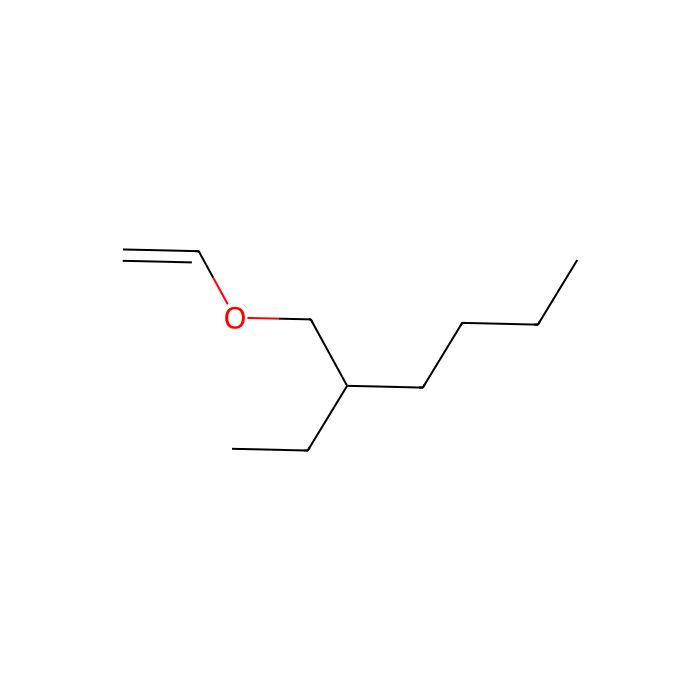
2-Ethylhexyl Vinyl Ether - ≥97%(GC) , CAS No.103-44-6

CAS: 103-44-6 Cat. No.: E156272 Formula: C10H20O Molecular Weight: 156.27 EC Number: 203-111-4
AVAILABLE TO ORDER
GRADE & PURITY ≥97%(GC)
Synonyms
(2-Ethyl-1-hexyl) vinyl ether|1-Ethenoxy-2-ethylhexane|3-((Vinyloxy)methyl)heptane|Ether, 2-ethylhexyl vinyl|Heptane, 3-((ethenyloxy)methyl)-|3-(ethenoxymethyl)heptane|2-ETHYLHEXYL VINYL ETHER|Vinyl 2-ethylhexyl ether|2-ethylhexylvinylether
Storage
Room temperature
Shipped In
Normal
★
Size
USA
Germany (EU)*
Price
Qty
5g
E156272-5g
8 In stock
—

$182.90

$274.90
Save $92.00 (33.47%)
25g
E156272-25g
1 In stock
—

$685.90

$1,028.90
Save $343.00 (33.34%)
Enter a quantity for the sizes you want to add.

Specifications

Synonyms
(2-Ethyl-1-hexyl) vinyl ether | 1-Ethenoxy-2-ethylhexane | 3-((Vinyloxy)methyl)heptane | Ether, 2-ethylhexyl vinyl | Heptane, 3-((ethenyloxy)methyl)- | 3-(ethenoxymethyl)heptane | 2-ETHYLHEXYL VINYL ETHER | Vinyl 2-ethylhexyl ether | 2-ethylhexylvinylether
Specifications & Purity
≥97%(GC)
Storage
Room temperature
Shipped In
Normal
Purity
≥97%(GC)
Names and Identifiers
Pubchem Sid
Pubchem Sid Url
https://pubchem.ncbi.nlm.nih.gov/substance/488183420
SMILES
CCCCC(CC)COC=C
IUPAC Name
3-(ethenoxymethyl)heptane
InChIKey
DSSAWHFZNWVJEC-UHFFFAOYSA-N
InChI
1S/C10H20O/c1-4-7-8-10(5-2)9-11-6-3/h6,10H,3-5,7-9H2,1-2H3
Isomeric SMILES
CCCCC(CC)COC=C
RTECS
KO0175000
Molecular Weight
156.27
Reaxys
1750721
Reaxys-RN_link_address
https://www.reaxys.com/reaxys/secured/hopinto.do?context=S&query=IDE.XRN=1750721&ln=

Advanced Data

Taxonomic Classification

Taxonomy Tree

KingdomOrganic compounds
SuperclassOrganic oxygen compounds
ClassOrganooxygen compounds
SubclassNot available
Intermediate Tree Nodes Not available
Direct ParentOrganooxygen compounds
Alternative Parents Hydrocarbon derivatives  
Molecular FrameworkAliphatic acyclic compounds
Substituents Hydrocarbon derivative - Organooxygen compound - Aliphatic acyclic compound
DescriptionThis compound belongs to the class of organic compounds known as organooxygen compounds. These are organic compounds containing a bond between a carbon atom and an oxygen atom.
External Descriptors Not available
3D Structure
Interactive Chemical Structure Model


Certificates (CoA,COO,BSE/TSE and Analysis Chart)
C of A & Other Certificates(BSE/TSE, COO):
Analytical Chart:

Find and download the COA for your product by matching the lot number on the packaging.

4 results found

Lot NumberCertificate TypeDateItem
F1730055F1730055Certificate of AnalysisOct 21, 2025 E156272
C1828126C1828126Certificate of AnalysisOct 14, 2025 E156272
C1828125C1828125Certificate of AnalysisOct 14, 2025 E156272
D2312185D2312185Certificate of AnalysisApr 17, 2023 E156272
Chemical and Physical Properties
Refractive Index1.42
Flash Point57°C(lit.)
Boil Point177 °C
Molecular Weight156.26
XLogP34.400
Hydrogen Bond Donor Count0
Hydrogen Bond Acceptor Count1
Rotatable Bond Count7
Exact Mass156.151 Da
Monoisotopic Mass156.151 Da
Topological Polar Surface Area9.200 Ų
Heavy Atom Count11
Formal Charge0
Complexity88.900
Isotope Atom Count0
Defined Atom Stereocenter Count0
Undefined Atom Stereocenter Count1
Defined Bond Stereocenter Count0
Undefined Bond Stereocenter Count0
The total count of all stereochemical bonds0
Covalently-Bonded Unit Count1
Safety and Hazards(GHS)
Pictogram(s)
GHS02,   GHS07,   GHS08,   GHS09
Signal
Warning
Hazard Statements

H226:Flammable liquid and vapor

H302:Harmful if swallowed

H315:Causes skin irritation

H319:Causes serious eye irritation

H373:May causes damage to organs through prolonged or repeated exposure

H411:Toxic to aquatic life with long lasting effects

Precautionary Statements

P210:Keep away from heat, hot surface, sparks, open flames and other ignition sources. - No smoking.

P233:Keep container tightly closed.

P240:Ground/bond container and receiving equipment.

P241:Use explosion-proof [electrical/ventilating/lighting/.../] equipment.

P242:Use only non-sparking tools.

P243:Take precautionary measures against static discharge.

P260:Do not breathe dust/fume/gas/mist/vapors/spray.

P264:Wash hands [and …] thoroughly after handling.

P270:Do not eat, drink or smoke when using this product.

P273:Avoid release to the environment.

P280:Wear protective gloves/protective clothing/eye protection/face protection.

P321:Specific treatment (see ... on this label).

P330:Rinse mouth.

P391:Collect spillage.

P302+P352:IF ON SKIN: wash with plenty of water.

P303+P361+P353:IF ON SKIN (or hair): Take off Immediately all contaminated clothing. Rinse SKIN with water [or shower].

P305+P351+P338:IF IN EYES: Rinse cautiously with water for several minutes. Remove contact lenses if present and easy to do - continue rinsing.

P362+P364:Take off contaminated clothing and wash it before reuse.

P370+P378:In case of fire: Use ... to extinguish.

P403+P235:Store in a well-ventilated place. Keep cool.

P501:Dispose of contents/container to an approved waste disposal plant.

P264+P265:Wash hands [and …] thoroughly after handling. Do not touch eyes.

P301+P317:IF SWALLOWED: Get medical help.

P337+P317:If eye irritation persists: Get medical help.

P332+P317:If skin irritation occurs: Get medical help.

P319:Get medical help if you feel unwell.

RTECS
KO0175000
Reaxys
1750721
Reaxys-RN_link_address
https://www.reaxys.com/reaxys/secured/hopinto.do?context=S&query=IDE.XRN=1750721&ln=
Solution Calculators
Reviews

Customer Reviews

Application Protocols

Not applicable in the context of immunoassays or molecular biology kits. There are no WB/IHC/IF/FC protocols for this chemical.

For materials applications (general guidance, not product‑specific):

  • Photocuring (thiol–ene or cationic):
    • Mix monomer with photoinitiator (0.5–3 wt% depending on system) and comonomer/oligomer as needed.
    • Degas under N2, apply as thin film, irradiate at 365–405 nm to target conversion; post‑cure thermally if required.
  • Acid‑initiated polymerization:
    • Charge dry solvent and initiator to a cooled reactor (0–5 °C), add monomer slowly under N2 while monitoring exotherm and viscosity.
    • Quench with a hindered base or alcohol; add inhibitor to residual monomer fraction.

Consult the primary literature and your EHS protocols for scale‑up and curing parameters. These examples are provided for research planning only.

Biological Roles

Item-specific biological data are not provided. As a synthetic vinyl ether monomer, 2‑ethylhexyl vinyl ether does not have a known intrinsic biological role.

General biochemical context (literature/knowledge):

  • Vinyl ether linkages (–O–CH=CH–) are present in endogenous plasmalogens (a class of glycerophospholipids) where the sn‑1 position carries a vinyl ether (alk‑1′‑enyl) substituent. These natural compounds are implicated in membrane structure and oxidative stress buffering. Note: this is a structural analogy only; 2‑ethylhexyl vinyl ether is not a plasmalogen and is not used in biological systems.
  • Reactivity in biochemistry: Electron‑rich alkenes like vinyl ethers are susceptible to acid‑catalyzed hydrolysis and electrophilic addition; in vivo, such motifs are carefully stabilized within lipid frameworks.

Use in bio‑oriented research (non-clinical):

  • As a hydrophobic comonomer to tailor surface energy of polymeric biomaterials or device coatings in research settings (e.g., modulating protein adsorption in vitro). Any such use requires exhaustive toxicological and extractables/leachables assessment prior to contact with biological systems.

Compliance reminder: For research use only. No medical, diagnostic, or therapeutic applications are intended or supported for this product.

Buffer Applications

This compound is a hydrophobic, reactive vinyl ether monomer and is not used to prepare aqueous buffers or to control pH. It is practically insoluble in water and can undergo acid‑catalyzed reactions that are incompatible with buffer formulation.

Practical guidance:

  • For aqueous buffer needs, select standard systems such as phosphate, HEPES, Tris, MOPS, or acetate depending on the target pH and ionic strength.
  • If polymer‑additive studies require dispersion in buffered media, incorporate the monomer into a polymer matrix first or emulsify with appropriate surfactants; control pH to neutral and avoid acidic conditions that could trigger hydrolysis/polymerization.
Green Alternatives

Context: 2‑Ethylhexyl vinyl ether is primarily a reactive monomer. When an inert ether solvent is needed, greener, more stable alternatives are often preferable. If a hydrophobic reactive diluent is required, consider life‑cycle and safety tradeoffs.

  • Greener inert ether solvents (when you do NOT need a reactive vinyl ether):

    • 2‑Methyltetrahydrofuran (2‑MeTHF): Bio‑derived from hemicellulose, higher boiling than THF, better water handling, forms fewer peroxides than diethyl ether; non‑reactive under typical conditions.
    • Cyclopentyl methyl ether (CPME): Excellent azeotrope behavior, broad solvent window, low peroxide tendency, high hydrophobicity; thermally robust.
  • Tradeoffs vs EOVE:

    • Reactivity: EOVE can intentionally copolymerize/functionalize networks; 2‑MeTHF/CPME will not. If inertness is required, they are greener choices.
    • Safety: EOVE may autopolymerize and is typically shipped with inhibitors; 2‑MeTHF/CPME have lower polymerization risk and improved safety profiles.
    • Environmental: Bio‑sourcing (2‑MeTHF) and improved recyclability (CPME) support greener metrics versus specialty monomers.
  • Greener reactive diluents (if reactivity is required):

    • Allyl ethers from biobased alcohols (e.g., glycerol derivatives) or isosorbide di‑allyl ether provide reactivity via radical allylation with reduced acid sensitivity compared to vinyl ethers; however, cure speeds and network structures differ.
    • Renewable acrylate/itaconate esters can substitute in UV‑curable systems, offering fast cure and established EHS data, but introduce acrylic odor/toxicity concerns and oxygen inhibition.

Selection guidance: If your process goal is solvation or viscosity reduction without incorporation into the polymer, choose 2‑MeTHF/CPME. If reactive dilution is fundamental, assess renewable allyl/acrylate alternatives and implement inhibitor and containment controls to mitigate EHS impacts.

Pharmaceutical Uses

No item-specific pharmacopeial status or excipient grade is provided for this product. Not specified for this item; refer to CoA/Spec Sheet.

General context (non-clinical, formulation science):

  • 2‑Ethylhexyl vinyl ether is primarily a materials monomer for research and industrial coatings/adhesives. It is not a common pharmaceutical excipient.
  • In preclinical device or coating R&D, vinyl ether monomers may be investigated as reactive diluents to adjust crosslink density, hydrophobicity, and film properties during UV/cationic curing. Any consideration toward medical device coatings requires rigorous biocompatibility, extractables/leachables, and residual monomer controls; such evaluations are beyond the scope of this listing.
  • If an ether solvent or hydrophobic diluent is required for pharmaceutical processes, non‑reactive, pharmacopeial‑listed solvents (e.g., ethanol, isopropanol, acetone, ethyl acetate) or established ethers (e.g., diethyl ether, while noting its hazards) are typically preferred over reactive vinyl ethers.

Compliance note: This product is offered for research use only and is not intended for drug, diagnostic, or clinical applications.

Physical Properties

Item-specific properties were not supplied. The following are general literature values for 2‑ethylhexyl vinyl ether (for method development and planning only; not product specifications):

  • Phase/appearance: Typically a colorless, hydrophobic liquid (literature/general).
  • Boiling point: Reported approximately 189–195 °C at 101 kPa (literature; values vary by source and stabilizer content).
  • Melting point: Below 0 °C; remains liquid at ambient conditions (literature/general).
  • Density: Approximately 0.83–0.85 g/mL at 20–25 °C (literature range).
  • Refractive index (n20 D): Commonly reported around 1.430–1.440 (literature range).
  • Vapor pressure: Low at ambient temperature relative to short‑chain vinyl ethers (literature trend).
  • Solubility: Practically insoluble in water; miscible with many nonpolar and moderately polar organic solvents (e.g., toluene, hexanes, ethers, esters) (general chemistry).
  • Partition behavior: Expected high hydrophobicity (logP estimated >3; literature/computational estimates) due to 2‑ethylhexyl chain.
  • Viscosity: Low to moderate, increasing upon inhibitor depletion or trace polymerization (general observation for vinyl ethers).

Important: None of the above values constitute specifications for SKU E156272. Not specified for this item; refer to CoA/Spec Sheet for any lot-specific values (e.g., inhibitor content, purity, refractive index, density). Always verify properties experimentally under your conditions due to sensitivity of vinyl ethers to acid traces and polymerization.

Quality & Grades
  • Item-specific grade/purity: Not specified for this item; refer to CoA/Spec Sheet.
  • Stabilizer/inhibitor: Not specified for this item; refer to CoA/Spec Sheet. Vinyl ethers are commonly shipped with trace inhibitors (e.g., MEHQ, BHT) to suppress autopolymerization; presence/identity impact UV absorbance and downstream reactivity.

Guidance on grades for this class of material (general information):

  • Technical/industrial grade: Suitable for bulk polymerization and coatings; broader impurity profile and inhibitor levels. Not recommended where trace acid, hydroperoxides, or oligomers interfere.
  • Reagent grade: Narrower impurity specifications and documented inhibitor content; typical choice for synthetic transformations and material science R&D.
  • Low‑UV/HPLC grade (if available): Controlled UV background and particulates; useful where spectroscopic monitoring or photochemical applications are sensitive to inhibitors.

Considerations for method development:

  • Inhibitor management: If inhibitor removal is required (e.g., for photopolymerization or acid‑sensitive catalysis), pass through basic alumina under inert atmosphere at low temperature; immediately use or re‑stabilize afterward. Verify by UV or GC.
  • Water/acid content: Trace acidity/water catalyze polymerization and hydrolysis. Verify by acid number, KF titration, and run a short‑stability test under your reaction conditions.
  • Lot release data to request: Purity by GC, inhibitor identity/ppm, acidity (as acetic), peroxides (if applicable), refractive index, and color (APHA).
Reaction & Applications

2‑Ethylhexyl vinyl ether (EOVE) is an electron‑rich enol ether valued as a hydrophobic monomer and a versatile synthon.

  • Polymerization (literature/general):
    • Cationic polymerization under Lewis/Brønsted acids (e.g., BF3·OEt2, HClO4, TfOH) to form poly(vinyl ether)s with low Tg and high flexibility due to the 2‑ethylhexyl side chain.
    • Photoinitiated cationic curing (iodonium or sulfonium salts) for coatings/inks; EOVE acts as a reactive diluent improving flow, lowering viscosity, and enhancing substrate wetting.
    • Copolymerization with isobutyl vinyl ether, N‑vinyl compounds, or epoxies (via dual‑cure systems) to tailor hardness and hydrophobicity.
  • Electrophilic additions (general reactivity):
    • Protonation/addition across the C=C affords stabilized cationic intermediates; hydrolysis yields the parent alcohol and an aldehyde (vinyl ether as masked aldehyde concept).
    • Halofunctionalization (HCl, Br2) and acetal/ketal exchange chemistry under mild acids.
  • Radical additions/thiol–ene (literature): Efficient anti‑Markovnikov thioether formation under UV/photoinitiation; useful in materials modification.
  • Hydroboration–oxidation: Access to β‑alkoxy alcohols/acetals depending on conditions (reported for vinyl ethers).

Practical tips:

  • Maintain inhibitor traces during storage; for polymerization experiments, control initiator dose and temperature to avoid runaway exotherms.
  • Thoroughly dry and base‑wash glassware; ppm‑level acid triggers uncontrolled curing.
  • Monitor by GC or 1H NMR (vinyl signals ~6.3–6.9 ppm) to quantify conversion; oligomer formation broadens baseline—use inhibitors for analytical samples.
Reaction Conditions

General literature guidance for vinyl ethers (adapt for your system; not product specifications):

  • Cationic polymerization:

    • Initiators: BF3·OEt2 (0.1–1 mol%), TfOH (≤0.5 mol%), or photogenerated acids (iodonium/sulfonium salts, 0.5–3 wt%).
    • Solvents: Nonpolar or weakly polar (toluene, heptane, CH2Cl2) dried and acid‑free.
    • Temperature: −20 to 25 °C; lower temperatures improve control and reduce exotherms.
    • Notes: Add monomer slowly; maintain inhibitor trace to moderate runaway; monitor exotherm and viscosity.
  • Thiol–ene additions:

    • Photoinitiation: 365–405 nm LEDs with Type I photoinitiators (e.g., DMPA, 0.5–2 wt%).
    • Stoichiometry: Slight thiol excess (1.05–1.2 equiv) for complete conversion.
    • Atmosphere: N2 to minimize oxygen inhibition; thin films cure rapidly (seconds–minutes).
  • Acid‑catalyzed hydrolysis/unmasking:

    • Catalysts: Dilute mineral acids or Amberlyst‑15.
    • Solvent: Aqueous/MeOH or acetone–water; 0–25 °C.
    • Outcome: 2‑ethylhexanol + corresponding aldehyde (formyl equivalent release).
  • Halofunctionalization:

    • Reagents: HCl or NBS/NCS with radical initiators.
    • Solvent: CH2Cl2, EtOAc; 0–25 °C.
    • Caution: Competing polymerization; use inhibitor and low temperature.

Expected yields: Highly system‑dependent. Clean thiol–ene and controlled cationic polymerizations often reach high conversions (>90%) under optimized conditions (literature).

Always run small‑scale trials to tune initiator load, temperature profile, and inhibitor content for your specific apparatus and heat removal.

Safety & Handling
  • Item-specific hazard classifications (GHS, pictograms, H‑statements, signal word): Not specified for this item; refer to the SDS.

General safety characteristics of vinyl ethers (literature/experience-based):

  • Flammability: Typically flammable liquids; use ignition‑source control, bonding/grounding, and work in well‑ventilated hoods.
  • Polymerization hazard: Vinyl ethers are prone to cationic autopolymerization initiated by acids, heat, and light. Commercial materials may contain polymerization inhibitors (e.g., BHT, MEHQ); verify presence and level on CoA.
  • Incompatibilities: Strong acids (Brønsted and Lewis), oxidizing agents, radical initiators, and UV light can induce decomposition or polymerization. Avoid contact with peroxides and strong electrophiles.
  • Handling practices:
    • Use dry, acid‑free glassware; rinse with base‑washed solvent if needed. Avoid acidic desiccants/stoppers.
    • Maintain an inert atmosphere (N2/Ar) during prolonged handling or heating; minimize headspace oxygen.
    • Keep containers tightly closed, protected from light/heat. Do not distill to dryness.
  • PPE: Chemical‑resistant gloves (e.g., nitrile), lab coat, splash goggles; use face shield for scale‑up transfers.
  • First aid (overview; defer to SDS):
    • Inhalation: Move to fresh air; seek medical attention if symptoms persist.
    • Skin/eye contact: Immediate decontamination with water for ≥15 min; remove contaminated clothing; obtain medical advice.
    • Ingestion: Rinse mouth; do not induce vomiting; get medical attention.
  • Spill/Fire response: Absorb with inert media (vermiculite), prevent ignition sources, and use foam/CO2/dry chemical for incipient fires. Consult SDS for extinguishing media compatibility.

Always consult the product’s SDS and institutional protocols for authoritative guidance.

Solvent Selection

This compound is most commonly used as a reactive monomer rather than as a routine solvent. However, understanding its solvation profile is valuable when formulating or copolymerizing.

  • Polarity and miscibility (general): Hydrophobic, low‑polarity ether; practically insoluble in water, miscible with hydrocarbons (hexanes, heptane), aromatics (toluene), and ethers/esters. Limited hydrogen‑bonding capacity (HBD = 0; weak HBA at oxygen), facilitating dissolution of nonpolar monomers, plasticizers, and hydrophobes.
  • Dielectric behavior: Expected low dielectric constant comparable to other long‑chain alkyl ethers (literature trend), favoring ion‑pairing; cationic polymerizations often use nonpolar diluents to moderate rate and heat release.
  • When to choose it:
    • As a reactive diluent/monomer to tune glass transition temperature (Tg) and flexibility in cationically cured networks.
    • To increase hydrophobicity and alkyl content in copolymers vs shorter vinyl ethers.
  • When to avoid it:
    • As an inert solvent for acid- or photoinitiated systems where unintended incorporation or polymerization would be problematic.
    • In aqueous or highly polar systems; choose 2‑MeTHF, ethyl acetate, or acetonitrile instead.

Comparison (general):

  • Versus THF/2‑MeTHF: Those are true solvents with higher polarity and better water tolerance; this vinyl ether is less polar and reactive (can polymerize), so unsuitable as an inert medium.
  • Versus cyclopentyl methyl ether (CPME): CPME offers similar hydrophobicity with greater oxidative/peroxide stability and is non‑reactive; preferred where an ether solvent (not monomer) is required.
Storage & Reconstitution
  • Item-specific storage: Room temperature (per Product Data). Shipped under normal conditions.
  • Additional best practices for vinyl ethers (general guidance):
    • Store in original, tightly sealed container, away from heat and light, preferably under an inert gas blanket (N2/Ar) to minimize oxidation and polymerization.
    • Maintain inhibitor content; if the material is supplied unstabilized (Not specified for this item; refer to CoA/Spec Sheet), consider adding an appropriate inhibitor for storage and remove immediately prior to use if necessary.
    • Avoid contact with acidic surfaces, strong acids, and oxidizers. Use PTFE‑lined caps; avoid acidic desiccants.
    • Do not refrigerate below the pour point only if phase separation or inhibitor precipitation is observed; most lots remain fluid at ambient conditions.
    • Do not freeze; repeated freeze–thaw is not relevant for a liquid monomer and may stratify inhibitors.

Reconstitution: Not applicable—this product is supplied as a liquid. If purification is required, distill under reduced pressure over basic alumina under inert atmosphere, collecting middle cut; immediately use or re‑stabilize. Always consult the CoA/SDS for lot‑specific guidance (e.g., inhibitor identity and recommended storage duration).

Structure & Identity

A hydrophobic vinyl ether monomer featuring a branched C8 alkoxy substituent on a terminal vinyl group; commonly used in cationic polymerization and hydrophobic coatings.

  • Item-specific (Product Data):

    • SKU: E156272
    • Product Name: 2-Ethylhexyl Vinyl Ether
    • CAS: 103-44-6
    • InChIKey: 71869 (as provided; abbreviated)
    • Storage Conditions: Room temperature
    • Shipped In: Normal
    • Category Path: 全部 / 可售 / 材料科学
    • Research Use Note: For research use only
  • Literature/Computed identifiers (general reference; not item-specific):

    • Molecular formula (literature): C10H20O
    • Molecular weight (literature): ~156.27 g/mol
    • Common structural description: CH2=CH–O–R where R = 2‑ethylhexyl [R = –CH(CH2CH3)–(CH2)4–CH3]
    • Representative SMILES (literature): C=COC(CCCCO)??? Not specified for this item; refer to CoA/Spec Sheet. (Note: multiple equivalent SMILES exist; consult authoritative databases for exact canonical form.)
  • Structural features (general chemistry):

    • Functional groups: vinyl ether (enol ether), branched alkyl chain (2‑ethylhexyl).
    • Hybridization/reactivity: Electron-rich alkene due to α-alkoxy donation; undergoes cationic/addition polymerization and electrophilic additions readily.
    • 2D structure (verbal): The molecule comprises a terminal vinyl unit (–CH=CH2) bonded through oxygen to a secondary carbon that begins a branched, eight‑carbon 2‑ethylhexyl chain. No formal stereocenters are specified (commercial material typically racemic at the secondary carbon).
Synthetic Utility

2‑Ethylhexyl vinyl ether (EOVE) is a representative enol ether with distinctive nucleophilic alkene character due to α‑oxygen donation.

Key transformations (literature/general):

  • Cationic polymerization: Readily forms poly(vinyl ether)s with tunable Tg via initiators such as BF3·OEt2, TfOH, or photogenerated acids. The bulky 2‑ethylhexyl group imparts flexibility and hydrophobicity to the polymer.
  • Hydrolysis/unmasking: Under mild acid, vinyl ethers hydrolyze to give an aldehyde plus the parent alcohol (2‑ethylhexanol). This makes vinyl ethers useful as masked formyl equivalents in certain strategies.
  • Electrophilic additions: HX addition (X = Cl, Br), oxymercuration/demercuration variants, and acetal exchange generate useful alkoxy‑functional intermediates.
  • Radical/thiol–ene: Efficient anti‑Markovnikov addition with thiols under UV or radical initiation provides thioethers with high functional‑group tolerance.
  • Oxidative cleavage: Ozonolysis or dihydroxylation pathways (conditions‑dependent) can transform the vinyl unit into carbonyl/diol derivatives.

Practical notes:

  • Moisture/acid sensitivity: Even ppm‑level acids can trigger polymerization/hydrolysis; rigorously dry and base‑treat vessels.
  • Inhibitor management: If inhibitor is removed for reactivity, conduct reactions immediately under inert atmosphere at low temperature; re‑stabilize unused portions.
  • Monitoring: 1H NMR vinyl resonances (~6.3–6.9 ppm) and GC are effective for conversion tracking; look for growth of oligomer baselines as an early sign of uncontrolled polymerization.
Target Specificity

Not applicable. This product is a small‑molecule vinyl ether monomer and is not an antibody, protein, or targeted biological reagent. No antigen/epitope specificity, clone, or isotype information is relevant.

Frequently Asked Questions

What is the purity of this product, and how is it determined?
This product is supplied at ≥97% purity, determined by gas chromatography (GC). Lot-specific values are stated on the Certificate of Analysis.
How should this product be stored?
Store at room temperature.
How is this product shipped?
This product ships under standard ambient conditions. No temperature-controlled packaging is required.
What are the CAS number, molecular formula and molecular weight?
The CAS Number is 103-44-6, the molecular formula is C10H20O, and the molecular weight is 156.27 g/mol. InChIKey DSSAWHFZNWVJEC-UHFFFAOYSA-N.
What documentation is provided?
Available product documentation, including Certificates of Analysis (COA), Safety Data Sheets (SDS), and specification sheets, is shown in the product document area. Document availability and access follow the current site policy.

Shall we send you a message when we have discounts available?

Remind me later

Thank you! Please check your email inbox to confirm.

Oops! Notifications are disabled.