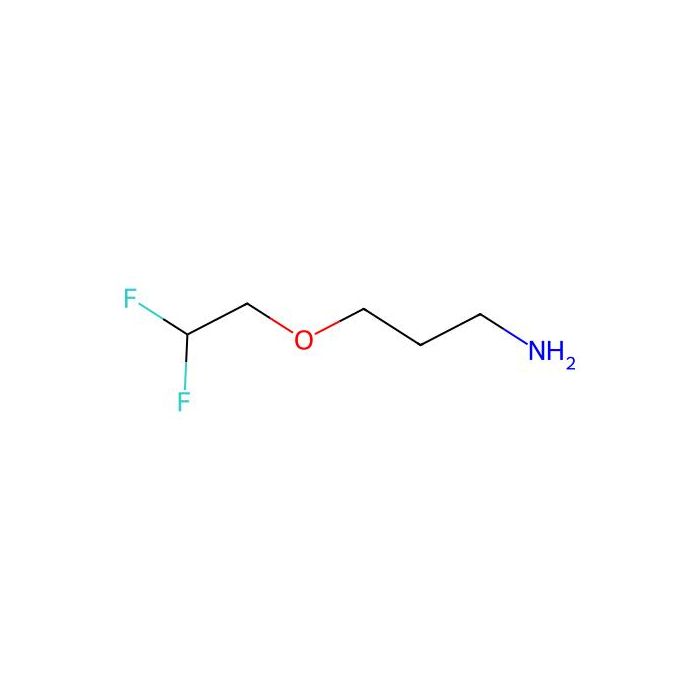
This compound belongs to the class of organic compounds known as dialkyl ethers. These are organic compounds containing the dialkyl ether functional group, with the formula ROR', where R and R' are alkyl groups.
External Descriptors
Not available
1. Djoumbou Feunang Y, Eisner R, Knox C, Chepelev L, Hastings J, Owen G, Fahy E, Steinbeck C, Subramanian S, Bolton E, Greiner R, and Wishart DS. ClassyFire: Automated Chemical Classification With A Comprehensive, Computable Taxonomy. Journal of Cheminformatics, 2016, 8:61.
Determine the necessary mass, volume, or concentration for preparing a solution.
Dilution Calculator
Determine the dilution needed to prepare a stock solution.
Reconstitution Calculator
Reviews
Customer Reviews
Application Protocols
Not applicable as standardized bioassay protocols (e.g., WB, IHC, IF, FC) do not pertain to a small-molecule amine building block. For synthetic use, refer to the Reaction Conditions and Synthetic Utility sections for general procedure outlines.
Biological Roles
This product is a synthetic organic building block. No inherent biological function is assigned for this catalog item.
General context (literature/general)
Ether-linked, difluorinated motifs are used in medicinal chemistry to tune physicochemical properties (pKa, lipophilicity, metabolic stability) without directly engaging in specific biochemical pathways.
Primary amines can be derivatized to amides, sulfonamides, and ureas that interact with proteins; however, any such biological activity arises from the final compounds, not from this intermediate itself.
The CHF2-bearing center adjacent to oxygen can modulate hydrogen-bonding and dipole characteristics in derived molecules.
No biological role is claimed or implied for this product; it is supplied strictly for research and laboratory synthesis.
Buffer Applications
Not typically applicable. 3-(2,2-Difluoroethoxy)propan-1-amine is a reactive building block rather than a buffering agent. While primary amines can transiently affect pH, this compound is not used to prepare defined buffer systems. For laboratory use, select established buffers (e.g., phosphate, HEPES, Tris) appropriate to your target pH.
Green Alternatives
While the compound itself is a target building block (not a solvent), greener choices can be made for the media and reagents used with it.
Greener solvent choices (general guidance)
Prefer EtOAc, 2-MeTHF, CPME, or MeOH/EtOH over chlorinated solvents where feasible. For amide couplings, EtOAc/MeCN or 2-MeTHF can often replace DCM/DMF in combination with appropriate reagents.
For reductive aminations, aqueous ethanol or MeOH with buffered conditions can reduce waste and toxicity relative to DMF/DCE.
Reagent selection
Consider water-soluble carbodiimides (EDC·HCl) and greener additives (OxymaPure) instead of HOBt/HOAt.
For reductions, NaBH(OAc)3 in acetic acid/EtOAc or catalytic hydrogenation in EtOH may be greener than cyanoborohydride in MeCN.
Process considerations
Salt formation and crystallization from IPA/EtOAc/MTBE blends can minimize use of chlorinated solvents.
Employ in-line solvent recovery and switch to higher-boiling, recyclable media (2-MeTHF) when compatible with reactivity.
Performance: Both dissolve amine building blocks well; 2-MeTHF offers better process sustainability at scale.
Pharmaceutical Uses
No pharmacopeial/excipient status or formulation grade is specified for this item; refer to CoA/Spec Sheet if needed. The compound is intended for research use only.
Discovery and process chemistry context (literature/general)
Serves as a fluorinated amine building block to introduce a 3-(2,2-difluoroethoxy)propyl substituent via amide formation, reductive amination, or N-alkylation in small-molecule lead optimization.
Salt formation (e.g., HCl) can aid in handling, crystallinity, and purification of intermediates during API route scouting.
Fluorination often improves metabolic stability and modulates basicity/lipophilicity; such attributes are evaluated during preclinical compound profiling, not attributed to this reagent per se.
No therapeutic or clinical claims are made for this product.
Physical Properties
Item-specific (Product Data)
Appearance: Not specified for this item; refer to CoA/Spec Sheet.
Grade/Purity: Not specified for this item; refer to CoA/Spec Sheet.
Molecular Formula: Not specified for this item; refer to CoA/Spec Sheet.
Molecular Weight: Not specified for this item; refer to CoA/Spec Sheet.
Literature/Computed (general guidance; not supplier specifications)
Empirical formula from structure interpretation: C5H11F2NO; FW ≈ 139.15 g/mol.
Expected physical state: low-viscosity liquid at ambient temperature (typical for small aliphatic amines and ether-amine hybrids of similar MW).
Volatility: moderate; anticipate measurable vapor pressure—work in a fume hood.
Solubility profile (qualitative):
Miscible with polar organic solvents (MeOH, EtOH, acetonitrile, acetone).
Good solubility in moderately polar/aprotic media (THF, DCM, EtOAc).
Limited solubility expected in nonpolar hydrocarbons unless protonated is avoided.
Freely soluble in water as the protonated ammonium salt; base form shows moderate aqueous solubility typical of ether-amines.
Acid-base properties: primary aliphatic amines generally have pKaH ~10–11 (literature range). The neighboring ether and difluoro group can slightly reduce basicity relative to propylamine.
Refractive index, density, BP/MP, UV cutoff: Not specified for this item; refer to CoA/Spec Sheet.
Notes: Treat any numerical property not listed here as unknown for this specific catalog item; consult the CoA/SDS for exact values when needed.
Quality & Grades
Item-specific (Product Data)
Grade/Purity: Not specified for this item; refer to CoA/Spec Sheet.
Stabilizers/Inhibitors: Not specified for this item; refer to CoA/Spec Sheet.
Interpreting grade (general guidance)
If an “AR/ACS” or “>95%/>98%” organic synthesis grade is specified on the CoA, it indicates suitability for most synthetic applications; chromatographic purity and low residual solvents/metals are typical but must be confirmed on the CoA.
For medicinal chemistry, low non-volatile residue and clear NMR/HPLC assay are often desired; request CoA data including HPLC purity, water by KF, and residual solvent profile.
Chromatography-sensitive work (e.g., kinetic studies) may benefit from materials verified for low UV background; if required, confirm UV cutoff in the CoA/SDS.
Practical notes for this class of reagent
Primary amines can discolor on storage due to trace oxidation; color is not always indicative of purity but monitor by HPLC/GC.
Ether-containing amines typically do not require inhibitors; however, minimizing air and light exposure helps maintain quality.
If salt form is needed (e.g., HCl salt for solid handling), request or generate in-house and confirm counterion content and assay by titration.
Documentation
For exact assay, water content, residual metals/halides, and identity data (NMR/IR/MS), rely on the batch-specific CoA/Spec Sheet.
Reaction & Applications
This compound is a fluorinated ether-amine building block valued in discovery chemistry and functional materials.
Representative applications (literature/general)
Amide, urea, and sulfonamide formation: The primary amine couples readily with activated carboxylic acids (HATU/EDC), isocyanates/carbonyldiimidazole (ureas), and sulfonyl chlorides (sulfonamides).
Reductive amination: Acts as the amine partner with aldehydes/ketones to introduce a 3-(2,2-difluoroethoxy)propyl substituent onto carbonyl frameworks.
N-protection chemistry: Boc, Cbz, and Fmoc protections proceed under standard conditions, facilitating multistep sequences.
N-alkylation: SN2 with alkyl halides/tosylates under mild base (e.g., K2CO3/Et3N) in polar aprotics; avoid strong base to protect the CHF2 center from undesired deprotonation.
Linker into bioactive scaffolds: The difluoroethoxy segment can tune pKa, lipophilicity, and metabolic stability; the ether spacer adds conformational flexibility and polarity.
Practical tips
Drying: If water-sensitive couplings are planned, pre-dry with molecular sieves (3Å/4Å) or co-evaporate with anhydrous solvents; amines are hygroscopic to varying degrees.
Acid salts: Generating the HCl salt can simplify handling (often crystalline) and improve weighability; liberate free base in situ with a non-nucleophilic base (DIPEA).
Compatibility: Avoid strongly basic, high-temperature conditions that could induce elimination, O–C cleavage, or dehydrofluorination at the difluoromethyl center.
Analysis: Monitor reactions by LC–MS; the difluoro fragment gives a distinctive mass signature (+38 amu vs hydrocarbon analogue).
Reaction Conditions
The following are general literature conditions for the chemistry of primary aliphatic amines bearing ether and difluoro substituents. They are guidance only and not item-specific specifications.
Amide coupling
Solvent: DMF, DCM, or MeCN; temperature 0–25 °C typically.
Reagents: HATU or EDC·HCl with base (DIPEA). Reaction time: 0.5–16 h depending on substrate.
Notes: Minimize water; pre-activate sterically hindered acids. Workup via aqueous quench and extraction; purify by silica or crystallization of salts.
Reductive amination
Solvent: MeOH, EtOH, or MeCN; temperature 0–25 °C.
Reagents: NaBH3CN (pH 5–6 with AcOH) or NaBH(OAc)3 (AcOH); or H2 (1–3 atm) with Pd/C in alcohols.
Notes: Form imine/hemiaminal, then reduce; avoid strong base which may affect the CHF2 site.
N-Alkylation (SN2)
Solvent: MeCN, DMF, DMSO; temperature 20–60 °C.
Base: K2CO3, Cs2CO3, or DIPEA; avoid NaH/t-BuOK unless specifically required.
Electrophiles: Primary alkyl bromides/iodides or sulfonates.
N-Protection
Boc protection: Boc2O, catalytic DMAP, base (Et3N/DIPEA) in DCM/MeCN, 0–25 °C.
Deprotection: TFA/DCM or HCl/dioxane at 0–25 °C.
Stability cautions (general)
Strong bases (e.g., LDA, t-BuOK) at elevated temperature can induce side reactions at the difluoromethyl carbon (deprotonation/dehydrofluorination). Keep conditions mild unless specifically targeting such chemistry.
Avoid prolonged heating with strong acids, which may promote ether cleavage.
Expected yields are substrate-dependent; consult primary literature for analogous substrates to set targets.
Safety & Handling
Item-specific (Product Data)
GHS Classification / Pictograms / H-Statements / Signal Word: Not specified for this item; refer to SDS.
Storage Conditions: Room temperature.
General safety considerations for aliphatic primary amines with ether functionalities (literature/general; defer to SDS)
Hazards: Primary amines are often skin/eye/respiratory irritants; some are corrosive. Vapors can be irritating—use in a chemical fume hood. Amines may be sensitizers in susceptible individuals.
PPE: Chemical-resistant gloves (e.g., nitrile), lab coat, splash goggles. Use a fume hood or local exhaust. Have eyewash/shower access.
First aid (overview; consult SDS):
Inhalation: Move to fresh air; seek medical attention if symptoms persist.
Skin/eye contact: Prompt decontamination with water for at least 15 minutes; remove contaminated clothing; seek medical advice.
Ingestion: Rinse mouth; do not induce vomiting; seek medical attention.
Incompatibilities: Strong oxidizers, strong acids (exothermic neutralization; salt formation), acylating/sulfonylating agents (reactive), carbonyl electrophiles (can form imines/enamines). Avoid contact with acid chlorides/anhydrides unless intended for coupling.
Peroxide formation: Ethers can form peroxides upon prolonged air/oxygen exposure; although the amine functionality can complicate classical peroxide tests, prudent practice is to store tightly closed, limit air headspace, and check aged material before distillation.
Handling tips: Keep container tightly sealed to minimize CO2 uptake (carbamate formation) and moisture/water absorption. Ground/bond if transferring bulk liquid. Avoid copper/bronze in transfer lines (amines can attack some nonferrous alloys).
Always consult the product SDS for authoritative hazard classification and emergency measures.
Solvent Selection
This product is a reactive amine building block rather than a bulk solvent. Selection here focuses on media for its dissolution and use in synthesis.
Polarity and miscibility (general behavior)
The molecule contains both a primary amine and an ether, giving good solubility in polar protic (MeOH, EtOH) and polar aprotic (DMF, DMSO, MeCN, THF, DCM) solvents.
Aqueous solubility increases greatly upon protonation (e.g., with HCl to form the ammonium chloride salt). The free base shows moderate water solubility typical of ether-amines.
Choosing a medium by transformation
Amide couplings: DMF, NMP, DCM, or MeCN with standard coupling reagents (HATU/EDC). For carbodiimide couplings, add base (DIPEA) and, where appropriate, HOAt/HOBt alternatives.
Reductive amination: MeOH or MeCN with NaBH3CN/NaBH(OAc)3; or EtOH/THF for catalytic hydrogenation (Pd/C).
N-alkylation: Polar aprotics such as MeCN, DMF, DMSO with inorganic bases; avoid strong bases that can deprotonate the difluoromethyl center.
Salt formation/crystallization: IPA/Et2O/MTBE mixed solvents for isolating HCl/mesylate salts.
Comparison notes (general)
Versus purely hydrocarbon media (hexanes/toluene), polar solvents improve dissolution and reaction rates for amine-centered chemistry.
Water or aqueous-organic biphasic systems can be effective when operating with phase-transfer catalysis or when forming a water-soluble ammonium salt.
Storage & Reconstitution
Item-specific (Product Data)
Storage Conditions: Room temperature.
General guidance for this class of materials
Store in a tightly closed container, under inert gas if possible, to limit moisture uptake and CO2 absorption (which can form carbamates on primary amines).
Protect from strong light and excessive heat. Avoid prolonged air exposure to minimize any peroxide formation at the ether and oxidative discoloration of amines.
If supplied as a free base liquid, consider preparing a small portion as an HCl salt for long-term storage and ease of handling; regenerate free base immediately before use.
Do not freeze aqueous solutions of the ammonium salt without evaluating stability; for stock solutions in dry organic solvents (e.g., MeCN, DCM, THF), prepare fresh or store short-term at 2–8 °C in moisture-tight vials.
Reconstitution: Not typically applicable; if received as a solid salt form, dissolve in a compatible anhydrous solvent (e.g., MeOH, MeCN, DCM, or DMF) under inert atmosphere for moisture-sensitive operations.
Always consult the container label and batch CoA/SDS for any lot-specific storage notes or inhibitor/stabilizer information.
Structure & Identity
Brief overview: 3-(2,2-Difluoroethoxy)propan-1-amine is a small aliphatic primary amine bearing an internal ether and a terminal difluoromethylated fragment, making it a useful, polarity-balanced fluorinated amine building block.
Computed/Literature (general, for identity support; not item specifications)
Suggested 2D structure description: A three-carbon propyl chain terminating in a primary amine (–NH2) is linked via an ether oxygen (–O–) to a 2,2-difluoroethyl group (–CH2–C(F)2H). In linear form: H2N–CH2–CH2–CH2–O–CH2–C(F)2H.
The primary amine provides nucleophilicity/basicity for coupling (amides, sulfonamides, ureas) and alkylation chemistry.
The ether spacer increases polarity and flexibility while attenuating basicity compared to a simple propylamine.
The geminal difluoro substituents modulate lipophilicity, metabolic stability, and C–H acidity at the difluoromethyl carbon relative to non-fluorinated analogs.
Synthetic Utility
Functional group portfolio
Primary amine: Nucleophilic, basic; engages in acylation (amides), sulfonylation (sulfonamides), carbamoylation/urea formation, reductive amination, and alkylation.
Ether linkage: Provides a polarity spacer; typically inert under many coupling conditions but susceptible to strong acids/bases at elevated temperatures.
2,2-Difluoroethyl tail: The CHF2-bearing carbon is more electron-poor; C–H acidity is enhanced vs –CH3/–CH2– analogs, which impacts stability under strong base and can enable niche transformations (e.g., deprotonation/functionalization under specialized conditions).
As an amine linchpin, it can be introduced late-stage to sensitive scaffolds via amide formation or reductive amination, installing both ether spacing and a gem-difluoro handle in one step.
The motif is an isostere for hydroxyalkyl or methoxyalkyl chains with modified polarity and metabolic fate, supporting SAR exploration.
Urea formation: Reaction with isocyanates or CDI-activated amines.
Sulfonamide formation: Reaction with sulfonyl chlorides in the presence of base (e.g., Et3N, DIPEA).
Reductive amination: Carbonyl compound + this amine → secondary amine after NaBH(OAc)3 or hydrogenation.
N-Protect/deprotect: Boc2O (Boc protection); TFA or HCl in dioxane for deprotection.
Target Specificity
Not applicable. This product is a small-molecule building block, not a biological targeting reagent (e.g., antibody, ligand with defined epitope/target). No antigen, epitope, clone, or isotype information applies.
We use cookies to ensure the website functions properly and, where permitted, to improve your experience. You can manage your preferences at any time in Settings. Learn more in our Cookie Policy.
Shall we send you a message when we have discounts available?
Remind me later
Thank you! Please check your email inbox to confirm.
Products are supplied to verified businesses, institutions, and qualified professionals for research and development use only. Not for use in humans, animals, diagnosis, or therapy.