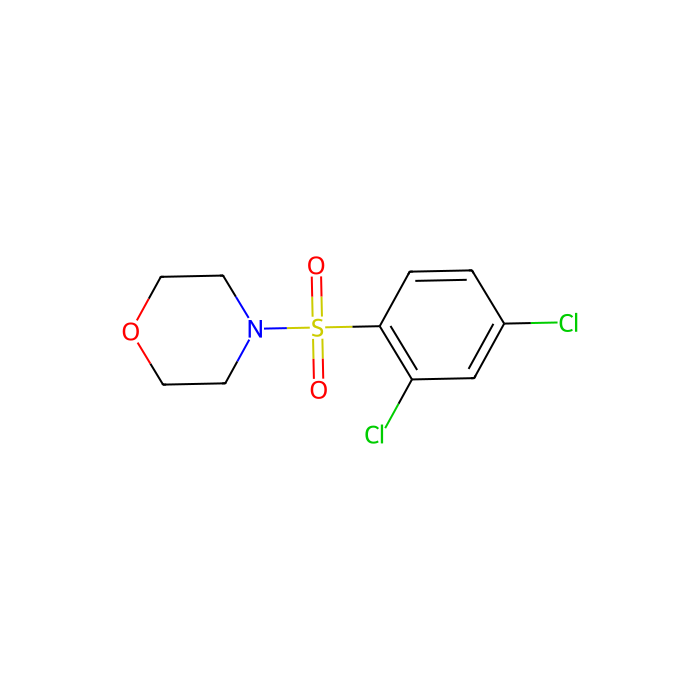
This compound belongs to the class of organic compounds known as benzenesulfonamides. These are organic compounds containing a sulfonamide group that is S-linked to a benzene ring.
External Descriptors
Not available
1. Djoumbou Feunang Y, Eisner R, Knox C, Chepelev L, Hastings J, Owen G, Fahy E, Steinbeck C, Subramanian S, Bolton E, Greiner R, and Wishart DS. ClassyFire: Automated Chemical Classification With A Comprehensive, Computable Taxonomy. Journal of Cheminformatics, 2016, 8:61.
Determine the necessary mass, volume, or concentration for preparing a solution.
Dilution Calculator
Determine the dilution needed to prepare a stock solution.
Reconstitution Calculator
Reviews
Customer Reviews
Application Protocols
No tested bioassay or kit application protocols are provided for this small-molecule building block.
General lab usage examples (non-validated; for guidance only)
Stock solution preparation: Dissolve in anhydrous DMSO to 10–50 mM. Warm gently and sonicate if needed; filter (0.2 µm PTFE) to remove particulates.
SNAr diversification (mini-scale): In a sealed vial, combine substrate (1.0 equiv), amine nucleophile (1.5–3.0 equiv), K2CO3 (2–3 equiv), and DMSO (0.2–0.5 M). Heat to 90–120 °C for 4–16 h. Quench with water, extract with EtOAc, dry, and purify by flash chromatography.
N-Acylation (morpholine N): In DCM (0.1–0.2 M) at 0 °C, add acyl chloride (1.2 equiv) to a solution of the substrate and DIPEA (3 equiv). Stir 1–2 h to rt; quench and work up.
Important
These are illustrative only. Optimize stoichiometry, temperature, and solvent based on your specific nucleophile/electrophile and desired selectivity.
Always perform small-scale trials and monitor by LC–MS/HPLC to confirm conversions and to avoid overreaction or side products.
Biological Roles
Item-specific biological function: Not specified for this item; this product is intended for research use only.
General biochemical context (literature; no clinical claims)
Sulfone motif: The SO2 group is a strong hydrogen-bond acceptor and electron-withdrawing functionality. In small molecules, sulfones can modulate polarity, improve metabolic stability, and alter binding vectors by constraining conformations. These are broad medicinal chemistry design principles rather than attributes unique to this compound.
Morpholine ring: Morpholine is a common, basic heterocycle used to enhance aqueous compatibility and tune pKa. Its conjugate acid pKa is typically in the ~8–9 range (literature for morpholine), which can influence distribution between aqueous and organic phases in biological assay media.
2,4-Dichlorophenyl fragment: Multiple chloro substituents generally increase lipophilicity and can influence π–π and halogen-bonding interactions in biomolecular contexts; however, such effects are highly scaffold- and target-dependent.
Use in research settings
This compound may serve as a synthetic intermediate for preparing libraries of aryl sulfone derivatives bearing a morpholine handle for SAR exploration.
Caveats
No endogenous biological role is known for this synthetic compound.
Any biological testing should be performed by qualified personnel under appropriate institutional approvals, and interpretation should consider purity, counter-ions, and solubility limits.
Buffer Applications
Not typically applicable. 4-(2,4-Dichlorophenylsulfonyl)morpholine is a neutral organic small molecule (weakly basic due to morpholine) and is not used as a buffering agent.
Practical guidance
If preparing assay solutions, dissolve first in a suitable organic co-solvent (e.g., DMSO) before diluting into aqueous buffers to mitigate precipitation.
Choose buffer systems compatible with secondary amines (e.g., phosphate, HEPES) and verify that pH does not lead to unwanted salt formation/precipitation. Conduct small-scale solubility checks at target pH and ionic strength.
Green Alternatives
Greener choices typically relate to solvent and coupling technology rather than replacement of the aryl sulfone motif itself.
Greener solvent options (literature/general)
Replace DMF/NMP with: Cyrene, GBL, propylene carbonate, or dimethyl carbonate where compatible.
Replace DCM with: Ethyl acetate or 2-methyltetrahydrofuran (2-MeTHF) for extractions and some reactions.
High-boiling polar media: Shift DMSO to sulfolane or water/organics when feasible; consider micellar catalysis for cross-couplings to reduce organic solvent load.
Catalysis and energy efficiency
Employ ligand-enabled Pd-catalysis for aryl chlorides to run at lower temperatures and lower catalyst loadings; explore nickel catalysis for desulfonylative or C–Cl activation under milder conditions.
Continuous flow heating can improve heat transfer and safety for SNAr/coupling steps, reducing solvent volumes and reaction times.
Illustrative comparison (general; trade-offs)
DMF vs Cyrene: Cyrene is bio-based and lower toxicity; however, it can be less stable under strong basic conditions and may require process re-optimization.
DCM vs EtOAc: EtOAc is less hazardous and biodegradable; may provide lower solubility for chlorinated aromatics, necessitating larger volumes or gentle warming.
Waste minimization
Favor telescoped sequences (e.g., SNAr followed by N-functionalization without isolation) to reduce workups.
Implement in-process controls to avoid overuse of halogenated solvents during purification (e.g., switch to hexane/EtOAc gradients instead of DCM/MeOH when chromatographically acceptable).
Pharmaceutical Uses
No pharmacopeial grade or excipient designation is provided for this item; it is supplied for research use only.
General context (literature/industry practice; no therapeutic claims)
Discovery chemistry building block: Aryl sulfones with morpholine substituents are frequently explored in medicinal chemistry campaigns to modulate polarity, basicity, and metabolic liabilities. The 2,4-dichloro aryl handle enables late-stage diversification (SNAr/cross-coupling) en route to candidate libraries.
Salt formation: The secondary amine can form salts with common acids (HCl, H2SO4, organic sulfonic acids) to adjust solubility for process development studies.
Formulation screening: If used in preclinical discovery support (not for human use), typical vehicles include DMSO stock diluted into PEG400/saline or other cosolvent systems; precipitation and stability must be verified empirically for each derivative.
Compliance note
This product is not produced to GMP standards unless explicitly stated (not specified here). For any regulated applications, source GMP-grade materials or qualify the material per internal QA procedures.
Recommendation
For process development or enabling studies, request CoA/Spec Sheet to confirm identity and purity, and perform in-house compatibility/stability screens under intended processing conditions.
Physical Properties
Item-specific specifications
Appearance: Not specified for this item; refer to CoA/Spec Sheet.
Molecular weight (item-specific): Not specified for this item; refer to CoA/Spec Sheet.
Other specifications (mp, bp, density, refractive index, elemental limits): Not specified for this item; refer to CoA/Spec Sheet.
Literature/computed general properties (for context; not lot specifications)
Approximate formula: C10H11Cl2NO3S (derived by structural composition)
Calculated molecular weight: ~296.17 g/mol
Physical state: Aryl sulfones of this class are typically crystalline solids (literature). Specific melting point for this exact compound not located in standard references.
Expected to be sparingly soluble in water due to aryl dichloro and sulfone; enhanced solubility in polar aprotic organics (DMSO, DMF, NMP) and moderate solubility in chlorinated solvents (DCM, CHCl3) and ethyl acetate.
Limited solubility anticipated in nonpolar hydrocarbons (hexane, heptane).
pKa/logP (no item data): Specific values not found in primary sources; as a secondary amine in a morpholine ring, conjugate acid pKa typically ~8–9 (literature, morpholine family). The sulfone is non-ionizable and strongly electron withdrawing.
Practical notes
If solid, gentle warming and sonication can aid dissolution in DMSO/DMF.
For quantitative solubility and thermal transitions applicable to your lot, rely on the CoA/Spec Sheet; do not use literature estimates for specification-critical applications.
Quality & Grades
Item-specific grade/purity
Grade/Purity: Not specified for this item; refer to CoA/Spec Sheet.
Appearance: Not specified for this item; refer to CoA/Spec Sheet.
Context and expectations
Research grade aryl sulfones are typically assessed by NMR purity, HPLC area %, and LC–MS identity. Elemental analysis or HRMS may be used for confirmation. When applicable, residual solvent and water content (e.g., Karl Fischer) can be reported—but these are not specified here.
If sold as “analytical” or “HPLC” grade (not stated for this item), expectations would include:
Low non-volatile residue and controlled UV background (HPLC grade, for chromatography use)
Tight impurity profiles with defined acceptance criteria (AR/ACS grade)
Implications for this compound class
Aryl sulfones often exhibit sharp melting points when pure; melting behavior can be a useful purity cross-check (if available on the CoA for this lot).
Morpholine-containing materials may absorb CO2/H2O in air; small baseline drifts in analytical HPLC can occur if samples are not freshly prepared.
Recommendations
Request and consult the CoA/Spec Sheet for this lot for: assay method and result, identification (1H/13C NMR, LC–MS), and any trace impurity controls.
For sensitive applications (e.g., medicinal chemistry SAR or method validation), consider in-house verification by HPLC and NMR upon receipt.
Reaction & Applications
Application themes (literature/general; expand as appropriate)
Electron-deficient aryl platform: The 2,4-dichloro substituents combined with a para-sulfone render the aryl ring activated toward nucleophilic aromatic substitution (SNAr). This enables diversification (e.g., replacement of one chloride with amines, alkoxides, thiolates) while preserving the sulfone–morpholine linkage.
Cross-coupling substrate: The aryl C–Cl bonds can participate in Pd-catalyzed Buchwald–Hartwig amination, Suzuki–Miyaura (after halide activation strategies), or nickel-catalyzed couplings under optimized ligand/catalyst systems tailored for aryl chlorides.
Heterocycle functionalization: The morpholine nitrogen (secondary amine) allows N-acylation, N-alkylation, and sulfonylation, enabling rapid library generation without perturbing the aryl–sulfone linkage.
Polarity tuning handle: The sulfone increases polarity and hydrogen-bond acceptor count, often used in medicinal chemistry to modulate solubility and metabolic stability (general medicinal chemistry principle; no clinical claims).
Protective/auxiliary roles: Alpha deprotonation at the benzylic-like C4 of morpholine–sulfone motifs can be leveraged in base-mediated transformations (substrate-dependent); caution with strong bases.
Practical tips
SNAr: Use polar aprotic solvents (DMSO/DMF), inorganic bases (K2CO3/Cs2CO3), and 60–140 °C depending on nucleophile strength; monitor regioselectivity (2- vs 4-chloro positions).
Cross-coupling: For aryl chlorides, use Pd(0) with BrettPhos or XPhos ligands, strong bases (NaOtBu, Cs2CO3), and 80–110 °C in toluene/dioxane or CPME; ensure compatibility with sulfone.
N-functionalization: Perform at 0–25 °C in DCM/THF with tertiary amine base (TEA/DIPEA) for acylations; for alkylations, use alkyl halides with mild base (K2CO3) in acetonitrile.
Reaction Conditions
General literature guidance (illustrative; adapt to substrate and scale)
Base: K2CO3, Cs2CO3 (amines may proceed base-free in some cases)
Solvent: DMSO, DMF, NMP
Temperature: 60–140 °C (dependent on nucleophile strength and position)
Time: 2–24 h; monitor by LC–MS/HPLC
Notes: The para-sulfone enhances activation; regioselectivity between 2- and 4-chloro sites should be assessed experimentally.
Buchwald–Hartwig amination of aryl C–Cl
Catalyst/ligand: Pd2(dba)3 (1–2 mol%) with BrettPhos or XPhos (2–4 mol%)
Base: NaOtBu or Cs2CO3 (2–3 equiv)
Solvent: Toluene, dioxane, or CPME; 80–110 °C
Atmosphere: Inert (N2/Ar)
Notes: The sulfone is generally compatible; control competing N-arylation of morpholine by protection or stoichiometry.
N-acylation/N-alkylation of morpholine
Reagents: Acyl chlorides or alkyl halides (1.1–1.5 equiv)
Base: DIPEA or TEA (2–3 equiv)
Solvent: DCM, THF, or MeCN
Temperature: 0–25 °C
Time: 0.5–4 h
Notes: Monitor for over-alkylation; quench with aqueous workup.
Workup/purification
Quench basic reactions with water, extract with EtOAc/DCM. If protonated (forms water-soluble salts), basify to pH >10 to recover the free base.
Purify by flash chromatography using EtOAc/hexane or DCM/MeOH gradients; sulfones often show strong UV absorption (200–260 nm).
Safety & Handling
Item-specific hazard details
Signal word, H-statements, GHS classification, and pictograms: Not specified for this item; refer to SDS.
General safety guidance (based on functionality/class; always defer to SDS for authoritative information)
Likely hazards: Organic sulfones and morpholine derivatives may cause skin/eye irritation and respiratory tract irritation if dusts/aerosols are generated. Avoid inhalation and contact.
PPE: Use lab coat, safety goggles, and appropriate chemical-resistant gloves (e.g., nitrile). Handle powders in a fume hood to prevent dust exposure.
Storage: Store tightly closed at room temperature (per Product Data) in a dry place. Protect from moisture. Keep away from strong bases and strong acids (which can degrade or react with the amine/sulfone), and from strong reducing agents.
Incompatibilities: Strong oxidizers typically do not rapidly attack sulfones, but avoid uncontrolled mixtures. Strong bases may deprotonate the morpholine nitrogen or alpha positions adjacent to the sulfone carbon, potentially promoting elimination or side reactions under forcing conditions.
First aid (overview; consult SDS):
Inhalation: Move to fresh air; seek medical attention if symptoms persist.
Skin contact: Wash with soap and water; remove contaminated clothing.
Eye contact: Rinse cautiously with water for several minutes; remove contact lenses if present and easy to do; continue rinsing.
Ingestion: Rinse mouth; seek medical advice.
Fire fighting: Use standard dry chemical, CO2, or foam. Combustion may produce HCl, SOx, and NOx; wear self-contained breathing apparatus.
Waste: Dispose according to local regulations; avoid release to the environment.
Polarity class: Moderately polar organic solid containing a secondary amine and a sulfone. Amphiphilic with limited aqueous solubility but good affinity for polar aprotic media.
Recommended solvents for dissolution and reaction media:
Excellent: DMSO, DMF, NMP (high solvating power for sulfones and heterocycles)
Stock solutions for screening: 10–50 mM in anhydrous DMSO are commonly achievable; filter if particulates persist.
Workup considerations: Partitioning from DMSO/DMF may require dilution with water then extraction using EtOAc or DCM; salt formation (protonation of morpholine N) will bias the compound to the aqueous phase—basify to liberate the free base prior to extraction.
When to choose alternatives
If non-halogenated media are preferred, consider acetonitrile, EtOAc, or 2-MeTHF (test solubility first). For very polar transformations, NMP can outperform DMF at elevated temperatures.
Small comparison (literature/general)
DMSO vs DMF: DMSO often affords higher solubility and thermal stability; DMF is easier to remove but can decompose at >150 °C.
DCM vs EtOAc: DCM provides better solubilization of chlorinated aromatics; EtOAc is greener but may require larger volumes.
Storage & Reconstitution
Item-specific storage and shipping
Storage conditions: Room temperature (per Product Data). Store tightly closed in a dry, well-ventilated area.
Shipped in: Normal (per Product Data).
General handling guidance
Protect from moisture and prolonged air exposure; heterocyclic amines can absorb CO2/H2O, altering mass and apparent purity.
For long-term storage, consider desiccation (e.g., in a desiccator cabinet or with desiccant packs) and amber container if extended light exposure is expected, although sulfones are typically light-stable.
Reconstitution/solution preparation
Solvents: DMSO, DMF, or NMP recommended for concentrated stock solutions; DCM, EtOAc, MeCN suitable for processing.
Procedure: Bring vial to room temperature before opening to avoid condensation. Weigh quickly, cap promptly. Prepare solutions using anhydrous solvents; filter if needed (0.2 µm PTFE).
Stability: Solutions in DMSO/DMF are generally stable for days at room temperature and weeks at 2–8 °C when protected from moisture; verify by LC–MS before critical use.
Specifications note
Any appearance, purity, water content, or other QC details specific to this item are Not specified for this item; refer to CoA/Spec Sheet.
For research use only; not for human or veterinary use.
Structure & Identity
Aryl sulfone bearing a morpholine ring at the 4-position and a 2,4-dichlorophenyl substituent; useful as an electron-deficient aryl building block with a basic heterocycle.
Molecular formula (computed by composition rationale): C10H11Cl2NO3S
Molecular weight (calculated): ~296.17 g/mol
Core functional groups: aryl sulfone (–SO2–) linking a 2,4-dichlorophenyl ring to a morpholin-4-yl carbon; secondary amine within morpholine; cyclic ether (morpholine oxygen)
2D description: A benzene ring bearing chlorine atoms at the 2- and 4-positions relative to the sulfone linkage; the sulfone sulfur is double-bonded to two oxygens and sigma-bonded to the aryl ring and to the C4 position of a morpholine ring (a six-membered ring containing one O and one NH, opposite each other). The morpholine nitrogen is unsubstituted (secondary).
Structural features confer strong electron withdrawal on the aryl ring (sulfone plus chloro substituents), enhancing SNAr reactivity and modulating physicochemical properties.
For definitive identifiers (validated SMILES/InChI), consult the CoA/Spec Sheet for this lot.
Synthetic Utility
Key functional handles
Two aryl chlorides (2,4-positions): Amenable to SNAr with hard nucleophiles or to Pd/Ni-catalyzed cross-couplings (Buchwald–Hartwig, Suzuki–Miyaura after suitable activation) thanks to combined activation by the para-sulfone and chloro substituents.
Sulfone linkage: Strongly electron withdrawing, stabilizes adjacent anions and can influence regioselectivity in aryl substitution. Generally robust toward many reaction conditions, serving as a polarity and conformational control element.
The target can be viewed as coupling of morpholin-4-yl carbanion (or equivalent) with a 2,4-dichlorophenylsulfonyl electrophile, or as sulfone formation from a 2,4-dichlorobenzenesulfonyl intermediate followed by C–C bond formation to morpholine at C4.
Typical transformations
SNAr: Replace one chloride with amines/alkoxides/thiolates to access densely functionalized sulfones.
Cross-coupling: Diversify the aryl ring while retaining the morpholine–sulfone fragment; select ligands tailored to aryl chlorides (BrettPhos/XPhos).
N-functionalization: Introduce solubilizing groups or labels on morpholine N under mild conditions.
Practical notes
Protect the morpholine N if competing N-arylation/alkylation is undesired during aryl substitutions.
The sulfone can survive many oxidizing and reducing conditions but verify compatibility for strongly nucleophilic or basic reagents that might target alpha positions.
Target Specificity
Not applicable. This product is a small-molecule chemical and is not an antibody, enzyme, or biological probe with defined biomolecular target specificity.
No antigen/epitope, species reactivity, clone, or isotype information is relevant to this item.
For applications involving biological assays, any “specificity” pertains to the designed use of derivatives made from this building block, not the starting material itself.
Frequently Asked Questions
What is the purity of this product?
This product is supplied at ≥98% purity (chemical assay). Lot-specific values are stated on the Certificate of Analysis.
How should this product be stored?
Store at room temperature.
How is this product shipped?
This product ships under standard ambient conditions. No temperature-controlled packaging is required.
What are the CAS number, molecular formula and molecular weight?
The CAS Number is 74832-72-7, the molecular formula is C10H11Cl2NO3S, and the molecular weight is 296.2 g/mol. InChIKey FRRPOGDSRUIIRS-UHFFFAOYSA-N.
What documentation is provided?
Available product documentation, including Certificates of Analysis (COA), Safety Data Sheets (SDS), and specification sheets, is shown in the product document area. Document availability and access follow the current site policy.
We use cookies to ensure the website functions properly and, where permitted, to improve your experience. You can manage your preferences at any time in Settings. Learn more in our Cookie Policy.
Shall we send you a message when we have discounts available?
Remind me later
Thank you! Please check your email inbox to confirm.
Products are supplied to verified businesses, institutions, and qualified professionals for research and development use only. Not for use in humans, animals, diagnosis, or therapy.