GRADE & PURITYMoligand™?Moligand™ — Aladdin's line of ligands and bioactive small molecules. Use for receptor, pathway, and binding studies needing defined small-molecule tools.10 mM in DMSO
Moligand™, 10 mM in DMSO Moligand™ for sensitive chromatographic and analytical workflows requiring minimal baseline interference.
🌡
Storage & shipping
Store at -80°C Ships Dry ice packs + Cold packs Check lot-specific COA for exact specifications.
📋
Quality documents
SDS, COA, datasheet, and spec sheet available for download. Lot-specific COA accessible via lot number lookup.
📚
Literature proof
Cited in 0 peer-reviewed publications across chromatography, organic synthesis, and cross-coupling reactions.
Overview
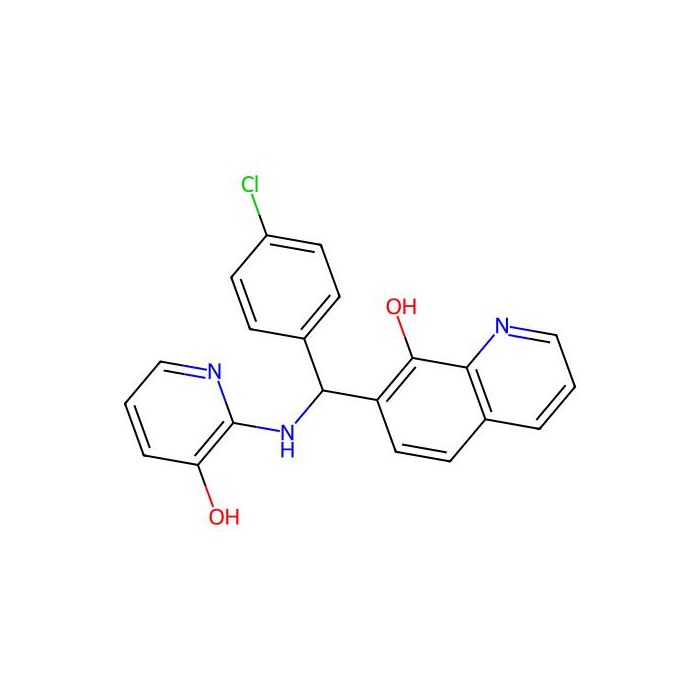
Adaptaquin is an inhibitor of hypoxia-inducible factor prolyl hydroxylase 2 (HIF-PHD2) , with an IC 50 of 2 μM. Adaptaquin can inhibit lipid peroxidation and maintain mitochondrial function .
Specifications
Specifications & Purity
Moligand™, 10 mM in DMSO
Storage
Store at -80°C
Shipped In
Dry ice packs + Cold packs
This product requires cold chain shipping. Ground and other economy services are not available.
Determine the necessary mass, volume, or concentration for preparing a solution.
Dilution Calculator
Determine the dilution needed to prepare a stock solution.
Reconstitution Calculator
Reviews
Customer Reviews
Application Protocols
No tested applications or recommended dilutions are specified for this item in the product data.
General protocol framework (for small-molecule screening; not item-specific)
Stock preparation: Dissolve compound in anhydrous DMSO at 10–50 mM. Vortex and, if needed, sonicate briefly. Filter through 0.22 μm PTFE for particulate removal.
Plate handling: Aliquot stocks into low-bind, sealed 96/384-well plates; store at −80°C. Thaw on ice and minimize exposure to ambient humidity to limit DMSO water uptake.
Assay setup: Prepare serial dilutions to generate full concentration–response curves (≥10 points, half-log spacing). Keep final DMSO ≤ assay tolerance (commonly 0.1–0.5% v/v for cells).
Controls: Include vehicle control, positive control (pathway-relevant, if available), and negative control. Run technical triplicates and at least three biological replicates.
Data quality: Monitor Z’ factor, signal window, and Hill slope. Confirm activity with an orthogonal assay to exclude readout-specific artifacts.
Documentation: Record lot number, stock concentration (and verification method), dilution scheme, plate maps, and storage history.
Biological Roles
Item-specific biological targets, pathways, or mechanisms of action are not specified in this catalog entry.
General guidance for small-molecule tool compounds (non-clinical, literature/practice-based)
If using as a pathway probe, independently verify literature-reported activities with your lot via orthogonal assays (biochemical, biophysical, and cellular) and appropriate counterscreens to exclude assay artifacts (e.g., redox cycling, detergent sensitivity, aggregation).
Establish concentration–response relationships over multiple logs of concentration and assess time dependence to separate rapid target engagement from downstream adaptive responses.
Evaluate selectivity by screening against a panel of related targets/enzymes. Where feasible, include genetic controls (knockout/siRNA) to validate on-target effects.
Consider liabilities common to aromatic small molecules (general): potential for colloidal aggregation at high micromolar levels, off-target mitochondrial effects, or interference with fluorescent readouts. Implement detergents or dynamic light scattering where aggregation is suspected.
Documentation
Record exact lot, solvent vehicle, stock age, and storage history in all reports and publications to ensure reproducibility and enable cross-study comparisons.
Buffer Applications
This product is a small-molecule screening compound rather than a buffering agent. It is not typically used to establish or maintain pH.
Practical notes
When preparing assay buffers that include organic vehicles (e.g., DMSO), confirm that buffer pH and ionic strength remain within the intended range after solvent addition.
If the compound is ionizable (check CoA or literature), pH can influence solubility and apparent potency; run pH controls (e.g., pH 6.5–8.0 for most biochemical assays) to rule out pH-driven artifacts.
Filter-sterilize working buffers and verify compound stability in the chosen buffer over the assay timescale via LC/UV.
Green Alternatives
As a screened small molecule (not a solvent or reagent used in bulk), “green alternatives” principally concern handling and formulation practices rather than replacing the compound itself.
Greener handling/formulation strategies (general)
Use minimal DMSO concentrations in assays to reduce solvent burden; favor aqueous buffers when compatible.
Scale experiments to microliter volumes with low-dead-volume plates and sealed storage to minimize waste and evaporative loss.
Employ analytical methods that reduce organic solvent consumption (UPLC over HPLC, LC gradients with higher aqueous content, or SFC when suitable for the analyte chemistry).
Comparison of common vehicle options (general guidance)
DMSO: Excellent solvency; cytotoxic above certain thresholds; hygroscopic. Often unavoidable but keep ≤0.1–0.5% v/v in cell assays when possible.
Ethanol: Acceptable in some biochemical assays; volatility can cause concentration drift; cell tolerance varies.
PEG400 or cyclodextrin vehicles: Can improve aqueous delivery; assess biological compatibility and assay interference.
Waste minimization
Consolidate compound dilutions and timepoint sampling to reduce replicate waste.
Segregate organic from aqueous waste streams; consider solvent recycling programs for ACN/MeOH if usage is significant.
Pharmaceutical Uses
No pharmacopeial status, excipient role, or manufacturing use is specified for this item. The product is supplied strictly for research use only and is not intended for human or veterinary administration.
Context for formulation scientists (general, non-clinical)
Preformulation-style assessments (solubility, pKa, logD, permeability) can be conducted in research settings to understand biophysical properties; however, such studies must not be construed as clinical development.
For in vivo research in laboratory animals (where institutionally approved), selection of vehicles should prioritize tolerability and compound stability (e.g., PEG/solutol systems, buffered aqueous with minimal DMSO). Verify protocol compliance with local regulations and institutional guidelines.
If scale-up or regulated use is contemplated, a different grade with full GMP documentation would be required; contact Aladdin for custom manufacturing inquiries.
Physical Properties
Item-specific physicochemical data are not included in this listing.
Molecular weight: Not specified for this item; refer to CoA/Spec Sheet.
Molecular formula: Not specified for this item; refer to CoA/Spec Sheet.
Appearance: Not specified for this item; refer to CoA/Spec Sheet.
Melting point: Not specified for this item; refer to CoA/Spec Sheet.
Boiling point: Not specified for this item; refer to CoA/Spec Sheet.
Density: Not specified for this item; refer to CoA/Spec Sheet.
Refractive index: Not applicable for solids; if liquid, Not specified for this item; refer to CoA/Spec Sheet.
Solubility: Not specified for this item; refer to CoA/Spec Sheet.
LogP/logD, pKa: Not specified for this item; refer to CoA/Spec Sheet.
General guidance (for small molecules; literature/practice-based, not item-specific)
Stock preparation is commonly performed in anhydrous DMSO for hydrophobic screening compounds, typically at 10–50 mM, followed by aliquoting and storage at −80°C to minimize freeze–thaw. Assess solubility empirically on a small scale before committing valuable material.
If aqueous work is required, consider co-solvent systems (DMSO or ethanol + buffered saline), pH adjustment (if ionizable), or inclusion of cyclodextrins/surfactants where appropriate. Filter sterilize through 0.22 μm PES for cell-based assays.
Hygroscopicity, polymorphism, and salt/solvate state can influence apparent solubility and melting behavior; verify with lot-specific CoA.
Intended for chemical biology, target validation, and screening workflows where identity and purity suitable for research are required. It is not a clinical, GMP, or pharmacopoeial grade material.
Each lot is provided for research use with identity/purity controls as defined in the CoA/Spec Sheet. Typical analytical controls for this grade may include HPLC/UPLC purity, MS, and/or NMR; consult the specific CoA for the actual tests performed.
How to use this grade effectively
For screening: Prepare DMSO stocks, minimize freeze–thaw, and document lot numbers in ELNs to ensure reproducibility.
For quantitative biology/chemistry: Verify purity basis (area% vs. weight%), residual solvent content, and counterion/solvate state from the CoA. Apply purity correction in dosing calculations when necessary.
For SAR/lead optimization: If tighter specifications (e.g., higher purity, trace metals, residual solvent thresholds) are required, contact Aladdin Technical Support for available upgraded grades or custom synthesis.
Item-specific notes
Appearance, exact purity specification, stabilizers (if any), and analytical data: Not specified for this item; refer to CoA/Spec Sheet.
Reaction & Applications
This product is supplied as a research-grade small molecule for screening and chemical biology applications. No specific synthetic or catalytic application is claimed for this item in the catalog entry.
Practical research uses (general, not item-specific)
Chemical probe studies: Evaluate as part of pathway-focused panels or phenotypic screens. Maintain rigorous controls (vehicle-only, inactive analogs) and replicate across concentrations to establish potency windows.
Assay development: Use to challenge assay robustness (Z’ factor) and to calibrate detection windows for reporter or target-engagement assays.
Mechanistic follow-up: If literature assigns a putative target class to Adaptaquin, validate in-house with orthogonal readouts (biochemical vs. cellular), binding assays (e.g., DSF, SPR, MST), and genetic modulation (KO/KD rescue).
Methodological tips
Prepare fresh DMSO stocks and aliquot to minimize freeze–thaw cycles. Confirm concentration by UV-Vis or quantitative NMR if high precision is required.
Track stability over time by LC-MS; assess for degradation under light, air, or aqueous conditions.
For SAR or tool-compound comparison, normalize to free concentration where protein binding or solubility limitations may skew apparent potency.
Reaction Conditions
No reaction condition recommendations are item-specific for this product because it is supplied as a completed small molecule rather than a reagent or catalyst.
General laboratory handling conditions for small molecules (not item-specific)
Solution preparation: Dissolve in dry DMSO under ambient conditions; if solubility is limited, sonication or gentle warming (<40°C) may help. Avoid prolonged heating that could induce degradation.
Stability checks: Conduct forced-degradation scouting (light, heat, oxidative, and pH stress) at micro-scale to map stability windows. Analyze by LC-MS/UPLC.
Bioassay incubation parameters: Typical cellular assays use 0.01–50 μM exposure ranges for tool compounds; optimize exposure time (2–48 h) based on readout kinetics, ensuring vehicle controls are included. These are general ranges from literature practice and are not specifications for this item.
Adsorption controls: Evaluate potential loss to plastics by comparing glass vs. polymeric labware for low-concentration solutions.
Safety & Handling
GHS classification, signal word, pictograms, and H-statements: Not specified for this item; refer to SDS.
For research use only. Not for human or veterinary use.
General laboratory safety (defer to SDS for authoritative guidance)
PPE: Wear lab coat, safety glasses, and appropriate chemical-resistant gloves (e.g., nitrile). Handle powders in a fume hood to avoid inhalation of dust or aerosols.
Avoid contact with skin, eyes, and clothing. Prevent ingestion and inhalation; do not pipette by mouth.
Storage incompatibilities (general): Keep away from strong oxidizers and strong acids/bases unless compatibility is established. Protect from moisture and prolonged exposure to light if photo-/hydro-lability is suspected.
First aid overview: In case of skin/eye contact, rinse with water for at least 15 minutes; remove contaminated clothing. If inhaled, move to fresh air. If swallowed, rinse mouth; do not induce vomiting; seek medical attention. Always consult the SDS for compound-specific instructions.
Spill and disposal: Collect small spills with inert absorbent; avoid dust generation. Dispose of waste via licensed chemical waste contractor per local regulations.
Transport/receipt: Shipped on dry ice + cold packs; inspect immediately upon receipt and transfer to the recommended storage to maintain integrity.
Solvent Selection
Item-specific solubility data are not provided for this listing. The following guidance reflects common practice for heteroaromatic small molecules in screening collections (general/literature-based, not item-specific):
Primary stock solvent: Anhydrous DMSO is typically the first choice due to high solvating power and compatibility with biochemical and cell-based assays.
Secondary organic solvents: DMF, ethanol, methanol, or acetonitrile may be used for intermediate stocks or analytical assays (e.g., HPLC). Always confirm compatibility with your bioassay system.
Aqueous work: Use co-solvent dilution (e.g., 0.1–1% DMSO final) or formulate with pH-adjusted buffers if the compound is ionizable. Consider cosolubilizers (e.g., Captisol/cyclodextrins) for challenging solubility.
Analytical solvents: For LC/UPLC, use H2O/ACN or H2O/MeOH with 0.1% formic acid (positive mode) or 5–10 mM ammonium bicarbonate (negative mode) as needed; verify compound ionization behavior.
Selection tips
Start with small-scale solubility screens (DMSO, DMF, MeOH, ACN, PBS 7.4) at 1–10 mg/mL.
Monitor for precipitation upon aqueous dilution; maintain DMSO below assay tolerance (often ≤0.1–0.5% v/v for cells, ≤1–2% for enzymes).
If instability is suspected, compare recovery under inert atmosphere, reduced light, and with/without acid/base modifiers.
Storage & Reconstitution
Storage conditions (item-specific): Store at −80°C.
Shipped in (item-specific): Dry ice packs + cold packs.
Appearance: Not specified for this item; refer to CoA/Spec Sheet.
Reconstitution and handling (general best practices for small molecules)
Upon receipt: Keep sealed and at −80°C until ready to use. Equilibrate to room temperature in a desiccated environment before opening to prevent condensation.
Stock solution: If appropriate for your application, prepare a concentrated stock in anhydrous DMSO (e.g., 10–50 mM). Mix thoroughly and, if needed, briefly sonicate. Verify concentration analytically when precision is critical.
Aliquoting: Dispense single-use aliquots into inert, low-bind vials or plates. Refreezing thawed aliquots is discouraged; repeated freeze–thaw can accelerate degradation.
Light/moisture protection: Store solutions and solids protected from light and moisture (amber vials, desiccant, inert gas headspace if sensitivity is suspected).
Stability: Item-specific shelf-life and solution stability are Not specified for this item; refer to CoA/Spec Sheet. For risk mitigation, limit storage time of DMSO solutions (e.g., days to weeks at −20 to −80°C) and monitor by LC/UV prior to critical experiments.
Structure & Identity
Product name: Adaptaquin (SKU: A1493378)
CAS: 385786-48-1
CID: 3740671
Category: Small molecule screening compound (Moligand™ collection)
Molecular formula: Not specified for this item; refer to CoA/Spec Sheet.
Molecular weight: Not specified for this item; refer to CoA/Spec Sheet.
InChIKey: Not specified for this item; refer to CoA/Spec Sheet.
SMILES: Not specified for this item; refer to CoA/Spec Sheet.
Structural description
Item-specific structural identifiers are not provided in the current listing. Please consult the Certificate of Analysis (CoA) or Specification Sheet for the definitive structure (SMILES/InChI) and elemental composition.
General note (context): Adaptaquin is widely referenced in the chemical biology literature as a heteroaromatic small molecule; however, Aladdin provides no structural assertion in this catalog entry. Users should verify identity via CoA and, if needed, confirm by in-house NMR/HRMS prior to critical studies.
Identity verification guidance (general best practice)
If structure is provided on the CoA, cross-check against external databases (by CAS/CID) to reconcile synonyms and salt/solvate forms.
For quantitative work, document the exact lot, form (free base vs. salt, solvate/hydrate), and purity basis to ensure stoichiometric accuracy.
Synthetic Utility
This product is offered as a finished small molecule for screening and chemical biology. No specific use as a synthetic intermediate or reagent is claimed in the product data.
General considerations (for chemists exploring derivatization; not item-specific)
If structural information is provided on the CoA, medicinal chemistry teams may explore analog design around identified heteroaromatic cores, amide linkages, or substituent patterns using standard transformations (Suzuki/Negishi couplings, reductive aminations, amide couplings, heteroaromatic substitutions).
For SAR: Map vectors amenable to substitution, prioritize positions that retain solubility and synthetic accessibility, and employ late-stage diversification to accelerate hypothesis testing.
Analytical support: Use LC-MS for high-throughput reaction scouting; confirm structures by NMR and HRMS; assess purity by UPLC with orthogonal detection (UV/ELSD/MS) to capture non-chromophoric species.
Caveat
Without item-specific structural identifiers in this listing, do not assume reactivity patterns. Obtain the structural data from the CoA before planning any derivative synthesis.
Target Specificity
Item-specific biological target(s), binding constants, or enzyme class selectivity are not provided for this product.
What users can do
Consult the CoA/Spec Sheet for any available target annotations.
If literature suggests a target for Adaptaquin, confirm lot-specific activity via independent assays (e.g., enzyme kinetics, CETSA/thermal shift, SPR) and include specificity panels to rule out off-target effects.
Report exact testing conditions (assay buffer, temperature, protein source, detection modality) to enable reproducibility.
Need help choosing the grade?
Our grade selection guide covers purity, stabilizer status, and application suitability for all variants in our catalog.
We use cookies to ensure the website functions properly and, where permitted, to improve your experience. You can manage your preferences at any time in Settings. Learn more in our Cookie Policy.
Shall we send you a message when we have discounts available?
Remind me later
Thank you! Please check your email inbox to confirm.
Products are supplied to verified businesses, institutions, and qualified professionals for research and development use only. Not for use in humans, animals, diagnosis, or therapy.