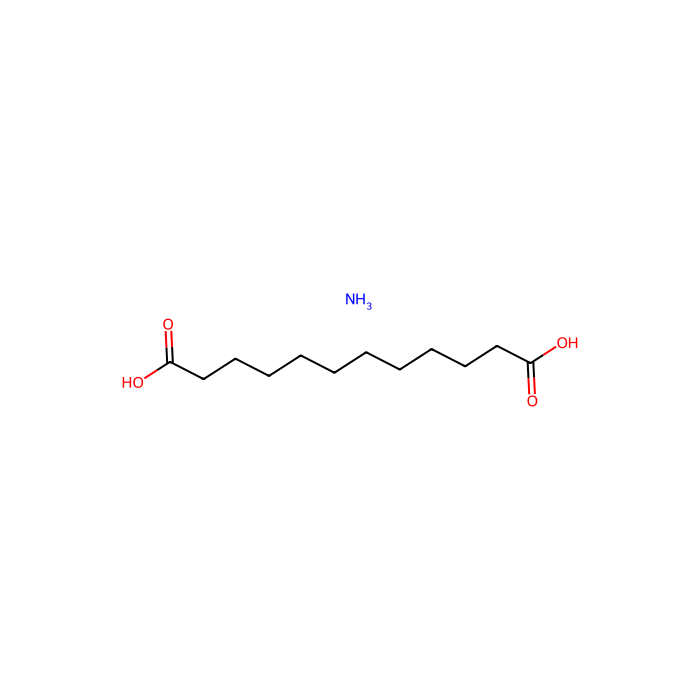
This compound belongs to the class of organic compounds known as medium-chain fatty acids. These are fatty acids with an aliphatic tail that contains between 4 and 12 carbon atoms.
External Descriptors
Not available
1. Djoumbou Feunang Y, Eisner R, Knox C, Chepelev L, Hastings J, Owen G, Fahy E, Steinbeck C, Subramanian S, Bolton E, Greiner R, and Wishart DS. ClassyFire: Automated Chemical Classification With A Comprehensive, Computable Taxonomy. Journal of Cheminformatics, 2016, 8:61.
Determine the necessary mass, volume, or concentration for preparing a solution.
Dilution Calculator
Determine the dilution needed to prepare a stock solution.
Reconstitution Calculator
Reviews
Customer Reviews
Application Protocols
No assay/application protocols are item-specifically validated for this SKU in the Product Data. The following general procedures may be adapted to your use case:
Preparation of aqueous stock solution (general): Weigh the required amount rapidly to minimize moisture uptake. Dissolve in deionized water to the desired concentration (e.g., 0.1–1.0 M equivalent in dicarboxylate). Filter (0.22 µm) if particulate is present. Record pH; adjust if needed using dilute acid/base.
Conversion to free diacid (general): Follow the acidification workflow outlined under Reaction Conditions. Rinse thoroughly to remove ammonium residues if the downstream step is acid‑catalyzed.
Counterion exchange (general): Dissolve in water; add stoichiometric base (e.g., NaOH or KOH) to generate the sodium/potassium dodecanedioate. Dialyze or precipitate as appropriate; confirm by ion chromatography or elemental analysis.
Item-specific recommendations such as tested dilutions, positive controls, or instrument settings: Not applicable/not provided for this compound type. Consult the CoA and adapt standard laboratory practices for salts of aliphatic dicarboxylates.
Biological Roles
No biological activity or clinical use is claimed for this product; it is for research use only. The following is general biochemical context for dodecanedioate species (not the ammonium salt specifically).
Metabolic origin: Dicarboxylic acids such as dodecanedioic acid arise via ω‑oxidation of medium-chain fatty acids (e.g., lauric acid), followed by β‑oxidation in peroxisomes. Dodecanedioate can appear transiently as a metabolic intermediate or excreted metabolite in organisms.
Transport/ionization: At physiological pH, dodecanedioic acid exists largely as its dicarboxylate; pairing with ammonium is not biologically privileged but ammonium/dodecanedioate ion pairs can form in solution.
Biophysical properties: Long-chain dicarboxylates can associate with membranes, micelles, or proteins via hydrophobic and ionic interactions; their surfactant-like behavior depends on chain length, ionic strength, and pH.
Enzymatic relevance: While no enzymes specifically utilize ammonium dodecanedioate, carboxylate-activating enzymes (e.g., acyl‑CoA synthetases) act on the corresponding free diacid after activation.
Use in bioassays (general guidance):
For cellular or enzymatic studies, convert to a defined buffer-compatible form and control pH. Ammonium can affect assays sensitive to ammonium ion (e.g., certain enzymatic reactions); consider exchanging the counterion if necessary.
Reminder: This section provides background context only. This SKU is supplied strictly for research and laboratory use.
Buffer Applications
Ammonium dodecanedioate is not a standard buffering reagent. While solutions contain weakly acidic ammonium (pKa ~9.25, literature) and a weakly basic dicarboxylate, the mixture does not provide a well-defined, high-capacity buffer over common biochemical pH ranges without additional acid/base components.
Guidance (general):
If pH control is needed, prepare solutions in an established buffer (e.g., phosphate, HEPES, acetate) and add the ammonium dodecanedioate as a co‑solute. Verify that ionic strength and ammonium content are compatible with your assay.
To leverage carboxylate buffering near pH ~4–5 (literature pKa1 of dodecanedioic acid is in the weak-acid range), use the free diacid with a suitable base (e.g., NaOH) to prepare a conventional conjugate acid/base pair; the ammonium salt alone is not ideal for this purpose.
Practical note: If the presence of ammonium is undesirable (e.g., MS-based proteomics where ammonium adducts complicate spectra), use volatile buffers (ammonium acetate/formate) intentionally, or exchange the counterion of dodecanedioate to sodium/potassium depending on analytical requirements.
Green Alternatives
Choice of counterion and derivative form of dodecanedioate strongly affects process greenness. Ammonium salts offer specific advantages in aqueous processing.
Sustainability considerations (general):
Volatile counterion: ammonium can be removed as ammonia under mild thermal or pH swing conditions, reducing inorganic salt waste versus Na+/K+ salts.
Aqueous processing: high water solubility enables water as a reaction/processing medium, minimizing VOC use. Conversion to the diacid by acidification allows phase separation with greener esters (e.g., ethyl acetate) for isolation.
Biobased feedstocks: dodecanedioate can be produced via biocatalytic ω‑oxidation of C12 fatty acids; retaining ammonium as counterion can simplify downstream neutralization.
Comparison (general, trade-offs):
Ammonium dodecanedioate vs sodium/potassium dodecanedioate:
Cons (NH4+): thermal decomposition can release ammonia odor; may require vented equipment.
Free diacid vs ammonium salt:
Pros (salt): safer handling (less corrosive), better water solubility, easier dosage in aqueous steps.
Cons (salt): limited solubility in nonpolar solvents; additional step to regenerate the acid or form esters for condensation polymerizations.
Greener process hints:
Use water or water/ethanol for salt handling where possible; avoid chlorinated solvents.
Recover ammonia during acidification using scrubbers; reuse in neutralization steps.
If esterification is needed, consider catalytic Fischer esterification of the free diacid in bioethanol rather than using acid chlorides.
Pharmaceutical Uses
No therapeutic or clinical claims are made for this product; it is for research use only. Within pharmaceutical research and development, ammonium dicarboxylate salts may be used in the following non-clinical contexts (general):
Salt screening: Dodecanedioate is an anionic counterion occasionally evaluated in salt selection studies for basic APIs to modulate crystallinity, hygroscopicity, and dissolution behavior. Ammonium dodecanedioate itself is not a common API salt but can serve as a model dicarboxylate.
Process intermediates: The ammonium salt can be a water-soluble intermediate en route to dodecanedioic acid or its esters used in prodrug or excipient synthesis (e.g., aliphatic diesters for lipophilic promoieties).
Excipient research: Long-chain aliphatic diacids and their salts are explored as components in lipidic formulations or polymeric excipients; typically the free acid or alkyl esters are preferred. The ammonium salt form aids aqueous handling during precursor synthesis.
Regulatory/status notes:
Pharmacopeial monographs generally exist for the free diacid (where applicable) rather than specific ammonium salts; confirm compendial status if pursuing GMP routes.
Residual ammonium is considered a low-toxicity inorganic residual; nonetheless, establish residual limits and removal strategies (e.g., drying, pH adjustment) during process development.
Item-specific pharmacopeial grade or compliance: Not specified for this item; refer to CoA/Spec Sheet.
Physical Properties
Only limited, item-specific physical data are provided for this SKU. Do not substitute literature values for specifications; verify against the CoA/Spec Sheet.
Item-specific (from Product Data):
Appearance: Not specified for this item; refer to CoA/Spec Sheet.
Storage: 2–8 °C (refrigerated). Shipped on wet ice.
Literature/general expectations for ammonium salts of long-chain α,ω-dicarboxylates (informational, not specifications):
Physical state: typically crystalline, hygroscopic solids with high water affinity.
Solubility: generally very soluble in water; low solubility in nonpolar organic solvents; variable in polar organics (e.g., methanol, ethanol) depending on stoichiometry and crystal solvate state.
Thermal behavior: may show endothermic events (loss of water of crystallization, if present) before decomposition; salts can decompose to release ammonia upon strong heating.
pH of aqueous solutions: mildly acidic to near-neutral depending on salt stoichiometry and concentration (ammonium is a weak acid; dicarboxylate is a weak base). Not a standardized buffer system.
Not specified for this item; refer to CoA/Spec Sheet:
Melting point / decomposition onset
Density
Refractive index
LogP / partition behavior
UV cutoff
Water or residual solvent content
Practical note: Because ionic solids can pick up moisture, weigh rapidly in a low-humidity environment for accurate massing; pre-dry conditions should be validated experimentally for your application.
Quality & Grades
Item-specific grade and purity were not provided in the Product Data for this SKU. Always consult the CoA/Spec Sheet for the supplied grade, assay method, and impurity profile.
Grade/Purity: Not specified for this item; refer to CoA/Spec Sheet.
Context and implications (general guidance for buyers/users):
Research grade ammonium carboxylates are typically assayed by neutralization titration, elemental analysis, or quantitative 1H NMR to confirm salt stoichiometry and assay.
If HPLC or LC–MS compatibility is critical, check for low UV background and presence/absence of inorganic residues. For salts, residual mineral content (e.g., sulfate, chloride) and water of crystallization may influence performance.
Stabilizers: Not typically added to simple ammonium salts; if present (e.g., anti-caking agents), they will be disclosed on the CoA. Stabilizers can influence Karl Fischer water measurements and thermal behavior.
Particle size and hydration: Some lots may crystallize with bound water; others may be anhydrous. This affects the effective molecular weight and solution molarity. Confirm hydrate state by TGA or KF if your application is stoichiometry‑sensitive (e.g., polymerization feed control).
Recommendations:
For quantitative synthesis, standardize your solution by acid–base titration against a primary standard.
If trace metals are a concern (e.g., catalytic processes), request a metals screen. Absent item-specific limits: Not specified for this item; refer to CoA/Spec Sheet.
Reaction & Applications
Ammonium dodecanedioate is a convenient, water-soluble form of an α,ω-dicarboxylate, useful wherever controlled release of dodecanedioic acid or its derivatives is needed.
Typical laboratory and process uses (general):
Precursor to dodecanedioic acid: acidify an aqueous solution of the ammonium salt (e.g., with mineral acid) to precipitate/partition the diacid for subsequent transformations (acyl chloride formation, esterification, polycondensation).
Polyamide/polyester workflows: serves as a diacid source for preparation of nylon-type polyamides (with α,ω-diamines) or aliphatic polyesters (with diols) after conversion to the diacid, diacyl chloride, or dialkyl ester.
Salt-assisted crystallization and purification: forms well-defined salts that can aid in purification of dodecanedioate streams from oxidative cleavage or ω‑oxidation routes; ammonium volatility simplifies downstream removal.
Phase behavior studies: used to probe aggregation and micellization phenomena of long-chain dicarboxylates in water as a function of pH and ionic strength.
Practical tips:
For clean diacid isolation, cool the acidified solution and adjust ionic strength to minimize co‑precipitation of ammonium salts; thoroughly wash to remove residual ammonium.
To prepare reactive derivatives (acyl chlorides), dry the isolated diacid before thionyl chloride/oxalyl chloride treatment; residual ammonium and water can quench reagents.
In biobased synthesis work, dodecanedioate salts are common intermediates from ω‑oxidation of lauric acid; the ammonium counterion reduces inorganic salt loading compared to Na+/K+ routes.
Note: No manufacturer-specific application notes were provided; the above reflects general, literature-based practices.
Reaction Conditions
Representative, literature-style conditions are provided for context when using dodecanedioate chemistry. These are not specifications for this SKU; optimize for your system.
Diacid regeneration from ammonium salt (general): Dissolve the ammonium salt in water (0.1–0.5 M). Cool in an ice bath. Add 1–2 M mineral acid (HCl or H2SO4) dropwise with stirring to pH ~1–2. A slurry of dodecanedioic acid typically forms. Stir 0.5–2 h at 0–5 °C, filter, wash with cold water, and dry under vacuum at 40–50 °C.
Esterification (from diacid, literature): Reflux the diacid in excess absolute alcohol (MeOH or EtOH) with catalytic H2SO4 or p‑TsOH (0.5–2 mol%). Water removal (Dean–Stark for higher alcohols or molecular sieves) accelerates conversion. Typical times: 4–24 h; workup by neutralization and extraction.
Diacyl chloride formation (from diacid, literature): Treat with thionyl chloride (2–3 eq) and catalytic DMF at 0–25 °C, then warm to 60–80 °C until gas evolution ceases. Remove volatiles under reduced pressure; use the diacyl chloride in situ for amidations or acylations under inert atmosphere.
Polycondensation (literature): Combine purified diacid/diester with diamine/diol under step‑growth conditions (100–220 °C depending on system), removing water/alcohol byproduct under vacuum or with sweep gas. Use catalysts (e.g., Ti(OBu)4 for polyesters) as appropriate.
Notes:
The presence of ammonium can suppress acid-catalyzed reactions; ensure full conversion to the neutral diacid before acylations.
Control moisture and acidity in scale-up to prevent discoloration or side reactions (e.g., lactone/anhydride formation in harsh conditions).
Safety & Handling
Authoritative safety classification must be taken from the SDS for this SKU. No GHS signal word, H‑statements, or pictograms were provided in the Product Data for this item.
GHS/SDS status (item-specific):
Signal word: Not specified for this item; refer to SDS.
H‑statements: Not specified for this item; refer to SDS.
Pictograms: Not specified for this item; refer to SDS.
GHS classification: Not specified for this item; refer to SDS.
General handling guidance for ammonium carboxylate salts (informational):
Likely hazards: low to moderate acute toxicity; may cause eye/skin/respiratory irritation, especially as dust or aerosols. Avoid inhalation and contact.
PPE: lab coat, safety glasses or goggles, and appropriate chemical-resistant gloves (e.g., nitrile). Use in a fume hood when handling powders or preparing solutions that may aerosolize.
Incompatibilities: strong oxidizers; strong acids or bases (will shift equilibria—acids liberate the free dicarboxylic acid and ammonia; strong bases convert ammonium to ammonia gas). Avoid contact with reactive acylating agents unless intentionally used in synthesis.
Thermal stability: heating can release ammonia; avoid elevated temperatures and hot surfaces. Do not confine decomposition gases.
Hygiene: prevent dust formation; wash thoroughly after handling. Keep containers tightly closed to minimize moisture uptake.
First aid overview (consult SDS for details):
Inhalation: move to fresh air; seek medical attention if symptoms persist.
Skin/eyes: rinse with water for several minutes; remove contaminated clothing; seek medical advice for persistent irritation.
Ingestion: rinse mouth; do not induce vomiting; get medical attention as appropriate.
Waste: collect aqueous solutions and solids as non‑halogenated, water‑soluble organic salts per institutional procedures.
Solvent Selection
This compound is an ionic ammonium carboxylate; solvent choice is driven by polarity and hydrogen-bonding capability.
General miscibility/solubility profile (literature/general):
Water: typically freely soluble; aqueous media are preferred for dissolution and handling.
Alcohols (MeOH, EtOH): often soluble to moderately soluble; solubility increases with water content.
Polar aprotic (DMSO, DMF): usually soluble due to high polarity and H‑bond acceptor capacity; DMSO often used for stock solutions when water is unsuitable.
Nonpolar solvents (hexanes, toluene, CPME, MTBE): generally poorly soluble.
Selection guidance:
Aqueous chemistry: use deionized water or defined buffer if pH control is required. Salt stoichiometry and concentration will influence pH.
Organic transformations: when anhydrous conditions are critical, convert to the corresponding diacid or dialkyl ester in a separate step; carboxylate salts can complicate solubility in nonpolar media.
Extractive workups: the ammonium salt remains in aqueous phase; acidification to pH < 2 liberates the free dicarboxylic acid, which can be extracted into moderately polar organics (e.g., EtOAc).
Small comparison (general):
Ammonium vs sodium/potassium dodecanedioate: ammonium salts are more volatile upon heating (release NH3), facilitating removal after processing; alkali salts are less volatile but may offer higher thermal stability.
Free diacid vs ammonium salt: the salt is usually more water-soluble and less corrosive/volatile; the diacid is better for nonaqueous condensations and esterifications.
Storage & Reconstitution
Item-specific conditions from Product Data:
Storage: Store at 2–8 °C.
Shipping: Shipped on wet ice.
Best practices (general for ammonium carboxylate salts):
Container: Keep tightly closed in the original, moisture-resistant container. Ammonium salts can be hygroscopic; minimize headspace exposure and reseal promptly.
Atmosphere: Store in a cool, dry place. Desiccant in secondary containment can help control humidity. Avoid prolonged exposure to air to limit moisture uptake and adventitious CO2 interaction.
Light: Typically not light-sensitive; store protected from excessive light as a general precaution.
Stability: Under refrigerated, dry storage, solid salts are commonly stable for many months. Always follow the lot-specific retest/expiry on the CoA.
Reconstitution (aqueous):
Use deionized water; if required, filter-sterilize (0.22 µm). Record pH after dissolution; adjust only if necessary for your application. Prepare fresh solutions when feasible; if solutions must be stored, refrigerate and use within a few days to limit microbial growth (add sterile filtration or preservatives per institutional policy).
Do not freeze/thaw solutions repeatedly without validation; precipitates can form upon temperature cycling depending on concentration and pH.
Any item-specific stabilizers, hydrate state, or assay on as‑is basis: Not specified for this item; refer to CoA/Spec Sheet.
Structure & Identity
Item-specific identifiers provided for this SKU are limited. Where unavailable, consult the CoA/Spec Sheet for definitive values.
Product name: Ammonium dodecanedioate (research-grade salt of a long‑chain α,ω-dicarboxylate)
CAS: 59864-79-8 (as provided)
InChIKey: Not specified for this item; refer to CoA/Spec Sheet.
SMILES: Not specified for this item; refer to CoA/Spec Sheet.
Molecular formula (item-specific): Not specified for this item; refer to CoA/Spec Sheet.
Molecular weight (item-specific): Not specified for this item; refer to CoA/Spec Sheet.
Structural features (general chemistry knowledge):
The conjugate base is dodecanedioate, the α,ω-dicarboxylate of a 12‑carbon aliphatic chain (–OOC–(CH2)10–COO–). The ammonium salt(s) comprise this di-anion (or mono-anion) paired with ammonium cation(s) (NH4+).
Functional groups: carboxylate(s) (deprotonated carboxylic acids) and ammonium counterion(s). No rings, no stereocenters; fully aliphatic, flexible chain.
2D description: a linear C12 backbone terminated at both ends by carboxylate groups; ionic pairing with NH4+ for charge neutrality. Depending on stoichiometry, the salt may be mono‑ or diammonium; consult the CoA for the exact form supplied under this SKU.
Notes:
Different salt stoichiometries (mono- vs di‑ammonium) have distinct formulas and molecular weights. Always use the item-specific CoA to calculate molarities precisely for your lot.
Synthetic Utility
As a readily handled, water-soluble form of a C12 α,ω-dicarboxylate, ammonium dodecanedioate is valuable in multi-step synthetic sequences where pH control, inorganic load minimization, and aqueous processing are priorities.
Key utilities (general):
Regeneration of diacid: Controlled acidification (e.g., HCl, H2SO4) produces dodecanedioic acid in high purity after filtration or extraction. This is a clean entry point for downstream activation to diacyl chlorides (SOCl2, (COCl)2) or mixed anhydrides for amidation and esterification.
Formation of dialkyl esters: Fischer esterification of the free diacid in MeOH/EtOH with catalytic acid (e.g., H2SO4, p‑TsOH) affords dimethyl/diethyl dodecanedioate—useful monomers and acylating agents in step-growth polymerizations and transformations.
Polycondensation feedstock: After conversion to diacid or diester, serves as a di-functional monomer with diamines/diols to produce aliphatic polyamides/polyesters with desirable flexibility and hydrophobicity.
Templating and ion-pairing: The long hydrophobic chain with terminal charges can influence supramolecular assemblies, crystallization behaviors, and phase separation; ammonium counterion can be removed post‑assembly by pH or heat.
Practical considerations:
Remove ammonium before moisture‑sensitive steps; residual NH4+ can neutralize catalytic acids or generate ammonia under heat.
If precise stoichiometry is critical, confirm whether the supplied salt is mono‑ or diammonium and whether any waters of crystallization are present (TGA/KF).
Target Specificity
This product is a small-molecule salt, not a biological targeting reagent. There is no antigen/epitope specificity, clone, isotype, or species reactivity associated with this SKU.
Target specificity data: Not applicable to this compound type.
If you require a targeting reagent (e.g., antibody, ligand), please refer to the appropriate product category.
We use cookies to ensure the website functions properly and, where permitted, to improve your experience. You can manage your preferences at any time in Settings. Learn more in our Cookie Policy.
Shall we send you a message when we have discounts available?
Remind me later
Thank you! Please check your email inbox to confirm.
Products are supplied to verified businesses, institutions, and qualified professionals for research and development use only. Not for use in humans, animals, diagnosis, or therapy.

 H2217171