GRADE & PURITYMoligand™?Moligand™ — Aladdin's line of ligands and bioactive small molecules. Use for receptor, pathway, and binding studies needing defined small-molecule tools.≥98%
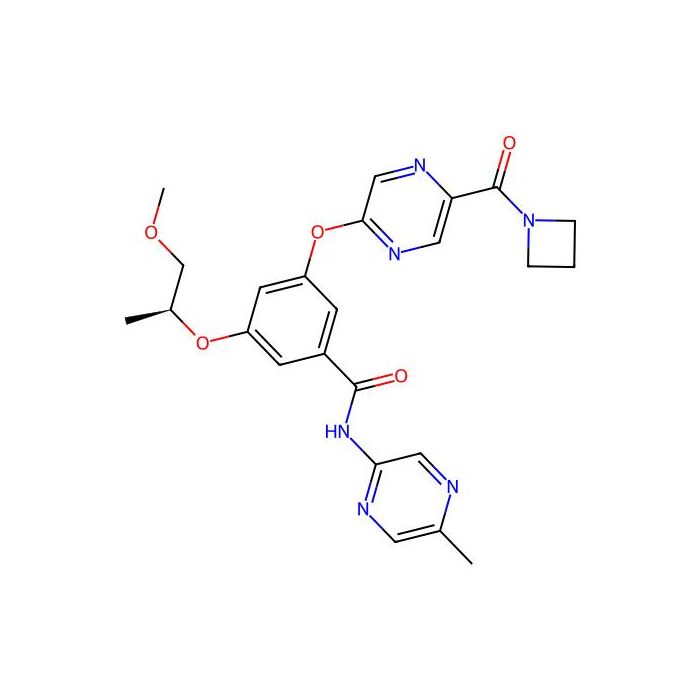
This compound belongs to the class of organic compounds known as diarylethers. These are organic compounds containing the dialkyl ether functional group, with the formula ROR', where R and R' are aryl groups.
External Descriptors
Not available
1. Djoumbou Feunang Y, Eisner R, Knox C, Chepelev L, Hastings J, Owen G, Fahy E, Steinbeck C, Subramanian S, Bolton E, Greiner R, and Wishart DS. ClassyFire: Automated Chemical Classification With A Comprehensive, Computable Taxonomy. Journal of Cheminformatics, 2016, 8:61.
Determine the necessary mass, volume, or concentration for preparing a solution.
Dilution Calculator
Determine the dilution needed to prepare a stock solution.
Reconstitution Calculator
Reviews
Customer Reviews
Application Protocols
Only tested/validated application details from the product listing may be included here.
Tested applications, recommended dilutions, and positive controls: Not specified for this item; refer to CoA/Spec Sheet.
General note: For planning purposes, see “Biological Roles” and “Solvent Selection” for generic considerations on stock preparation and assay vehicle limits. Develop assay-specific protocols internally and validate empirically.
Biological Roles
Literature context (no medical claims):
AZD1656 is described in the literature as a small-molecule modulator of glucokinase (hexokinase IV), a key enzyme that catalyzes the phosphorylation of glucose to glucose-6-phosphate in hepatocytes and pancreatic β-cells. Modulation of glucokinase activity influences glycolytic flux, glycogen synthesis, and glucose-stimulated insulin secretion.
Utility as a tool compound: Researchers employ AZD1656 to interrogate glucose-sensing pathways, evaluate enzyme kinetics (e.g., effects on S0.5, kcat, or cooperativity), and benchmark new chemical matter targeting glucokinase.
Selectivity considerations: When profiling enzyme selectivity, it is standard to compare activity across hexokinase isoforms I–III versus glucokinase, and to assess off-target effects on kinases or metabolically linked enzymes (literature best practice).
Experimental notes (general):
Dosing windows in biochemical assays often span from low nanomolar to mid-micromolar, constrained by solubility and assay vehicle limits; define the upper bound empirically to avoid aggregation artifacts.
In cell studies, titrate DMSO vehicle controls carefully and monitor mitochondrial readouts (e.g., ATP, OCR/ECAR) to separate on-target metabolic effects from solvent or off-target perturbations.
Item-specific biological data (potency, EC50/IC50, selectivity): Not specified for this item; refer to primary literature and the CoA/Spec Sheet.
Buffer Applications
This product is not a buffering agent. However, buffers are central to its use in biochemical and cell-based assays.
General guidance:
Enzyme assays: Use a neutral pH buffer compatible with glucokinase assays (e.g., 50 mM HEPES or Tris, pH 7.4–7.8) containing Mg2+ and K+ as required by the coupled detection system. Maintain final DMSO ≤1% (v/v).
Additives: 0.01–0.05% nonionic surfactant and 0.1% BSA can minimize adsorption/aggregation for hydrophobic ligands; verify no interference with readouts.
Solubility on dilution: Pre-dilute the DMSO stock 10–20× in buffer while vortexing to prevent local supersaturation and precipitation.
Item-specific buffer compatibility: Not specified for this item; refer to CoA/Spec Sheet.
Green Alternatives
Green chemistry considerations are not typically applicable to a bioactive tool compound used at micromole-to-milligram scales. Environmental impact is better managed through solvent and process choices rather than substitution of the active itself.
Preferred stock solvent: DMSO (widely used, recyclable in larger labs). Consider minimizing DMF/MeCN where possible.
Aqueous systems: Maximize buffer content and minimize organic cosolvent in biological assays consistent with compound solubility and assay tolerance.
Waste minimization: Use small-volume, high-concentration stocks and dispense via positive-displacement or acoustic dosing to reduce plastic waste and solvent use.
Substitution of AZD1656 with a “greener” molecule is not meaningful for mechanism-driven studies; instead, apply green lab practices in handling, dosing, and disposal.
Pharmaceutical Uses
Formulation/CMC context for research only (no therapeutic claims):
AZD1656 is a code-named discovery compound described in the literature for modulation of glucokinase. In preclinical and formulation research, such compounds are often explored for oral exposure potential, permeability, and metabolic stability; none of these attributes are specified for this item.
Excipient compatibility screening (general): Solubilization using cyclodextrins, lipid-based vehicles, or pH-adjusted cosolvent systems is commonly evaluated during early PK studies. Any such use must be restricted to non-clinical research.
Regulatory and compendial status:
Not a pharmacopeial substance to our knowledge; no USP/EP monographs are implied by this Moligand™ listing.
Item-specific formulation properties (polymorphs, particle size, hygroscopicity): Not specified for this item; refer to CoA/Spec Sheet.
Research use only. Not for human or veterinary use.
Physical Properties
Item-specific physicochemical specifications are not provided in the Product Data.
Appearance: Not specified for this item; refer to CoA/Spec Sheet.
Melting point: Not specified for this item; refer to CoA/Spec Sheet.
Boiling point: Not applicable for most solid tool compounds; Not specified for this item; refer to CoA/Spec Sheet.
Density: Not specified for this item; refer to CoA/Spec Sheet.
LogP/logD: Not specified for this item; refer to CoA/Spec Sheet.
pKa: Not specified for this item; refer to CoA/Spec Sheet.
Solubility: Not specified for this item; refer to CoA/Spec Sheet.
UV/Vis characteristics: Not specified for this item; refer to CoA/Spec Sheet.
General/literature guidance for bioactive screening compounds of this class:
Stock preparation is commonly performed in anhydrous DMSO (e.g., 10–50 mM) due to broad solvency; aqueous buffers are typically used only after dilution to ≤1% DMSO (v/v) to maintain solubility and biological compatibility.
If the compound contains aromatic chromophores (common in enzyme modulators), expect moderate UV absorption near 254–280 nm (literature, compound-class dependent); verify with a quick scan before HPLC quantitation.
Hygroscopicity and polymorphism can influence apparent solubility; equilibrate to room temperature in a desiccator before opening and record any phase changes during method development.
Quality & Grades
Grade/Purity: Moligand™ (provided).
What Moligand™ typically implies (general information):
Moligand™-designated items are intended for molecular screening, target validation, and SAR exploration in discovery workflows. Such offerings are commonly supported by identity confirmation (e.g., LC–MS/HRMS, NMR) appropriate for screening libraries and tool compounds.
UV cleanliness, residual solvent levels, and inorganic impurities are managed for research use; however, pharmaceutical GMP, clinical, or cGMP specifications are not implied.
Item-specific specifications:
Purity, residual solvent content, metal limits, water content, and stabilizers: Not specified for this item; refer to CoA/Spec Sheet.
Best practices for quality assurance:
Verify batch identity against CoA (e.g., LC–MS retention time and mass match) before inclusion in screening decks.
For quantitative biology (e.g., potency shifts between lots), perform a quick qNMR or HPLC area-% check to confirm material consistency.
Record lot numbers and maintain frozen aliquots to minimize freeze–thaw and adventitious hydrolysis/oxidation across campaigns.
Reaction & Applications
This compound is supplied as a bioactive small molecule tool and is not typically employed as a reagent, catalyst, or solvent in synthetic transformations.
Not commonly used in Grignard, cross-coupling, or other named synthetic reactions as a functional reagent.
For researchers in chemical biology and enzymology, AZD1656 can serve as a reference/positive-control small molecule in biochemical or cell-based studies investigating carbohydrate metabolism pathways (literature). See “Biological Roles” and “Application Protocols” for relevant guidance.
If derivatization is desired for probe development:
Without an authenticated structure, no specific functional-handle strategy can be recommended in this listing. Obtain the verified structure (CoA/Spec Sheet) before planning linkers, bioorthogonal tags, or photoaffinity groups.
Item-specific reactivity data: Not specified for this item; refer to CoA/Spec Sheet.
Reaction Conditions
Not applicable. AZD1656 is a bioactive tool compound and is not generally employed as a reagent or catalyst in chemical reactions.
If chemical modification is undertaken for probe development, adopt standard conditions appropriate to the verified functional groups once the authenticated structure is obtained from the CoA/Spec Sheet.
Safety & Handling
Safety data specific to this item are not provided in the Product Data; consult the SDS for authoritative information.
GHS Classification/Pictograms/Signal Word/H-Statements: Not specified for this item; refer to SDS.
General hazards (class-based, literature): Small-molecule research compounds may cause irritation upon contact, and the toxicological profile is often incompletely characterized. Handle as a substance of unknown toxicity.
Practical precautions:
Engineering controls: Work in a fume hood when weighing, dissolving, or handling powders and concentrated DMSO stocks.
PPE: Lab coat, nitrile gloves (double-glove for DMSO handling), safety glasses. Avoid skin contact—many bioactives are DMSO-permeable.
Incompatibilities: Avoid strong oxidizers and reactive acylating/alkylating agents unless part of a controlled synthesis; keep away from ignition sources when using organic solvents.
First aid (overview; defer to SDS): Skin/eye contact—rinse with water for 15 minutes; inhalation—move to fresh air; ingestion—rinse mouth, seek medical attention.
Spill/cleanup: Absorb DMSO solutions with inert material; avoid aerosolization of powders; decontaminate surfaces with appropriate solvent followed by detergent and water.
Special notes:
For enzyme/cell assays, filter-sterilize working dilutions through 0.22 µm if sterility is required. Dispose of bioactive waste as hazardous organic waste.
Research use only. Not for human or veterinary use.
Solvent Selection
This product is a bioactive small molecule rather than a routine reaction solvent. Selection focuses on stock preparation and assay compatibility.
General guidance (literature/practice-based):
Primary solvent: DMSO is typically preferred for preparing concentrated stocks (e.g., 10–50 mM) due to broad solvency for heteroaromatic and aromatic drug-like chemotypes.
Cosolvent strategies for aqueous assays: After preparing a DMSO stock, dilute into assay buffer maintaining final DMSO at 0.1–1.0% (v/v) to limit vehicle effects on enzymes/cells.
Alternative solvents: DMF or ethanol can sometimes aid solubility but may be less biocompatible; confirm tolerance in your assay system.
Surfactants: 0.01–0.05% nonionic surfactant (e.g., Tween-20 or Pluronic F-68) can mitigate aggregation for hydrophobic compounds; confirm no interference.
Polarity and miscibility (general):
DMSO stock solutions are fully miscible with water and most polar organics; precipitates may form upon dilution if the kinetic solubility of the compound is exceeded—pre-warm and add slowly with mixing.
Item-specific solubility, pKa, or logP: Not specified for this item; refer to CoA/Spec Sheet.
Storage & Reconstitution
Storage conditions: Store at -20°C (provided). Keep container tightly closed in a dry, inert atmosphere. Allow to equilibrate to room temperature in a desiccator before opening to prevent condensation.
Shipping: Ice chest + ice pads (provided). Inspect upon receipt; if thawed, re-freeze promptly after inspection.
Reconstitution (general guidance for small-molecule tool compounds):
Solvent: Use anhydrous DMSO for primary stock solutions unless your CoA/Spec Sheet recommends otherwise.
Concentration: Prepare a convenient high-concentration stock (e.g., 10–50 mM) based on intended assay ranges. Filter-sterilize through 0.22 µm PTFE if sterility is required.
Aliquoting: Dispense into single-use screw-cap vials or PCR tubes to avoid repeated freeze–thaw. Backfill with inert gas (N2/Ar) if feasible.
Storage of solutions: Store DMSO stocks at -20°C protected from light and moisture. Avoid >3 freeze–thaw cycles; discard if precipitation, discoloration, or potency drift is observed.
Aqueous working solutions: Prepare fresh immediately before use; keep on ice during multi-hour experiments to limit degradation.
Item-specific stabilizers, water/peroxide limits, or UV cutoff: Not specified for this item; refer to CoA/Spec Sheet.
Research use only.
Structure & Identity
Brief overview: AZD1656 is a bioactive small molecule (AstraZeneca code name) commonly used as a tool compound in metabolic enzyme research (literature). Item-specific identifiers provided below are limited; defer to CoA/SDS for authoritative identity data.
CAS: 919783-22-5 (provided)
PubChem CID: 16039797 (provided)
InChIKey: Not specified for this item; refer to CoA/Spec Sheet. (Product Data lists a truncated key)
SMILES: Not specified for this item; refer to CoA/Spec Sheet.
Molecular Formula: Not specified for this item; refer to CoA/Spec Sheet.
Molecular Weight: Not specified for this item; refer to CoA/Spec Sheet.
Structural features (literature/general):
AZD1656 is reported in the literature as a small-molecule glucokinase modulator; detailed atom connectivity and stereochemistry should be confirmed from an authenticated structure database or the supplier’s CoA.
2D description: As an encoded screening compound, the precise ring systems/heteroatoms should not be inferred without the verified structure. Request the Spec Sheet for a definitive structural diagram.
Best practice:
Verify identity by matching CAS/CID and full InChIKey/SMILES on the CoA or through an orthogonal technique (LC–MS, 1H NMR) prior to critical experiments.
Synthetic Utility
This item is supplied as a finished small-molecule tool compound and is not typically used as a building block or reagent in multistep synthesis.
Without the verified structure, derivatization strategies (e.g., prodrug, photoaffinity, or biotinylated probes) cannot be recommended from this listing. Obtain the authenticated structure (CoA/Spec Sheet) prior to planning synthetic modifications.
If analog synthesis is intended, consult primary literature on glucokinase modulators for privileged scaffolds, exit vectors, and SAR trends; design handles that preserve enzyme-binding interactions while enabling vector attachment.
Item-specific functional group guidance: Not specified for this item; refer to CoA/Spec Sheet.
Target Specificity
Only item-specific data may be listed here.
Target, epitope, species reactivity, clone/isotype: Not applicable (this item is not an antibody) and not specified for this item; refer to CoA/Spec Sheet.
Note: While literature discusses AZD1656 in the context of glucokinase, no target specificity data are provided in this Product Data. Users should consult primary references or the supplier’s documentation for any confirmed target annotations.
Need help choosing the grade?
Our grade selection guide covers purity, stabilizer status, and application suitability for all variants in our catalog.
We use cookies to ensure the website functions properly and, where permitted, to improve your experience. You can manage your preferences at any time in Settings. Learn more in our Cookie Policy.
Shall we send you a message when we have discounts available?
Remind me later
Thank you! Please check your email inbox to confirm.
Products are supplied to verified businesses, institutions, and qualified professionals for research and development use only. Not for use in humans, animals, diagnosis, or therapy.