Determine the necessary mass, volume, or concentration for preparing a solution.
Dilution Calculator
Determine the dilution needed to prepare a stock solution.
Reconstitution Calculator
Reviews
Customer Reviews
Application Protocols
No tested biological application protocols (e.g., WB, IHC, IF, FC) are provided for this item.
General laboratory protocol example (literature/generic; not item-specific):
Standardization of active chlorine (iodometric): Dissolve an accurately weighed portion in water. Add excess KI in mildly acidic solution and titrate liberated I2 with standardized Na2S2O3 using starch indicator to faint endpoint. Calculate % active chlorine to set reagent stoichiometry for upcoming reactions.
Typical electrophilic chlorination: Dissolve substrate in MeCN/H2O (9:1). Buffer to pH ~8 with NaHCO3. Add standardized solution of the reagent dropwise at 0–5 C. Stir to completion (TLC). Quench with Na2S2O3, extract, wash, dry, and purify.
Note: Adjust conditions to substrate needs. Always consult primary literature and your institutional safety protocols.
Biological Roles
This product is a synthetic oxidizing/chlorinating reagent and does not serve a native biological role.
General/literature context (not item-specific and not implying clinical use):
N‑chlorosulfonamides can generate reactive chlorinating species in water, akin to monochloramine/hypochlorous acid chemistry, which are relevant in disinfection and oxidative stress studies. However, the reagent itself is not a metabolite.
In biochemical method development, related reagents have been used to effect controlled oxidative modifications of amino acid side chains (e.g., chlorination of phenolic or anilinic residues) for analytical purposes. Such uses require careful control to avoid nonspecific oxidation.
Because these reagents can alter biomolecules, they are typically excluded from live-cell systems and are used only in vitro for derivatization or analytical workflows.
Note: No biological activity, targets, or pathways are specified for this item. Any handling with biomolecules should prioritize compatibility, quench strategies (e.g., thiosulfate), and avoidance of unintended protein or nucleic acid oxidation.
Buffer Applications
This item is not a buffering agent. It is an oxidizing/chlorinating reagent and is not typically used to prepare or maintain buffer systems.
Practical note (literature/generic):
If used in aqueous reactions, choose a buffer that maintains pH 7–10 (e.g., phosphate, carbonate, borate) while being resistant to oxidation. Avoid buffers containing easily oxidizable components (e.g., Tris can undergo chlorination/oxidation). Validate buffer compatibility on a small scale.
Green Alternatives
Selecting a chlorinating/oxidizing reagent involves balancing safety, waste, solvent, and selectivity.
Comparison (literature/generic):
Chloramine B hydrate: water-compatible, solid, easier dosing than gaseous Cl2; generates chloride/sulfamide byproducts; moderate EHS profile as an oxidizing solid.
Chloramine‑T: similar but slightly different reactivity; comparable EHS and waste; often interchangeable in aqueous media.
N‑Chlorosuccinimide (NCS): organic-soluble, effective in nonpolar solvents; generates succinimide waste; more hazardous in some radical chlorinations.
Sodium hypochlorite (bleach): inexpensive, high atom economy; aqueous only; can be less selective; generates significant salt waste.
Oxone (2KHSO5·KHSO4·K2SO4): strong oxygen-transfer oxidant; metal-free; not a chlorinating agent unless combined with halides; safer aqueous handling but can be over-oxidizing.
Small decision matrix (qualitative):
Aqueous, mild chlorination: Chloramine B or Chloramine‑T.
Nonpolar substrate/solvent: NCS or tBuOCl.
Green oxidations without chlorination: Oxone, H2O2 (with catalysts).
Greener practice tips:
Use water or MeCN instead of chlorinated solvents when feasible.
Minimize excess reagent; standardize active chlorine to avoid overdosing.
Quench residual oxidant with sodium thiosulfate; neutralize and separate benign salts for disposal per local regulations.
Pharmaceutical Uses
No pharmacopeial grade or excipient role is specified for this item; refer to CoA/Spec Sheet for any compliance information.
General context (not item-specific; no therapeutic claims):
N‑chlorosulfonamide oxidants are research reagents used in process development laboratories for selective chlorination/oxidation steps in the synthesis of intermediates. They are not typical pharmaceutical excipients.
For GMP or regulated environments, if such reagents are employed at R&D scale, stringent control of residuals and characterization of byproducts is required. Alternative reagents with established regulatory precedent (e.g., NCS) may be preferred when scaling.
Conclusion: Treat this product strictly as a research chemical with no stated pharmaceutical formulation use.
Physical Properties
Item-specific specifications are not provided in the Product Data. Do not use the following as product specifications; consult the CoA/Spec Sheet for authoritative values.
Appearance: Not specified for this item; refer to CoA/Spec Sheet.
Molecular weight: Not specified for this item; refer to CoA/Spec Sheet.
Melting point / decomposition: Not specified for this item; refer to CoA/Spec Sheet.
Boiling point: Not applicable to ionic hydrates; solid decomposes before boiling (literature, general for N‑chlorosulfonamide salts).
Density: Not specified for this item; refer to CoA/Spec Sheet.
Solubility (literature/general): typically soluble in water; sparingly soluble to insoluble in nonpolar organic solvents; variable solubility in polar organics (MeOH, MeCN) depending on counterion and hydration.
pKa (of the parent sulfonamide, literature): strongly deactivating sulfonyl renders the N–H (when present) acidic, but for the N‑chloro salt the operative speciation relates to hydrolysis to hypochlorite-like species under basic or neutral aqueous conditions.
LogP: Not meaningful for ionic hydrates; expect low partitioning into nonpolar phases (literature/generic).
Refractive index: Not applicable for solids.
Hygroscopicity: N‑chlorosulfonamide salts can slowly lose active chlorine on prolonged exposure to moisture and light; hydration state may change with ambient humidity (literature/generic guidance).
Important: The hydrate waters and counterion identity directly affect assay on an “available chlorine” basis; verify active chlorine content prior to quantitative use.
Quality & Grades
Grade/Purity: Not specified for this item; refer to CoA/Spec Sheet.
Interpretation and guidance (general):
Oxidant assay: For N‑chlorosulfonamide reagents, the most practical quality indicator is the “available chlorine” content, typically determined iodometrically. Hydration state and counterion purity significantly affect the active chlorine assay. Verify assay prior to stoichiometric applications.
Inorganic impurities: Transition metals can catalyze decomposition of N–Cl bonds. Low metal content is desirable for stability and reproducibility. If your method is metal-sensitive, request the metals profile on the CoA.
Organic impurities: Unreacted sulfonamide (dechlorinated) or over-chlorinated byproducts lower effective oxidant strength. HPLC or iodometric titration can quantify.
Stabilizers: Not specified for this item. Some N–Cl reagents are supplied without stabilizers; if present, stabilizers may affect certain reactions (e.g., radical vs electrophilic pathways). Confirm on CoA.
UV/Chromatography: If using in analytical contexts, note that aromatic sulfonamides absorb in the UV; HPLC-grade solvent compatibility is usually dictated by your mobile phase rather than the solid reagent.
Recommendations:
For kinetic or quantitative oxidations, standardize a fresh solution (e.g., iodometry) to determine exact active chlorine content of the batch you will use.
Document hydration by drying a small aliquot under controlled conditions if your protocol requires mass-based stoichiometry independent of assay (literature/generic practice).
Reaction & Applications
Chloramine B (literature/generic description) is used as an electrophilic chlorinating and oxygen-transfer oxidizing reagent, analogous to Chloramine‑T but lacking the para‑methyl substituent. It often provides slightly different selectivity/reactivity due to electronic effects.
Representative application families (literature, not item-specific):
Electrophilic chlorination: halogenation of activated aromatics, enols/enolates, and heterocycles; conversion of thioethers to sulfoxides/sulfones under controlled conditions.
Oxidations: oxidation of primary/secondary alcohols to carbonyls under buffered aqueous conditions; oxidative dehydrogenation of certain substrates; oxidative cyclizations forming N–N or C–N bonds.
Haloamidation/halolactonization: intramolecular cyclizations via electrophilic halogen addition across alkenes followed by nucleophile capture (in water or MeCN with catalysts).
Azo/azo coupling assistance: in situ generation of diazonium-like electrophiles via oxidative pathways (substrate-dependent).
Reagent for analytical chemistry: iodometric titration standardization; oxidative determination of analytes (e.g., phenols, anilines) by forming chlorinated derivatives (method-dependent; literature).
Practical guidance:
Standardize active chlorine content before use (iodometry with KI/Na2S2O3).
Control pH (often pH 7–10 for predictable behavior). Acidic media may release chlorine/chloramines and change selectivity.
Avoid strong nucleophilic solvents that can scavenge electrophilic chlorine unless desired (e.g., methanol can form MeOCl-like species).
For poorly soluble organic substrates, use biphasic systems with phase-transfer catalysts (e.g., tetrabutylammonium salts) or switch to a more organic-soluble chlorinating agent if necessary.
Monitor reactions by TLC/GC/HPLC, as over‑chlorination can occur upon prolonged exposure.
Reaction Conditions
The following are general, literature-based guidelines for N‑chlorosulfonamide reagents and are not product specifications. Optimize for each substrate.
Solvents: Water, MeOH, EtOH, MeCN, acetone, and mixed aqueous/organic systems are common. Avoid strongly nucleophilic or easily oxidizable solvents if undesired side reactions are possible. DMSO can be oxidized under some conditions.
pH: Neutral to mildly basic (pH 7–10) often gives controlled electrophilic chlorination/oxidation. Acidic media can liberate chlorine, increasing volatility and changing selectivity.
Temperature: 0–25 C for sensitive substrates; 25–60 C to drive slower oxidations. Avoid overheating to limit decomposition of N–Cl functionality (literature generality).
Stoichiometry: 1.0–1.5 equiv for selective chlorinations; 2.0+ equiv for multi-electron oxidations (e.g., to sulfones). Always verify with active-chlorine assay.
Catalysts/additives: Phase-transfer catalysts (e.g., Bu4N+ salts) for biphasic systems; acids/bases to tune speciation; halogen-bond donors or photolysis can promote radical pathways for alkane chlorination (literature advanced methods).
Workup: Quench residual oxidant with sodium thiosulfate or sodium sulfite; adjust pH to neutral; extract organics with suitable solvents; remove inorganic salts by filtration or aqueous wash.
Monitoring: TLC/HPLC/GC; look for over‑chlorinated byproducts; control time and temperature.
Expected outcomes: Yields are substrate-dependent; many electrophilic chlorinations proceed in good yields under buffered, room-temperature conditions in water or MeCN (literature surveys).
Safety & Handling
Hazard classifications, pictograms, and statements for this specific item are not provided. Always consult the product SDS for authoritative safety information.
General safety considerations for N‑chlorosulfonamide oxidants (literature/generic):
Likely hazards: oxidizing solid, skin/eye irritation, respiratory irritation, harmful if swallowed. N–Cl species can release chlorine-containing oxidants in contact with acids or reducing agents.
PPE: safety goggles, lab coat, appropriate chemically resistant gloves (e.g., nitrile), and use in a fume hood to avoid inhalation of dust or vapors from decomposition.
Storage: For this item, Product Data specifies Room temperature, Argon charged. Keep container tightly closed, protected from moisture, heat, sunlight, and contamination with organics or reducing agents. Segregate from acids, bases, reducing agents, and combustible materials.
First aid (overview; defer to SDS): If inhaled—move to fresh air. Skin/eye contact—rinse with water for at least 15 minutes. If ingested—rinse mouth; do not induce vomiting; seek medical attention.
Spill response: Avoid dust generation. Sweep up carefully and transfer to a compatible container for disposal. Quench residual oxidizing power cautiously with sodium thiosulfate solution before drain disposal per institutional guidelines (literature/generic).
Solvent Selection
This material is an ionic, N‑chlorinated sulfonamide hydrate; solvent choice is governed by its polar, salt-like character and the reaction mechanism.
Water: typically highly soluble, enabling aqueous electrophilic chlorination and oxidation chemistry; hydrolysis may generate hypochlorite-like species under basic or neutral conditions.
Polar protic organics (MeOH, EtOH): moderate solubility; can participate in solvent-mediated reactions (e.g., solvent capture of electrophilic chlorine). Check for competing solvent chlorination.
Polar aprotics (MeCN, DMF, DMSO): variable solubility; often used when organic substrates require nonaqueous media; monitor stability as some aprotics (especially DMSO) can be oxidized.
Nonpolar solvents (toluene, hexanes): generally poor solubility; phase-transfer strategies or biphasic conditions may be employed.
When to choose it versus alternatives:
Prefer Chloramine B hydrate for aqueous or mixed-solvent electrophilic chlorinations where milder, more controllable reactivity than hypochlorite bleach is desired, and when N‑chlorosuccinimide (NCS) is too lipophilic or harsh.
Consider NCS or tBuOCl for nonpolar media or when a neutral, organic-soluble chlorinating agent is required.
For green solvent choices, water, 2‑MeTHF (with phase transfer), or MeCN often balance performance and safety.
Practical tips:
Adjust pH to modulate speciation/reactivity; mildly basic conditions often enhance effective chlorine transfer in water.
Use phase-transfer catalysts for biphasic systems to bring the oxidant into the organic phase (literature/generic).
Shipped in: Not specified for this item; refer to CoA/Spec Sheet.
Stabilizers: Not specified for this item; refer to CoA/Spec Sheet.
Best practices (general/literature):
Keep tightly sealed under inert gas to minimize moisture uptake and photodecomposition of the N–Cl bond. Store away from heat and light, segregated from acids, bases, reducing agents, and combustibles.
If long-term storage is anticipated, consider amber containers and desiccant to limit light and humidity exposure.
Reconstitution and solution stability:
Prepare fresh solutions in water or compatible solvents immediately before use for maximum active chlorine. Standardize concentration via iodometry if precise stoichiometry is required.
Aqueous solutions may lose activity over hours to days due to hydrolysis and disproportionation; store chilled and protected from light if short-term holding is necessary, but verify activity before use.
Do not store solutions in metal containers; use glass or compatible plastics.
Research use note: For research use only (as provided).
Structure & Identity
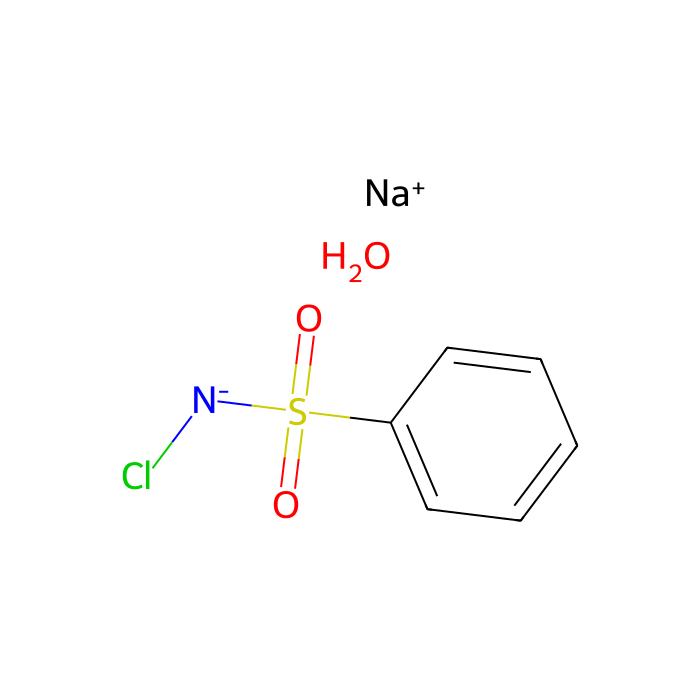
Chloramine B Hydrate is commonly understood in the literature as the hydrated, inorganic salt form of an N‑chlorobenzenesulfonamide (often encountered as the sodium salt). It is used as an electrophilic chlorinating and oxygen-transfer oxidizing reagent.
SKU: C405474
CAS: 304655-80-9 (as provided)
PubChem CID: 16211637 (as provided)
InChIKey: 447886 (as provided)
Molecular formula: Not specified for this item; refer to CoA/Spec Sheet.
Molecular weight: Not specified for this item; refer to CoA/Spec Sheet.
SMILES: Not specified for this item; refer to CoA/Spec Sheet.
Structural features (general/literature description, not item-specific):
Contains an N–Cl functional group on a sulfonamide nitrogen (N‑chloro sulfonamide), conferring electrophilic chlorine transfer capability.
Aromatic benzene ring para to the sulfonyl group in the benzenesulfonamide scaffold (for the generic “chloramine B” literature structure), with a sulfonyl (–SO2–) moiety bonded to the anilide nitrogen.
Typically isolated as an inorganic counterion salt (commonly sodium) and may include waters of hydration (hydrate). Hydration state can influence assay strength on an active‑chlorine basis.
2D description in words: an aromatic phenyl ring bearing a –SO2–NHCl substituent; the sulfonamide nitrogen carries the N–Cl bond; the sulfonyl group is bonded to the aromatic ring; charge is balanced by an alkali metal cation in salt forms (literature).
Notes:
Exact stereochemistry is not applicable (achiral). Hydration number and counterion identity should be confirmed from the CoA/specification for this specific catalog item.
Synthetic Utility
Functional group profile (literature/generic):
N–Cl bond in a sulfonamide matrix acts as a source of electrophilic chlorine and as an oxygen-transfer oxidant via hydrolytic formation of HOCl/Cl2 or direct N–Cl transfer.
Key transformations:
Electrophilic chlorination of activated aromatics and enolizable systems; regioselectivity can be tuned by solvent and pH.
Oxidation of thioethers to sulfoxides/sulfones under controlled stoichiometry; amines to chloramines/imines; alcohols to carbonyls in buffered media.
Halocyclizations (e.g., chlorolactonization, haloamidation) across alkenes/alkynes, often in MeCN/H2O.
Facilitation of diazotization/azo couplings by oxidative generation of nitrosating/chlorinating species in situ (substrate- and condition-dependent).
Retrosynthetic value:
Offers a bench-stable, weighable alternative to gaseous chlorine or aqueous hypochlorite, with improved dosing precision and, in many cases, cleaner product profiles.
Selectivity levers:
pH control modulates speciation between N–Cl transfer and HOCl pathways.
Solvent polarity and nucleophilicity influence competitive solvent capture and radical vs ionic mechanisms.
Catalysis: halogen-bond donors, phase-transfer catalysts, or photolysis can alter pathways and outcomes (literature reports).
Operational notes:
Standardize active chlorine (iodometry) before stoichiometric reactions.
Minimize metal contamination and strong bases to reduce undesired decomposition.
Target Specificity
Not applicable. This product is a small-molecule oxidizing/chlorinating reagent, not a biological targeting agent. No antigen, epitope, clone, isotype, or species reactivity information is associated with this item.
We use cookies to ensure the website functions properly and, where permitted, to improve your experience. You can manage your preferences at any time in Settings. Learn more in our Cookie Policy.
Shall we send you a message when we have discounts available?
Remind me later
Thank you! Please check your email inbox to confirm.
Products are supplied to verified businesses, institutions, and qualified professionals for research and development use only. Not for use in humans, animals, diagnosis, or therapy.