Store at -20°C. Store under desiccating conditions. The product can be stored for up to 12 months.
Specifications
Biochemical and Physiological Mechanisms
G protein activator; mast cell degranulator. Promotes histamine release, inhibits CaM (calmodulin), inhibits PLC (phospholipase C) and activates G proteins. Mechanism analogous to mastoparan . Active in vivo and in vitro .
Storage
Store at -20°C,Desiccated
Shipped In
Ice chest + Ice pads
This product requires cold chain shipping. Ground and other economy services are not available.
Action Type
AGONIST
Mechanism of action
Agonist of MRGPRX2
Note
Wherever possible, you should prepare and use solutions on the same day. However, if you need to make up stock solutions in advance, we recommend that you store the solution as aliquots in tightly sealed vials at -20°C. Generally, these will be useable for up to one month. Before use, and prior to opening the vial we recommend that you allow your product to equilibrate to room temperature for at least 1 hour. Toxic, refer to SDS for further information. Need more advice on solubility, usage and handling? Please visit our frequently asked questions (FAQ) page for more details.
Determine the necessary mass, volume, or concentration for preparing a solution.
Dilution Calculator
Determine the dilution needed to prepare a stock solution.
Reconstitution Calculator
Reviews
Customer Reviews
Application Protocols
No item-specific, validated application protocols are provided in the Product Data for this listing.
General guidance
Refer to peer-reviewed literature and your internal SOPs for protocols on mast cell degranulation assays, Ca2+ flux assays, and mediator quantification using Compound 48/80.
Because this is a mixture, pilot experiments to determine the effective concentration range for your cell system and lot are strongly recommended.
For authoritative, product-specific instructions (if available), consult the lot-specific CoA and SDS.
Biological Roles
Literature context (for research use only; not item specifications)
Functional class: Potent mast cell secretagogue used as a positive control in studies of degranulation and mediator release.
Putative mechanism: Activates the G protein–coupled receptor MRGPRX2 (human; ortholog Mrgprb2 in mouse), leading to Gq/PLC activation, intracellular Ca2+ mobilization, cytoskeletal reorganization, and exocytosis of granule contents.
Readouts: Release of histamine, β-hexosaminidase, tryptase, and cytokines; membrane capacitance changes; Ca2+ flux by fluorescent indicators.
Cell systems: Employed with primary mast cells (e.g., bone marrow–derived mast cells), mast cell lines (e.g., RBL-2H3, HMC-1; verify receptor expression), and engineered GPCR reporter cells.
Selectivity considerations: As a mixture with polycationic components, Compound 48/80 can also interact nonspecifically with anionic cell-surface moieties, which may contribute to off-target effects at higher concentrations. Titrate carefully and include vehicle and negative controls.
Kinetics: Responses are typically rapid (seconds to minutes) with transient Ca2+ spikes followed by mediator release over minutes to tens of minutes (assay-dependent).
Good practices
Verify receptor expression in your model (e.g., qPCR or immunoblot for MRGPRX2/Mrgprb2) when mechanistic interpretation is required.
Include orthogonal stimuli (e.g., ionomycin, antigen-mediated FcεRI crosslinking) and antagonists/inhibitors, where appropriate, to benchmark assay performance.
No clinical/medical claims are made. This product is supplied strictly for research use only.
Buffer Applications
Not a buffering agent. This material does not form defined buffer systems and is not used to control pH.
Practical note (general)
Working solutions are commonly prepared in biological buffers (e.g., PBS, HBSS, Krebs-Ringer) for cell-based assays. Select a buffer that maintains physiological pH and ionic strength and is compatible with your readout (e.g., Ca2+-free buffers for certain imaging protocols).
If sterility is required, prepare under aseptic conditions and filter through a 0.22 µm membrane.
For composition and pH specifications of buffers, refer to your assay SOPs. No item-specific buffer data are provided for this product.
Green Alternatives
Context: As a bioactive research mixture used in very small quantities, green chemistry considerations focus on solvent choices and waste minimization rather than replacement of the active itself.
Greener practice options (general)
Prefer aqueous vehicles: Prepare working solutions in water/PBS/physiological saline when compatible with your assay to avoid organic solvents.
Minimize DMSO: If concentrated stocks in DMSO are required, reduce final assay DMSO to ≤0.1–0.2% v/v and consolidate aliquots to avoid repeated thawing/wasting.
Right-sizing: Prepare small aliquots to eliminate repeated freeze–thaw cycles and reduce disposal of expired solutions.
Waste management: Segregate halogen-free organic waste (DMSO, alcohols) from aqueous buffers; neutralize and dispose per local regulations.
Illustrative comparison of vehicles (general; not item specifications)
Water/PBS: Lowest environmental impact; may require sterile technique and shorter shelf-life for solutions.
DMSO: High solvating power but higher environmental burden; use only for concentrated master stocks and at minimal final percentages.
Note: There is no direct “green substitute” for the bioactivity of Compound 48/80, which is historically defined by function rather than single-molecule identity. Sustainability gains are best achieved via solvent selection, microscale protocols, and careful inventory management.
Pharmaceutical Uses
Not applicable. Compound 48/80 is supplied for research use only and is not formulated as a pharmaceutical excipient or active ingredient.
General information (context only)
No pharmacopeial monograph is associated with this historical mixture.
Any use in manufacturing, clinical, or diagnostic settings is outside the scope of supply and is not supported.
Researchers seeking formulation-like behavior (e.g., for in vitro dosing) should instead consult the Storage & Reconstitution and Solvent Selection sections for guidance on preparing laboratory stock and working solutions.
Physical Properties
Item-specific values
Appearance: Not specified for this item; refer to CoA/Spec Sheet.
Molecular weight (exact): Not specified for this item; refer to CoA/Spec Sheet.
Molecular formula: Not specified for this item; refer to CoA/Spec Sheet.
Melting point, boiling point, density, refractive index: Not specified for this item; refer to CoA/Spec Sheet.
Literature/general properties for context (mixture; values vary and are not specifications)
Physical state: Typically an amorphous, hygroscopic solid (mixture of oligomers).
Solubility: Readily soluble in water, saline, and common polar media (e.g., PBS); also soluble in DMSO. Final working solutions for cell-based assays are commonly prepared in aqueous buffers to minimize vehicle effects.
Ionization: Polycationic character in neutral/physiological pH due to multiple amine functions (literature), favoring high aqueous solubility and strong interactions with anionic biomolecules and membranes.
LogP/pKa: Not meaningfully defined for a heterogeneous oligomeric mixture; expect overall high polarity and multiple basic pKa values due to amines (literature).
Practical notes (general)
Because the material is hygroscopic, massing should be performed rapidly under low humidity or in a desiccator.
For quantitative solution preparation, prepare a concentrated aqueous or DMSO stock by weight and report concentrations in mass/volume units (e.g., mg/mL), recognizing the mixture character.
Always defer to the lot-specific CoA/SDS for authoritative property and handling data.
Quality & Grades
Item-specific grade/purity
Grade/Purity: Not specified for this item; refer to CoA/Spec Sheet.
Context and guidance for this material (mixture)
Nature of material: Compound 48/80 is historically supplied as a functional mixture rather than a single-structure analytical standard. Consequently, “purity” is better framed as compositional profile and biological activity rather than a single % assay.
Characterization: Suppliers may provide lot-specific data such as UV-Vis profile, nitrogen content, or functional activity in a mast-cell degranulation assay (e.g., β-hexosaminidase release). For this catalogue item, consult the CoA for any such data.
Implications for experimental design: Because composition can vary across lots, best practice is to qualify a new lot in your assay (e.g., generate a fresh EC50/response curve) and retain aliquots for consistency.
Stabilizers: None indicated for this item. If stabilizers/buffers are present in a given lot, they will be listed on the CoA/SDS.
Regulatory/analytical grades: AR/HPLC/pharmacopeial grades are generally not applied to this legacy mixture. If a specific grade is required by your protocol or QA system, verify with CoA/specification sheets.
Recommendation
Document the lot number in all reports and publications, and, when possible, bracket critical experiments with the same lot to control for mixture variability.
Reaction & Applications
Scope of use: Compound 48/80 is not commonly used as a synthetic reagent. Its primary utility is as a bioactive tool compound in cell/biochemical research.
Research applications (literature; for laboratory research use only)
Mast cell biology: Widely used to evoke degranulation and mediator release (e.g., histamine, β-hexosaminidase) in rodent and human mast cell models.
Receptor pharmacology: Serves as an agonist/activator in studies of the MRGPRX2 (human) or Mrgprb2 (mouse) receptor pathways, facilitating investigations of pseudoallergic signaling, Ca2+ mobilization, and downstream kinase activation.
Assay development: Positive control for degranulation assays, fluorometric Ca2+ flux, mediator quantitation (ELISA/LC-MS), and reporter-gene systems linked to Gq/PLC signaling.
Membrane/cationic polymer interactions: Due to polycationic character, can be used to probe interactions with anionic lipids/glycoconjugates on cell surfaces.
Practical considerations
Lot qualification: Because the material is a mixture, determine an effective concentration range de novo for each lot (e.g., construct a 6–8 point concentration-response curve).
Vehicles: Prefer aqueous buffers for working solutions; if using DMSO stocks, ensure final DMSO remains within tolerable limits for your system.
Readouts: β-hexosaminidase release, histamine assays, tryptase activity, Ca2+ imaging, and transcriptional reporters are common endpoints.
Note: No medical or diagnostic use is intended or implied. For in vitro research use only. Always validate concentrations and exposure times in your specific model.
Reaction Conditions
Chemical reaction conditions are not generally applicable because Compound 48/80 is not used as a classical reagent. Instead, below are literature-based conditions for in vitro assay use (general guidance; optimize per system):
Typical in vitro assay conditions (literature; not item specifications)
Stock preparation: 10–100 mg/mL in DMSO or 1–10 mg/mL in sterile water/PBS; aliquot and store frozen.
Working concentrations: Commonly 0.1–10 µg/mL for mast cell degranulation assays; some systems respond at lower or require higher concentrations—establish a full concentration–response curve for each lot and cell type.
Incubation: Acute stimulation for 5–30 min at 37°C for mediator release; seconds to minutes for Ca2+ flux. Longer incubations may affect cell viability—include time-course controls.
Buffers: Use physiological buffers (e.g., HEPES-buffered saline, PBS, HBSS). For Ca2+ imaging, adjust extracellular Ca2+/Mg2+ according to dye/protocol requirements.
Controls: Include vehicle control, positive control (e.g., ionomycin or FcεRI crosslinking where appropriate), and pathway modulators (e.g., GPCR antagonists) to benchmark responses.
Readouts: β-hexosaminidase release quantified via 4-MU- or pNP-based substrates; histamine by fluorometric/ELISA/LC-MS; Ca2+ by Fluo-4/Fura-2.
Note: The above are literature-style parameters to help plan experiments and are not specifications for this item. Always perform small-scale pilot experiments to refine conditions.
Safety & Handling
Item-specific hazard data
Signal Word: Not specified for this item; refer to SDS.
H-Statements: Not specified for this item; refer to SDS.
GHS Classification and Pictograms: Not specified for this item; refer to SDS.
General safety guidance (literature/practice; not a substitute for SDS)
Anticipated hazards: Organic, polyamine/oligomeric mixture; may cause skin/eye/respiratory irritation. Avoid inhalation of dusts and contact with skin/eyes. Handle in a fume hood or well-ventilated area.
PPE: Lab coat, nitrile gloves, safety goggles; use a dust mask/respirator as appropriate to exposure risk and institutional policy.
First aid (overview): If inhaled—move to fresh air; if on skin—wash with soap and water; if in eyes—rinse cautiously with water for several minutes and remove contact lenses if present; if ingested—rinse mouth. Seek medical attention according to SDS guidance.
Incompatibilities: Strong oxidizers; strong acids may cause exothermic reactions or salt formation; reactive carbonyls may further alkylate amines. Avoid moisture to limit clumping and ensure accurate weighing.
Engineering controls: Use secondary containment for solutions; weigh in a desiccator or low-humidity environment.
Spill/cleanup: Avoid dust generation; collect with inert absorbent for solutions. Dispose via approved chemical waste streams per institutional and local regulations.
Chronic exposure: No comprehensive data for mixtures—minimize exposure using ALARA principles and consult SDS.
Always consult the product’s SDS for definitive hazard classification and emergency procedures.
Solvent Selection
Applicability: As a bioactive research reagent rather than a synthetic intermediate, solvent choice primarily concerns stock-solution preparation and dilution vehicles.
General solvent behavior (literature)
Water/PBS/physiological saline: Typically excellent solubility; favored for working solutions in cell-based assays to minimize organic cosolvent exposure.
DMSO: Good solubility and convenient for concentrated stocks (e.g., 10–100 mg/mL), then dilute into aqueous buffers so final DMSO ≤0.1–0.5% v/v as your system tolerates.
Alcohols (methanol/ethanol): Soluble but often avoided in biological assays beyond very low percentages due to cytotoxicity.
Selection guidance
Choose aqueous buffers (PBS, HBSS, Krebs-Ringer) for immediate-use working solutions.
Use DMSO for long-term, concentrated master stocks when repeated freeze–thaw of aqueous solutions would be problematic.
Filter-sterilize (0.22 µm) if sterility is required; confirm that filtration does not lead to significant adsorptive loss by doing a small recovery check.
DMSO: Pros—high solubility, stable frozen aliquots; Cons—vehicle effects in cells, must minimize final %.
Tip: Report concentrations as mass/volume (mg/mL) for this mixture to avoid ambiguity arising from undefined molecular weight.
Storage & Reconstitution
Item-specific instructions (from Product Data)
Storage: Store at -20°C, desiccated.
Shipping: Ice chest + ice pads.
General reconstitution and handling guidance (literature/practice; not item specifications)
Solvents: Dissolve in sterile water, PBS/physiological saline, or DMSO. For cell-based assays, prefer aqueous vehicles for working solutions and limit DMSO content.
Stock solutions: Prepare concentrated stocks (e.g., 10–100 mg/mL in DMSO or 1–10 mg/mL in water/PBS) to minimize freeze–thaw cycles. Vortex gently; brief sonication can help dissolution if needed.
Sterilization: If required, filter through a 0.22 µm PTFE or PES membrane. Verify recovery to ensure minimal adsorptive loss.
Aliquoting: Dispense single-use aliquots in low-bind tubes; avoid repeated freeze–thaw. Label with lot, concentration (mg/mL), solvent, and date.
Stability: Aqueous stocks are generally less stable to microbial growth and potential hydrolysis; store cold and use promptly. DMSO stocks tend to be more stable when kept frozen and protected from moisture.
Working solutions: Prepare fresh on the day of use. Keep on ice during setup and equilibrate to 37°C immediately before dosing if required by the assay.
Always consult the lot-specific CoA/SDS for any definitive storage limits, stability data, or incompatibilities.
Structure & Identity
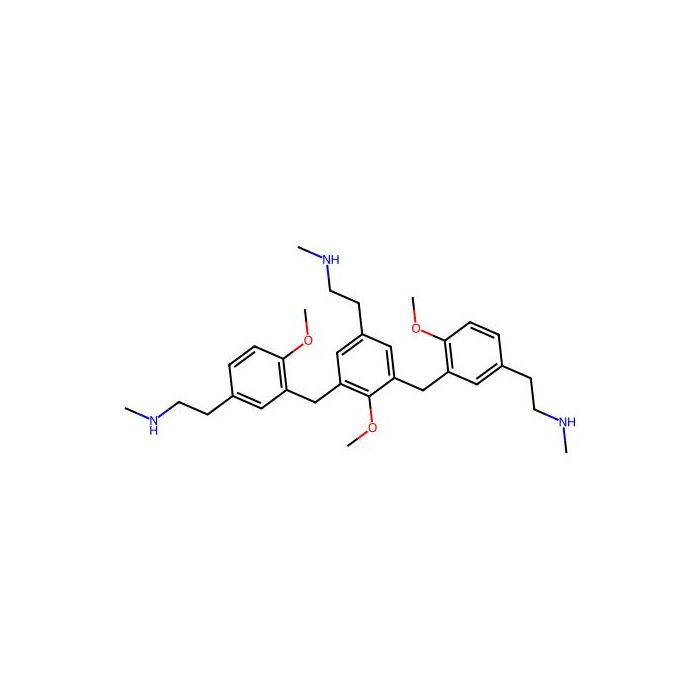
Brief description: Compound 48/80 is a legacy research reagent best known as a mast-cell secretagogue. It is not a single, well-defined molecule; rather, it is a mixture of oligomeric/condensation products.
SMILES: Not specified for this item; refer to CoA/Spec Sheet.
Molecular formula: Not specified for this item; refer to CoA/Spec Sheet.
Molecular weight: Not specified for this item; refer to CoA/Spec Sheet.
Literature/general identity notes (for context; not item specifications)
Composition: Commonly described as a heterogeneous mixture of condensation products derived from p-methoxyphenethylamine (and related phenethylamines) with formaldehyde, yielding oligomeric, polycationic species.
Structural features: Aromatic phenethyl motifs (anisole-type rings) connected via methylene linkages; the mixture may include secondary/tertiary amines and quaternary ammonium-like cationic centers in oligomers.
Consequence of mixture character: No single canonical SMILES/InChI; properties can vary across lots, so functional assays are often used to confirm activity.
2D structural description in words (literature)
Repeating units of a 4-methoxyphenyl-CH2-CH2-amine fragment, joined by methylene linkages introduced by formaldehyde condensation. The aromatic rings bear para-methoxy substituents; the aliphatic chain terminates or branches at amine nitrogens that can be further alkylated, producing cationic oligomers.
Note: For definitive, lot-specific identity information, consult the CoA and SDS for this catalogue item.
Synthetic Utility
Not typically applicable. Compound 48/80 is a functional mixture used as a biological tool and is not generally employed as a building block or reagent in synthetic organic chemistry.
Context (general)
The heterogeneous, oligomeric composition and polycationic nature make it unsuitable for precise stoichiometric transformations or predictable reactivity patterns.
If your aim is to explore structure–activity relationships of mast cell secretagogues, consider using well-defined small-molecule agonists/antagonists of MRGPRX2 or synthesizing discrete phenethylamine derivatives for clearer interpretation.
For chemical synthesis guidance relevant to phenethylamine derivatives or GPCR tool compounds, consult domain-specific literature; this listing does not provide synthetic-grade specifications.
Target Specificity
Not applicable to this product listing. Target specificity data (e.g., antigen/epitope, clone, isotype, species reactivity) apply to antibodies or biologics and are provided only when included in the Product Data. No such item-specific information is supplied for this small-molecule mixture.
We use cookies to ensure the website functions properly and, where permitted, to improve your experience. You can manage your preferences at any time in Settings. Learn more in our Cookie Policy.
Shall we send you a message when we have discounts available?
Remind me later
Thank you! Please check your email inbox to confirm.
Products are supplied to verified businesses, institutions, and qualified professionals for research and development use only. Not for use in humans, animals, diagnosis, or therapy.

 K2218157