GRADE & PURITYMoligand™?Moligand™ — Aladdin's line of ligands and bioactive small molecules. Use for receptor, pathway, and binding studies needing defined small-molecule tools.≥98%
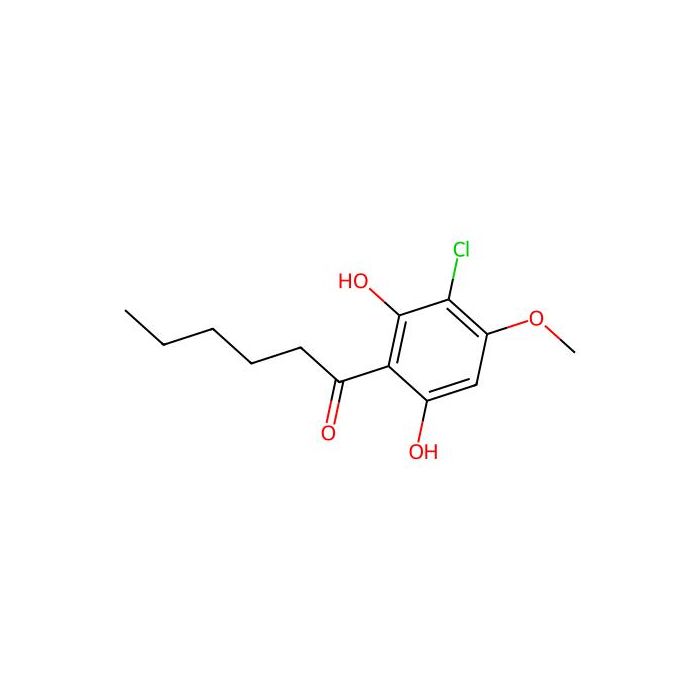
Differentiation-inducing factor-3 (DIF-3) is a monochlorinated metabolite of differentiation-inducing factor-1 (DIF-1), that belongs to the differentiation-inducing factor (DIF) family.
DIF-3 reduces the expression levels of cyclin D1 and c-Myc by facilitating their degradation via activation of GSK-3β. DIF-3 inhibits Wnt/β-catenin signaling pathway-related proteins in DLD-1 cells. DIF-3 exerts a strong antiproliferative effect on the human cervical cancer cell line HeLa by inducing cyclin D1 degradation and inhibiting cyclin D1 mRNA expression.
Application
1.As a glycogen synthase kinase-3β (GSK-3β) activator to determine if GSK-3β is required for the anti-inflammatory actions of VU0360172 (VuPAM) in murine microglia,
2.As a phosphorylation inhibitor for GSK-3β to examine the links between activation of pr
Storage
Protected from light,Store at -20°C
Shipped In
Ice chest + Ice pads
This product requires cold chain shipping. Ground and other economy services are not available.
This compound belongs to the class of organic compounds known as alkyl-phenylketones. These are aromatic compounds containing a ketone substituted by one alkyl group, and a phenyl group.
External Descriptors
Not available
1. Djoumbou Feunang Y, Eisner R, Knox C, Chepelev L, Hastings J, Owen G, Fahy E, Steinbeck C, Subramanian S, Bolton E, Greiner R, and Wishart DS. ClassyFire: Automated Chemical Classification With A Comprehensive, Computable Taxonomy. Journal of Cheminformatics, 2016, 8:61.
We use cookies to ensure the website functions properly and, where permitted, to improve your experience. You can manage your preferences at any time in Settings. Learn more in our Cookie Policy.
Shall we send you a message when we have discounts available?
Remind me later
Thank you! Please check your email inbox to confirm.
Products are supplied to verified businesses, institutions, and qualified professionals for research and development use only. Not for use in humans, animals, diagnosis, or therapy.

 J2629619